
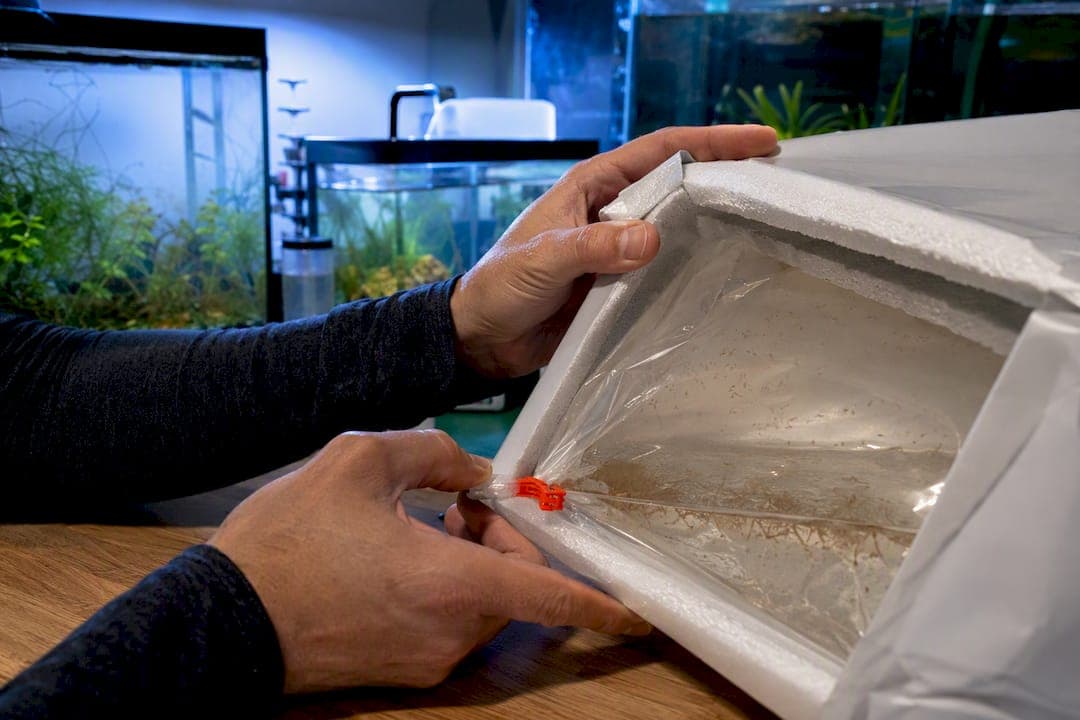
If your brine shrimp arrive dead, freshly dead animals can still be strained and frozen as fish food, but decomposed or foul-smelling ones must go straight into the trash. The first move either way: inspect the container within minutes, look for any twitch or gill movement, and start gentle aeration immediately if you see one. No movement at all after a few minutes means you're managing a loss, not a rescue, so document it fast and contact your seller before any claim window closes.
TL;DR:
- Proper handling of dead brine shrimp depends on their condition, with decomposed or foul-smelling batches needing immediate disposal to prevent tank contamination.
- Cold storage with gentle aeration and slow acclimation significantly improve survival during shipping and hold periods, especially when combined with quick inspection upon arrival.
- Shipping failures mainly result from temperature shocks, hypoxia, osmotic stress, or in-transit hatching, which can often be mitigated by better packing and timing orders around weather.
- Placing orders with suppliers who use land-based, controlled environment systems and shorter transit times reduces the risk of dead-on-arrival shrimp.
- Freshly dead shrimp can be strained and frozen for later fish feed if they show no foul odor or signs of decomposition, but should not be fed if rotten or ammonia smell is present.
Table of Contents
- Quick Triage Checklist for Brine Shrimp Dead on Arrival
- Why Do Brine Shrimp Die During Shipping?
- How Long Can You Hold Live Brine Shrimp Before They Die?
- How to Order Brine Shrimp so They Actually Arrive Alive
- Can You Still Feed Fish With Dead Brine Shrimp?
- How Demeter Biosciences Reduces DOA Risk in Live Shipments
- A Publisher's Note on Cutting Down DOA Incidents
- Get Fresher Shipments With Fewer Surprises
- Where to Learn More About Brine Shrimp Storage and Handling
- Sources
Quick Triage Checklist for Brine Shrimp Dead on Arrival
The first half hour after opening the box decides whether you save a partial culture or lose the whole batch. Work through this order:
- Open the bag over a light-colored tray or bowl so you can actually see color and movement against a plain background.
- Do the tilt test. Gently rock the container. Live or dormant shrimp drift and often show faint leg or gill movement. Truly dead ones stay rigid or sink in a limp clump.
- Check smell and color. A faint briny odor is normal. A sharp, rotten, or ammonia-like smell means decomposition has already started, and that batch is done.
- Isolate the survivors. Move anything showing life into a clean container with fresh saltwater, separate from the dead mass, and start a small air stone right away.
- Check temperature and salinity if you have the tools. Extreme readings on either end point you toward the likely cause, which matters for your claim and for your next order.
While you're working through the tray, keep a running tally for documentation:
- Time the package arrived versus time you opened it
- Photos of the water temperature (a cheap thermometer strip works)
- Photos of the bag or container, unopened and opened
- A rough estimate of the percentage that show no movement
Most suppliers that offer live-arrival guarantees want proof within a short time window after delivery, so send photos and your notes to the seller the same day rather than waiting to see if things improve overnight.
Why Do Brine Shrimp Die During Shipping?
Dead-on-arrival shrimp almost always trace back to one of four failures, and figuring out which one hit your shipment tells you what to fix next time.
- Temperature shock. Both extremes kill, but cold is trickier because it often causes dormancy that looks identical to death. Shrimp chilled hard in transit can stop moving entirely, then revive once warmed slowly. Heat is less forgiving. Water above roughly 80°F for more than an hour or two during transit usually means real mortality, not sleep.
- Hypoxia and ammonia buildup. A sealed bag with too many animals and too little headspace runs out of oxygen fast, especially if the trip runs long or gets delayed at a hub. Waste products build up in that same closed system, and the combination suffocates the population before it ever reaches your door.
- Salinity or osmotic shock. Shrimp shipped in one salinity and dumped straight into another, more different one, take on stress they can't recover from. This is as much an acclimation problem as a shipping problem.
- Hatching-in-transit die-off. If your order included eggs or very young nauplii, sometimes a portion hatches mid-shipment. Newborn nauplii run on yolk reserves for a day or two, but that fragile stage doesn't tolerate rough handling well, and a mass of what looks like dead shrimp might actually be hatched-but-crashed nauplii rather than adult mortality.
Hobbyist reports on forums like the Aquarium Co-Op community point to a recurring pattern: shrimp that seem fine on arrival die within the first hour because the receiving water wasn't mixed and aerated ahead of time.
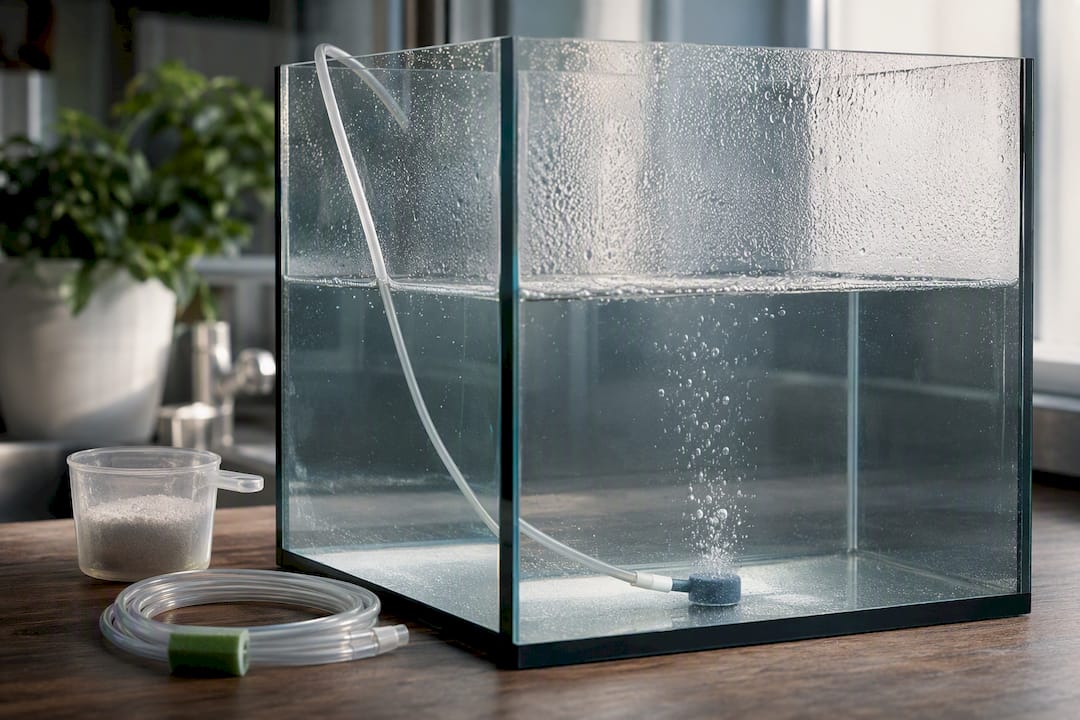
Pro Tip: Mix your holding saltwater the night before a scheduled delivery and let it aerate overnight. A tank full of freshly mixed salt water can shock arriving shrimp almost as badly as bad shipping water did.
How Long Can You Hold Live Brine Shrimp Before They Die?
Live arrivals bought you time, not a guarantee. What you do in the next 48 to 72 hours determines whether that population holds or crashes anyway.
- Set the temperature. Cold storage slows metabolism and extends survival, but cold alone without oxygen is a trap. Refrigeration without aeration is one of the most common causes of mortality in stored batches, because low temperature still doesn't solve an oxygen-starved container.
- Add gentle aeration. A small air stone on the lowest setting you own is usually enough. You're not trying to churn the water, just keep dissolved oxygen moving through it.
- Match salinity to the original shipping water where you can, and avoid swings of more than a few parts per thousand during the holding period.
- Do partial water changes only if you notice cloudiness or odor building up, not on a fixed schedule.
- Acclimate with a slow drip rather than dumping shrimp straight into a display tank, and skip that step entirely if the batch already showed signs of stress or die-off. Introducing weakened animals directly into an established tank risks both quick death and pathogen spread to your existing stock.
Hatchery-level guidance from the University of Florida's IFAS extension uses a version of this same principle at industrial scale: brined Artemia eggs held at roughly 4°C stay viable for hatching for up to a week, and the eggs that survive best are the ones kept in controlled salinity with steady aeration the whole time. Hobbyists holding live adult shrimp instead of eggs are working with a much shorter clock, but the same two levers, cold and oxygen together, do the heavy lifting.
How to Order Brine Shrimp so They Actually Arrive Alive
Most delivery-day disasters trace back to decisions made when the order was placed, not to bad luck in transit. A few habits cut your risk before the box ever ships:
- Pick shipping windows that avoid your carrier's slowest days. A Friday shipment that sits in a warehouse over the weekend is one of the most common causes of mass mortality, regardless of how well it was packed.
- Ask the seller directly how they pack orders. Insulation, oxygen in the bag headspace, and heat or cold packs matched to your regional weather all matter more than people expect.
- Look for a live-arrival guarantee or replacement policy, and read the fine print on how many hours you have to report a problem.
- Time your order around extreme weather. A heat wave or hard freeze on either end of the route raises DOA risk even with good packing.
- Consider a subscription or bulk order from a supplier close to your region. Shorter transit time is one of the most reliable ways to reduce shipping stress, since every extra hour in a sealed bag compounds the same oxygen and temperature problems.
Can You Still Feed Fish With Dead Brine Shrimp?
Freshly dead shrimp aren't automatically waste. If the batch sank but shows no foul odor and no visible breakdown, straining and freezing it for later feeding is a reasonable use, and it's the same logic hatcheries rely on when they preserve Artemia biomass rather than discard it.
- Strain the batch through a fine net, rinse briefly in clean saltwater, and freeze flat in a thin layer for easy portioning later.
- Skip this entirely if there's any rotten or ammonia smell, visible cloudiness in the water, or if the shrimp sat unrefrigerated for more than a few hours. Feeding decomposed material risks an ammonia spike in your tank.
- Thaw only what you'll use in one feeding, briefly in a small cup of tank water, and never refreeze leftovers.
Pro Tip: Portion frozen shrimp into ice cube trays before freezing. One cube per feeding keeps you from dumping in more than your fish and water quality can handle.
How Demeter Biosciences Reduces DOA Risk in Live Shipments
Some suppliers raise brine shrimp in controlled, land-based systems and feed them exclusively on microalgae like Dunaliella, which can keep protein content and overall nutrition consistent instead of subject to the seasonal swings wild-harvested shrimp go through. That consistency matters at the shipping stage too, since animals raised without starvation stress tend to hold up better in transit than wild stock pulled from variable natural conditions.
Guidance for customers centers on the same two variables covered above:
- Cold storage combined with gentle aeration, never refrigeration alone
- Careful, gradual acclimation instead of a direct drop into a display tank
- Prompt inspection on arrival, with support available for anyone unsure what they're looking at
Readers who want the full walkthrough on holding shrimp for 48 to 72 hours can check the detailed cold-and-aeration protocol on the Demeter blog. Subscription customers and bulk buyers tend to see fewer of these issues simply because shipments rotate more often and spend less time sitting in transit.
A Publisher's Note on Cutting Down DOA Incidents
Most DOA complaints we see trace back to three habits: no documentation at the door, no aerator running during the first hour, and shrimp shoved into a refrigerator with no oxygen source at all. Fix those three things and you'll eliminate the majority of losses before you ever touch shipping logistics. The rest comes down to ordering smarter: pick your delivery days deliberately and ask sellers real questions about packing before you hit checkout.
— Demeter
Get Fresher Shipments With Fewer Surprises
Some suppliers raise brine shrimp on land, in controlled systems, feeding them exclusively on Dunaliella algae instead of leaving nutrition to the seasonal luck of a wild harvest. That control may extend to shipping. Fresher rotation and shorter time in transit are the two biggest levers against DOA losses, and a subscription or direct order built around regular delivery cycles can help reduce risks compared to one-off orders from unfamiliar sellers.
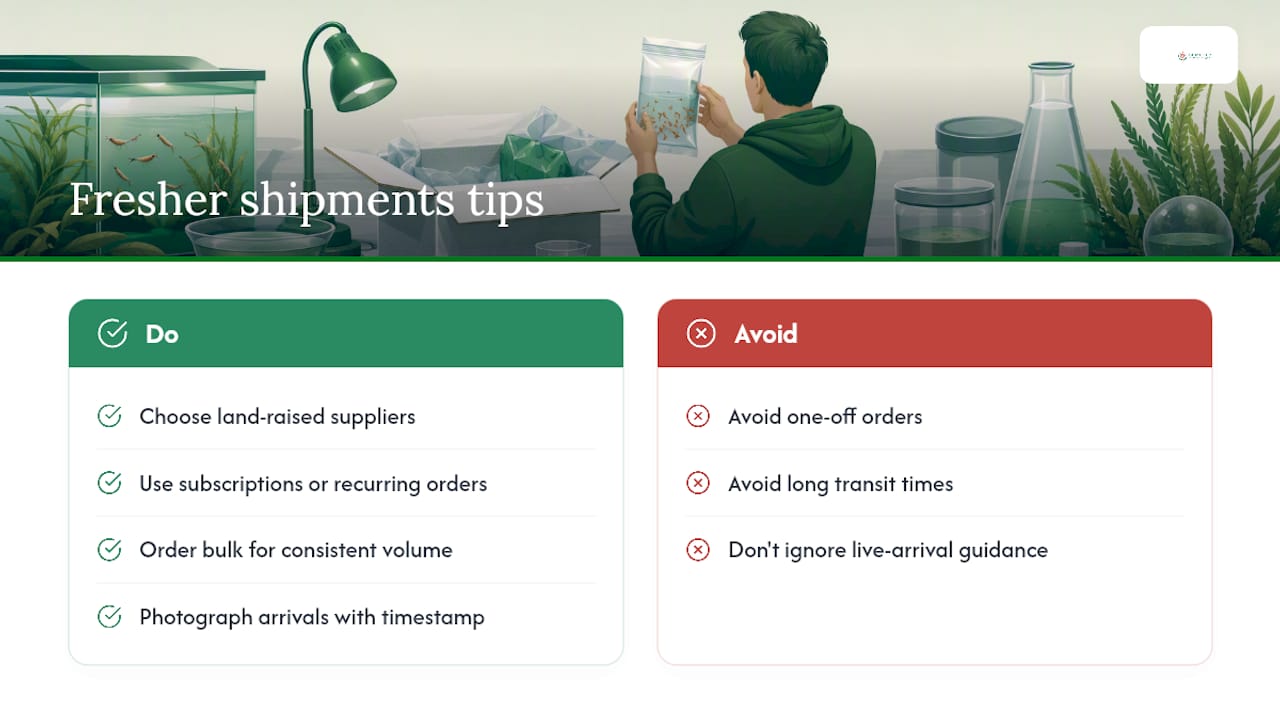
If you run a fish store, museum tank, or research setup that needs volume, the bulk ordering page is built for exactly that kind of recurring need. Every order comes with live-arrival guidance, and if something looks wrong when your box shows up, reach out directly with your photos and timestamp so the team can sort out a replacement or walk you through triage. Place your next order now and see whether a shorter supply chain fixes the DOA problem your last supplier couldn't.
Where to Learn More About Brine Shrimp Storage and Handling
- Storage of Decapsulated Artemia (PDF) — IFAS, covering brining ratios and refrigerated storage protocols used by hatcheries
- Decapsulating Brine Shrimp Eggs — IFAS, on decapsulation and safe egg storage
For general aquatic husbandry beyond brine shrimp specifically, the Aquarium Care Made Easy guide covers broader tank health practices worth pairing with any feeding routine.