
Yes, live brine shrimp can survive winter shipping, but only when transit is fast, insulation is right, and heat-pack duration matches time in the box. If any of those three slip, the order should wait. Before you click "buy" on a cold week, check the overnight low for every night your package will be in transit; if it drops below the thresholds below, hold the shipment rather than risk a box of dead shrimp on your porch.
TL;DR:
- Proper packaging and insulation are crucial; use heat packs sized to transit time and avoid direct contact with shrimp bags to prevent cooking or cold exposure.
- Shipping early in the week and requesting hold-for-pickup at hubs reduce the risk of cold-related damage during weekend delays or transportation stops.
- Fast shipping, in-water conditioning, and ammonia neutralization within 48 hours before departure improve shrimp survival rates during winter transit.
- Delay orders when overnight lows drop below 65°F and avoid shipping if temperatures fall under 40 to 45°F, especially during severe weather or carrier disruptions.
- Land-based production allows flexible shipping schedules in cold weather, reducing the risk of dead-on-arrival and enabling coordinated, weather-aware logistics.
Table of Contents
- Winter Shipping Brine Shrimp: Packing Checklist and Heat Packs
- Best Ship Days and Carrier Choices for Cold Weather
- Prepping Brine Shrimp and Water Before They Ship
- What to Do in the First 30 Minutes After Delivery
- When to Hold or Delay a Winter Shrimp Shipment
- How Demeterbioscience Handles Winter Shrimp Delivery
- A Note on Choosing Welfare Over the Calendar
- Order Live Brine Shrimp Without Gambling on the Forecast
- Further Winter Shipping Resources
- Sources
- FAQ
Winter Shipping Brine Shrimp: Packing Checklist and Heat Packs
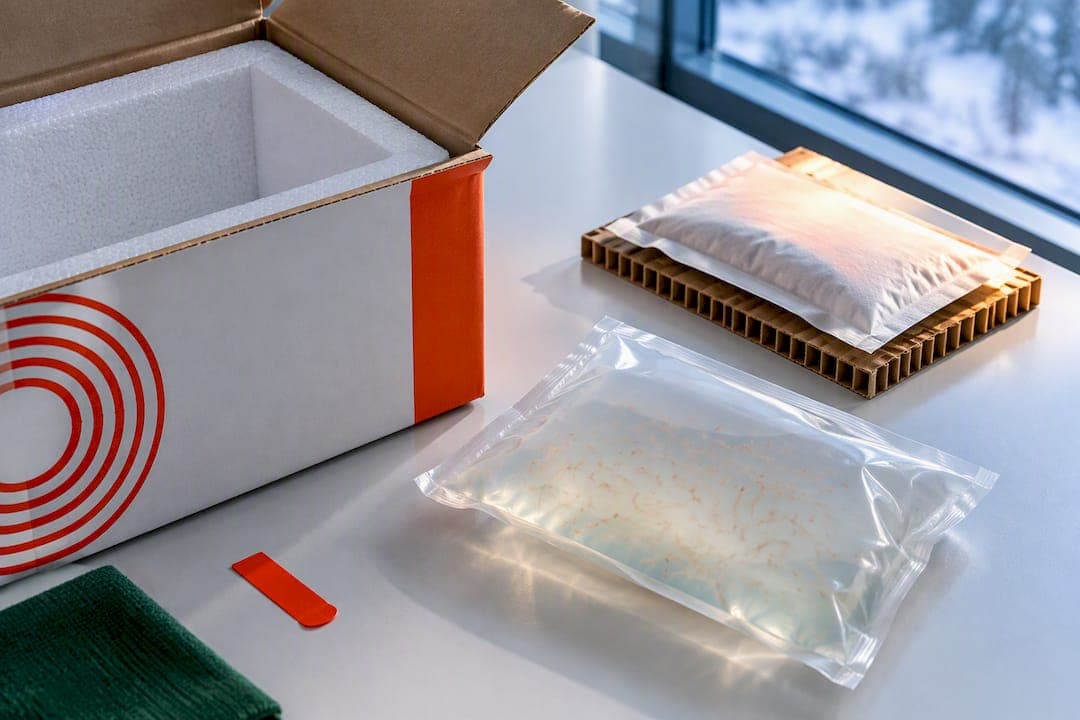
Getting brine shrimp through a cold snap alive comes down to five physical layers working together, not one magic product. A properly packed winter box holds warmth like a thermos holds coffee: insulation slows heat loss, and the heat pack replaces what's lost.
- Insulated liner (foam box or foil bubble liner) inside a cardboard shipper
- Foam padding or crumpled paper to fill dead air space and stop the bags from shifting
- Double-bagged shrimp with a pure oxygen fill in the headspace for longer transit windows
- Void fill around the edges so the insulated liner can't gap open in transit
- Heat pack, sized to transit time, placed against the box wall, never against the bag itself
Duration matters more than most sellers admit. A 40-hour heat pack covers a standard two-day shipment; a 72-hour pack is the better call for three-day transit or anything routed through a weekend hub. Activate the pack right before sealing the box, not hours ahead, since most chemical packs lose a meaningful chunk of their heat window sitting around already "on."
Buffer placement is where a lot of home shippers get it wrong. Heat packs need airflow to release warmth evenly; pressed flat against a shrimp bag, they can cook the water in one corner while the rest of the box stays cold. That's also why dry ice has no place in a live shrimp box: it doesn't heat anything, and its sublimation can build up carbon dioxide inside a sealed shipper.
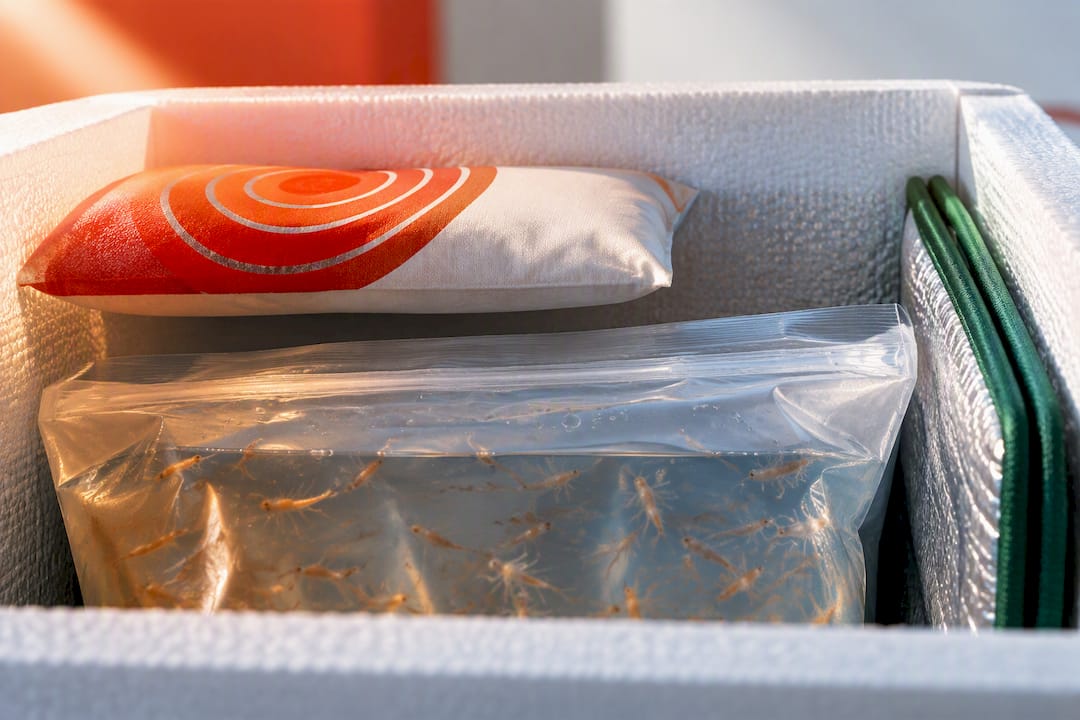
Pro Tip: Tape the heat pack to the inside wall of the outer box, not to the bag, then position the bag toward the center where the insulation traps warmth most evenly.
Best Ship Days and Carrier Choices for Cold Weather
- Ship Monday through Wednesday. A Monday, Tuesday, or Wednesday ship date keeps the package moving instead of sitting in a warehouse or delivery truck over a weekend, when temperature swings and staffing gaps both spike.
- Match the service level to the transit risk. USPS Priority Mail typically lands in 2 to 3 days; Priority Mail Express and UPS Next Day or 2nd Day Air cost more but cut the cold-exposure window roughly in half.
- Ask for hold-for-pickup at the local hub. Requesting that a package wait at the carrier facility instead of riding the final delivery truck shaves hours off the coldest, least controlled leg of the trip.
- Upgrade for higher-value or sensitive orders. A bulk institutional order or a shipment during a hard freeze is worth the jump to overnight or two-day air, even if standard shipping would work most weeks.
Sellers who check weather along the entire transit chain, not just the origin and destination, catch the layover cities where a package might sit on a tarmac in single-digit temperatures.
Prepping Brine Shrimp and Water Before They Ship
What happens in the 48 hours before a box leaves the warehouse matters as much as the packaging itself. Ammonia buildup, not cold alone, kills a surprising share of shipments that look fine on paper.
- Fast the shrimp 24 to 48 hours before shipping to cut waste output and slow ammonia accumulation in the bag.
- Ship in the water they're already conditioned to, since a sudden pH or hardness swing adds stress on top of temperature stress.
- Add an ammonia neutralizer like Seachem Prime or Fritz Complete for any transit stretching past 24 hours; these buffer ammonia at shipping doses for roughly a day or two.
- Fill with pure oxygen instead of air when the trip runs longer than a single overnight leg.
- Double-bag and seal with rubber bands, twisting the bag neck twice before banding it so a jolt in transit doesn't pop it open.
Pro Tip: If you're the one placing the order, ask the seller directly whether they fasted the shrimp and neutralized ammonia before shipping; a seller who can answer that specifically is a seller who ships winter orders often.
What to Do in the First 30 Minutes After Delivery
- Bring the box inside immediately and check the bag's water temperature before opening anything.
- If the water feels cold, don't dump it straight into a tank. Slow air-warming or a float-bucket method lets the temperature climb gradually instead of shocking the shrimp with a fast jump.
- Look closely before writing anything off as dead. Cold water slows brine shrimp into a near-motionless dormancy that looks like death but often reverses once temperatures climb back into range.
- Check for any movement or oxygen distress once the bag reaches a safer range, and note how the water looks: cloudy or foul-smelling water is a worse sign than stillness alone.
- Photograph the box, the packaging, and the water temperature right away if anything looks off. That documentation is what most sellers need to process a live-arrival claim.
When to Hold or Delay a Winter Shrimp Shipment
A shipment doesn't have to go out just because it's scheduled. These are the trigger points worth building into your own order timing, whether you're the buyer or the seller:
- Activate heat packs whenever overnight lows anywhere along the route drop below 65°F.
- Consider holding the shipment outright if overnight lows fall below roughly 40 to 45°F, depending on how sensitive the species is to cold.
- Hold for severe storms or any carrier disruption that signals a multi-day delay, since a shipment stuck in a truck for an extra 48 hours is far riskier than one that ships a day late.
- Sellers should offer an explicit hold or cancel option rather than leaving buyers to guess, and reach out proactively the moment a forecast turns risky.
How Demeterbioscience Handles Winter Shrimp Delivery
Land-based production changes the calculation here in a way wild harvest never could. Because Demeterbioscience raises brine shrimp on a controlled Dunaliella algae diet in a land-based system, supply doesn't dry up or drop in protein content when wild harvest slows for the season, which is exactly when winter shipping questions matter most.
That consistency shows up in how orders actually move in cold months:
- Shipments hold when conditions look risky rather than going out on a fixed schedule regardless of weather.
- Orders ship Monday through Wednesday whenever weather allows, keeping shrimp out of weekend delivery gaps.
- Every box gets insulated packing with heat-pack duration matched to the specific transit time, not a one-size-fits-all pack.
- Scheduled shipments through a subscription plan give buyers a predictable window they can plan around instead of gambling on a single cold week.
A Note on Choosing Welfare Over the Calendar
Delaying a shipment costs a seller time and a little goodwill in the short term. It costs a lot more to send shrimp into a forecast that's already stacked against them, then deal with a dead-on-arrival claim and a disappointed buyer. That tradeoff isn't close.
Good communication looks simple in practice: tell the buyer before the box ships if the forecast looks bad, offer a hold or a reschedule without making them ask twice, and follow through on both. Consistent, land-based production is what makes that kind of flexibility possible in the first place. When supply doesn't swing with the seasons, neither does the pressure to ship on a bad day just to keep inventory moving.
— Demeter
Order Live Brine Shrimp Without Gambling on the Forecast
This business is built around avoiding the exact problem this article walks through: a shipment that goes out on the wrong day and arrives compromised. By sourcing brine shrimp from a land-based, algae-fed system rather than a wild seasonal harvest, it can hold, reschedule, or adjust packing without leaving customers short on supply.
A single order of live brine shrimp runs $17 to $35, insulated and heat-packed to match your transit window. If you'd rather not think about timing a fresh order around every cold front, the Demeter Biosciences membership delivers monthly for $25 and builds weather buffers into the schedule automatically. Local fish stores and institutions ordering in volume can check the bulk order page for retail and museum quantities. If a hard freeze or storm is bearing down on your delivery window, contact us before you order and we'll work out timing that doesn't put the shrimp at risk.
Further Winter Shipping Resources
- WeatherIShip's live shrimp shipping guide for heat-pack durations and fasting protocols
- Reef Beauties' cold-weather shipping breakdown for transit-hub weather checks
- USARK's shipping guidance for hold-for-pickup procedure
- Aquatics Unlimited's shipping policy for typical vendor hold clauses
- Demeterbioscience's overnight brine shrimp shipping guide for order-day expectations
Sources
- How to Ship Live Shrimp: The Complete Guide (Neocaridina, Caridina & More) | WeatherIShip
- How We Ship Saltwater Fish Safely in Cold Weather – Reef Beauties
- USARK blog: shipping suggestion (hold for pickup)
FAQ
How Long Can Brine Shrimp Survive During Shipping?
Well-packed brine shrimp typically survive 24 to 72 hours in transit, depending on water quality, oxygen fill, and temperature control. Fasting before shipping and neutralizing ammonia with a product like Seachem Prime extends that window for longer trips.
Is It Safe to Ship Live Aquatic Animals During Winter?
It's safe when the box uses proper insulation, a heat pack sized to the transit time, and a ship date that avoids weekend delays. It's not safe when overnight lows along the route drop into the 40s or lower without those safeguards, which is when sellers should hold the order instead.
How Long Can Brine Shrimp Survive in Fresh Water?
Brine shrimp are saltwater organisms and will not survive long-term in fresh water; they typically die within hours as their cells struggle to regulate salt balance. Always ship and store them in appropriately conditioned saltwater, not tap or fresh water.
Will Brine Shrimp Hatch in 70-Degree Water?
Brine shrimp cysts generally hatch best in warmer water, so cooler water will slow hatching considerably rather than stop it outright. For shipped live adult shrimp rather than cysts, cooler temperatures simply slow their metabolism without triggering the hatching process at all.
What Temperature Should Trigger Holding a Winter Shrimp Order?
Activate heat packs whenever overnight lows anywhere on the route drop below 65°F, and consider holding the shipment entirely once lows fall below roughly 40 to 45°F. Demeterbioscience follows this threshold directly, holding orders proactively when forecasts along the transit route look risky.