

Protein is the primary building block and key energy nutrient that determines growth, survival, and feed-conversion efficiency in commercial fish farming. Unlike terrestrial livestock, fish routinely burn protein as a primary fuel source, which is why commercial aquafeeds carry far higher protein percentages than cattle or poultry rations. The practical takeaway: add high-protein live feeds like microalgae-fed brine shrimp during larval stages and conditioning windows, when amino-acid demand spikes and formulated feeds alone often fall short.
Three things to keep in mind from the start:
- Fish require 10 essential amino acids they cannot synthesize: methionine, arginine, threonine, tryptophan, histidine, isoleucine, lysine, leucine, valine, and phenylalanine.
- NOAA's Alternative Feeds Initiative tracks the industry-wide shift away from fishmeal toward multi-source protein strategies.
- Demeterbioscience produces land-based, Dunaliella-fed live brine shrimp with at least 40% protein content, purpose-built for hatchery and hobbyist use.
Table of Contents
- Why protein drives fish physiology, growth, and energy
- Species-level protein targets you can actually use
- What protein sources are actually available, and what each costs you
- How microalgae-fed live brine shrimp deliver protein where it counts
- How to match protein to life stage and measure what's working
- Sustainability and cost: why the industry moved away from fishmeal
- Key Takeaways
- What we've learned from applying these principles directly
- Demeterbioscience live brine shrimp: ordering options
- Useful sources and further reading
Why protein drives fish physiology, growth, and energy
Fish use dietary protein for tissue construction, enzyme production, hormone synthesis, immune function, and direct energy. That last use is the key difference from most terrestrial animals: fish extract more metabolizable energy from protein catabolism than from carbohydrates, so they need dietary protein percentages that would look excessive in a pig or chicken diet.
At the cellular level, two sensing pathways govern the response. TORC1 activates when amino-acid abundance is detected, triggering protein synthesis and tissue deposition. GCN2 fires when amino acids run short, suppressing synthesis and redirecting metabolism. The practical consequence: a feed with adequate crude protein but a skewed amino-acid profile can still trigger GCN2 and stall growth, because the fish senses a deficit in one limiting amino acid even when total nitrogen looks fine.
Lysine and methionine are the two amino acids most commonly deficient in plant-based formulations. When either falls short, the entire protein-synthesis process slows, regardless of how much crude protein the feed contains. This is why amino-acid balance matters more than the protein percentage printed on the bag.
Species-level protein targets you can actually use
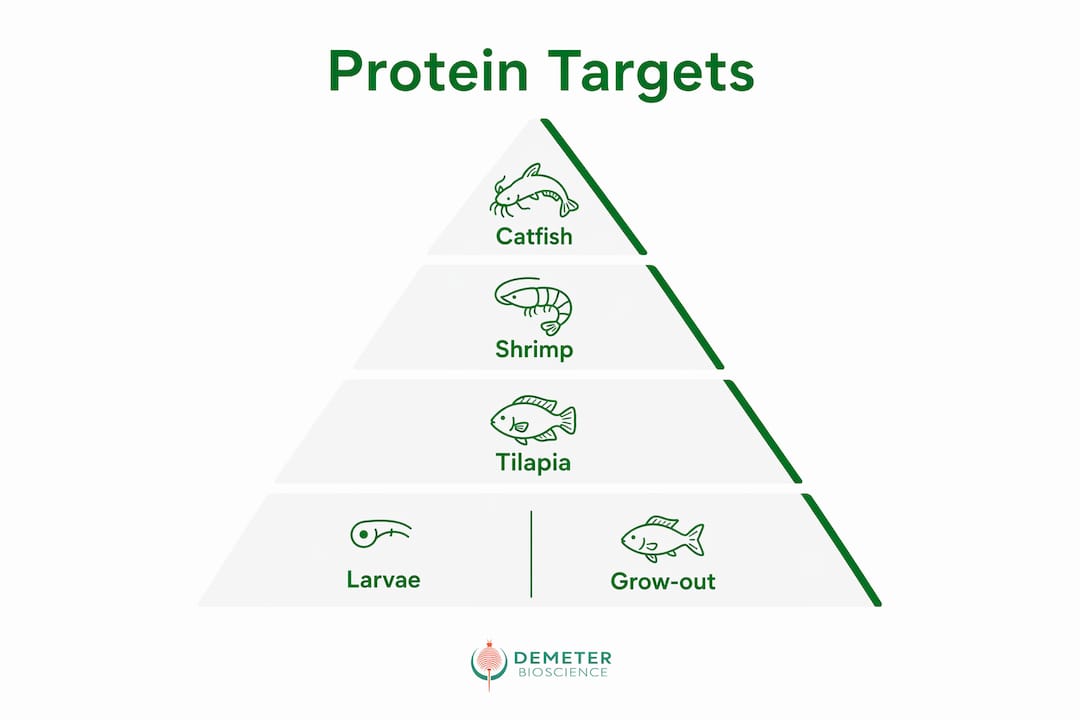
Recommended dry-matter protein ranges vary substantially by species and life stage. Carnivorous species need more; herbivorous and omnivorous species need less, though still more than most people expect.
| Species | Protein range (dry matter) | Life-stage note |
|---|---|---|
| Channel catfish | 28-32% | Fry need the upper end; grow-out can drop lower |
| Shrimp | 30-35% | Post-larvae need higher frequency and higher protein |
| Tilapia | 35-40% | Fry and fingerlings need 40%; adults tolerate 35% |
| Salmonids | 44-50% | Smolts and broodstock stay near the top of the range |
Life stage shifts requirements more than most farmers budget for. Early larvae and fry need both higher protein percentages and more frequent feeding, because their gut capacity is tiny and amino-acid turnover is rapid. Recirculating aquaculture systems (RAS) also tend to push targets slightly higher than pond culture, since fish in RAS expend less energy on thermoregulation but face higher stocking densities.
Pro Tip: Don't run a single feed formula from fry to harvest. Switch to a lower-protein grow-out diet once fish reach fingerling size — you'll cut feed costs and reduce ammonia load without sacrificing growth rate.
What protein sources are actually available, and what each costs you
No single protein source is perfect. Multi-source blending is now industry best practice precisely because every ingredient has a trade-off.
- Fishmeal: 65–72% crude protein, excellent amino-acid balance, high digestibility, and no significant anti-nutritional factors (ANFs). The gold standard, but supply is constrained and prices are volatile.
- Soybean meal and plant proteins: Lower cost and widely available, but most carry ANFs including trypsin inhibitors, phytates, and saponins that reduce digestibility and can trigger gut inflammation at high inclusion rates. Fermentation, heat treatment, and enzyme addition all reduce ANF load.
- Insect meal (black soldier fly, mealworm): Strong amino-acid profile, growing supply chain, and some evidence of immune-stimulating effects. Regulatory status for food-fish use varies by state.
- Poultry by-product meal: Cost-effective, moderate protein content, but lower digestibility than fishmeal and regulatory restrictions apply in some markets.
- Microalgae: Consistent nutrient density, sustainable production, and no wild-harvest pressure. Protein content varies by species; Dunaliella and Spirulina are among the higher-protein options.
- Live feeds (brine shrimp, rotifers): Nutrient-dense, highly digestible, and ideal for larvae that cannot yet handle dry pellets. Quality depends entirely on what the live feed was fed before harvest.
Processing matters as much as ingredient choice. Fermentation, heat treatment, and enzyme addition each reduce ANFs and improve bioavailability. Formulating on digestible amino-acid values rather than crude protein alone is now the standard approach in well-run hatcheries.
How microalgae-fed live brine shrimp deliver protein where it counts
Microalgae-fed live brine shrimp are a high-protein, nutrient-dense live feed that supports larval survival, rapid early growth, and coloration in both hatchery and ornamental settings. The critical word is "fed." Wild-harvested brine shrimp are often collected in a nutritionally depleted state, having grazed on whatever the salt lake offered. Their protein content and amino-acid profile vary with season and location.
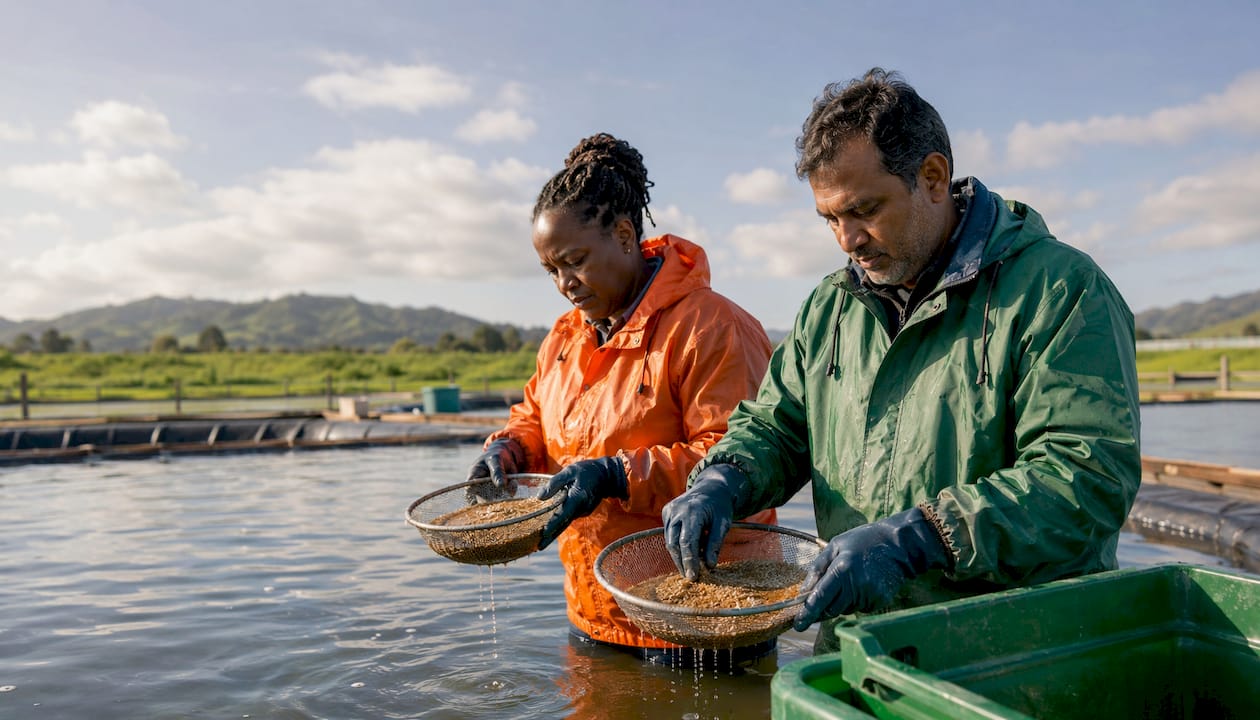
Brine shrimp raised on Dunaliella, a carotenoid-rich green microalga, carry a consistent protein load and a predictable micronutrient profile. Farmed microalgae-fed live feeds deliver predictable nutrient density that wild-harvested sources simply cannot match. For hatchery operators, that consistency translates directly into more uniform larval batches and tighter FCR numbers.
Demeterbioscience's land-based cultivation system controls every variable: algae strain, water quality, stocking density, and harvest timing. The result is live brine shrimp with at least 40% protein content on a dry-weight basis, shipped live to your door.
Pro Tip: Introduce live brine shrimp at first feeding for marine larvae and during broodstock conditioning. These are the two windows where amino-acid density has the greatest measurable impact on survival and egg quality.
How to match protein to life stage and measure what's working
Start with species and stage, then choose your feed or supplement. Here's a practical sequence:
- Identify the target species and current life stage (larvae, fry, fingerling, grow-out, broodstock).
- Set the dry-matter protein target from the species table above.
- Choose a base feed formulated to that target, with digestible amino-acid values listed on the label.
- Add live brine shrimp during high-demand windows: first feeding for larvae, conditioning for broodstock, and recovery after stress or disease.
- Track feed-conversion ratio (FCR) and weekly weight gain. An FCR above 1.8 in most warmwater species usually signals a protein or amino-acid imbalance worth investigating.
- Adjust feeding frequency before adjusting ration size. More frequent, smaller meals reduce amino-acid catabolism and cut nitrogen waste.
For live brine shrimp dosing, feed what fish consume within 10–15 minutes. Leftover live feed degrades water quality fast, especially in closed systems. In RAS or small hatchery tanks, dose twice daily during larval windows rather than one large morning feed. For high-protein feeding protocols in intensive systems, pairing live feeds with a formulated diet during the first two weeks post-hatch consistently outperforms either approach alone.
Sustainability and cost: why the industry moved away from fishmeal
Fishmeal inclusion in salmon diets dropped from roughly 70% in the 1980s to about 25% by 2017 as alternative proteins matured. That shift was driven by both economics and supply pressure on wild forage fish stocks, not by any single regulatory mandate.
Protein represents a significant portion of variable operating costs in aquaculture — making it the single largest lever for both profitability and environmental footprint.
The sustainability case for farmed microalgae-fed live feeds is straightforward. Dunaliella cultivation requires no wild harvest, produces no bycatch, and can be scaled in land-based systems with a small physical footprint. Plant proteins can replace 75–95% of fishmeal in many species when properly processed and supplemented, but they still carry ANF risk and land-use costs. Microalgae sidestep both problems. The economic trade-off is a higher per-unit cost than commodity plant proteins, which is why microalgae-fed live feeds are used strategically during high-value windows rather than as a bulk feed replacement.
Key Takeaways
Protein quality and amino-acid balance, not just crude protein percentage, determine growth, survival, and feed efficiency in commercial fish farming.
| Point | Details |
|---|---|
| Match protein to species and stage | Use 28–32% for catfish, 30–35% for shrimp, 35–40% for tilapia, and 44–50% for salmonids on a dry-matter basis. |
| Amino-acid balance beats crude protein | Lysine and methionine are the most common limiting amino acids; a skewed profile stalls growth even at high protein levels. |
| Use live brine shrimp at critical windows | First feeding for larvae and broodstock conditioning are the two stages where live, microalgae-fed brine shrimp have the greatest impact. |
| Protein drives feed costs | Protein represents a significant portion of variable operating costs; precision feeding and live supplements reduce waste and improve FCR. |
| Demeterbioscience for consistent live protein | Dunaliella-fed, land-based brine shrimp with at least 40% protein deliver predictable nutrition that wild-harvested sources cannot match. |
What we've learned from applying these principles directly
The conventional wisdom in aquaculture nutrition focuses almost entirely on crude protein percentages. What that framing misses is that the fish doesn't care about the number on the label. It cares whether the right amino acids arrive at the right tissue at the right time. That's the gap Demeterbioscience was built to address.
By cultivating brine shrimp exclusively on Dunaliella in a controlled, land-based system, we eliminate the two biggest variables that make wild-harvested live feeds unreliable: seasonal nutritional depletion and inconsistent gut-load content. Customers using our product during larval windows report more uniform batch sizes and stronger early growth compared with wild-harvested alternatives.
The broader point: live feeds are not a luxury add-on. For larvae and conditioning broodstock, they are the most direct way to deliver bioavailable protein and micronutrients at the moment fish need them most.
Demeterbioscience live brine shrimp: ordering options
Demeterbioscience sells live brine shrimp fed exclusively on Dunaliella microalgae, guaranteeing at least 40% protein content and a consistent amino-acid profile with every shipment. That's the nutritional standard described throughout this article, available as a direct order.
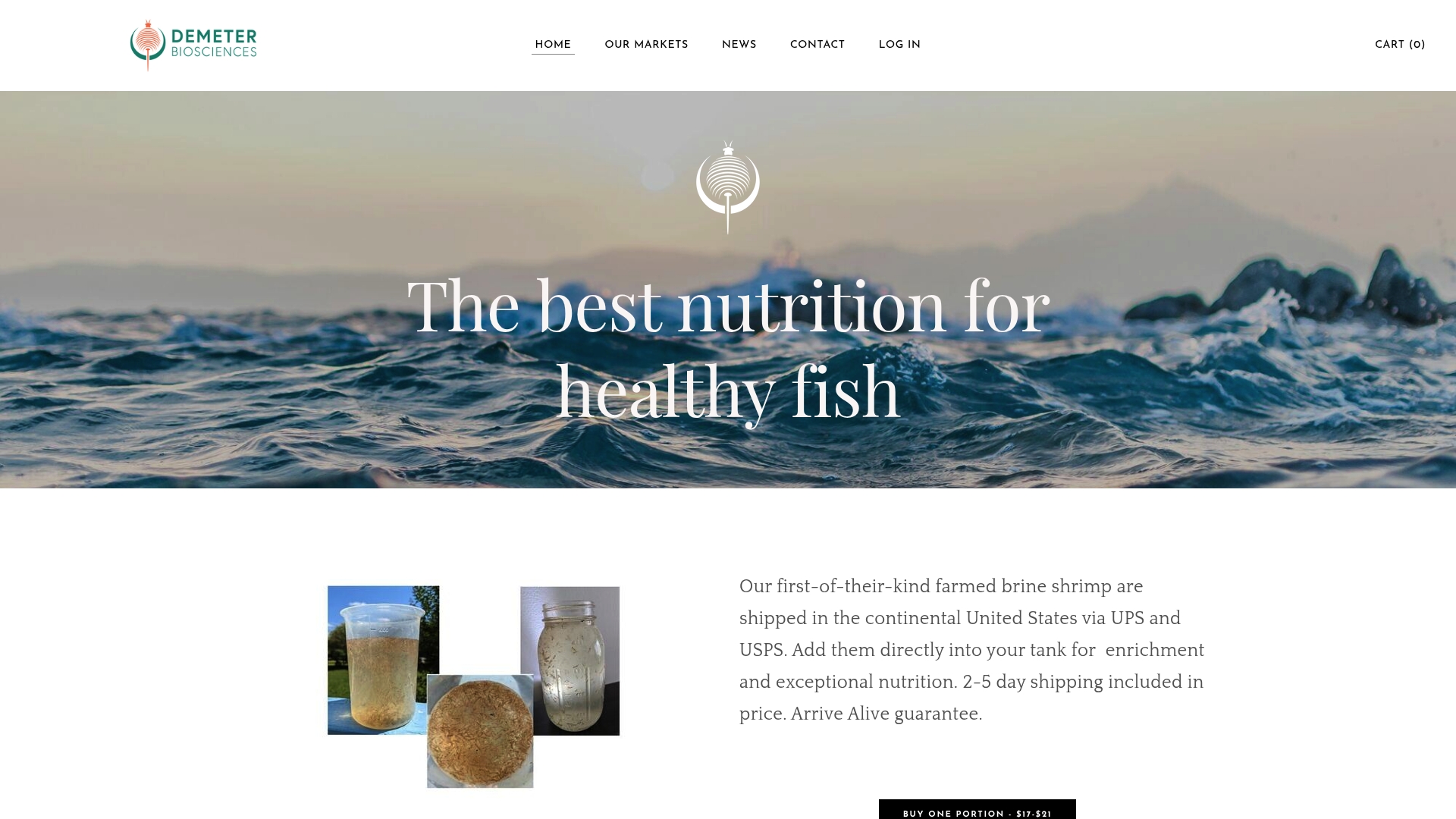
Ordering options cover every scale of operation. Single shipments work for hobbyists and small hatcheries testing a new protocol. A monthly membership keeps a steady supply arriving without reordering every cycle. Institutions, research facilities, and local fish stores can place bulk orders sized to their volume. All orders ship live, with packaging designed to maintain viability in transit. To place an order or ask about bulk pricing, visit the product page or reach out through the contact page.
Useful sources and further reading
- Understanding Fish Nutrition, Feeds, and Feeding — Virginia Tech
- Feeds for Aquaculture — NOAA Fisheries
- Alternative Proteins for Fish Diets: Implications beyond Growth — PMC
- Processing and anti-nutritional factor management in aquafeeds — PMC
- Protein sources in feed for farmed fish — IFREMER/Archimer
- Multi-source protein strategies in aquaculture — ScienceDirect
- Aquaculture feeds and feed economics — EDIS/FLVC
- Amino-acid sensing and protein nutrition in aquaculture — Frontiers in Life Science & Technology
- The Nutrition and Feeding of Farmed Fish and Shrimp — FAO Training Manual