
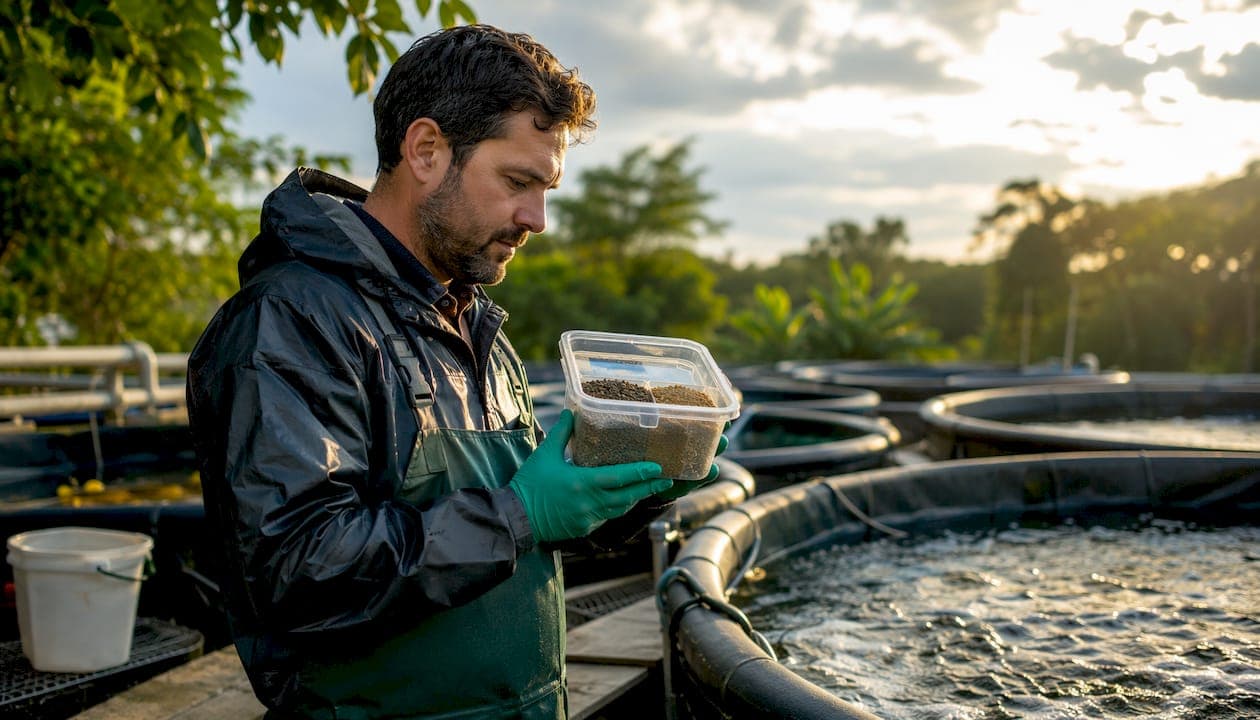
For most commercial hatcheries, the strongest protein strategy combines microalgae-fed live brine shrimp for larval stages with a blended formulated diet for nursery and grow-out. FAO aquaculture guidance sets the target at 30%–55% crude protein across life stages, and no single ingredient hits every mark cleanly. Larvae need live, HUFA-enriched prey first. Juveniles transition to micro-pellets alongside live feed over 2–3 weeks. Grow-out phases lean on fishmeal-based or partially replaced formulated diets.
- Larval stage: microalgae-enriched live brine shrimp (Artemia) or rotifers as the primary protein and HUFA delivery vehicle
- Nursery/transition: co-feed micro-pellets with live prey for 2–3 weeks before fingerling sale
- Grow-out: fishmeal-based pellets with targeted alternative protein inclusions (plant, insect, or single-cell proteins)
- Feeding baseline: 2%–3% of body weight per day, adjusted for species, size, and water temperature
Statistic callout: FAO places the crude protein requirement for farmed fish at 30%–55% depending on species and life stage. Demeterbioscience's land-based, Dunaliella-fed brine shrimp deliver a minimum of 40% crude protein, placing them squarely in that target range for larval diets.
Table of Contents
- What protein sources do commercial hatcheries actually use?
- How do you choose and integrate protein sources for your hatchery?
- Why microalgae-fed, farmed brine shrimp hold up under hatchery scrutiny
- Sourcing and scaling live feed supply for a commercial hatchery
- Common pitfalls that cost hatcheries larvae and money
- Key Takeaways
- The case for spending more on early-stage nutrition
- Demeterbioscience live brine shrimp for your hatchery
- Useful sources for hatchery nutrition buyers
What protein sources do commercial hatcheries actually use?
Six categories cover the field. Each has a different nutritional profile, cost structure, and operational fit.
Fishmeal
The benchmark. Fishmeal typically delivers 65%–72% crude protein with a near-ideal indispensable amino-acid profile, including strong lysine and methionine levels and naturally occurring DHA and EPA. Supply cost is volatile and tied to marine catch cycles, but nutritional completeness is hard to match. Most formulated hatchery diets still use fishmeal as their protein backbone.
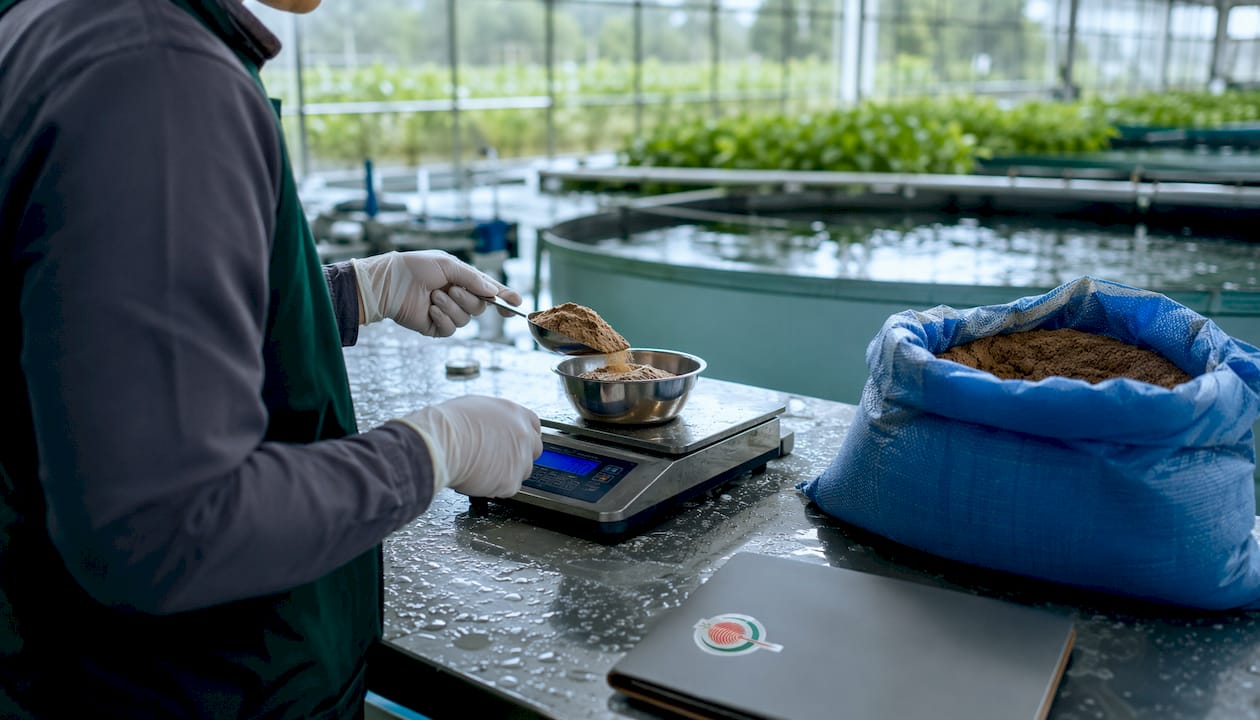
Live feed: brine shrimp and rotifers
Brine shrimp (Artemia) and rotifers are the standard live feeds for marine and freshwater larvae. Their particle size, digestibility, and motility trigger feeding responses that dry feeds cannot replicate in early larvae. Protein content varies by source and gut-loading status. Wild-harvested Artemia can be nutritionally inconsistent; enriched or farmed alternatives close that gap considerably.
Microalgae-enriched live feed
Feeding live prey on microalgae before offering them to larvae, a practice called gut-loading or enrichment, significantly raises HUFA (DHA/EPA) and micronutrient contents. Artemia enriched with HUFAs and microalgae consistently improve larval growth, immune competence, and stress tolerance across species including Litopenaeus vannamei, Lates calcarifer, and Oreochromis niloticus. This is the category where farmed, microalgae-fed brine shrimp from suppliers like Demeterbioscience fit.
Insect meal from Black soldier fly (Hermetia illucens) and mealworm (Tenebrio molitor) meals generally contains substantial crude protein with a reasonable amino-acid profile, though methionine levels can be low. Chitin content may reduce digestibility in some species. Inclusion rates of 10%–25% work well in many trials without growth penalties; higher inclusions require amino-acid supplementation.
Plant proteins
Soy protein concentrate, pea protein, and canola meal are cost-competitive and widely available. The problem is anti-nutritional factors (ANFs): trypsin inhibitors, phytate, and saponins reduce digestibility and can damage gut integrity. Fermentation and concentration processing reduce ANFs substantially. Properly balanced plant protein blends can replace 75%–95% of fishmeal in some omnivorous species, but carnivores like salmonids tolerate much lower replacement rates before performance drops.
Single-cell proteins (SCP)
Yeast, bacteria, and microalgae-derived SCPs offer 50%–70% crude protein and a favorable amino-acid profile. They carry essentially no seasonal supply risk and a low environmental footprint. Inclusion levels of 10%–30% are well-documented; higher rates can affect palatability. Alternative protein inclusions range from 10% to 100% depending on species and ingredient, though full replacement remains difficult for carnivores.
| Protein source | Crude protein (%) | Key nutrients | Main limitation | Sustainability |
|---|---|---|---|---|
| Fishmeal | 65–72 | DHA/EPA, lysine, methionine | Cost volatility, supply risk | Moderate |
| Live brine shrimp (wild) | 40–55 | Variable HUFA | Seasonal inconsistency | Moderate |
| Microalgae-fed brine shrimp | ≥40 | Consistent DHA/EPA, lysine | Higher unit cost | High |
| Insect meal | 40–55 | Moderate AA profile | Low methionine, chitin | High |
| Plant proteins | 30–55 | Lysine (soy) | ANFs, low methionine | High |
| Single-cell proteins | 50–70 | Broad AA profile | Palatability at high inclusion | Very high |
How do you choose and integrate protein sources for your hatchery?
Start with species and life stage, then work backward to the nutrient spec.
Decision factors to lock in first:
- Target crude protein range for the species and stage (larvae typically need the upper end of the 30%–55% band)
- Amino-acid balance, especially lysine and methionine, against a fishmeal reference profile
- DHA/EPA requirement for larvae (critical for neural and eye development)
- Pathogen risk tolerance and biosecurity protocols
- Supplier lead times and seasonal availability
- Cost per gram of delivered protein, not just cost per kilogram of ingredient
Stepwise integration checklist:
- Request a full proximate analysis, amino-acid profile, and DHA/EPA panel from every candidate supplier before ordering.
- Verify pathogen testing certificates and lot-to-lot consistency statements. No certificate, no trial.
- Run a small-scale, controlled trial at 10%–25% inclusion of the new ingredient alongside your baseline diet for a minimum of two weeks.
- Monitor behavioral robustness indicators: feeding response, swimming vigor, and post-transfer survival. Weight gain alone is a poor early-stage indicator of whether a diet is actually working.
- If the trial passes, scale inclusion in 10%–15% increments with continued monitoring before committing to full-volume orders.
- Train hatchery staff on handling differences between live feed and dry ingredients, particularly temperature sensitivity and survival benchmarking on arrival.
What to ask suppliers specifically:
- Proximate analysis (protein, lipid, moisture, ash) with lot number
- Full amino-acid profile with lysine and methionine values
- DHA and EPA content (mg/g dry weight)
- Pathogen screening results (bacterial, viral, parasitic as applicable)
- Cultivation or production method (land-based vs. wild-caught, feed inputs used)
Pro Tip: During any live-feed trial, track feeding response and swimming vigor daily rather than waiting for a weekly weight check. Larvae that are nutritionally stressed show behavioral changes 48–72 hours before growth metrics diverge. Catching it early saves the cohort.
Why microalgae-fed, farmed brine shrimp hold up under hatchery scrutiny
The core problem with wild-harvested Artemia is variability. Nutritional content shifts with season, harvest location, and gut-fill status at the time of collection. A larval cohort fed inconsistent prey in week one carries that variability forward through every subsequent life stage.
Demeterbioscience addresses this with a land-based production system where brine shrimp are fed exclusively on Dunaliella microalgae. The result is a claimed minimum of 40% crude protein with consistent DHA/EPA delivery, lot to lot. That kind of nutritional repeatability matters enormously when you're managing thousands of larvae and cannot afford a bad batch.
Key proof points for farmed, microalgae-fed brine shrimp:
- Controlled cultivation eliminates the starvation conditions common in natural salt lake ecosystems
- Dunaliella feeding provides a reliable HUFA source, particularly DHA, which is critical for larval neural development
- Land-based production removes seasonal supply gaps that affect wild-harvested sources
- Lot-to-lot consistency enables meaningful comparison across feeding trials
Early-stage enrichment of live feed produces disproportionate gains in larval resilience. Small, precise dietary adjustments at the larval stage improve tolerance to transport and environmental stress far more than equivalent adjustments at the juvenile or grow-out stage.
Farmed brine shrimp also reduce biosecurity risk. Wild-harvested live feed can carry pathogens. A land-based system with documented cultivation inputs and pathogen screening closes that exposure. For hatcheries operating under strict biosecurity protocols, that alone can justify the price premium over wild alternatives. Learn more about microalgae as fish feed and how Dunaliella changes the nutritional equation.
Sourcing and scaling live feed supply for a commercial hatchery
Sourcing options and lead times:
- Direct farmed suppliers (like Demeterbioscience) offer subscription and bulk ordering with predictable delivery schedules
- Wild-harvested Artemia cysts are available from distributors but carry seasonal price and quality swings
- Always maintain a contingency supplier; single-source dependency for live feed is a serious operational risk
- Farmed supply eliminates most seasonality risk; wild supply does not
Handling SOP essentials:
- Receive live brine shrimp with temperature monitoring; cold-chain breaks kill survivorship fast
- Acclimate to tank temperature gradually (15–20 minutes minimum) before introducing to larval tanks
- Benchmark survival on arrival: any shipment below your agreed threshold triggers a supplier conversation, not a workaround
- Keep live feed in aerated, temperature-controlled holding until feeding time; do not stockpile beyond 24 hours without proper life-support
Scaling logistics checklist:
- Calculate daily live-feed demand using the 2%–3% body weight baseline across your total larval biomass.
- Convert that to Artemia volume per day, accounting for gut-fill weight and water content.
- Specify packing and shipping requirements with your supplier: oxygen-packed, insulated, and with a minimum survival guarantee in writing.
- Budget freight as a line item separate from ingredient cost; live organism shipping is not cheap, and survivorship losses directly affect your cost-per-fed-larva.
- Build a 10%–15% waste and mortality contingency into your weekly order volume.
Common pitfalls that cost hatcheries larvae and money
Red flags to avoid:
- Switching protein sources without staged trials. Hit-and-trial diet changes cause physiological and behavioral deficits that undermine post-stocking survival.
- Ignoring amino-acid deficits when replacing fishmeal. Lysine and methionine shortfalls suppress growth even when crude protein percentages look fine on paper.
- Skipping HUFA enrichment for larvae. DHA and EPA are not optional for early-stage marine and many freshwater species.
- Accepting supplier documentation that lacks lot numbers, production dates, or pathogen screening results.
- Relying on mixed alternative proteins without checking for synergistic or antagonistic interactions between sources.
Expert tips from hatchery practitioners:
- Enrich live feed with HUFA and fat-soluble vitamins even when using pre-enriched farmed brine shrimp; a top-up enrichment step adds insurance for high-value species.
- Use co-feeding (live feed plus micro-pellets simultaneously) during the transition window rather than a hard cutover. Introducing micro-pellets 2–3 weeks before fingerling sale trains juveniles and reduces dry-feed rejection.
- Monitor behavioral robustness, not just weight. A cohort that feeds aggressively and swims with vigor is a cohort that will survive stocking.
Pro Tip: Ask every supplier for a Certificate of Analysis with a lot number before the first shipment arrives. If they cannot provide one within 24 hours of your request, that tells you everything you need to know about their production controls.
Key Takeaways
Microalgae-fed live brine shrimp for larvae plus a blended formulated diet for grow-out is the most defensible protein strategy for commercial hatcheries that need both nutritional precision and supply reliability.
| Point | Details |
|---|---|
| Target crude protein range | FAO guidance sets 30%–55% crude protein for farmed fish; larvae need the upper end. |
| Live feed enrichment matters most early | HUFA-enriched brine shrimp at the larval stage drives post-transfer survival more than any grow-out diet adjustment. |
| Blend alternatives, don't swap wholesale | Mixing plant, insect, or SCP ingredients at 10%–25% inclusion outperforms single large-source replacements. |
| Behavioral metrics beat weight alone | Track feeding response and swimming vigor during trials; weight gain lags nutritional stress by days. |
| Demeterbioscience for larval stages | Land-based, Dunaliella-fed brine shrimp with ≥40% crude protein and lot-to-lot consistency reduce nutritional variability at the most critical life stage. |
The case for spending more on early-stage nutrition
The hatchery industry has a persistent habit of optimizing feed cost at the grow-out stage while underinvesting in larval nutrition, where the return on every dollar spent is actually highest. A fingerling that survives stocking in good condition generates revenue. One that doesn't is a total loss, and the feed savings that preceded it are irrelevant.
Consistent, HUFA-enriched live feed at the larval stage reduces variability in fingerling quality, which means fewer culls, more predictable batch sizes, and lower long-term mortality costs. The math usually favors the higher-quality input. Hatcheries that have shifted to farmed, microalgae-fed brine shrimp consistently report more uniform cohorts and better post-transfer outcomes than those relying on wild-harvested alternatives with inconsistent nutritional profiles.
The argument against premium live feed is almost always a unit-cost argument. The argument for it is a survival-rate argument. In commercial aquaculture, survival rate wins.
Demeterbioscience live brine shrimp for your hatchery
Hatcheries that need consistent larval nutrition without the seasonal variability of wild-harvested Artemia have a direct option in Demeterbioscience. Their land-based production system feeds brine shrimp exclusively on Dunaliella microalgae, delivering a minimum of 40% crude protein with documented lot-to-lot consistency.
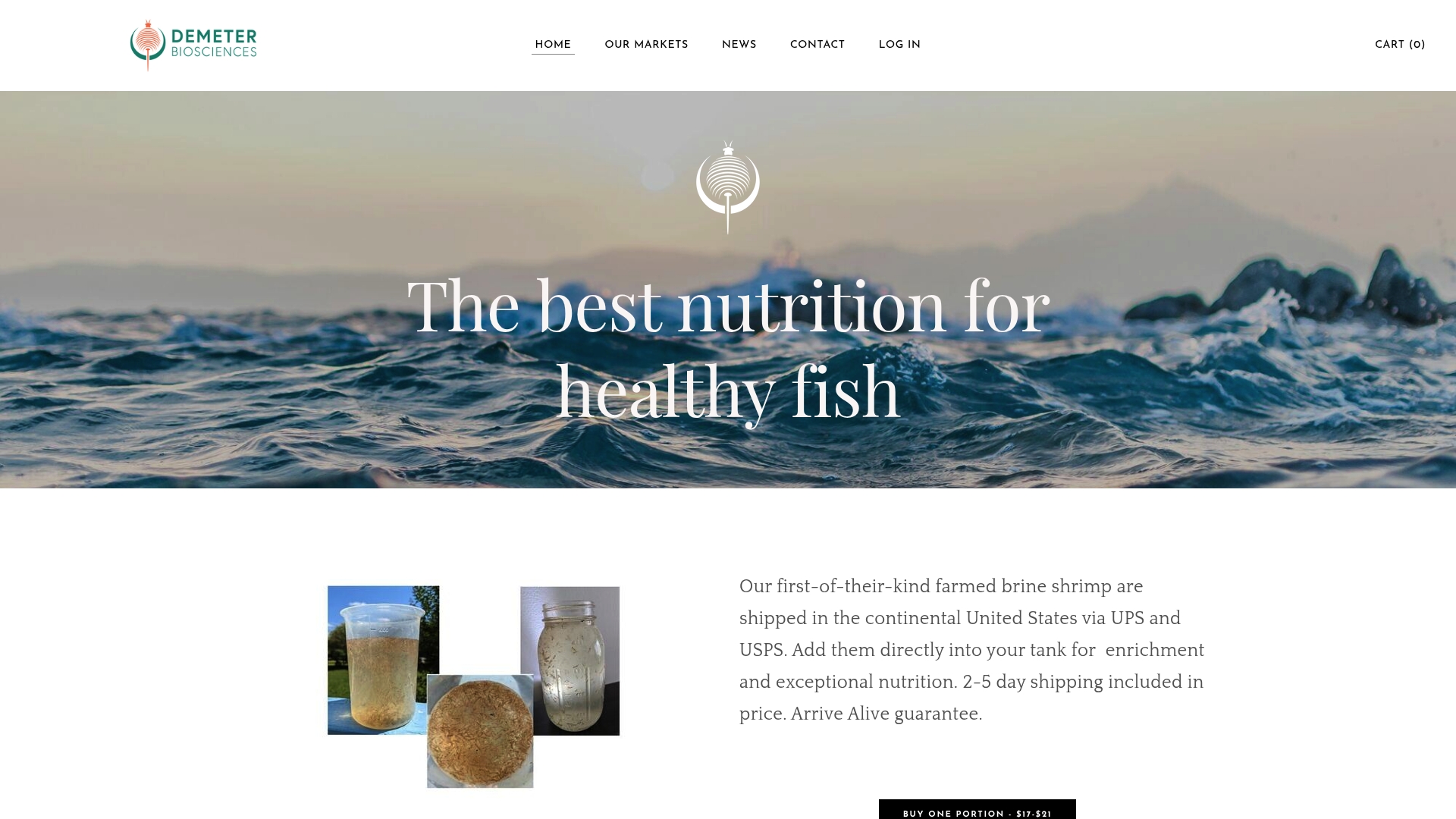
Ordering options cover the full range of commercial needs: trial shipments for buyers running their first live-feed evaluation, bulk orders for hatcheries with established weekly demand, and subscription plans that lock in delivery cadence and reduce procurement overhead. Every shipment comes from a controlled cultivation environment with biosecurity protocols built in, which matters when your larval tanks cannot afford a pathogen introduction.
Request a trial batch or get a bulk quote directly through the Demeterbioscience contact page. Bring your daily demand calculation and your proximate analysis requirements. They can match the documentation to your supplier acceptance criteria before the first box ships.
Useful sources for hatchery nutrition buyers
- FAO aquaculture nutrition guidance: Primary reference for crude protein requirement ranges (30%–55%) across farmed fish species and life stages.
- Alternative protein sources in aquafeed: Current scenario and future perspectives: Comprehensive review of plant, insect, and SCP inclusion data; covers replacement ranges and blending strategies.
- Protein sources in feed for farmed fish (Ifremer): Benchmark fishmeal data (65%–72% protein) and plant protein replacement evidence including ANF management.
- Artemia as a strategic live feed in fish and shrimp hatcheries: Literature review on Artemia enrichment technologies and their effects on larval growth and survival across commercial species.
- Hatchery nutrition: Preparing marine fish larvae for survival beyond the tank: Practitioner-focused piece on enrichment effects, co-feeding protocols, and behavioral robustness metrics.
- Conservation aquaculture research on larval nutrition and survival: Research warning against casual diet selection; supports staged trial design and behavioral monitoring as primary success metrics.
- Brine shrimp nutrition for commercial larval fish: 2026 guide: Practical enrichment protocols and feeding schedules for commercial larval operations using brine shrimp.