
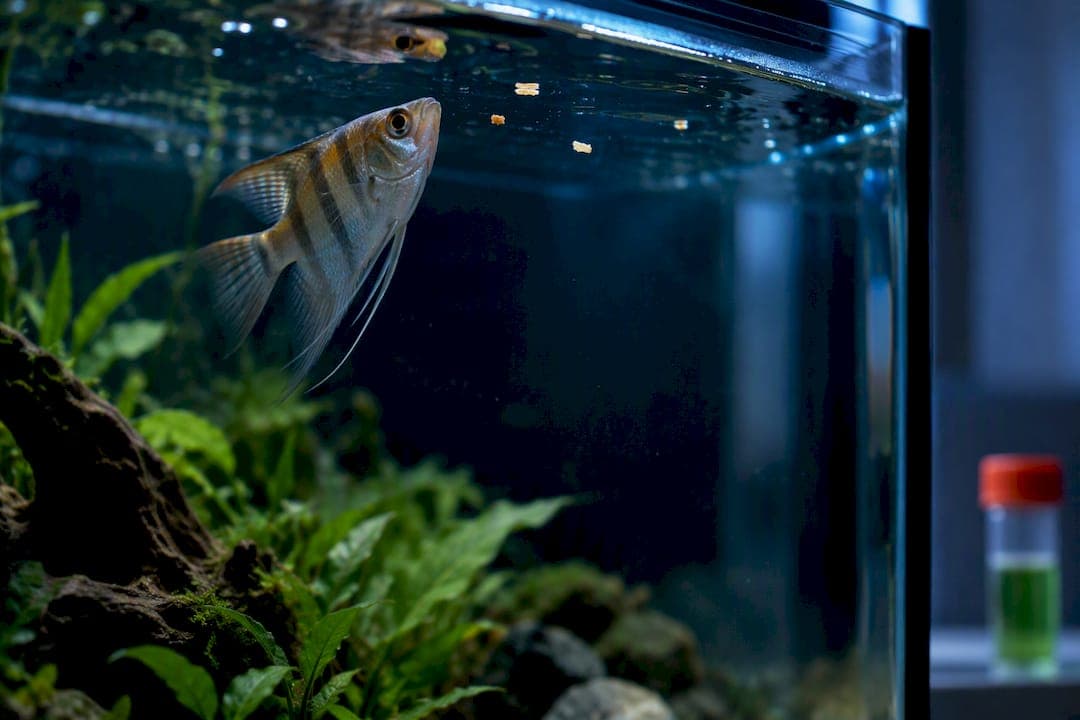
Most picky eating in aquarium fish comes down to environmental stress, not fussiness. Test your ammonia, nitrite, and temperature before you touch the food dish, and stop feeding if ammonia or nitrite are present, since leftover food only makes water quality worse. If just one fish refuses food while tankmates eat normally, suspect diet mismatch, bullying, or a recent stressor. If the whole tank goes off food at once, treat it as a water or oxygen emergency first.
TL;DR:
- Fish refusing food due to water quality issues require immediate testing of ammonia, nitrite, and temperature, with feeding stopped if ammonia or nitrite are present.
- A partial water change and increased aeration are critical first responses to ammonia spikes, and only one change should be made at a time to track effectiveness.
- Live foods like brine shrimp trigger hunting responses and can help restore appetite in picky or stressed fish, especially when shipped fresh and rinsed properly.
- Feeding should be tailored to species behavior, with small, frequent portions and targeted delivery methods used for shy or bullied fish, and new foods tested over 48 to 72 hours.
- Persistent refusal to eat after water stabilization suggests possible illness, requiring veterinary assessment to avoid unnecessary medication and ensure proper treatment.
Table of Contents
- Why Is Your Fish Not Eating? Common Causes and Quick Diagnostics
- The First 48 to 72 Hours: A Rescue Checklist
- What Food and Feeding Tactics Actually Work on Picky Eaters
- When a Picky Eater Might Actually Be a Sick Fish
- Why Live Brine Shrimp Break the Appetite Blockade
- A Calmer Approach Beats Frantic Experimentation
- Getting Fresh Live Brine Shrimp When You Need Them Fast
- Sources
- FAQ
Why Is Your Fish Not Eating? Common Causes and Quick Diagnostics
Appetite is often the first thing to go when water quality slips, before you see any visible sign of distress in the fish itself. Ammonia and nitrite suppress feeding response even at levels that look harmless on a strip test. Nitrite becomes toxic at concentrations as low as 0.10 mg/L, and proper nitrification needs alkalinity above 20 mg/L to keep the whole cycle stable, according to IFAS Extension. Low oxygen and swings in temperature do the same thing, quietly, before anything else looks wrong.
Recent disruptions matter more than hobbyists usually credit. A new tankmate, a big water change, a filter cleaning, or even a short power outage can trigger days of fasting. That is not random. Stress activates hormonal pathways in fish that directly suppress hunger signaling, a mechanism reviewed in teleost feeding research and one reason a seemingly minor tank disturbance causes a multi-day appetite crash.
Some causes have nothing at all to do with stress:
- Natural fasting cycles in certain species, especially before spawning or during temperature drops
- High-metabolism feeders (many marine species) simply needing more frequent small meals
- Bullying or food competition, where a subordinate fish physically cannot reach the food
- Physical limitation, like a fish too slow or too shy to compete at the surface
Keep a short log: which fish, what food, what time, how long before it was ignored. That pattern, more than any single symptom, tells you whether you are dealing with a water problem, a social problem, or a diet problem.
The First 48 to 72 Hours: A Rescue Checklist
Once you notice appetite loss, the clock matters. Follow this sequence rather than reacting all at once.
- Test immediately. Check ammonia, nitrite, nitrate, pH, and temperature. Note every number.
- Stop feeding if ammonia or nitrite is present. Extension guidance recommends holding off on feeding for 1 to 3 days to let the nitrogen cycle stabilize.
- Do a partial water change and boost surface agitation or aeration; both actions lower ammonia load and raise dissolved oxygen fast, a combination Texas A&M Extension identifies as the correct immediate response to an ammonia spike.
- Run a controlled feeding test. Offer one highly palatable food, once a day, and pull uneaten portions within minutes.
- Isolate or target-feed any fish being chased off food, and track its weight and behavior daily.
- Escalate to a vet if appetite has not returned after stabilizing water for 72 hours.
Pro Tip: Change only one variable at a time. If you swap food and change water and rearrange decor in the same afternoon, you will never know which fix actually worked.
What Food and Feeding Tactics Actually Work on Picky Eaters
Once water is stable, food choice and presentation decide whether appetite comes back. Live foods like brine shrimp, daphnia, and blackworms trigger a hunting response that no pellet can replicate. Movement and chemical cues in the water do the convincing, not the ingredient list. Frozen options like bloodworms and mysis shrimp come close, especially thawed in tank water rather than tap water, which avoids a temperature or chlorine shock right at the moment you need the fish to relax and eat.
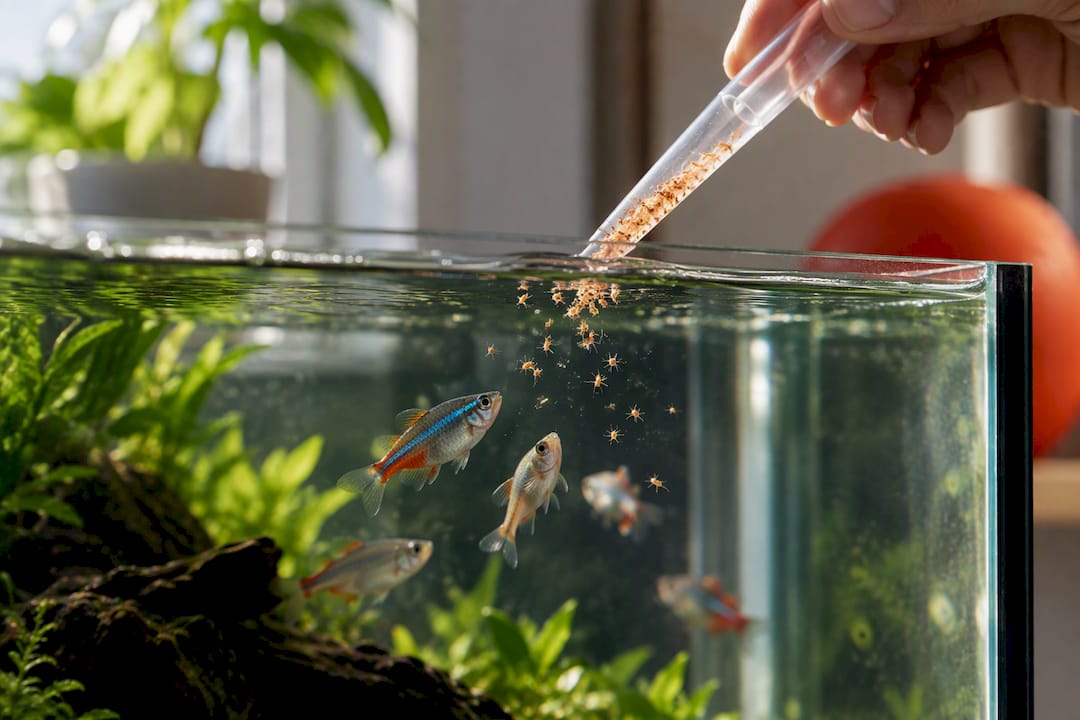
Prepared foods still matter for the long term, but form matters as much as formula. Match sinking or floating pellets to how the species actually feeds, and size the pellet to the fish's mouth, not to what is on the store shelf. Feed form and frequency both need to track species biology, particularly for high-metabolism feeders that expect several small meals rather than one large one, a point supported by research on feed attraction behavior.
Practical tactics that consistently help:
- Mix a small amount of live or frozen food into pellets rather than switching cold.
- Give any new food 48 to 72 hours before judging it rejected, per the single-variable testing approach extension and hobbyist guides both recommend.
- Use a feeding ring, syringe, or turkey baster to deliver food directly to a shy or bullied fish
- Cut portions smaller and feed twice rather than once, if a fish seems overwhelmed by a large offering
Pro Tip: A syringe aimed near a timid fish's hiding spot bypasses the entire tank hierarchy, so you are not fighting the pecking order every time you feed.
When a Picky Eater Might Actually Be a Sick Fish
Not every feeding problem is behavioral. Watch for red flags that point toward disease rather than stress: visible sores or lesions, rapid or labored breathing, clamped fins held tight against the body, or steady weight loss over more than a week despite stable water.
A vet trained in aquatic medicine will ask for your water history, check for external parasites or bacterial signs, and rule out systemic illness before recommending treatment, guidance University of Illinois veterinary staff emphasize for hobbyists tempted to self-diagnose.
While arranging care, keep water stable, offer small amounts of gentle, easily digestible food, and avoid excess handling. Resist the urge to dose the tank with random medications:
- Broad-spectrum "just in case" treatments can stress an already weakened fish
- Mixing multiple medications can interact unpredictably and mask real symptoms
- Treating the wrong pathogen delays the correct diagnosis and wastes recovery time
Why Live Brine Shrimp Break the Appetite Blockade
Live food works because it moves, and movement is the trigger a stressed or picky fish responds to before anything else. The scent trail and swimming motion of live prey activate a hunting instinct that flips a fish from ignoring food to chasing it, something prepared diets rarely replicate on their own.
Demeterbioscience raises its brine shrimp on a diet of Dunaliella microalgae in controlled, land-based systems, which the company states delivers at least 40% protein content without the seasonal starvation gaps common in wild-harvested shrimp. That consistency matters most exactly when you need it: during a rescue feeding, not months later.
A fish that has ignored pellets for a week will often strike at live brine shrimp within seconds. That single response is often the clearest diagnostic signal a hobbyist gets that the problem was behavioral, not physiological.
Rinse live shrimp before dosing, feed sparingly to avoid fouling water, and once appetite stabilizes, begin stepping prepared food back in alongside it.
A Calmer Approach Beats Frantic Experimentation
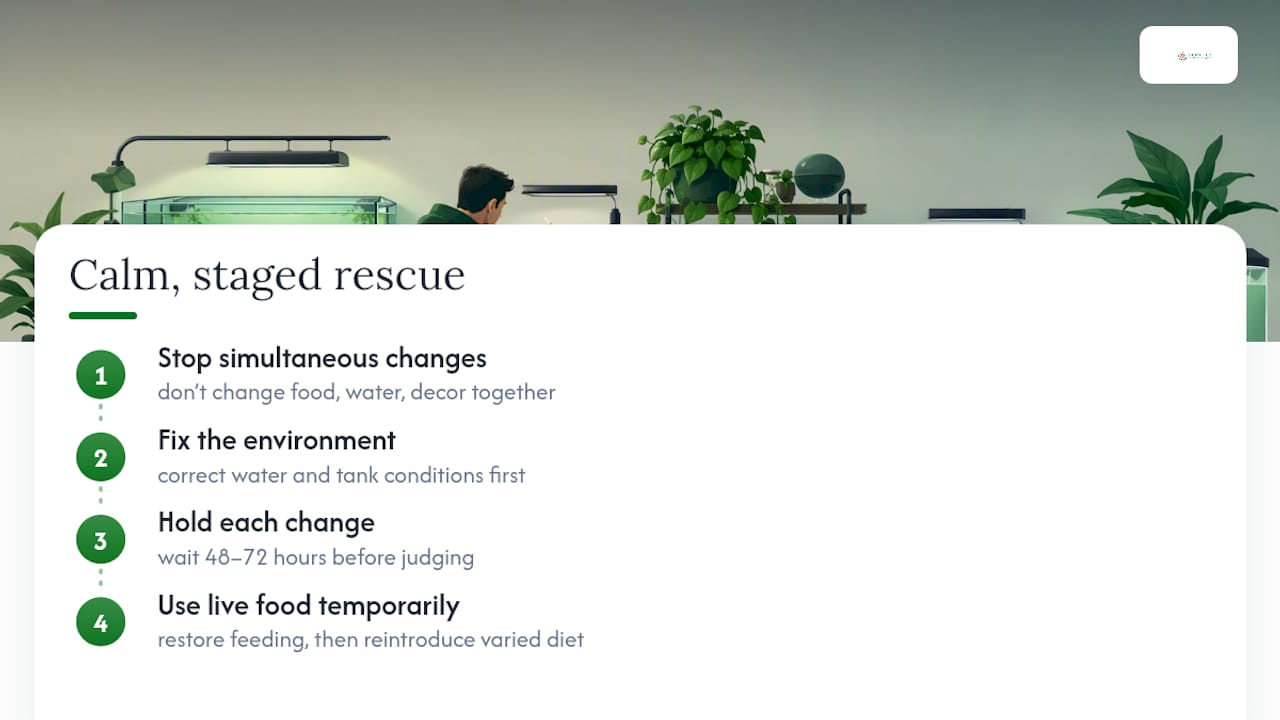
Most hobbyists panic and change three things at once: food, water, decor, sometimes even the tank mates. That makes the data useless. Fix the environment first, hold each change for 48 to 72 hours, and only then judge whether a food was truly rejected or just untested long enough.
Live food is a bridge, not a permanent diet. Use it to restore feeding response, then work back toward a varied, nutritionally balanced diet that does not depend on live shrimp forever.
— Demeter
Getting Fresh Live Brine Shrimp When You Need Them Fast
Demeterbioscience solves the one problem that stalls most rescue feeding attempts: getting genuinely fresh live brine shrimp before the appetite window closes. Because the shrimp are farmed on Dunaliella microalgae in controlled systems rather than wild-harvested, they arrive without the starvation stress and seasonal nutrient swings that can make wild shrimp a weaker rescue food.
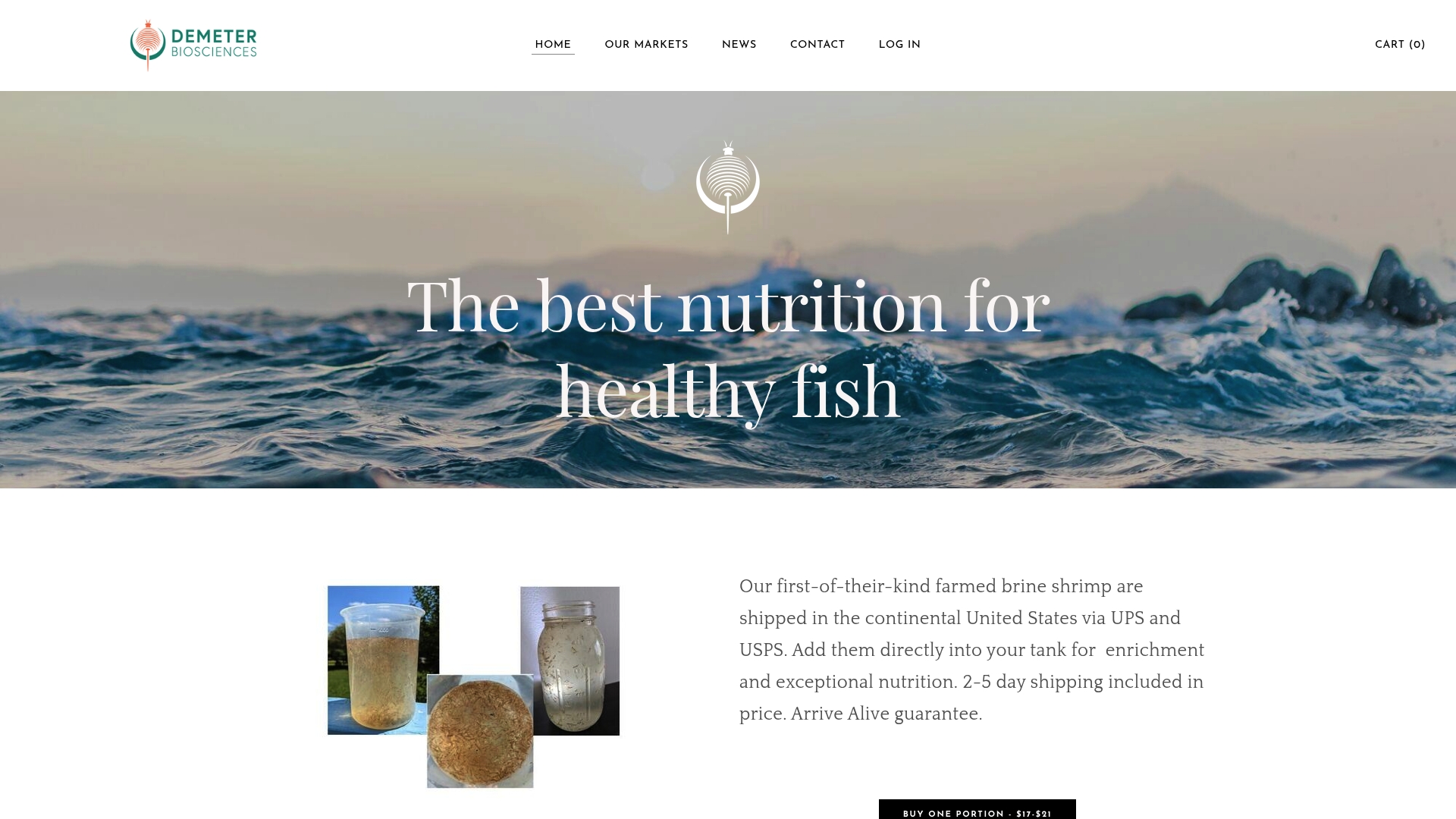
For a one-off rescue, order live brine shrimp directly, priced from $17 to $35 depending on quantity. If appetite problems tend to recur, or you would rather not scramble for live food during the next crisis, the Demeter Biosciences membership delivers a consistent monthly shipment for $25 per month. Rinse shrimp before dosing, feed only what gets eaten within minutes, and once your fish is reliably striking at food again, start stepping prepared diets back in. Order now to have live shrimp on hand before the next feeding refusal turns into a multi-day fast.
Sources
- IFAS Extension: Managing ammonia and nitrite in aquaria
- Neuroendocrine control of feeding in teleost fish (review)
- Ammonia in aquatic systems — Texas A&M Extension (technical bulletin)
- University of Illinois: Care and feeding of your pet fish (veterinary guidance)
FAQ
What does it mean when your fish doesn't want to eat?
It usually signals stress from water quality, a recent tank disturbance, or social pressure from tankmates rather than genuine pickiness. Test ammonia and nitrite first, since both suppress appetite before other symptoms appear.
How long can a sick fish go without eating?
Healthy fish typically tolerate several days without food while you stabilize water conditions, and extension guidance actually recommends withholding food for 1 to 3 days when ammonia is present. If refusal continues past 72 hours of stable water, treat it as a possible medical issue and consult an aquatic vet.
How do I encourage a picky fish to eat?
Offer live foods like brine shrimp or daphnia first, since motion and scent trigger a hunting response that pellets cannot match. Target-feed shy individuals with a syringe or feeding ring, and give any new food 48 to 72 hours before deciding a fish has rejected it.
What should I do first when my fish isn't eating?
Test your water immediately and stop feeding if ammonia or nitrite shows up, since leftover food only worsens the problem. Change one variable at a time, whether that is water quality, food type, or tank dynamics, and watch for 48 to 72 hours before making another change.
Does Demeterbioscience sell live food for picky eaters?
Yes. Demeterbioscience ships live brine shrimp directly, priced from $17 to $35 per order, plus a $25 monthly membership for recurring supply, both listed on the live brine shrimp product page.