
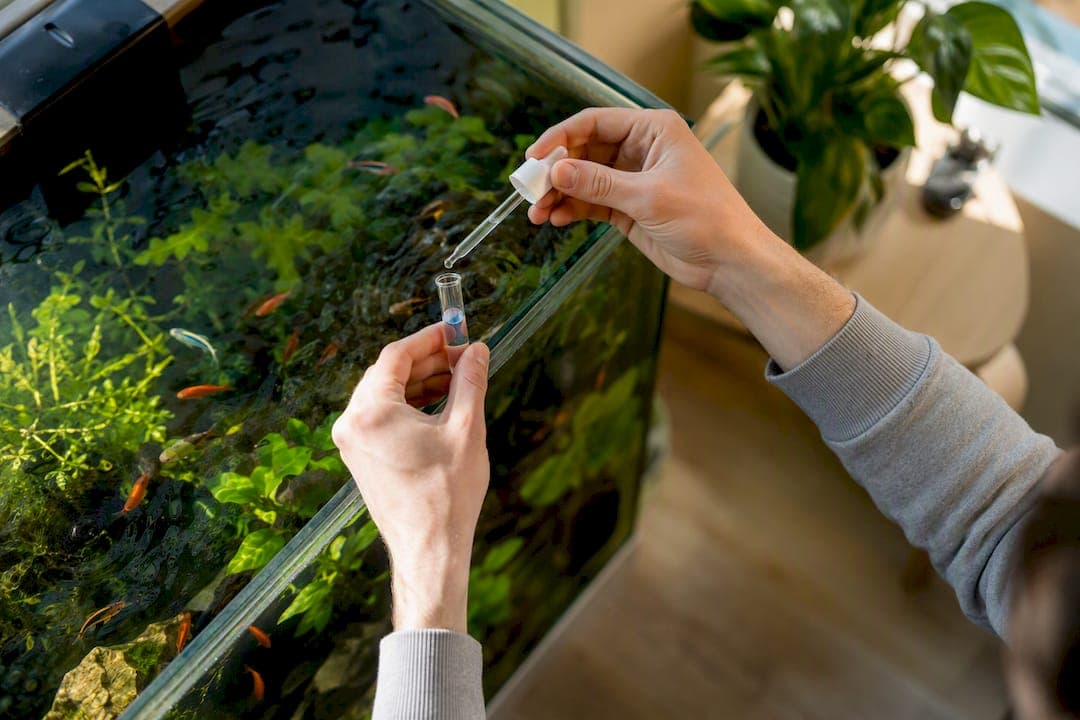
Stabilizing water quality, feeding a consistent and appropriate diet, quarantining every new arrival, and keeping filtration running clean is the single highest-impact routine for improving ornamental fish health. Most tank crises trace back to one of those four things slipping, not to some exotic pathogen. Follow the UF/IFAS guidance on fish health management, and prevention through nutrition, water quality, and biosecurity beats reactive treatment nearly every time.
Here's what to do today:
- Test ammonia and nitrite immediately if any fish looks off.
- Do a 50% partial water change if ammonia reads above 0 ppm.
- Stop feeding for 48 to 72 hours if fish show clamped fins or lethargy.
- Check your heater and thermometer against each other for accuracy.
- Confirm your filter is actually moving water, not just running.
- Isolate any fish added in the last two weeks in a separate quarantine tank.
- Count your fish load against your biofilter's maturity; young filters (built over roughly 8 weeks) can't handle heavy bioloads yet.
- Watch surface behavior. Fish gasping at the top usually means low oxygen, not disease.
It cuts the ammonia load your fish's gills are fighting and gives a stressed biofilter room to catch up before you add anything else to the water.*
Key Takeaways
Ornamental fish health improves most reliably when stable water quality, consistent nutrition, quarantine discipline, and clean filtration all run on a predictable schedule instead of getting addressed only after a problem appears.
| Point | Details |
|---|---|
| Water quality comes first | Keep ammonia and nitrite at 0 ppm and nitrate under 20 to 40 ppm; test weekly. |
| Build a maintenance rhythm | Daily visual checks, weekly water tests and partial changes, monthly filter care. |
| Quarantine every new fish | Isolate new arrivals for at least two weeks before adding them to the display tank. |
| Try physical fixes before medication | Fasting, water changes, salt, and temperature adjustment resolve many common issues within 48 to 72 hours. |
| Feed a consistent, quality diet | Rotate staples with a farmed live-food supplement like Demeterbioscience's brine shrimp for steadier nutrition and color. |
Table of Contents
- Daily, Weekly, and Monthly Maintenance for Better Fish Health
- What Water Parameters Actually Keep Fish Healthy?
- What Should You Feed Ornamental Fish for Better Health?
- How Long Should You Quarantine New Fish?
- How Do You Keep Filtration Clean Without Killing Beneficial Bacteria?
- What Are the First Signs of a Sick Fish?
- Can Live Brine Shrimp Improve Fish Health?
- A Practical Next Step for Better Fish Nutrition
- Frequently Asked Questions
- Sources
Daily, Weekly, and Monthly Maintenance for Better Fish Health
Good fish keeping isn't complicated once it's a habit. It's a short list of checks, repeated on a schedule, so small problems get caught before they become large ones.
Daily. Look at your fish. Are they swimming normally, eating with interest, breathing steadily? Feed small portions your fish finish in under two minutes. Glance at the thermometer and confirm the filter outflow is steady, not sputtering.
Weekly.
- Test ammonia, nitrite, nitrate, and pH with a liquid test kit.
- Change 10 to 25% of the water, matching temperature and dechlorinating first.
- Vacuum gravel to pull out uneaten food and waste before it breaks down.
- Check alkalinity and adjust if it's trending low, since low alkalinity lets pH crash overnight.
Monthly, or as needed.
- Rinse filter media in removed tank water, never tap water, to protect the bacteria colony living on it.
- Replace mechanical filter cartridges on the schedule your manufacturer recommends, staggered so you're never replacing everything at once.
- Inspect heaters, air pumps, and tubing for wear or mineral buildup.
Heavy waste producers like goldfish or large cichlids often need water changes on the more frequent end of that range. Species with delicate slime coats or high bioloads simply foul water faster than a small tetra will, so treat these ranges as starting points, not fixed rules.
What Water Parameters Actually Keep Fish Healthy?
Keep your parameters compatible with the species you're keeping, and the target is nearly always the same: zero ammonia, zero nitrite, and nitrate held under roughly 20 to 40 ppm for most home aquaria. Nitrifying bacteria that convert waste into safer compounds do their best work in a pH range around 7.2 to 8.2, according to tank cycling guidance from Duke University, so keeping pH inside that band supports both your fish and your filter.
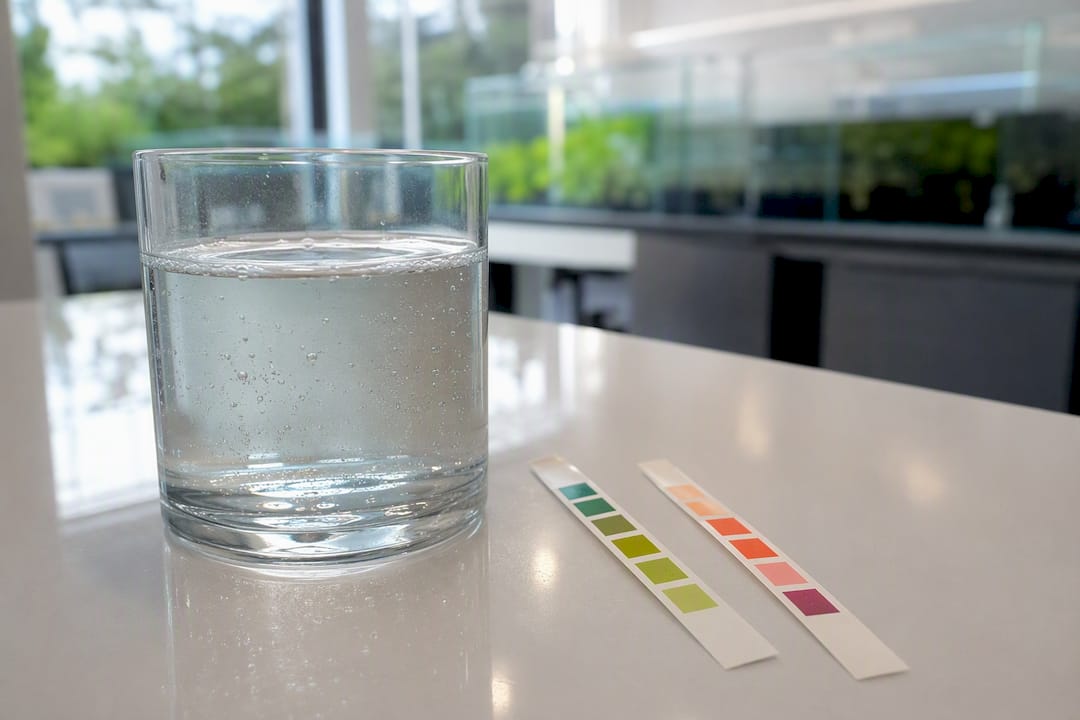
| Parameter | Safe range | Immediate fix if off |
|---|---|---|
| Ammonia | 0 ppm | 50% water change now; retest in a few hours. |
| Nitrite | 0 ppm | 50% water change; add aquarium salt if the species tolerates chloride. |
| Nitrate | Under 20–40 ppm | Water change 25% or more; reduce feeding |
| pH | Species-appropriate, biofilter favors 7.2–8.2 | Adjust gradually; never shock fish with a sudden swing |
| Alkalinity | Stable, not crashing | Add sodium bicarbonate in small doses, testing between additions |
| Dissolved oxygen | High, visible surface movement | Add an air stone or increase surface agitation |
When you need to correct a problem, work through it in order:
- Confirm the reading with a second test if it seems unusual.
- Perform a 50% water change for detectable ammonia or nitrite.
- Raise alkalinity gradually with small doses of sodium bicarbonate, checking again before adding more. Species with narrow pH tolerances need smaller, slower adjustments.
- Add aeration if fish are gasping at the surface, especially during hot weather when water holds less oxygen.
- Cut back feeding for a few days to reduce the waste load feeding the problem.
Pro Tip: Never scrub or replace all your filter media in one cleaning session. Rinse it gently in a bucket of removed tank water so the beneficial bacteria survive, and stagger which portion of the media you clean each month.
What Should You Feed Ornamental Fish for Better Health?
Feed a nutritionally complete staple diet in portions your fish finish within a minute or two, once or twice daily for most tropical species. Overfeeding is one of the most common causes of poor water quality and disease, according to PetMD's fish care guide, since uneaten food breaks down into exactly the ammonia spike you're trying to avoid.
- Pellets and flakes work as a reliable daily staple with predictable nutrition.
- Frozen and freeze-dried foods add variety with lower disease risk than most wild-caught live foods.
- Live food, when sourced from a controlled farming operation rather than wild harvest, adds palatability and nutritional density that dried foods can't fully replicate.
- Fast fish for a day or two during illness, transport stress, or before a long trip.
- An automatic feeder helps during vacations; a calibrated scoop keeps portions consistent day to day.
Rotating your staple foods and adding a high-quality live-food serving occasionally often shows up first in color and fin condition. A deeper feeding protocol, including nutritional guidance for captive fish, can help you build out a full weekly rotation.
Pro Tip: Watch what's left in the tank two minutes after feeding, not what you put in. If food is sinking uneaten, you're overfeeding regardless of what the container label suggests.
How Long Should You Quarantine New Fish?
Quarantine every new arrival for a minimum of two weeks before it touches your display tank. This single habit prevents more disease outbreaks than almost anything else on this list.
- Move new fish directly into a separate quarantine tank, never the main display.
- Observe feeding response and behavior daily. A fish that won't eat by day three needs closer attention.
- Stabilize water parameters in the quarantine tank before introducing anything else.
- Watch closely for external parasites like ich or flukes, since these show up fastest in the first week.
- Note whether a prophylactic freshwater or salt dip fits the species before deciding to use one.
- Escalate to targeted treatment or a fish veterinarian if symptoms persist past the observation window.
For acclimation, float the sealed bag for 15 to 20 minutes to equalize temperature, then mix small amounts of tank water into the bag over 15 to 30 minutes. Never pour bag water into your display system. Transport itself suppresses a fish's immune system, so quarantine protects both the newcomer and the tank it's about to join.
How Do You Keep Filtration Clean Without Killing Beneficial Bacteria?
Targeted disinfection lowers pathogen risk without wrecking your biofilter, as long as you separate what gets disinfected from what gets rinsed. Chlorine bleach works for short-contact disinfection of nets and buckets, followed by a full dechlorination rinse before reuse. Products like Virkon Aquatic® and iodine-based compounds handle equipment disinfection, and UV sterilizers treat water in the flow path itself. Always follow product label instructions and handle these with the same care you'd use around any household chemical.
- Rinse filter media in removed tank water, never disinfect it directly.
- Stagger media cleaning across multiple filter stages so you never wipe out the whole bacteria colony at once.
- Keep a separate net and siphon for quarantine tanks to avoid cross-contaminating your display.
- Consider a simple foot bath or dedicated tools if you manage multiple systems, a basic biosecurity habit borrowed straight from commercial aquaculture.
Pro Tip: Siphon uneaten food and organic debris out of the substrate every week rather than letting it accumulate. That single habit reduces disease pressure more than most disinfectants, and it doesn't touch your biological filter media at all.
What Are the First Signs of a Sick Fish?
Check water quality first. Most visible symptoms trace back to an environmental problem, not an infection, and they respond to physical treatment rather than medication.
- Observe the specific signs (clamped fins, gasping, white spots, lethargy) and test your water immediately.
- Apply physical first responses: stop feeding, change 50% of the water, add aquarium salt where the species tolerates it, and raise temperature slightly if that fits the species.
- Reassess after 48 to 72 hours before deciding on next steps.
- Escalate to targeted medication or a fish veterinarian for anything that looks internal, bacterial, or advanced.
A physical-first approach resolves a large share of common problems without ever reaching for medication, but some signs mean don't wait:
- Pinecone-like raised scales (dropsy)
- Deep or spreading ulcers
- Heavy, unexplained bleeding
- Lesions expanding rapidly over a day or two
The RSPCA's fish health checklist is a useful reference for comparing healthy versus sick signs when you're not sure which category a symptom falls into.
Can Live Brine Shrimp Improve Fish Health?
High-quality live food improves palatability, digestibility, coloration, and immune response when it supplements a balanced staple diet, rather than replacing it. Farmed brine shrimp raised on a consistent algae diet avoid the seasonal variability and starvation conditions common in wild-harvested supplies, which matters because a starved brine shrimp offers far less nutritional value than one raised on a steady food source.
- Use live brine shrimp as a supplement, not a sole diet, feeding it once or twice a week.
- Rinse or portion thawed servings carefully so uneaten shrimp don't foul the water.
- Choose a farmed source over wild-harvested product for more predictable nutrition batch to batch.
- Increase feeding frequency slightly, in small portions, during recovery or a color-enhancement cycle.
Pro Tip: During recovery from illness, a small live-food serving twice a week often restores appetite faster than pushing more staple food. Watch closely for anything left uneaten and pull it before it settles into the substrate.
A note on prevention and sourcing
Reactive medication treats a symptom. Reliable water quality and consistent, well-sourced nutrition prevent the problem from starting. That's the whole philosophy behind this checklist, and it's the same reasoning behind choosing a farmed, nutritionally consistent live-food source over wild harvest.
A Practical Next Step for Better Fish Nutrition
If you've read this far, you already know that inconsistent nutrition undermines every other routine on this list, and that's exactly where wild-harvested live food tends to fall short. Brine shrimp pulled from natural salt flats vary by season, sometimes arriving half-starved with a fraction of the protein content your fish need for real recovery or color development.
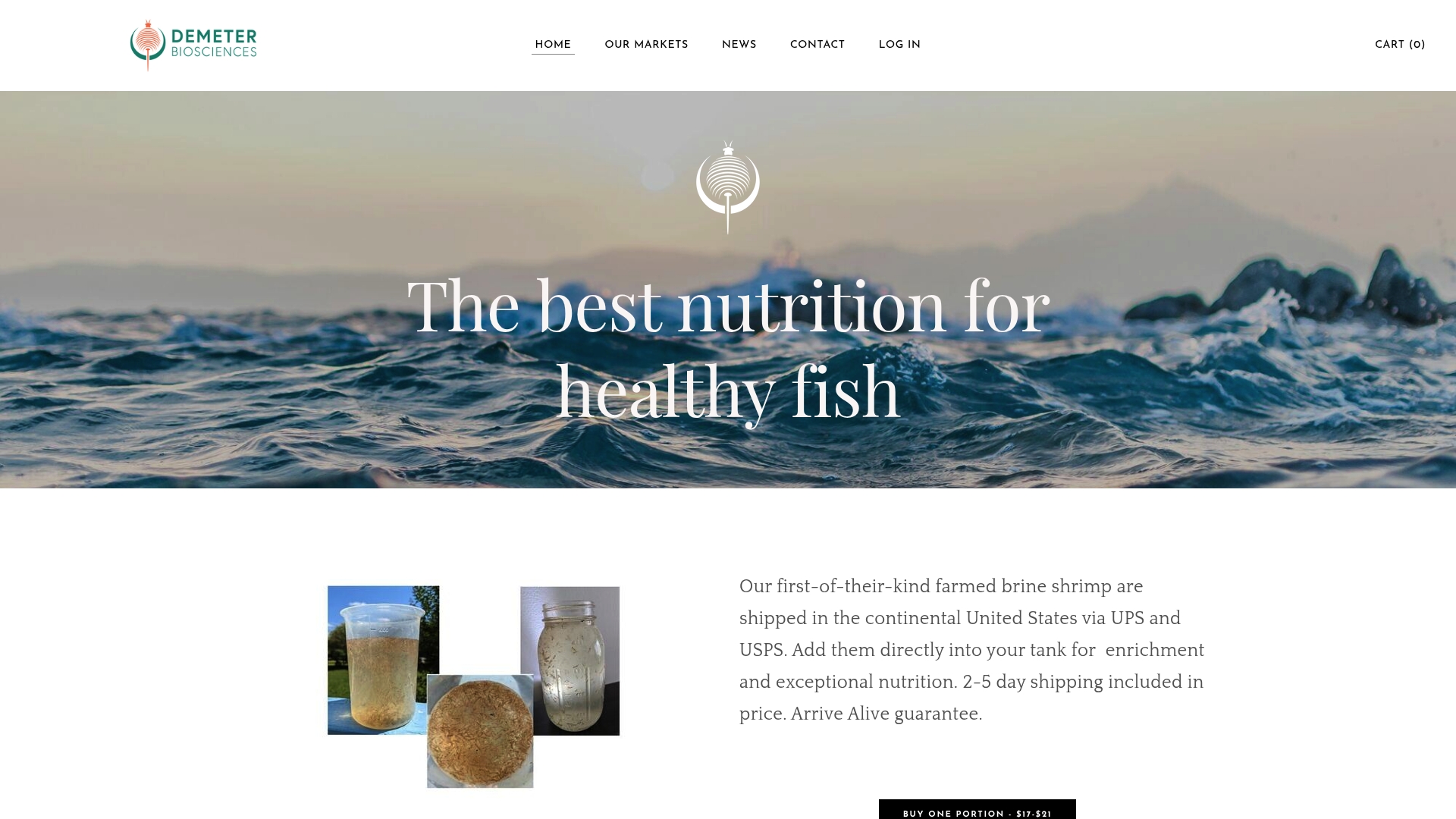
Demeterbioscience raises live brine shrimp on land-based, algae-fed systems that hold protein content at 40% or higher, batch after batch, without the seasonal swings wild harvest can't avoid. For hobbyists who want a dependable live-food supplement rather than a gamble on what a distributor happened to net that week, that consistency is the entire point. Options include single live brine shrimp orders for home tanks, subscription plans for recurring shipments, and bulk orders for local fish stores or institutions feeding larger collections. If you're ready to add a reliable live-food supplement to your rotation, place an order for live brine shrimp today or reach out through the contact page to discuss a subscription or bulk plan suited to your setup.
Frequently Asked Questions
What is the fastest way to improve ornamental fish health? Test your water immediately, change 50% if ammonia or nitrite show up, and hold off feeding for a day or two while you assess. That single move addresses the most common cause of sudden fish stress.
How often should I test my aquarium water? Weekly testing for ammonia, nitrite, nitrate, and pH catches problems before they become visible in your fish. Test more often during the first eight weeks of a new tank, while the biofilter is still maturing.
Do I really need to quarantine every new fish? Yes. A two-week quarantine period catches parasites and stress-related illness before they reach your established fish, and it costs far less than treating an outbreak in your main display.
Can live brine shrimp replace a staple diet? No. Live brine shrimp work best as a supplement fed once or twice weekly alongside a nutritionally complete staple diet, not as a fish's only food source.
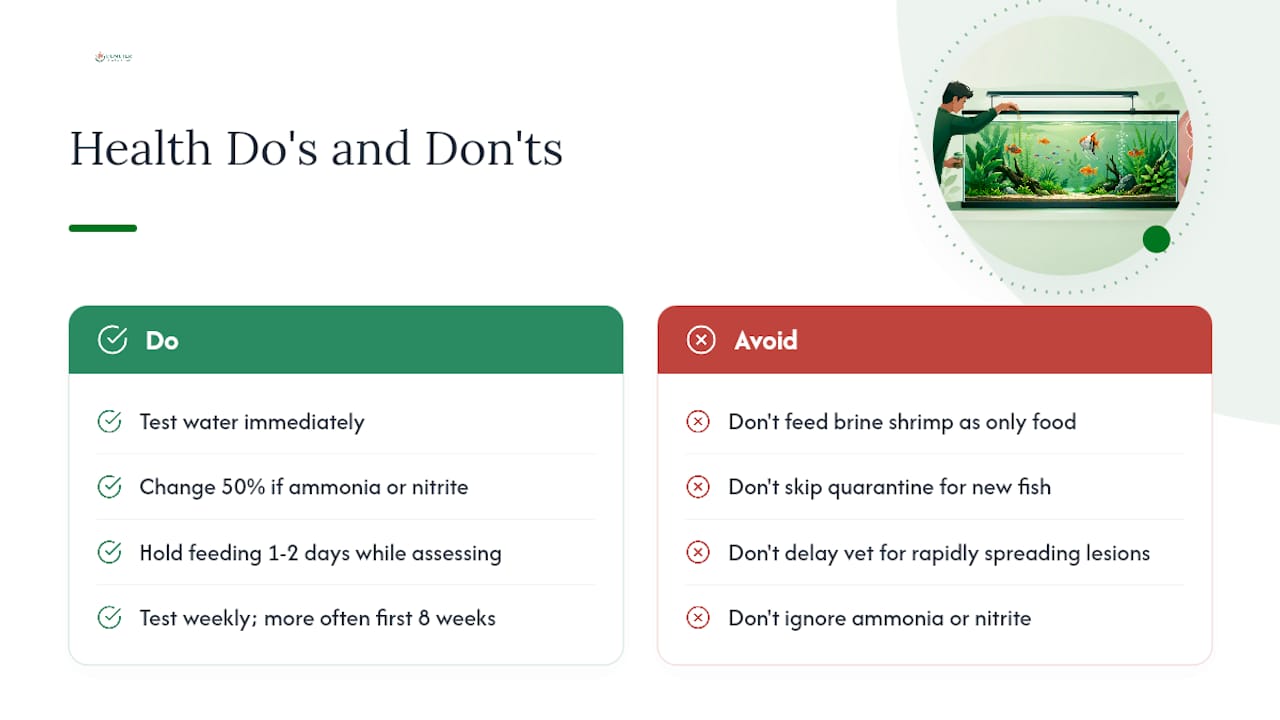
When should I see a fish veterinarian instead of treating at home? Escalate immediately for dropsy, deep ulcers, heavy bleeding, or lesions that spread within a day. Most other symptoms deserve 48 to 72 hours of physical treatment and water correction first.
Sources
- Fish Health Management Considerations in Recirculating Aquaculture Systems: Parts 1–3 (UF/IFAS)
- How To Take Care of Fish: Beginner Guide | PetMD
- Pet Fish Health - Tropical Fish Diseases - RSPCA
- Nitrogen cycle and tank cycling FAQ (Duke University)