
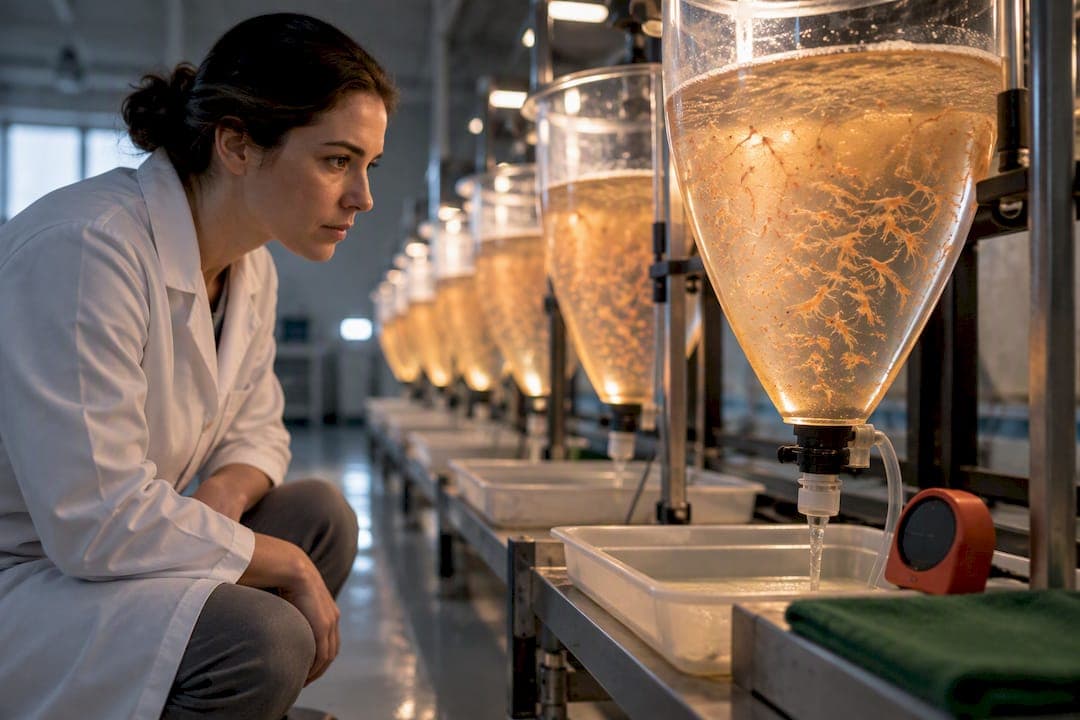
Live food turnover rate is how often you must hatch, replace, or restock live feed like brine shrimp to keep larvae fed on schedule without running short or wasting a batch. The working rule most hatcheries and hobbyists follow: hatch within 16 to 24 hours, feed enriched nauplii as soon as possible, hold any cold-banked surplus at most 24 hours, and keep decapsulated cysts in saturated brine for up to two months. Get this rhythm wrong and you either starve larvae of nutrients or throw away feed you paid for.
TL;DR:
- Most hatcheries and hobbyists should batch decapsulation for two to four weeks, storing cysts in saturated brine to ensure consistent hatch rates and simplifies inventory management.
- Calculating daily nauplii needs involves dividing total required nauplii by yield per gram of cysts—typically about 125,000 nauplii per gram at a 50% hatch rate.
- Cold banking hatched nauplii at 2 to 10 degrees Celsius extends viability up to 24 hours, with gradual warming necessary to prevent thermal shock.
- Using consistently microalgae-fed Artemia cysts lowers variability in hatchability and nutritional content, reducing frequency of recalibrating hatch and feed volumes.
- Decapsulation disinfects cysts and fosters biosecurity, making it a crucial step for preventing contamination and reducing emergency batch rejections.
Table of Contents
- How to calculate turnover rate: formula and worked examples
- Operational workflows and inventory tactics: batching, aliquoting, and cold-banking
- Timing, enrichment, and nutritional constraints that dictate turnover speed
- Biosecurity and quality-control practices to prevent turnover failures
- How consistent, microalgae-fed brine shrimp change turnover planning
- Trade-offs: picking a turnover rhythm that fits your labor and risk tolerance
- Quick next steps: Demeter supply options for stable turnover
- Sources
- FAQ
How to calculate turnover rate: formula and worked examples
Turnover frequency comes down to one equation: total daily nauplii required divided by nauplii produced per hatch batch. To get there, you need a few conversion numbers that hatchery and extension guides use consistently.
- Estimate cysts per gram, typically 200,000 to 300,000 depending on strain, according to Artemia production guidance.
- Apply a hatch rate, often around 50% but variable by strain and water quality, per the same production guidance.
- Multiply your target nauplii density by tank volume to get total nauplii needed, then work backward to cyst grams.
Say a hobbyist tank holds 20 liters and needs 5 nauplii per milliliter twice a day, which is 100,000 nauplii per feeding, or 200,000 nauplii daily. At 250,000 cysts per gram and a 50% hatch rate, that batch yields roughly 125,000 nauplii per gram of cysts, so the tank needs about 1.6 grams of cysts decapsulated daily, or a little over 11 grams for a week if batched.
A small hatchery running six larval tanks at the same density needs six times that volume, plus a safety margin of 15 to 20% to cover uneven hatch rates and handling loss. That pushes weekly cyst prep closer to 80 grams rather than a flat multiple, which is why most small operations batch and store rather than decapsulate daily.
Operational workflows and inventory tactics: batching, aliquoting, and cold-banking
Once you know your daily and weekly cyst needs, the real work is building a routine that does not require decapsulating chemicals every single day. Decapsulated cysts stored in saturated brine at 330 grams of sodium chloride per liter can sit refrigerated for up to two months, according to Virginia Tech Extension. This lets you batch a month's worth of cysts in one session and pull daily aliquots as needed.
- Decapsulate a batch large enough for two to four weeks, then store it in saturated brine (330 g NaCl per liter) in the refrigerator.
- Homogenize the brine container by stirring thoroughly before drawing each aliquot, since decapsulated eggs settle fast and uneven draws cause inconsistent hatch yields.
- Hatch daily if you run multiple tanks with staggered feeding times, or hatch weekly with cold-banked surplus if your schedule is more forgiving.
- Keep a simple checklist tracking brine batch date, aliquot amounts pulled, and hatch outputs so drift in yield gets caught early.
For nauplii you have already hatched but cannot use immediately, a cold bank held at 2 to 10 degrees Celsius with aeration keeps them viable for up to 24 hours, per the same extension source. Warm them gradually to ambient temperature before feeding to avoid thermal shock. When refrigeration capacity is limited, rotating frozen saline ice bottles in the cooler can hold that temperature range for roughly a 12-hour cycle, a practical workaround for smaller setups without dedicated cold storage. Our feeding schedule checklist lays out daily and weekly templates you can adapt to either rhythm.
Pro Tip: Label every brine batch with the decapsulation date so nothing sits past the two-month window unnoticed.

Timing, enrichment, and nutritional constraints that dictate turnover speed
Turnover speed is not just about convenience, it is dictated by biology. Decapsulated eggs hatch in 24 to 48 hours once placed in hatching solution, according to UF/IFAS Extension, and freshly hatched nauplii carry their richest internal lipid reserves in the first several hours after hatching. Enrichment windows, when Artemia are fed microalgae emulsions to boost fatty acid content, typically run 4 to 24 hours before feeding, and that window matters because larval fish and shrimp cannot synthesize certain fatty acids themselves.

A 12-day enrichment trial increased DHA, DPA, and ARA content in Artemia and improved hepatopancreas health markers in Penaeus vannamei postlarvae, according to peer-reviewed research, underscoring why timing enrichment correctly matters more than simply hatching more Artemia. Early larval stages with the highest nutritional demands need the fastest turnover, freshly enriched nauplii fed within hours of hatching, while juvenile stages with established digestive systems tolerate a slower, more batched schedule. Our enrichment timing guide covers the practical side of matching enrichment windows to your feeding calendar.
Biosecurity and quality-control practices to prevent turnover failures
Decapsulation does more than improve hatchability, it also disinfects the cyst shell, which the FAO Artemia Manual treats as a core biosecurity step. Skipping or rushing this step raises the risk of bacterial contamination that can wipe out a hatch or introduce pathogens into larval tanks.
- Keep decapsulation equipment separate from feeding and harvesting tools to avoid cross-contamination between batches.
- Spot-check hatch rate and nauplii mobility under a microscope or hand lens before committing a batch to feeding.
- Watch for off smells, cloudy brine, or sluggish nauplii, all signs a batch should be discarded rather than fed.
- Disinfect hatching cones and aeration lines between batches, following the equipment-separation protocols the FAO manual recommends.
When a batch fails any of these checks, restart rather than stretch it. A compromised batch risks larval health far more than the cost of the cysts you discard.
How consistent, microalgae-fed brine shrimp change turnover planning
Wild-harvested Artemia cysts vary in protein and lipid content depending on season and harvest location, which forces constant recalibration of hatch density and feeding volume. Demeter Biosciences raises brine shrimp on a diet exclusively of the algae Dunaliella in controlled, land-based systems, which the company states delivers at least 40% protein content consistently, avoiding the starvation conditions and seasonal swings common in wild harvests.
That consistency changes turnover math: when protein and lipid profiles do not shift batch to batch, you stop re-testing hatch density and feeding volume every time a new cyst shipment arrives. For stores, museums, and hatcheries running predictable feeding schedules, that reliability matters more than shaving pennies off a bulk cyst price. Our nutrition breakdown covers how microalgae-fed profiles compare to wild-harvested variability in more detail.
Trade-offs: picking a turnover rhythm that fits your labor and risk tolerance
Daily hatching earns its labor cost only when tank density or species sensitivity demands freshly enriched nauplii every feeding. Everyone else does better batching cysts and cold-banking nauplii, trading a little nutritional freshness for predictable labor. Reliable, farm-raised live feed shifts that trade-off further toward less frequent hatching since you are no longer compensating for wild harvest variability, and it eases pressure on wild cyst stocks in the process.
— Demeter
Quick next steps: Demeter supply options for stable turnover
Turnover planning gets simpler when the feed itself is not the variable. Demeter Biosciences sells live brine shrimp as one-off shipments for hobbyists testing a new schedule, a monthly membership at $25 per month for recurring feeding needs, and bulk orders for stores, museums, and hatcheries that need volume without daily hatching.
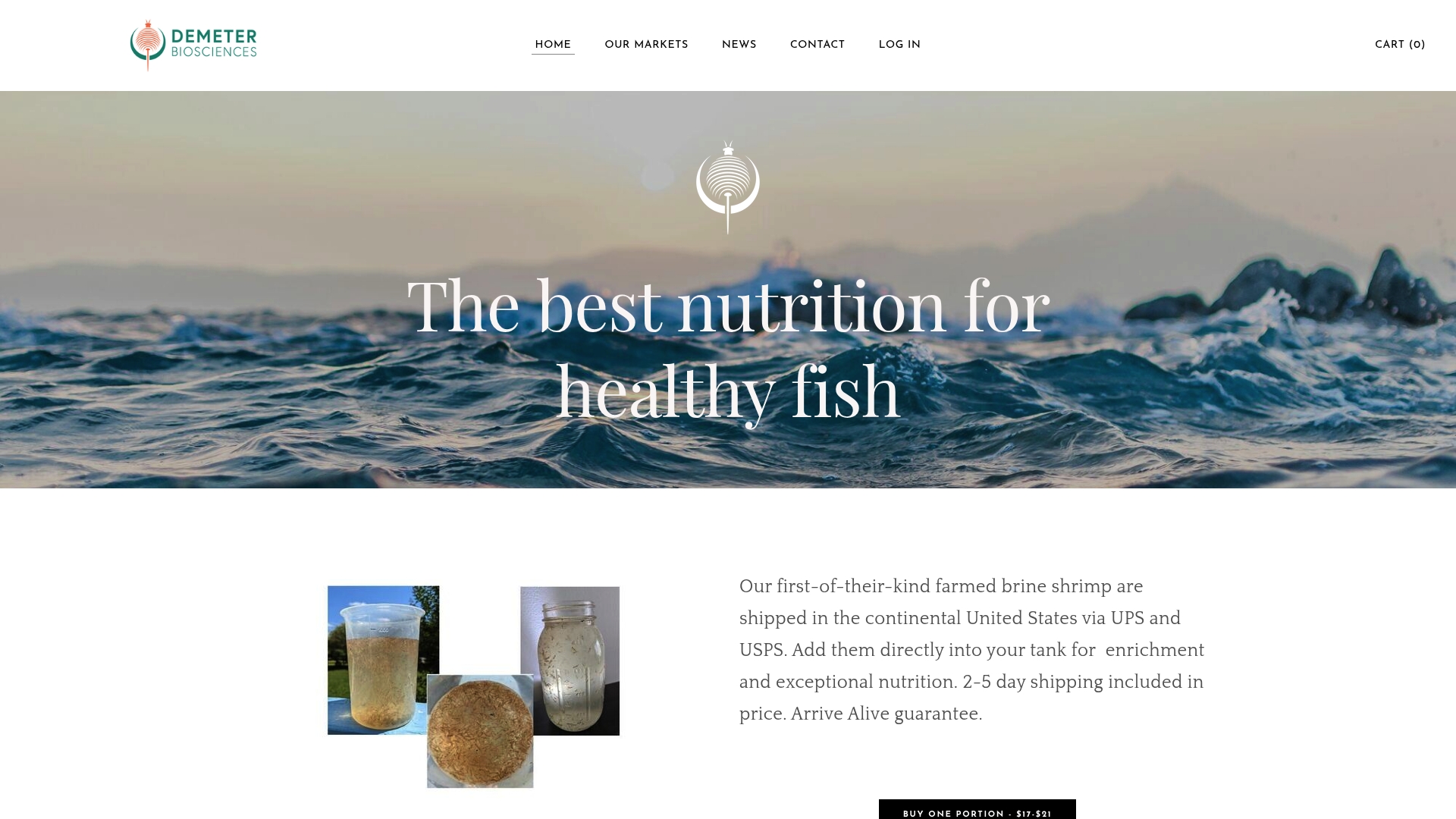
- Order a one-off batch of live brine shrimp, priced $17 to $35, to test how consistent supply changes your feeding routine.
- Choose the membership if your turnover schedule is recurring and predictable, since it removes the guesswork of timing individual orders.
- Go bulk if you run a store or institutional tank system where volume, not frequency, drives your turnover math.
Sources
- Artemia culture and storage (VT Extension / related factsheet)
- Decapsulating brine shrimp eggs (UF/IFAS Extension)
- Effect of HUFA in enriched Artemia on growth and health of Penaeus vannamei postlarvae (PMC)
FAQ
How long can decapsulated brine shrimp eggs be stored?
Decapsulated cysts stored in saturated brine at 330 grams of sodium chloride per liter and refrigerated can last up to two months, according to Virginia Tech Extension. This lets you batch decapsulation once and aliquot smaller amounts as you need them.
How long can hatched brine shrimp nauplii be held before feeding?
Hatched nauplii can be cold-stored at 2 to 10 degrees Celsius with aeration for up to 24 hours, per the same extension guidance. Warm them gradually before feeding to avoid shocking the larvae with a sudden temperature change.
How do I calculate how many cysts I need per day?
Divide your total daily nauplii requirement by the nauplii yield per gram of cysts, which is roughly 125,000 nauplii per gram at a 250,000 cysts-per-gram strain and a 50% hatch rate, based on figures from Artemia production guidance. Adjust for your tank's target density and add a safety margin for uneven hatch rates.
Why does decapsulation matter for turnover reliability?
Decapsulation disinfects the cyst's outer shell and improves hatchability, which the FAO Artemia Manual treats as a core biosecurity step. Skipping it raises the risk of contamination that can force an emergency batch restart.
Does enrichment timing affect how fast I need to turn over feed?
Yes, freshly hatched and properly enriched nauplii carry higher levels of DHA, DPA, and ARA, and a 12-day enrichment trial showed measurable improvements in postlarval health markers, according to peer-reviewed research. Feeding enriched nauplii soon after the enrichment window closes preserves those nutritional gains rather than letting them degrade.