
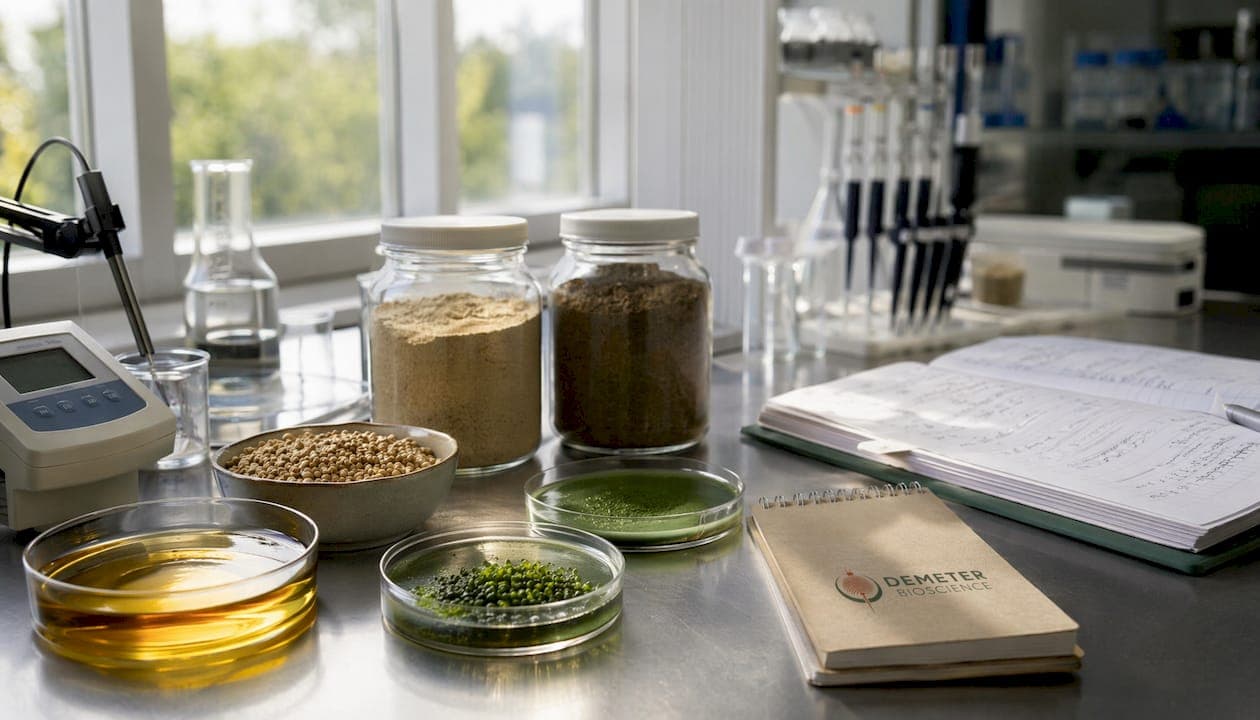
Controlled environment aquaculture relies on a precise mix of feed types to meet the nutritional demands of captive fish at every life stage. The main categories, as defined by aquaculture feed classification, are natural live feeds, supplementary feeds, and complete formulated feeds. Each plays a distinct role:
- Complete formulated feeds: Extruded or pressure-pelleted diets supplying all required protein, lipids, carbohydrates, vitamins, and minerals. Typical macronutrient targets are protein at 18–50%, lipids at 10–25%, and carbohydrates at 15–20%, with ash below 8.5% and moisture below 10%.
- Supplementary feeds: Partial diets used alongside natural food sources, common in pond-based or semi-intensive systems.
- Natural live feeds: Organisms like brine shrimp (Artemia), rotifers, and copepods, fed directly to larvae or juveniles that cannot yet accept dry feeds.
Key ingredient examples found across controlled environment fish feeds include fishmeal, fish oil, soybean meal, microalgae protein (such as Nannochloropsis and Dunaliella), insect meal (black soldier fly larvae), and processed brine shrimp. Feed forms range from floating extruded pellets and sinking pressure-pelleted granules to live organisms and freeze-dried preparations.
What types and compositions define fish feeds in controlled environments?
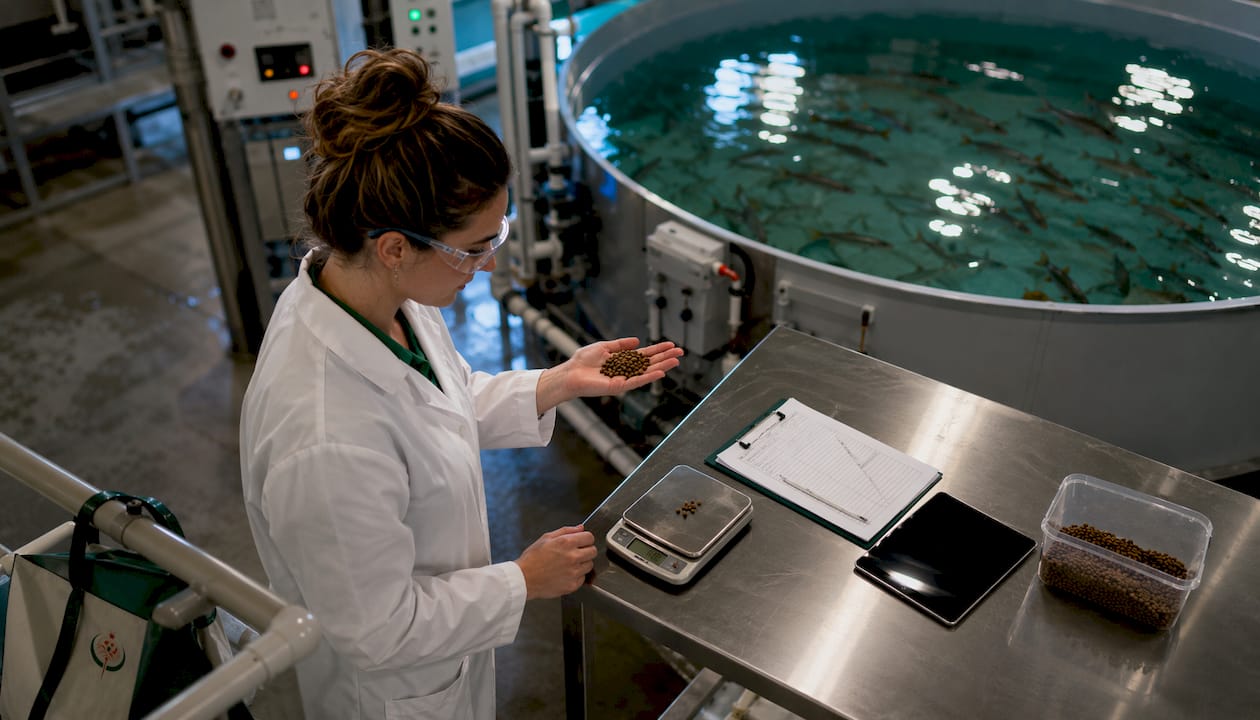
Controlled fish feed methods in intensive recirculating aquaculture systems (RAS) and flow-through tanks almost always center on complete diets, because fish confined at high density cannot forage freely. The nutritional profile of any given feed shifts significantly by species and life stage. Salmon smolts need high-lipid, high-protein diets; tilapia fingerlings tolerate more plant protein; catfish grow well on moderate-protein sinking pellets.
| Feed Component | Typical Range in Complete Diets | Common Sources |
|---|---|---|
| Protein | 18–50% | Fishmeal, soybean meal, insect meal, microalgae |
| Lipids | 10–25% | Fish oil, algal oil, canola oil |
| Carbohydrates | 15–20% | Wheat, corn, rice bran |
| Ash | <8.5% | Mineral premixes |
| Moisture | <10% | Controlled during manufacturing |
| Vitamins & minerals | Trace | Premix blends |
Major ingredient categories break down as follows:
- Animal proteins: Fishmeal remains the benchmark for amino acid balance and palatability, though supply constraints push formulators toward alternatives.
- Plant proteins: Soybean meal, wheat gluten, corn gluten, peas, canola, and lupine are all in active commercial use. The FDA approved taurine in 2018 as a supplement that helps plant-protein diets match the functional profile of fishmeal.
- Microbial and algal proteins: Nannochloropsis oculata co-product, Spirulina, and Dunaliella supply essential amino acids, omega-3 fatty acids, and bioactive compounds that support immune function.
- Insect meals: Black soldier fly (Hermetia illucens) larvae meal is now commercially scaled and used in salmon, trout, and tilapia feeds.
- Lipid sources: Fish oil, algal oil (rich in DHA), and terrestrial plant oils each contribute different fatty acid profiles.
Plant-based proteins carry a catch. Anti-nutritional factors like trypsin inhibitors and phytate reduce digestibility unless the meal is fermented or heat-treated before inclusion. Skipping that step wastes protein and can suppress growth.
How do sustainability pressures shape aquaculture feed choices?
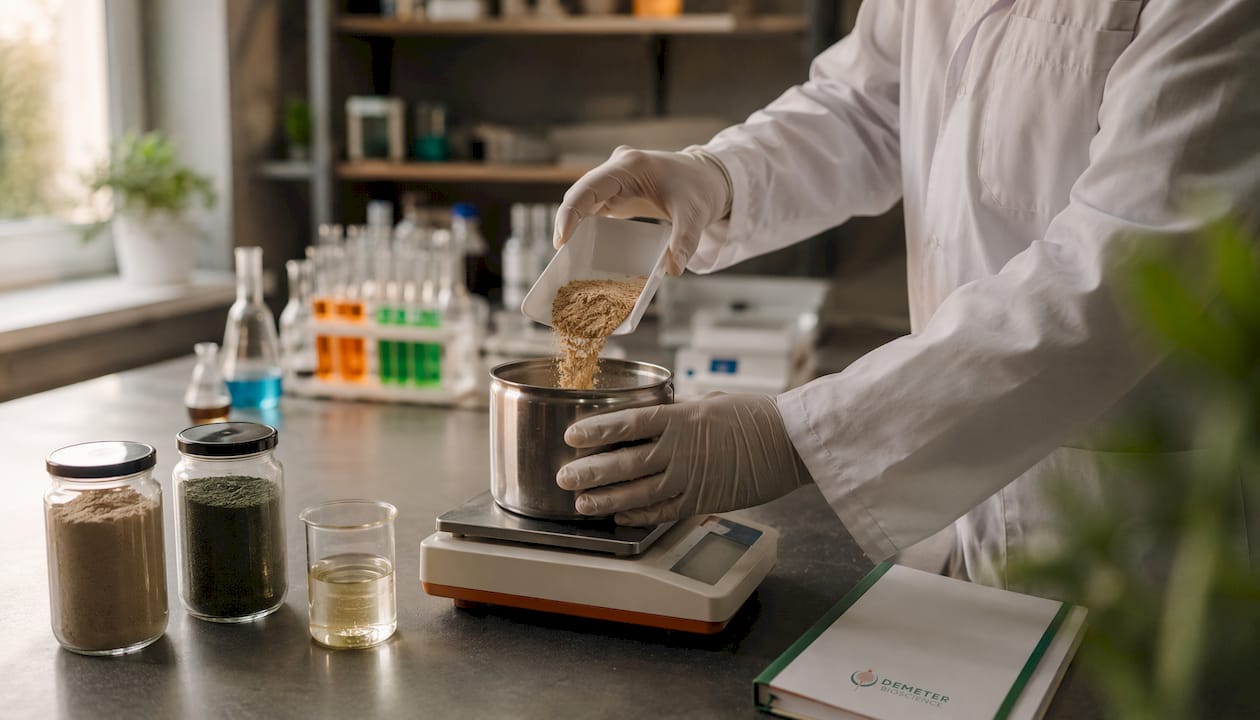
Traditional fishmeal and fish oil production depends on wild forage fish stocks, a supply chain that faces both ecological limits and price volatility. The shift toward microalgae and insect-based meals addresses both problems at once: these ingredients can be produced on land, require no wild-catch inputs, and offer bioremediation potential in certain production systems.
Sustainability advantages of emerging feed ingredients:
- Microalgae supply marine-derived omega-3 fatty acids (EPA and DHA) without drawing on ocean stocks, and support fish immune function through bioactive pigments and polysaccharides.
- Insect meal closes a nutrient loop by converting organic waste streams into high-protein biomass.
- Fermented agricultural by-products, such as rice bran, can fully replace soybean meal in tilapia diets with no measurable loss in growth, feed conversion, or survival.
- Algal oil used alongside marine by-products in rainbow trout feeds maintained growth performance and actually improved fillet DHA content compared to conventional formulations.
Key finding: A defatted Nannochloropsis oculata co-product replaced 33% of fishmeal in tilapia diets without compromising growth or flesh quality, demonstrating that microalgae co-products are ready for commercial-scale inclusion today, not just in the lab.
Nutrient leaching from poorly manufactured pellets creates a separate environmental problem: dissolved nitrogen and phosphorus drive eutrophication in receiving waters. Binders like carboxymethyl cellulose maintain pellet integrity under water, limiting that leaching and reducing waste load on filtration systems. The broader push toward "zero-catch" feeds, prioritizing microalgae and insect proteins, aligns with circular bioeconomy goals and reduces the aquaculture sector's dependence on wild fisheries.
What specific feed products and live feeds are used in US controlled aquaculture?
Commercial feed formulations in the United States vary by target species, but several examples represent the current state of the art.
Formulated feeds by species:
- Tilapia (RAS and pond systems): Sinking pellets with 28–35% protein, typically combining soybean meal, corn gluten, and fishmeal. Fermented rice bran and microalgae co-products are increasingly substituted at partial inclusion rates.
- Salmonids (flow-through and RAS): High-energy extruded floating pellets, 40–50% protein and 20–25% lipid, with fish oil and algal oil blends to maintain omega-3 profiles. Insect meal inclusion at 10–20% is commercially viable for Atlantic salmon.
- Channel catfish (pond and tank systems): Floating pellets at 28–32% protein, historically soybean and cottonseed meal based, with fishmeal added for juveniles.
Live and processed feeds:
-
Brine shrimp (Artemia): The standard first-feed for marine fish larvae and a staple enrichment vehicle for freshwater juveniles. Wild-harvested Artemia cysts are subject to seasonal quality variation and can arrive in nutritionally depleted states. Demeterbioscience's farmed live brine shrimp are raised on Dunaliella algae in a land-based controlled system, delivering a guaranteed minimum of 40% protein and consistent omega-3 content regardless of season.
-
Rotifers and copepods: Used for first-feeding marine larvae too small to accept Artemia.
-
Freeze-dried and processed Artemia: Shelf-stable alternatives for facilities without live culture capacity, though nutritional profiles are lower than fresh live product.
Pro Tip: When integrating live brine shrimp into a formulated feed program, time live feed offerings to coincide with the transition from yolk-sac absorption to active feeding. Gut-loaded, algae-fed Artemia at this stage deliver essential fatty acids that dry feeds often cannot replicate at the larval scale.
Demeterbioscience's bulk brine shrimp orders serve museums, local fish stores, and larger aquaculture operations that need consistent supply without the variability of wild harvest. For aquaculture professionals exploring sustainable feed ingredients, the controlled cultivation model addresses the core problem with wild-caught live feeds: you never really know what you are getting.
How are aquaculture feeds manufactured?
Feed manufacturing method determines buoyancy, durability, digestibility, and ultimately how well fish convert feed to body mass. Two processes dominate commercial production.
Extrusion forces a moistened, heat-treated mash through a die under high pressure and temperature. The rapid pressure drop at the die exit causes steam expansion, creating a porous, floating pellet. Extruded feeds cost more to produce but offer real operational advantages: floating pellets let farmers observe feeding intensity directly and adjust rations in real time, which is critical in RAS where overfeeding degrades water quality fast.
Pressure pelleting compresses feed ingredients through a die without the steam-expansion step, producing a denser, sinking pellet. Sinking feeds suit bottom-feeding species like catfish and shrimp, which will not accept floating product.
Pellet size is not a minor detail. Pellets sized at 20–30% of a fish's mouth gape optimize intake efficiency and reduce the energy fish spend manipulating oversized pieces, making selection of τροφές για μικρά ζώα crucial in small-scale aquaculture systems. Getting this wrong at the larval stage can suppress growth measurably. Binders such as carboxymethyl cellulose and selected grain starches hold pellets together in water, preventing the nutrient leaching that fouls tank water and wastes feed cost.
How does feed quality affect fish growth and health in controlled settings?
Feed is the single largest operating cost in most aquaculture systems, accounting for roughly 60% of the cost of growing fish. That figure alone explains why feed conversion ratio (FCR) and the Economic Conversion Ratio (ECR) get so much attention from production managers. A feed that costs less per kilogram but converts poorly ends up more expensive per kilogram of fish produced.
Protein quality and amino acid balance drive growth rate more than any other single variable. Farmed fish typically consume feed at 1–5% of body weight per day, with feeding frequency adjusted by life stage: larvae may need feeding nearly hourly, while large catfish in pond systems are often fed once daily. In indoor intensive systems, feeding fish up to five times per day maximizes growth at optimal temperatures.
Feed also shapes fish health directly. Microalgae-derived omega-3 fatty acids support immune response and reduce inflammatory stress, particularly relevant in high-density RAS where disease pressure is elevated. Consistent nutrition for captive specimens reduces the metabolic stress that comes from variable feed quality, a problem endemic to wild-harvested live feeds.
What regulatory standards govern aquaculture feed quality in the US?
The FDA regulates aquaculture feeds as animal food under the Federal Food, Drug, and Cosmetic Act. Feed ingredients must be either Generally Recognized as Safe (GRAS), approved food additives, or covered by a valid New Animal Drug Application (NADA). The 2018 FDA approval of taurine as a feed ingredient was a direct result of research showing that plant-protein-heavy diets were deficient without it.
NOAA supports feed quality indirectly through its National Marine Aquaculture Initiative, which has funded alternative feed research since 1998 across species including black sea bass, cod, flounder, and sablefish. The NOAA/USDA Alternative Feeds Initiative, launched in 2007, accelerated the development and regulatory acceptance of novel ingredients now in commercial use.
State-level regulations add another layer, particularly around discharge limits for net-pen operations. The standard in US jurisdictions is typically "no net accumulation" of feed waste on an annual basis, which pushes producers toward high-efficiency feeds and precise feeding technology. Quality control at the manufacturing level focuses on moisture content, pellet durability, and mycotoxin testing, since feed stored improperly for more than 90–100 days risks mold growth that can be acutely toxic to fish.
Key Takeaways
Complete formulated feeds, live feeds like brine shrimp, and alternative protein sources including microalgae and insect meal together define the current standard for controlled environment aquaculture nutrition in the US.
| Point | Details |
|---|---|
| Complete diet composition | Protein ranges 18–50%, lipids 10–25%, carbohydrates 15–20% depending on species and life stage. |
| Microalgae as fishmeal replacement | Nannochloropsis co-product replaced 33% of fishmeal in tilapia diets with no loss in growth or flesh quality. |
| Pellet sizing matters | Pellets at 20–30% of mouth gape optimize intake and reduce energy waste in controlled systems. |
| Feed cost dominates budgets | Feed accounts for a significant portion of the cost of growing fish, making FCR a primary production metric. |
| Live feeds fill a larval gap | Algae-fed farmed brine shrimp deliver consistent omega-3 and protein levels that dry feeds cannot match at the larval stage. |
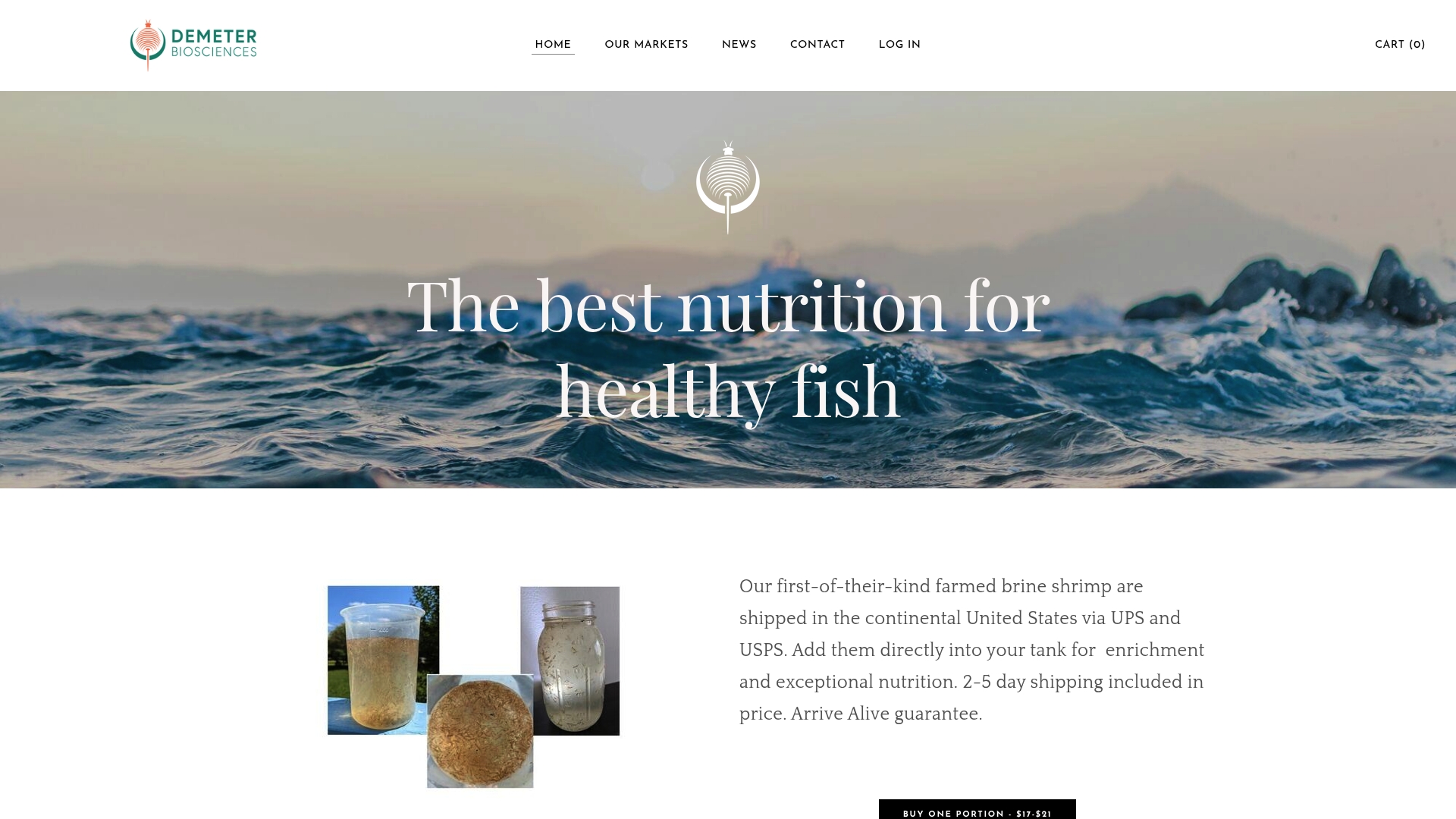
Demeterbioscience produces farmed live brine shrimp raised exclusively on Dunaliella algae in a land-based controlled system, guaranteeing at least 40% protein and stable fatty acid profiles year-round. For aquaculture operations that depend on live feed quality at every production stage, explore Demeterbioscience's live brine shrimp or contact the team to discuss bulk supply options.