
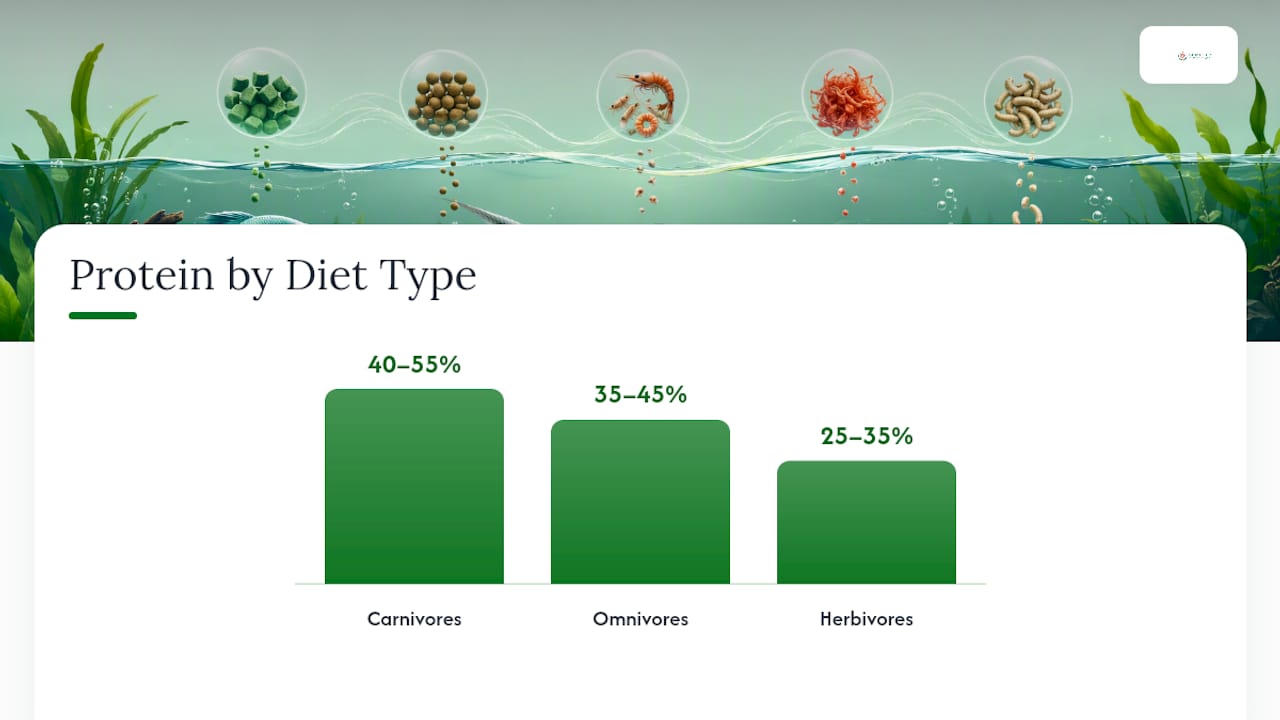
Carnivores generally require a high crude protein diet, omnivores need a moderate protein level, and herbivores require a lower protein diet. Juveniles and breeders typically require protein levels at the higher end of their species range. That is the entire answer in one breath; everything else is execution.
Here's the one-line action: pick a species-appropriate staple pellet or flake that matches your fish's diet category, then supplement carnivores and omnivores with a high-quality animal protein source like live or frozen brine shrimp two to three times a week. Do not overfeed to hit a protein target. Excess protein does not build extra muscle. It becomes ammonia.
These bands align with nutrient work from the National Research Council and feeding-trial reviews compiled by the FAO, both of which show requirements shifting by species, age, and even how a trial was run. A few things to lock in before you touch a feeding chart:
- Match the protein band to diet category first, species second.
- Push toward the higher end of the range for fry, juveniles, and fish in breeding condition.
- Treat crude protein percentage as a starting point, not the finish line. Amino acid balance and digestibility decide how much of that protein actually gets used.
- Increase feeding frequency in small amounts rather than dumping more food to chase a percentage.
Key Takeaways
Matching protein percentage and quality to species, life stage, and digestibility protects both fish health and water chemistry better than chasing a single crude-protein number.
| Point | Details |
|---|---|
| Diet category sets the range | Carnivores need roughly 40-55% protein, omnivores 35-45%, herbivores 25-35%. |
| Life stage shifts the target | Juveniles and breeders in conditioning need the top of their range; adults in maintenance need less. |
| Quality beats crude percentage | Complete amino acid profiles and high digestibility determine usable protein, not the label number alone. |
| Overfeeding drives ammonia | Up to 65% of excess dietary protein can be excreted as waste, spiking ammonia in closed tanks. |
| Supplement with consistent protein | Demeterbioscience's microalgae-fed live brine shrimp deliver at least 40% protein with none of the seasonal variability of wild-harvested Artemia. |
Table of Contents
- How Diet Type and Life Stage Change Protein Requirements
- Why Protein Quality Matters More Than the Crude Percentage on the Bag
- Common High-Protein Feeds: Live, Frozen, Pelleted, and Plant-Based
- Species-Specific Protein Percentages: A Quick Reference Chart
- How to Read a Fish Food Label for Real Protein Value
- Getting Feeding Amounts and Frequency Right
- Managing the Water-Quality Risks of Protein Feeding
- Why Microalgae-Fed Live Brine Shrimp Deliver Reliable High-Protein Nutrition
- Feed Your Fish the High-Protein Supplement Wild Artemia Can't Match Consistently
- Frequently Asked Questions
- Sources
How Diet Type and Life Stage Change Protein Requirements
A cichlid ripping into bloodworms and a plecostomus grazing on algae wafers are not eating similar amounts of protein because their bodies process it in completely different ways. Carnivorous fish have short, simple digestive tracts built for breaking down animal tissue fast. Herbivores carry longer intestines packed with fermentation chambers designed for cellulose and plant matter, and dumping 50% protein into that system does not help. It just gets wasted, and some ends up as strain on your filter.
That is why the three broad diet categories carry such different targets. PetMD lists carnivores at roughly 40 to 55%, omnivores at 35 to 45%, and herbivores at 25 to 35%, numbers that track closely with the wider feeding-trial range of 24 to 57% reported across species in the FAO's review of aquaculture nutrition research. The gap between the low and high end of that overall range is enormous, and diet type explains most of it.
Life stage moves the needle almost as much as species does. A juvenile fish is building new tissue at a rate it will never match again as an adult, and that tissue is mostly protein. Research on amino acid requirements across fish species consistently finds juveniles clustering at 30 to 50% protein even within species that settle into lower maintenance ranges as adults. Once growth slows, protein needs drop, and feeding adult maintenance-level fish a juvenile-grade diet mostly just adds cost and bioload.
Three life-stage patterns show up again and again:
- Juveniles and fry need the top of their diet category's range, sometimes slightly above it, because growth rate outpaces almost every other metabolic demand.
- Adult fish in maintenance can drop toward the lower half of the range once growth plateaus, particularly in low-activity or cooler setups.
- Breeders in conditioning need a temporary bump, often for several weeks before spawning, to support egg and sperm development without pulling reserves from body tissue.
Temperature complicates this in a way a lot of hobbyists get backwards. Warmer water speeds up metabolism and appetite, so fish eat more. That does not mean the protein percentage of the food needs to climb. Reviews of feeding trials point out that a lot of the apparent "higher protein requirement" seen at warmer temperatures is really just increased voluntary intake, not a true shift in the ideal percentage. A tropical tank running at 82°F will eat more grams of food per day than the same species at 76°F. Keep the percentage stable and let quantity do the adjusting.
Pro Tip: Compare a juvenile African cichlid to an adult tang on the same reef. The juvenile cichlid, still packing on body length, does best around 45% protein fed multiple small times a day. Feeding them the same pellet is a mismatch for one of them, guaranteed.
Why Protein Quality Matters More Than the Crude Percentage on the Bag
A 50% protein food built on cheap, poorly digested filler can underperform a 35% food built on complete, highly digestible protein. Crude protein tells you quantity. It says nothing about whether your fish can actually use it.
Fish require ten essential amino acids they cannot synthesize on their own, and these need to come from diet: arginine, histidine, isoleucine, leucine, lysine, methionine, phenylalanine, threonine, tryptophan, and valine. Every one of these has to show up in adequate amounts, because a diet missing even one becomes what nutritionists call limiting. Growth stalls at the level the scarcest amino acid allows, regardless of how much total protein sits on the label. Studies on amino acid requirements across fish species find this pattern holding broadly true, with the same core set of indispensable amino acids required across very different species, from catfish to salmon to ornamental tropicals.
Digestibility is the other half of the equation, and it's the part most hobbyists never think about. Two foods can list identical crude protein and produce wildly different results in the tank, because one is 90% digestible and the other is 60%. The undigested portion doesn't vanish. It passes through as waste and becomes ammonia load on your biofilter. That is a direct, measurable water-quality cost tied to protein source quality, not just quantity.
This is also why nutrient tables need a grain of caution attached. The values published in reference tables like the NRC's requirement charts were mostly derived using highly digestible, near-ideal lab diets, so they represent something close to a best-case bioavailability scenario. Real commercial and homemade diets rarely hit that ceiling, which is why practical feeding plans build in a safety margin above the bare minimums those tables report.
Plant-based proteins deserve extra scrutiny here. Legumes and soy-based ingredients often carry anti-nutritional compounds that interfere with nutrient absorption, and they frequently fall short on specific essential amino acids like lysine and methionine. Soy is the strongest plant option available, but it usually needs blending with animal protein or supplemental amino acids to fully meet fish requirements. Digestibility and nutrient quality end up mattering as much as the number on the front of the bag.
Common High-Protein Feeds: Live, Frozen, Pelleted, and Plant-Based
Every protein source trades off nutrient completeness against cost, shelf life, and mess. Knowing where each one fits keeps you from over-relying on whatever's easiest to scoop out of the cabinet.
Live foods like brine shrimp and rotifers sit at the top of the digestibility ladder. They're moving, they're fresh, and picky fish respond to them when nothing else works. The tradeoff is logistics: live foods need proper storage, timely feeding, and carry some risk of introducing pathogens if sourced from unreliable suppliers.
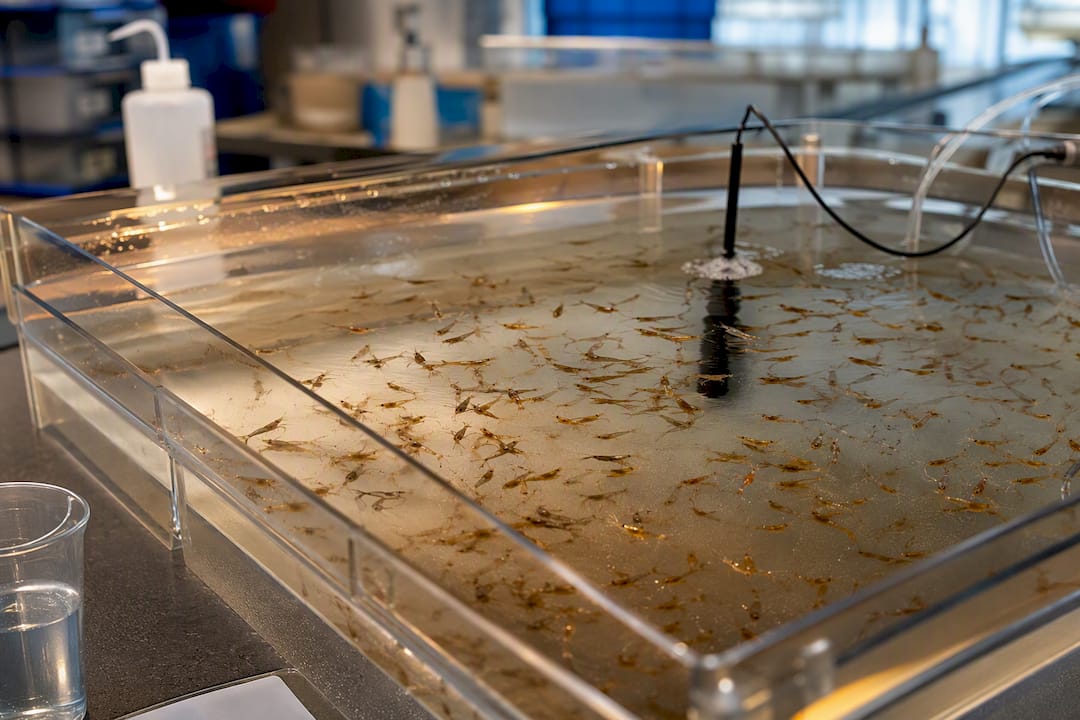
Frozen foods including mysis shrimp, krill, and bloodworms hold most of live food's nutritional value with far less hassle. Freezing does knock down some vitamin content over time, and freeze-thaw cycles degrade quality fast if you're not disciplined about portioning.
Pelleted and paste foods built on fish meal offer convenience and shelf stability that live and frozen foods can't match. Quality varies enormously here. A pellet with fish meal in the first two ingredients performs very differently than one padded with wheat flour and colored to look nutritious.
Plant-based proteins like spirulina and soy meal work well for herbivores and as a partial substitute in omnivore diets, and they carry a real sustainability upside. A committee review on fish nutrition flags this as a growing area of research, while also cautioning that alternatives to fish meal often can't match its amino acid completeness or digestibility without careful formulation.
Matching source to purpose keeps feeding simple:
- Daily staple: a quality pellet appropriate to diet category, chosen for ingredient order over marketing claims.
- Breeding conditioning: live or frozen animal protein, fed more frequently for two to four weeks pre-spawn.
- Picky eaters: live brine shrimp almost always breaks a hunger strike when pellets get ignored.
- Hospital or recovery tanks: soft, highly digestible frozen foods that go easy on a stressed digestive system.
Pro Tip: Never refreeze thawed frozen fish food, and thaw only what you'll use within a few minutes. Cross-contamination between raw frozen foods and other tank equipment is an easy way to introduce unwanted bacteria, so keep a dedicated thawing container separate from anything else in your fishroom.
Species-Specific Protein Percentages: A Quick Reference Chart
Different fish groups cluster around fairly predictable protein bands once you know their natural feeding role. This chart covers the groups hobbyists ask about most.
| Group / Species | Protein % (Juvenile / Adult) | Best Feed Source | Digestibility Note | Feeding Note |
|---|---|---|---|---|
| Marine carnivores (groupers, lionfish) | 50-55% / 45-50% | Frozen mysis, silversides, carnivore pellet | High if animal-based; low with filler-heavy pellets | Feed 1-2x daily; avoid flake-only diets |
| Reef omnivores (tangs, clownfish) | 40% / 30-35% | Algae-based pellet + occasional mysis | Moderate; depends on plant fiber content | Graze-feed small amounts 2-3x daily |
| African mbuna cichlids | 40-45% / 35-40% | Spirulina-based pellet + occasional brine shrimp | High protein risks bloat; keep plant matter present | Small frequent meals reduce aggression and bloat |
| South American tetras | 40-45% / 35-40% | Flake or micro-pellet, live/frozen brine shrimp weekly | High with quality flake; degrades if stored poorly | Feed small amounts once or twice daily |
| Discus | 45-50% / 40-45% | Beef heart blend, frozen bloodworms, quality pellet | High with fresh/frozen; watch fat content | Multiple small feedings; sensitive to overfeeding |
| Koi and pond omnivores | 35-40% / 25-30% | Wheat-germ pellet in cold months, higher protein in warm | Seasonal; lower digestibility in cold water | Reduce feeding sharply below 50°F |
| Goldfish | 35% / 30-32% | Sinking omnivore pellet | Moderate; goldfish overeat readily | Small portions twice daily to limit waste |
| Bettas | 40-50% / 35-40% | Betta-specific pellet, frozen bloodworms | High with animal-based pellets | Feed sparingly; prone to overfeeding |
| Angelfish | 45% / 35-40% | Cichlid pellet, frozen brine shrimp | High with quality protein sources | Feed 1-2x daily in modest portions |
| Corydoras and bottom feeders | 35-40% / 30-35% | Sinking wafer, occasional frozen bloodworms | Moderate; wafers vary widely in quality | Feed after lights-out for undisturbed access |
A few immediate takeaways from that chart:
- Groupers and lionfish: stick close to 45 to 55% protein with frozen mysis or silversides as the backbone; limit plant-based fillers entirely.
- Mbuna cichlids: resist the urge to feed high-protein carnivore pellets. Excess animal protein in mbuna diets is a well-documented contributor to bloat and Malawi bloat disease.
- Goldfish and koi: protein needs drop hard in cold water. Feeding a warm-season diet through winter just adds uneaten waste to the pond.
The single most common mistake in this chart is feeding a carnivore-formulated food to an omnivore or herbivore group because it's the food already in the cabinet. Mbuna owners do this constantly with leftover cichlid pellets meant for predatory species, and the plant-heavy digestive tract of an mbuna simply isn't built to handle that protein load safely.
How to Read a Fish Food Label for Real Protein Value
Guaranteed analysis panels tell you the legal minimum and maximum for crude protein, crude fat, crude fiber, and moisture. They don't tell you where that protein came from, which is the piece that actually matters.
Run through this checklist before trusting a bag:
- Check where crude protein lands relative to your target diet band, but treat it as a floor, not a full picture.
- Read the first three ingredients. If a named animal protein like fish meal, krill meal, or shrimp meal isn't among them, the protein source is likely weaker quality.
- Watch for vague terms like "meal" or "meat by-product" without a species name attached. Named sources (herring meal, menhaden meal) are more traceable and typically higher quality.
- Look for added crystalline amino acids like lysine or methionine on the ingredient list. Their presence often signals the base protein was incomplete and needed patching, not a bonus feature.
- Confirm whether the guaranteed analysis is stated on an as-fed or dry-matter basis. High-moisture foods (like some frozen or gel diets) will show lower numbers as-fed even with strong dry-matter protein content.
Here's a worked example. The second bag is almost certainly delivering more usable, better-balanced protein even though the number on the front is identical. This is exactly the gap that separates premium formulations from generic ones sitting on the same shelf.
Getting Feeding Amounts and Frequency Right
Two rules of thumb cover most situations. Neither rule is precise for every setup. A stressed or recovering fish eats far less than the formula suggests, and fry burning through a growth spurt often need more frequent, smaller meals rather than a single larger one.
A simple weekly structure works for most home aquariums:
- Juveniles/fry: 3 to 4 small feedings daily, protein at the top of the species range.
- Adults in maintenance: 1 to 2 feedings daily, protein at the mid-to-low end of the range.
- Breeding/conditioning: 2 to 3 feedings daily with live or frozen protein added, sustained for 2 to 4 weeks before spawning, then tapered back.
Watch the fish, not just the clock. These signs tell you it's time to adjust:
- Slower-than-expected growth in juveniles despite consistent feeding.
- Stringy, pale, or excessively loose feces, often a sign of poor digestibility or too much protein at once.
- Ammonia or nitrite readings creeping up between water changes with no other explanation.
- Reduced activity or appetite, which can flag either underfeeding or a diet mismatch for that life stage.
Managing the Water-Quality Risks of Protein Feeding
Protein that isn't digested or metabolized doesn't disappear. Much of it gets excreted, largely as ammonia, and in some feeding scenarios as much as 65% of added dietary protein ends up excreted rather than retained as tissue. That single figure explains most protein-related water-quality crashes in home aquariums: overfeeding a high-protein diet doesn't just waste food money, it directly loads your nitrogen cycle.
The common failure points are predictable:
- Ammonia and ammonium spikes from uneaten high-protein food decomposing in the substrate.
- Nitrate accumulation from sustained overfeeding, especially in tanks with light plant coverage.
- Reduced dissolved oxygen as biological oxygen demand rises with waste load.
- Algae blooms fed by the nitrate and phosphate byproducts of excess protein breakdown.
| Symptom | Immediate Action |
|---|---|
| Ammonia spike | Stop feeding for 24 hours, perform a 30-50% water change, check filter capacity |
| Persistent elevated nitrate | Increase water change frequency, add live plants, replace saturated filter media |
| Cloudy water after feeding | Reduce portion size immediately, siphon uneaten food within minutes of feeding |
Choosing highly digestible animal protein over poorly digested fillers reduces this ammonia burden meaningfully, which matters even more in closed systems and smaller tanks where dilution capacity is limited.
Why Microalgae-Fed Live Brine Shrimp Deliver Reliable High-Protein Nutrition
Live brine shrimp fed exclusively on microalgae carry a complete animal amino acid profile, and that consistency is the part wild-harvested Artemia can't guarantee. Wild brine shrimp populations swing with seasonal conditions and sometimes arrive nutritionally depleted from starvation in the wild before harvest.
This consistency matters most in three practical scenarios:
- Conditioning breeders ahead of a spawn, when amino acid completeness directly affects egg viability and fry survival.
- Weaning fry off of infusoria and onto frozen or prepared diets, where live movement triggers a feeding response nothing else replicates.
- Breaking a hunger strike in picky carnivores that have gone off pellets entirely.
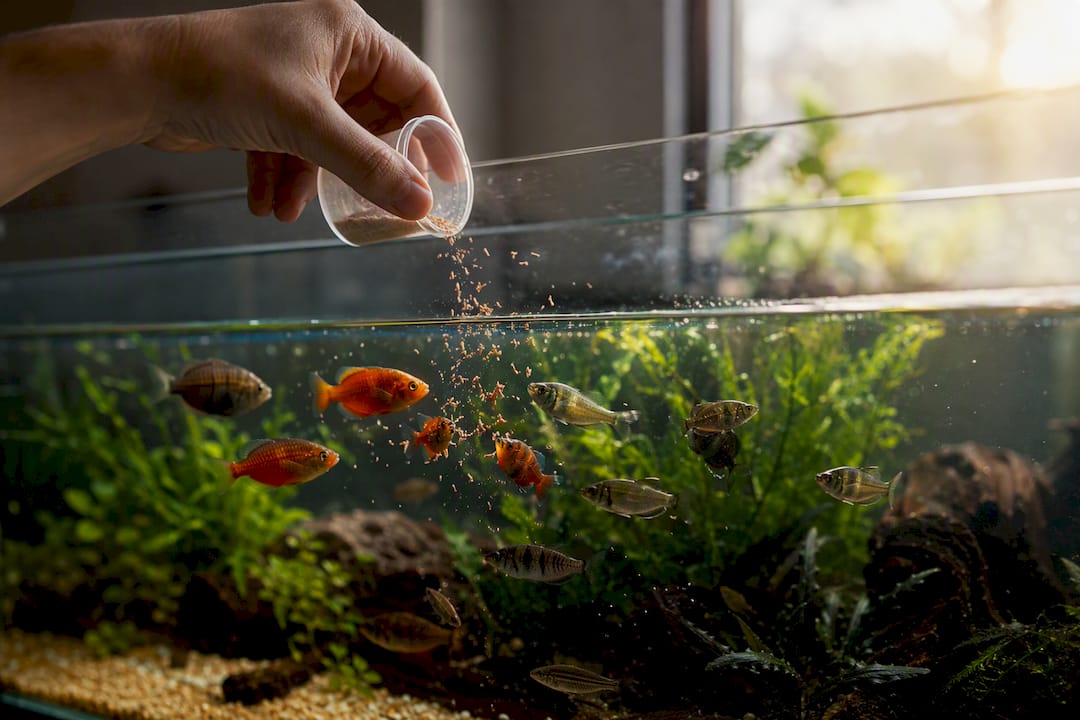
Handling is straightforward: acclimate live shrimp gradually to your tank's temperature, feed only what your fish will consume within a few minutes, and avoid letting excess shrimp linger uneaten in the substrate, since they'll decompose and add to bioload just like any other protein source.
Pro Tip: Rotate live brine shrimp into your feeding schedule two to three times a week for community carnivores and omnivores, reserving daily staple feeding for a quality pellet. That rotation gives you consistent baseline nutrition plus a complete-amino-acid boost without overloading your filter.
A Practical Rule of Thumb for Balancing Ideal Protein With Real Tanks
Chasing the textbook-perfect protein percentage for every fish in a mixed community tank is a losing game, and it usually ends with someone overfeeding to try to satisfy the pickiest eater. My working rule: match the diet category and life stage first, prioritize digestibility over the number on the bag second, and use targeted supplements like live brine shrimp to fill amino acid gaps rather than reaching for a higher-protein staple across the board.
Maximum growth and stable water quality pull in opposite directions past a certain point, and for community tanks the safer default is to feed slightly under the ceiling of the range rather than at it. Judge results by what you can actually observe: steady growth, good coloration, firm feces. Those tell you more than any single percentage ever will.
Feed Your Fish the High-Protein Supplement Wild Artemia Can't Match Consistently
Wild-harvested brine shrimp depend on ocean conditions nobody controls, and quality shifts season to season.
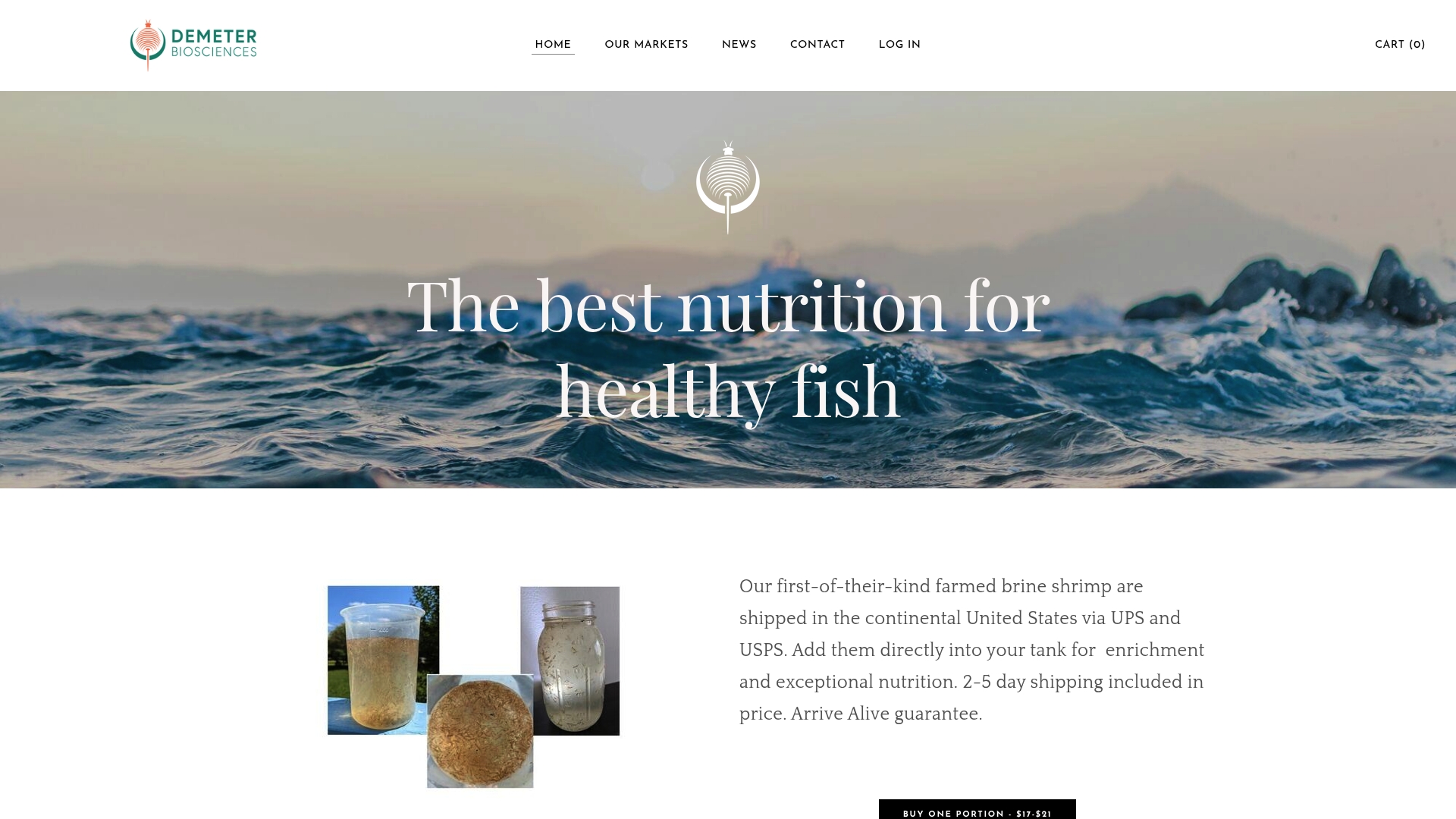
That consistency is the entire point. You're not gambling on whether this batch was starved before shipping or packed with filler nutrition. Whether you're conditioning breeders, weaning fry, or trying to win back a picky carnivore that's gone off pellets, the live brine shrimp ship live and ready to feed. Hobbyists managing a single tank can order direct or set up a recurring subscription so supply never runs short. Fish stores, museums, and research institutions needing larger volumes can look at bulk ordering options built for exactly that scale, and the product page breaks down the full nutritional profile if you want the details before you buy. Store live shrimp cool, feed within the acclimation window noted on arrival, and reach out through Demeterbioscience's contact page if you're ordering for an institutional account. Place your first order today and see the difference consistent, microalgae-fed protein makes in your tank.
Frequently Asked Questions
What percentage of protein do most aquarium fish need? Carnivores need the most protein, omnivores need a moderate amount, and herbivores need the least, with juveniles of any group needing more than adults.
Can too much protein hurt my fish or my tank? Yes. Undigested and excess protein gets excreted largely as ammonia, and overfeeding a high-protein diet is one of the fastest ways to spike ammonia and nitrate in a closed aquarium system.
How do I know if my fish isn't getting enough protein? Slow or stalled growth in juveniles, dull coloration, reduced activity, and thin body condition are the main signs. Compare growth rate and body condition against expectations for that species and life stage.
Is crude protein on a fish food label the same as usable protein? No. Crude protein is a lab measurement of total nitrogen content, not a measure of digestibility or amino acid completeness. A food with lower crude protein but higher-quality, more digestible ingredients often outperforms a higher-percentage food built on fillers.
How often should I feed live brine shrimp to supplement protein? Two to three times a week works well for most carnivores and omnivores as a supplement alongside a quality daily staple, with more frequent feeding during breeding conditioning periods.
Do plant-based proteins like spirulina meet all of a fish's amino acid needs? Not fully on their own. Plant proteins often lack certain essential amino acids and can contain anti-nutritional compounds, so they work best blended with animal protein sources rather than as a sole protein source for omnivores or carnivores.
Sources
The protein ranges and feeding guidance in this piece draw on a mix of formal nutrient science and applied aquarium practice. For nutrient minimums and amino acid tables, the National Research Council's requirement tables remain the reference standard, alongside amino acid research on protein requirements across fish species. The FAO's review of feeding trials is the best source for understanding why measured requirements vary so widely by methodology. For hobby-facing practical ranges and label advice, PetMD's fish feeding guide and the aquarium feeds and nutrition primer translate the science into tank-ready decisions. Label-reading and feed-rotation tips reflect a combination of applied aquaculture research and long-standing hobbyist practice, not a single source.
- Protein and amino acid requirements of fishes
- Fish feeds and nutrition (FAO review excerpt)
- The values in the nutrient requirement table (Table 7-1)
- What Do Fish Eat? Your Guide To Feeding Pet Fish | PetMD
- Anti-nutritional factors in some grain legumes (Semanticscholar)