
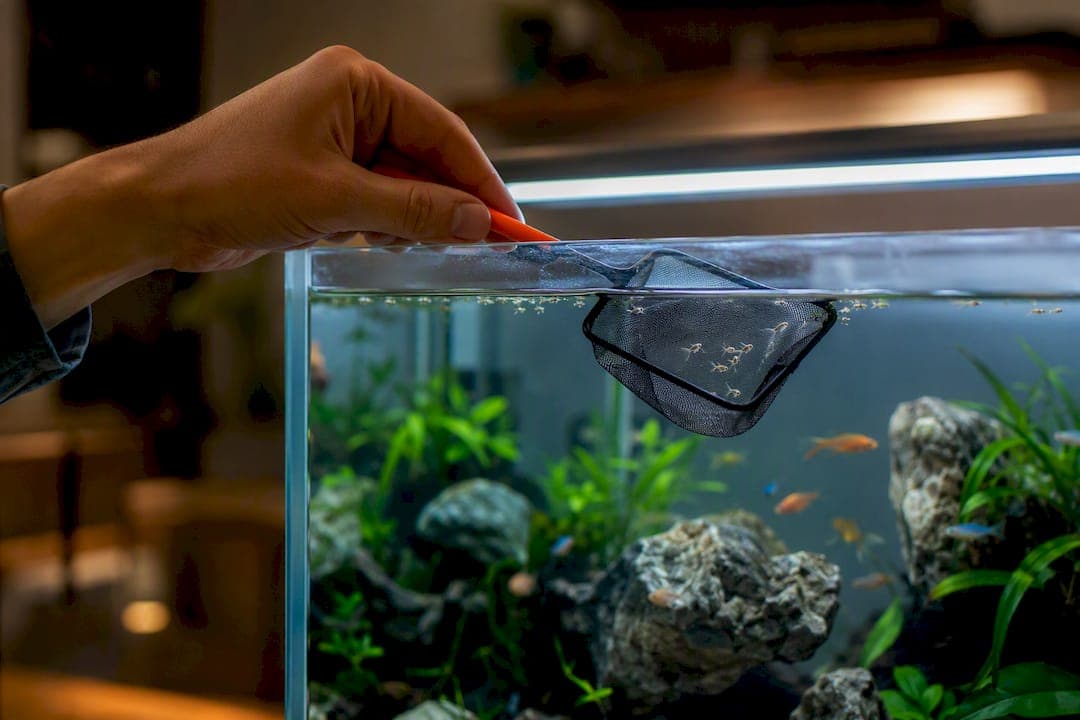
Yes, remove uneaten brine shrimp right away. Dead brine shrimp decompose fast and release ammonia into your tank within hours, not days. Grab a pipette or fine net, pull out visible shrimp, and run an ammonia test. If shrimp survive only minutes to hours in freshwater, waiting until tomorrow is not an option. If your test reads anything above zero, do a partial water change now.
TL;DR:
- Removing uneaten brine shrimp promptly prevents ammonia spikes caused by rapid decomposition, which can occur within hours in freshwater tanks.
- Using targeted tools like pipettes or siphons for substrate-bound shrimp minimizes disturbance and reduces the risk of ammonia buildup.
- Preventing leftovers by portioning shrimp based on species and tank size, along with rinsing before feeding, greatly cuts down on water fouling.
- Testing ammonia, nitrite, and pH levels immediately after overfeeding guides necessary water changes and chemical treatments to stabilize water quality.
- Avoiding over-hatching and maintaining predictable shipment sizes through routines or subscriptions helps prevent excess shrimp from overwhelming tank capacity.
Table of Contents
- How Do You Remove Uneaten Brine Shrimp From a Tank?
- What Prevents Brine Shrimp From Going Uneaten in the First Place?
- How Do You Fix Water Quality After Uneaten Shrimp Decompose?
- Will Shrimp Buried in the Substrate Cause Algae Problems?
- Why Rinsing and Batch Sizing Are Non-Negotiable Habits
- A Working Habit, Not a Crisis
- A Simpler Way to Avoid the Cleanup Cycle Entirely
- Sources
- FAQ
How Do You Remove Uneaten Brine Shrimp From a Tank?
The tool you reach for depends on where the shrimp ended up. Surface stragglers need a different approach than the ones that sank into your gravel.
For surface and midwater cleanup:
- Turn off your powerheads and pumps first. Circulating water scatters shrimp into corners and behind decorations, turning a two-minute job into a hunt.
- Skim the surface with a fine-mesh net or a small kitchen strainer designed for aquarium use.
- Scoop clusters into a bucket filled with your own tank water. Never add saltwater or leftover hatching brine into a freshwater tank. The salt load alone can stress fish and throw off your parameters.
For individual shrimp in delicate or planted tanks, a pipette or turkey baster gives you precision a net can't match. Both let you target one shrimp at a time without uprooting plants or spooking shy fish like corydoras or dwarf shrimp tankmates. This is also the better tool for nano tanks where a net is simply too big to maneuver.
For substrate-bound shrimp, a small siphon or gravel vacuum pulls debris out of the gravel bed without a full teardown. Run the siphon tip just above the substrate surface in a slow, sweeping pattern rather than jamming it down into the gravel, which stirs up more waste than it removes.
Once you've physically removed what you can see, run through this quick triage:
- Powerheads and filters off (temporarily)
- Lights on for full visibility
- Visible dead shrimp removed by hand, net, or siphon
- Ammonia, nitrite, and pH tested
- Partial water change scheduled if any reading is elevated
Pro Tip: Keep a dedicated small container just for shrimp removal, filled with tank water before you start. Dumping netted shrimp straight into a sink or a different tank risks temperature shock and cross-contamination between systems.
Turning pumps off during feeding does double duty. It stops shrimp from getting shredded by an impeller, and it also makes them easier to spot and remove once feeding time is over.
What Prevents Brine Shrimp From Going Uneaten in the First Place?
Cleanup is a lot less work when there's less to clean up. Most overfeeding problems trace back to eyeballing portions instead of measuring them.
- Portion by time, not volume. Feed only what your fish visibly consume in 2 to 5 minutes. If shrimp are still swimming around after that window, you fed too much.
- Match portions to species. A 10-gallon betta tank needs a fraction of what a 55-gallon community tank of tetras and barbs will clear.
- Hatch smaller, staggered batches instead of one large hatch meant to last several days. If nothing in the tank is actively hungry, skip the hatch that day rather than force-feeding a schedule.
- Rinse before every feeding. A quick rinse in dechlorinated water strips away salt, eggshells, and debris that would otherwise dissolve straight into your tank. This single habit does more to prevent water fouling than almost anything else on this list.
Feeding technique matters as much as portioning. Distribute shrimp across the tank rather than dumping them in one spot, pause any circulation for a minute so fish can actually catch them, and watch consumption before deciding whether to add more.
Pro Tip: If you routinely hatch more than your tank eats within an hour, you're not feeding fish, you're feeding your filter. Cut your hatch volume by a third and watch how little changes in your fish's behavior.
How Do You Fix Water Quality After Uneaten Shrimp Decompose?
Test first, then act. Run ammonia, nitrite, nitrate, and pH checks as soon as you notice uneaten shrimp or cloudy water. Any measurable free ammonia is worth responding to immediately. Freshwater tanks have no buffer here; shrimp die and start breaking down within minutes to hours, and decomposing organic matter can spike nitrogen levels within 24 hours if it sits unaddressed.
Once you have readings in hand, work through this sequence:
- Do a partial water change of 25% to 50%, scaled to how high your ammonia or nitrite readings are.
- Add a temporary chemical absorber like activated carbon or an ammonia neutralizer if levels are high enough that a water change alone won't bring them down fast.
- Increase surface agitation or aeration briefly to help off-gas ammonia and support oxygen levels while nitrifying bacteria catch up.
- Siphon visible debris directly from the substrate surface, but avoid aggressively churning the gravel bed itself. That layer holds beneficial bacteria you don't want to wipe out over a single feeding mistake.
Elevated ammonia or nitrite after a heavy feeding usually needs retesting within 24 hours, and again after your water change, to confirm the numbers are actually trending down rather than just diluted temporarily. Expect full recovery to baseline within a few days if you stay on top of testing, assuming no additional overfeeding in the meantime.
Will Shrimp Buried in the Substrate Cause Algae Problems?
Usually not, if you're catching this early and your tank runs normal filtration. Small numbers of shrimp stuck under gravel rarely cause long-term algae or cyanobacteria blooms on their own. The real risk shows up with mass die-offs or repeated heavy overfeeding that piles up faster than your filter and water changes can handle.
If you suspect buried shrimp, here's how to check without tearing the tank apart:
- Run a small siphon tip just along the substrate surface in the suspect area
- Lift a scoop of top substrate into a jar of tank water if you need to inspect it closely
- Watch for a persistent sulfur-like or "rotten egg" smell, which signals anaerobic buildup
- Deep-clean that section only if ammonia keeps spiking despite normal water changes
Why Rinsing and Batch Sizing Are Non-Negotiable Habits
Rinsing live brine shrimp in dechlorinated water before every feeding strips out salt and shell debris before it ever enters your tank. It's a step Demeterbioscience recommends on every shipment, not because it's optional polish, but because skipping it is the single easiest way to load your tank with invisible waste.
- Do a fast rinse in a fine-mesh net under dechlorinated water for a few seconds before feeding
- Feed farmed, microalgae-fed shrimp for more predictable consumption, since consistent protein content means fish respond to feeding the same way each time
- Order smaller, timed shipments instead of one bulk hatch meant to stretch across a week
Pro Tip: If you find yourself hatching "just in case" batches that outlast your fish's appetite, switch to a subscription cadence instead. Predictable, smaller deliveries remove the guesswork that leads to over-hatching in the first place.
A Working Habit, Not a Crisis
Treat cleanup as five steps in order: safety first, remove what you see, test, change water if needed, then fix the habit that caused it. Portion control and a quick pre-feeding rinse quietly prevent most of the ammonia emergencies hobbyists scramble to fix after the fact.
— Demeter
A Simpler Way to Avoid the Cleanup Cycle Entirely
Portioning and rinsing solve most of the problem, but the root cause for a lot of hobbyists is simpler: hatching more shrimp than any tank can realistically eat in one sitting. Demeterbioscience's live brine shrimp shipments arrive as measured, farmed batches fed exclusively on Dunaliella algae, so you're feeding a known quantity instead of guessing how much a home hatch produced.
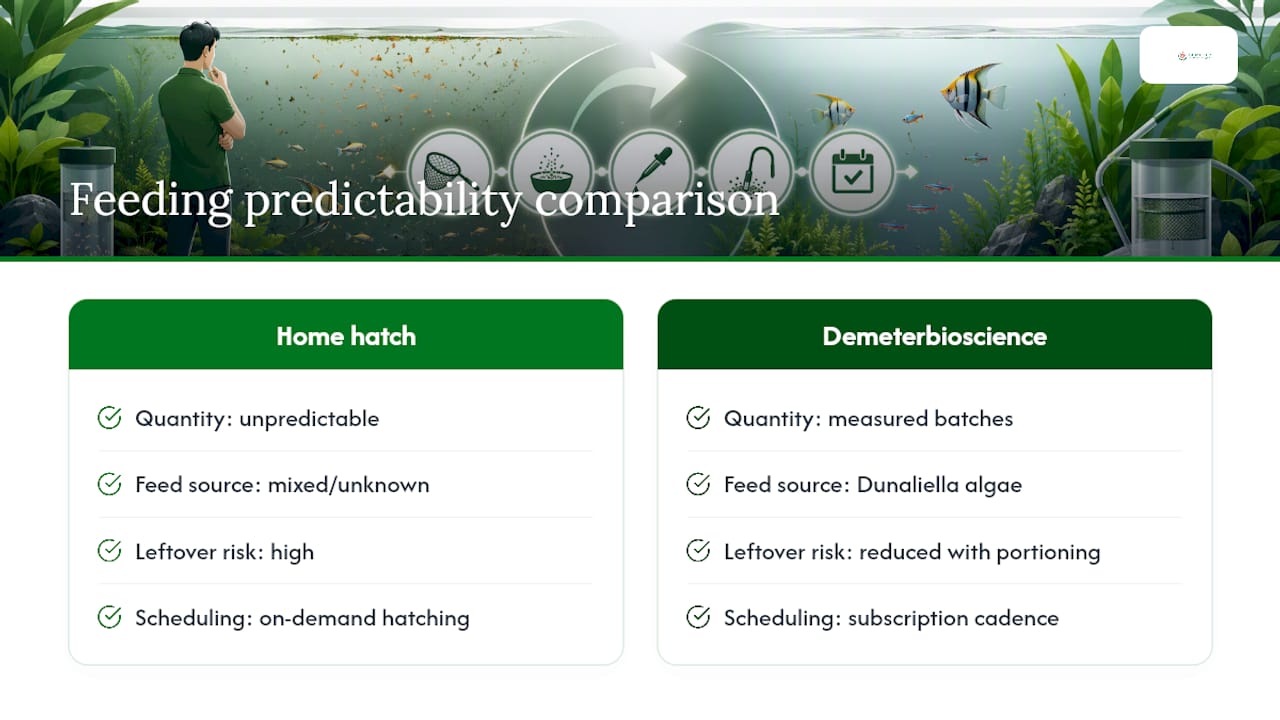
Pairing that predictability with the rinse and portioning habits covered above cuts down on leftover shrimp before they ever hit your substrate. A subscription plan keeps shipments arriving on a schedule that matches what your fish actually consume, so you're not stuck deciding whether to hatch "just in case" every few days. If you're feeding a fish store, museum tank, or research setup instead of a single aquarium, the bulk ordering option scales the same predictability up. Check current shipment sizes and subscription options to find the cadence that matches your tank's appetite.
Sources
- Care guide: brine shrimp (Carolina Biological Supply)
- Effects of uneaten fish feed on aquaculture water environment (PMC article)
- Live Brine Shrimp - Furry Critter Network
- A beginner's guide to brine shrimp (AlgaeBarn)
FAQ
How Long Can Brine Shrimp Survive in Fresh Water?
Brine shrimp are saltwater organisms and typically survive only minutes to a few hours once introduced to freshwater, which is why prompt removal of uneaten shrimp matters so much.
How Do You Decapsulate Brine Shrimp Eggs?
Decapsulation involves soaking brine shrimp eggs in a diluted bleach solution for a few minutes to dissolve the outer shell, then rinsing thoroughly in dechlorinated water before hatching or feeding. This step is separate from feeding-time rinsing but shares the same goal: reducing debris that fouls water.
How Do You Keep Newly Hatched Brine Shrimp Alive Before Feeding?
Store them briefly in cold, aerated dechlorinated water rather than at hatching temperature, which slows their metabolism and extends usability for a short window. Guidance on short-term cold storage covers safe holding times in more detail.
What Do Newly Hatched Brine Shrimp Look Like?
Newly hatched brine shrimp, called nauplii, are tiny orange specks visible to the naked eye, swimming in short jerky bursts near light sources. Their small size makes them easy for fry and small fish to eat, but it also means uneaten ones are just as easy to overlook during cleanup.
Do I Need to Rinse Brine Shrimp Before Every Feeding?
Yes. Rinsing removes salt, shell fragments, and other debris that otherwise dissolve directly into your tank and contribute to cloudy water and nutrient buildup, even when the shrimp themselves get eaten.