
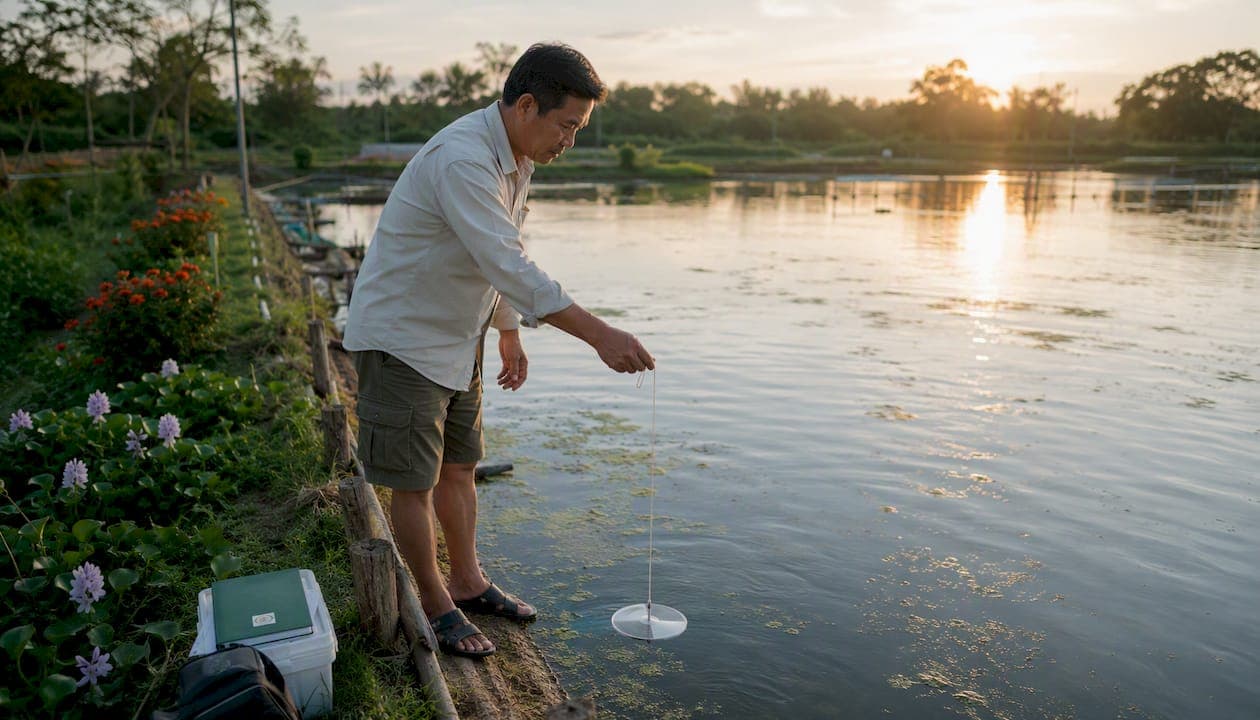
Organic inputs supply carbon substrate and slow-release nutrients that build microbial and plankton food webs in ponds, ultimately increasing the natural food available to fish. Use them in extensive to semi-intensive systems where your goal is to reduce external feed costs and build ecosystem productivity. Avoid them in high-density, low-aeration ponds where dissolved oxygen is already marginal, because decomposing organic matter will push DO below safe thresholds before you can correct it.
Before your first application, do three things:
- Check your aeration capacity and confirm you can maintain dissolved oxygen above 5 mg/L even at predawn, when biological oxygen demand peaks.
- Plan frequent, small doses rather than a single large application. Spreading inputs across multiple weekly additions prevents the oxygen crash that sinks most first attempts.
- Set up a monitoring schedule covering DO (especially 5–6 AM readings), ammonia, nitrite, and Secchi disk depth before you add anything to the pond.
Pro Tip: If your Secchi disk reading drops below 20 cm after an application, stop dosing immediately and increase aeration. That turbidity spike signals a microbial bloom consuming oxygen faster than the pond can replenish it.
Table of Contents
- What counts as an organic input in pond aquaculture?
- How do organic inputs actually increase pond productivity?
- What are the real benefits of using organic inputs?
- What are the risks, and how do you manage them?
- Application rates and timing: what the numbers actually look like
- How to source and prepare organic inputs safely
- How do organic inputs fit into your full pond management system?
- What should you monitor, and what do the thresholds mean?
- US regulatory context: what "organic" actually means for your pond
- A sustainable live-feed supplier that fits organic-minded systems
- Key Takeaways
- The trade-offs no one talks about honestly
- Demeterbioscience: a consistent live-feed source for organic-minded operations
- Useful sources and further reading
What counts as an organic input in pond aquaculture?
The term "organic input" covers any carbon-rich biological material applied to a pond to stimulate microbial activity and release nutrients. In practice, aquaculture fertilization draws on a wide range of materials, each with distinct nutrient profiles, decomposition rates, and oxygen demands.
The main categories:
- Animal manures and litters: Poultry litter, swine manure, cattle dung, and duck droppings are the most widely used. Poultry litter tends to be nutrient-dense and relatively dry; swine and cattle manures are wetter and slower to decompose.
- Compost: Partially or fully decomposed mixtures of plant and animal materials. Composted inputs release nutrients more gradually and impose a lower immediate oxygen demand than raw manure.
- Green manures and crop residues: Legume cuttings, rice straw, and other plant materials applied directly or incorporated into pond sediment. These are high in carbon relative to nitrogen (high C:N ratio), so they primarily fuel heterotrophic bacteria rather than algal blooms.
- Agricultural byproducts: Rice bran, oilseed meals (cottonseed, soybean), and similar processing residues. These are often locally available, cost-effective, and carry predictable nutrient content when sourced from a consistent supplier.
- Industrial organic wastes: Molasses, biogas sludge, and brewery effluents are used in some systems. Molasses in particular is a fast-fermenting carbon source that can rapidly stimulate bacterial growth.
- Prepared organic fertilizers: Commercially formulated products blended from composted materials, often with standardized nutrient content.
One distinction worth keeping clear: using organic inputs for biological pond management is not the same as operating a certified organic aquaculture system. The USDA National Organic Program has specific requirements for certified organic aquaculture that go well beyond the choice of fertilizer. The two concepts overlap but are not interchangeable.
Material quality varies considerably. Labile organic matter that decomposes within days to weeks makes a more effective pond fertilizer than semilabile material that breaks down over months to years. Moisture content, age, and the feed origin of manures all affect how quickly nutrients become available and how much oxygen the decomposition process will consume. Fresh, wet manure from grain-fed animals decomposes faster and releases more ammonia than aged, dried material from the same source.

How do organic inputs actually increase pond productivity?
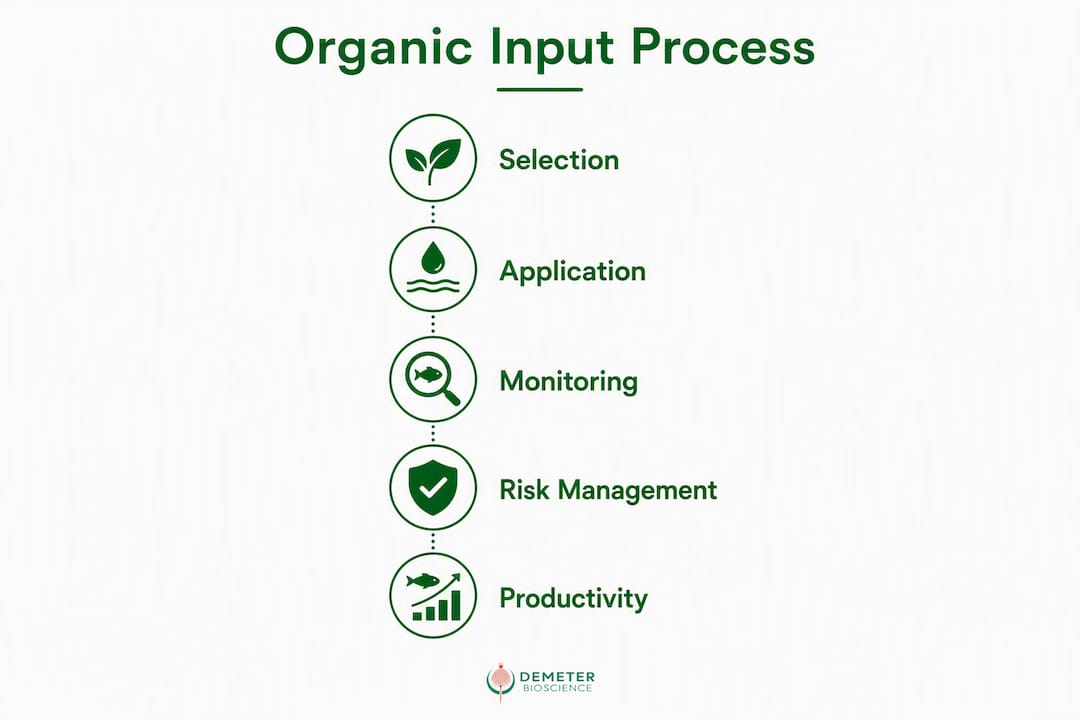
The mechanism is not direct fertilization in the way a gardener thinks of it. Animal manures and agricultural byproducts stimulate pond productivity primarily by providing a carbon substrate for microbial growth, and that microbial community is the foundation of everything that follows.
When organic matter enters the pond, heterotrophic bacteria colonize it rapidly. Those bacteria are consumed by protozoans, which are consumed by zooplankton, which become food for larval and juvenile fish. This pathway, called the microbial loop, means that organic inputs feed fish indirectly through a chain of biological transformations rather than by supplying nutrients directly to algae. Organic fertilizers supply organic matter plus mineral nutrients and also provide attachment sites for microbes, a structural advantage that inorganic fertilizers cannot replicate.
Organic inputs do not just add nutrients to a pond. They build habitat for the microbial community that converts those nutrients into fish food. The difference between a pond managed with organic inputs and one managed with inorganic fertilizers alone is the difference between a living ecosystem and a chemical solution.
Nutrient mineralization from organic sources is slower than from inorganic fertilizers, and temperature-dependent. In warm water (above 25°C), bacterial activity accelerates and nutrients become available within days. In cooler conditions, the same material may take two to three weeks to release meaningful quantities of nitrogen and phosphorus. Plan your application schedule around water temperature, not just the calendar.
The carbon-to-nitrogen ratio of your input determines which biological pathway dominates. High C:N materials (straw, wood chips, most crop residues) fuel heterotrophic bacteria and suppress algal growth by immobilizing available nitrogen. Low C:N materials (poultry litter, fresh manure) release ammonia quickly and can trigger phytoplankton blooms. Most productive pond systems benefit from a blend that supports both pathways simultaneously.
Pro Tip: Apply organic inputs in the morning, not the afternoon. Morning applications give the pond the full daylight period for photosynthetic oxygen production to offset the decomposition oxygen demand that follows. Afternoon or evening applications front-load the oxygen demand into the night, when photosynthesis stops.
What are the real benefits of using organic inputs?
The strongest case for organic inputs in pond aquaculture is economic and ecological at the same time.
When you build a natural food web in your pond, you are not just cutting feed costs. You are creating a system where fish grow on food they would eat in the wild, which tends to produce better gut health, more natural behavior, and in some markets, a product that commands a premium.
Primary advantages:
- Natural food web stimulation: Zooplankton and benthic invertebrate populations increase, providing fish with nutritionally complete live food that no pelleted feed fully replicates. This matters most in nursery ponds, where larval fish depend on live prey.
- Feed cost reduction: In extensive and semi-intensive systems, recycling farm wastes into ponds reduces reliance on purchased feed and fertilizer. For operations with access to on-farm manure or crop residues, the input cost can approach zero.
- Circular economy fit: Using agricultural byproducts and farm wastes closes a nutrient loop. Rice bran, oilseed meals, and manure that would otherwise require disposal become productive inputs, reducing both waste management costs and the environmental footprint of the farming operation.
- Reduced synthetic chemical use: Organic inputs lower or eliminate the need for synthetic nitrogen and phosphorus fertilizers. Over time, this reduces the risk of chemical accumulation in pond sediments and the surrounding watershed.
- Biodiversity and gut health: Fish raised in ponds with active natural food webs tend to show more diverse gut microbiomes and stronger immune responses than those raised on pelleted feed alone, though this varies by species and stocking density.
The market benefit is real but conditional. Organic aquaculture promotes sustainability by reducing synthetic chemical use, and consumer demand for sustainably produced seafood is growing in the US. But using organic inputs does not automatically qualify your product for an organic label or a price premium. That requires formal certification, which is a separate and more demanding process.
What are the risks, and how do you manage them?
The risks of organic inputs are predictable and manageable, but they are not trivial. Most failures come from one of three sources: too much material applied at once, contaminated inputs, or inadequate aeration.
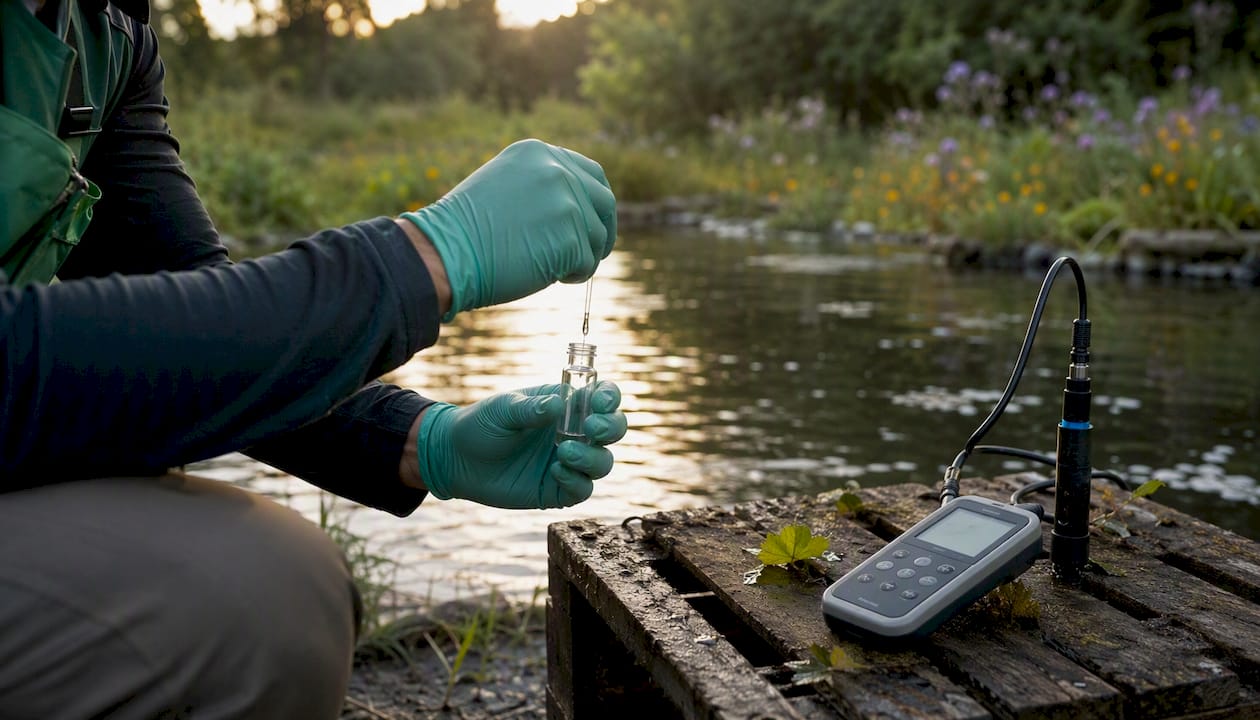
Dissolved oxygen depletion is the most immediate threat. Decomposing organic matter consumes oxygen, and the demand peaks at predawn when photosynthesis has been offline for hours. A large manure application on Monday can produce a fish kill by Wednesday morning if aeration is insufficient. The warning signs are fish surfacing and gulping air, reduced feeding activity, and a Secchi disk reading that has dropped sharply.
Pathogen and antibiotic residues are a serious concern with manures from confined animal feeding operations. Swine and poultry manures from antibiotic-treated animals can carry drug residues and pathogenic bacteria including Salmonella and E. coli. These risks are substantially reduced by composting, which generates internal temperatures that kill most pathogens, but raw manure from unknown sources should not go directly into a food-fish pond.
Heavy metals and contaminants accumulate in some industrial byproducts. Biogas sludge and certain industrial effluents can carry zinc, copper, or other metals at concentrations that build up in sediment over time. Lab testing before first use is not optional for these materials.
Nutrient spikes and eutrophication follow large, infrequent applications. A single heavy dose of manure can push ammonia to toxic levels within 48 hours and trigger algal blooms that crash when the bloom dies, consuming oxygen and releasing more ammonia in a cycle that is difficult to break without a partial water exchange.
Mitigation checklist:
- Compost or age raw manures for at least 30 days before pond application.
- Apply in small, frequent doses rather than large batches. Compost applied at modest, regular rates releases nutrients gradually and reduces immediate oxygen demand compared with raw manure.
- Test inputs from new sources for heavy metals, pathogens, and antibiotic residues before use.
- Maintain mechanical aeration capacity sufficient to keep DO above 5 mg/L at all times.
- Keep an emergency aeration protocol ready: know where your backup aerators are and how fast you can deploy them.
- Monitor DO at 5–6 AM daily for the first week after any new application.
Application rates and timing: what the numbers actually look like
There is no universal application rate for organic inputs because material quality varies too much. A dry poultry litter with 4% nitrogen is not the same as fresh swine manure at 0.5% nitrogen, even at the same weight per hectare. The table below gives working ranges for common materials; treat them as starting points, not prescriptions.
| Input material | Typical rate (kg/ha/week) | Notes |
|---|---|---|
| Poultry litter (dry) | — | High N; monitor ammonia closely |
| Cattle manure (fresh) | 500–1,000 | Lower N; higher oxygen demand |
| Compost (mature) | — | Slower release; preferred for nursery ponds |
| Rice bran | — | High C:N; primarily fuels heterotrophs |
| Oilseed meal (soybean) | — | Moderate N; dissolves quickly |
| Molasses | 50–150 | Fast-fermenting; use sparingly |
These ranges assume semi-intensive pond systems with mechanical aeration. Reduce rates by 30–50% in ponds without aeration, and increase monitoring frequency accordingly.
Converting weekly to daily doses:
- Determine your weekly target rate from the table above, adjusted for your material's actual nutrient content.
- Divide the weekly total by 5 or 7 to get a daily dose. Daily application is preferable to twice-weekly in warm weather.
- Apply in the morning, spread evenly across the pond surface or from a boat in larger ponds.
- Check DO at predawn the following morning. If DO is below 5 mg/L, reduce the next dose by 25%.
- After two weeks at a stable dose, check Secchi disk depth. A reading of 25–40 cm indicates a healthy phytoplankton bloom. Below 20 cm, reduce dosing. Above 60 cm, the pond is underproducing and you can increase.
Response timeline: Expect visible increases in phytoplankton (greening of water, Secchi disk reading dropping toward 30 cm) within 5–10 days of first application in warm water. Zooplankton populations typically peak 10–21 days after phytoplankton establishment. Fish growth response in fingerlings can be measurable within 4–6 weeks of consistent application.
Pro Tip: Keep a logbook with date, material, dose, DO reading, Secchi depth, and any fish behavior observations for every application. After 60 days, you will have enough data to optimize your schedule for your specific pond and material. Without records, you are guessing every time.
How to source and prepare organic inputs safely
The quality of your organic inputs determines whether you get a productive pond or a water quality crisis. Sourcing decisions made before the first application matter more than most adjustments you can make afterward.
Evaluating source quality:
- Ask about feed origin for manures. Manure from animals fed antibiotics or heavy-metal-supplemented feeds (common in some swine and poultry operations) carries those residues. Request a feed history or a basic lab panel before purchasing.
- Check moisture content. Fresh, wet manure is harder to dose accurately and decomposes faster, increasing oxygen demand. Dry or partially dried material is easier to handle and apply consistently.
- Assess age. Manure that has been sitting in a pile for 60 or more days has already undergone significant microbial activity. It is safer and more predictable than fresh material, though some nutrient content is lost.
- Look for visible contaminants. Plastic, metal, or chemical residues in compost or byproduct materials are disqualifying. If a supplier cannot tell you what went into their compost, do not use it in a food-fish pond.
- Request a lab analysis. A basic nutrient panel (total N, P, K, moisture, organic matter) from a certified agricultural lab costs $20–$50 and gives you the data to calculate actual application rates rather than guessing from generic tables.
Preparation methods:
- Composting: Mix carbon-rich materials (straw, wood chips) with nitrogen-rich manures at a C:N ratio of roughly 25:1 to 30:1. Maintain moisture at 50–60% and turn the pile every 5–7 days. At 55–65°C internal temperature, most pathogens are killed within two weeks. Mature compost is ready in 30–60 days depending on conditions.
- Aging: Simply stockpiling manure under cover for 30–60 days reduces pathogen load and ammonia volatility without active management. Less effective than composting but practical for small operations.
- Fermented molasses mixes: Dilute molasses in water (1:10 ratio) and allow to ferment for 24–48 hours before application. This activates beneficial bacteria and reduces the risk of a sharp oxygen demand spike.
- Size reduction: Chopping or grinding crop residues before application accelerates decomposition and improves nutrient release. Whole rice straw can take months to break down; chopped straw at 2–5 cm length decomposes in weeks.
Pro Tip: Partner with your local cooperative extension service for lab testing referrals. University extension programs in most US states offer subsidized soil and compost testing, and many have aquaculture-specific staff who can interpret results in the context of pond management.
How do organic inputs fit into your full pond management system?
Organic inputs work best when they are one component of a coordinated management system, not a standalone intervention. The decisions you make about stocking density, aeration, liming, and supplemental feeding all interact with how organic inputs perform.
Matching inputs to stocking density and target yield:
- At low stocking densities (extensive systems, under 1,000 fish/ha), organic inputs alone can support most of the fish's nutritional needs through natural food web productivity.
- At moderate densities (semi-intensive, 1,000–5,000 fish/ha), organic inputs reduce supplemental feed requirements but rarely eliminate them. Expect to reduce feed by 20–40% compared with a system relying solely on commercial feed, depending on species and management quality.
- At high densities (intensive, above 5,000 fish/ha), organic inputs become a liability without substantial aeration. The oxygen demand from decomposition competes directly with the fish's respiratory needs.
Aeration sizing: For every 500 kg/ha/week of organic input applied, plan for at least 1 HP of mechanical aeration per surface acre as a baseline. Paddle wheel aerators positioned at pond corners provide the best circulation and prevent dead zones where organic matter accumulates and creates localized oxygen depletion.
Pairing with inorganic fertilizers: Organic and chemical fertilizers can be used in combination to balance immediate nutrient availability with longer-term carbon inputs. A practical phased approach: apply inorganic fertilizer (urea or triple superphosphate) at pond preparation to establish an initial phytoplankton bloom, then transition to organic inputs to sustain productivity and build the microbial community over the growing season.
Liming interaction: Organic decomposition consumes alkalinity and can depress pH, particularly in soft-water ponds. Lime applications (agricultural limestone at 1,000–2,000 kg/ha at pond preparation, or hydrated lime at lower rates during the season) buffer pH and maintain the alkalinity that supports both phytoplankton growth and ammonia detoxification. Check alkalinity monthly and target 75–150 mg/L as CaCO₃.
Pro Tip: Microalgae can actively mitigate the pollution load from animal wastes in pond systems. Integrating microalgae-based approaches alongside organic inputs gives you a biological buffer against ammonia and nutrient spikes that aeration alone cannot provide.
What should you monitor, and what do the thresholds mean?
Monitoring is not optional when you are managing organic inputs. The biological processes involved move fast, and a problem that is easy to correct on Monday morning can become a fish kill by Tuesday night if you miss the early signals.
| Parameter | Target range | Warning threshold | Action |
|---|---|---|---|
| Dissolved oxygen (predawn) | 5 mg/L | Below 5 mg/L | Increase aeration; reduce next dose |
| Dissolved oxygen (afternoon) | 7–12 mg/L | Below 6 mg/L | Check aeration; assess bloom density |
| Total ammonia nitrogen | Below 1 mg/L | Above 2 mg/L | Partial water exchange; halt dosing |
| Unionized ammonia (NH₃) | Below 0.01 mg/L | Above 0.02 mg/L | Emergency water exchange; check pH |
| Nitrite (NO₂) | Below 0.05 mg/L | Above 0.5 mg/L | Add salt (NaCl); reduce feeding |
| pH | 7.0–8.0 | Outside the 7.0–8.0 range | Lime or partial exchange |
| Secchi disk depth | 25–40 cm | Below 20 cm or above 60 cm | Reduce dose or increase fertilization |
| Alkalinity | 75–150 mg/L CaCO₃ | Below 50 mg/L | Apply agricultural limestone |
Monitoring schedule:
- Daily (first two weeks of any new input): DO at predawn (5–6 AM) and afternoon (2–3 PM). Fish behavior observation at feeding time.
- Three times per week: Ammonia and nitrite using a field test kit. Secchi disk depth.
- Weekly: pH and alkalinity. Visual check of pond bottom in shallow areas for sludge accumulation.
- Monthly: Full water quality panel including BOD if possible. Plankton community check (a simple net tow and visual identification of dominant zooplankton groups).
Biological indicators to watch: Fish surfacing or crowding at inlets indicates low DO before your meter confirms it. A sudden shift in plankton color from green to blue-green (cyanobacteria dominance) signals nutrient imbalance, often excess phosphorus relative to nitrogen. Benthic sludge accumulation above 10 cm in depth indicates that organic loading has exceeded the pond's decomposition capacity and sediment management (drying, tilling between crops) is needed.
US regulatory context: what "organic" actually means for your pond
Using organic inputs in your pond and selling your fish as "certified organic" are two completely different things. This distinction matters for marketing, recordkeeping, and the legal risk of making claims you cannot support.
The regulatory landscape:
- The USDA National Organic Program (NOP) governs organic certification in the US. As of 2026, the NOP does not have a finalized federal organic aquaculture standard. This means there is no single federal pathway to a USDA Organic seal for most farmed fish and shellfish.
- Third-party certifiers (such as the Aquaculture Stewardship Council and various state-level programs) offer sustainability certifications that are not the same as USDA Organic but may carry market value depending on your buyers.
- Some states have their own organic or sustainable aquaculture programs. Check with your state department of agriculture and your local cooperative extension service for current requirements.
Practical implications:
- You can use organic inputs without any certification. There is no regulatory requirement to certify if you are not making organic marketing claims.
- If you want to use the word "organic" in marketing your fish, you need formal certification from a USDA-accredited certifier. Using organic inputs alone does not qualify your product.
- Recordkeeping matters regardless of certification status. Document your input sources, application rates, and water quality data. This protects you in the event of a food safety inquiry and positions you well if you pursue certification later.
- For operations exploring the certification path, the USDA NOP and university extension resources are the right starting points. A guide on how organic aquatic food is produced can help clarify what the production and certification process actually involves.
A sustainable live-feed supplier that fits organic-minded systems
One concrete example of how supply choices support organic-oriented pond management: Demeterbioscience produces farmed live brine shrimp fed exclusively on the microalgae Dunaliella, in a land-based, controlled cultivation system. The product carries at least 40% protein content and consistent nutritional quality across shipments, which is a meaningful contrast to wild-harvested brine shrimp that vary in nutritional value with season and harvest location.
Farmed live brine shrimp from a controlled, microalgae-fed system give nursery pond managers something wild harvest cannot: a predictable nutritional profile delivered on a schedule, not subject to seasonal availability gaps or the starvation conditions common in natural brine shrimp populations.
Where this fits in organic-minded pond systems:
- Nursery ponds: During the critical early larval stage, when natural zooplankton populations have not yet peaked after organic input application, farmed live brine shrimp fill the gap without introducing synthetic feed ingredients.
- Low-productivity periods: In late fall or early spring, when water temperatures suppress microbial activity and natural food web productivity drops, a consistent live-feed supply maintains fish condition without reverting to pelleted feed.
- Ornamental production: Hobbyist and ornamental fish producers who want to align their feeding program with a sustainable, farmed feed approach benefit from the traceability and nutritional consistency that a controlled production system provides.
How to evaluate any live-feed supplier:
- Ask for documentation of production methods and feed inputs. A supplier who cannot tell you what their brine shrimp eat is not a supplier you can make traceability claims about.
- Confirm delivery logistics and minimum order quantities before committing to a supply arrangement.
- Request a nutritional analysis panel (protein, lipid, moisture, ash) for the specific product you are buying, not a generic species average.
Key Takeaways
Organic inputs build natural food webs in ponds through microbial stimulation, but safe use requires frequent small doses, consistent monitoring, and aeration capacity matched to the decomposition load.
| Point | Details |
|---|---|
| Use in the right system | Organic inputs work best in extensive to semi-intensive ponds; high-density systems need substantial aeration to offset oxygen demand. |
| Dose frequently, not heavily | Frequent small applications prevent DO crashes; large infrequent doses are the most common cause of fish kills from organic inputs. |
| Monitor predawn DO first | The 5–6 AM dissolved oxygen reading is your earliest warning signal; keep it above 5 mg/L after every new application. |
| Compost before applying | Composted or aged inputs release nutrients gradually and carry far lower pathogen and oxygen demand risk than raw manure. |
| Demeterbioscience fills the gap | When natural pond productivity lags, microalgae-fed live brine shrimp from Demeterbioscience provide consistent, traceable nutrition without synthetic inputs. |
The trade-offs no one talks about honestly
The conversation around organic inputs in aquaculture tends to split into two camps: advocates who treat it as a near-complete solution and skeptics who dismiss it as impractical at scale. Both miss the more useful middle ground.
The yield trade-off is real. Organic aquaculture methods lower reliance on synthetics and can improve ecosystem resilience, but many studies report lower yields compared with intensive conventional systems. For a farmer whose revenue depends on maximizing biomass per hectare, that gap matters. For a farmer whose competitive advantage is a premium product sold to buyers who care about how it was raised, the same gap is acceptable or even irrelevant.
What gets underestimated is the labor dimension. Sourcing, composting, testing, and applying organic inputs takes time and skill that a bag of urea does not. A farmer who switches to organic inputs without accounting for that labor cost will find the economics less favorable than the input cost savings suggest. The monitoring requirement is also non-trivial. Predawn DO checks, weekly ammonia tests, and monthly plankton assessments are not burdensome individually, but they require consistency and someone who knows what the numbers mean.
The strongest case for organic inputs is not yield or cost in isolation. It is the combination of ecosystem resilience, reduced chemical dependency, and the long-term productivity of a pond that has an active, diverse microbial community rather than one that depends entirely on external nutrient inputs. Ponds managed with organic inputs over multiple seasons tend to develop richer sediment biology and more stable water quality than those managed with inorganic fertilizers alone, though this takes time to establish.
Start with a pilot pond. Run it alongside a conventionally managed pond for one full growing season, track your costs and yields honestly, and let the data tell you whether the trade-off works for your operation. The farmers who get the most out of organic inputs are the ones who treat the first season as a learning exercise, not a commitment.
Demeterbioscience: a consistent live-feed source for organic-minded operations
If you are building a pond system around natural productivity and want a live-feed option that matches that approach, Demeterbioscience offers farmed live brine shrimp fed exclusively on Dunaliella microalgae, with at least 40% protein content and consistent nutritional quality across every shipment. There is no seasonal variability, no starvation-condition nutritional decline, and no mystery about what the animals ate before they arrived at your facility.
For farms and institutions that need a reliable, recurring supply, bulk and subscription options are available for regular shipments. Whether you are supplementing natural pond productivity during low-temperature periods, supporting a nursery pond through the critical larval stage, or simply looking for a traceable live-feed source that aligns with your sustainability goals, Demeterbioscience ships directly to your facility. Contact the team at demeterbioscience.com/contact.html to discuss your pond's specific needs or request product specifications before placing a pilot order.
Useful sources and further reading
The references below are the most authoritative starting points for US-based practitioners and researchers working with organic inputs in pond aquaculture.
- Fertilizer Use in Aquaculture (UNL Digital Commons / USDA ARS): Comprehensive technical overview of organic and inorganic fertilizer mechanisms, application timing, and pond management integration. A primary reference for practitioners.
- Organic Fertilizers for Fish Ponds (Auburn University / International Center for Aquaculture and Aquatic Environments): Practical guidance on compost, manure, and byproduct use in fish ponds, with application rate examples and safety considerations.
- Fertilizing Fish Ponds (FAO Training Series): FAO's foundational module on pond fertilization, covering food web dynamics, fertilizer types, and management principles.
- Organic Manuring in Freshwater Aquaculture and Its Impact on Pond Ecosystem and Fish Health: Peer-reviewed overview of manure use in freshwater systems, including ecosystem effects and fish health implications.
- Organic Aquaculture Regulation, Production, and Marketing (Wiley Online Library): Systematic review of organic aquaculture standards, yield trade-offs, and market dynamics. Useful for operations considering certification.
- Organic Aquaculture Productivity, Environmental Sustainability, and Food Security (Food Security journal): Academic analysis of the productivity and sustainability trade-offs in organic aquaculture systems, with food security framing.
- Impact of Organic and Inorganic Feeding Management on Water Quality and Plankton Communities (Aquaculture Fish & Fisheries): Research comparing organic and inorganic management effects on water quality parameters and plankton communities in polyculture systems.
- Organic Matter for Pond Fertilizer (Global Seafood Alliance): Practitioner-oriented overview of organic matter use in pond fertilization, with discussion of risks and management strategies.
- A Review on the Role of Organic Manures in Aquaculture Species Growth (Zenodo): Recent review covering organic manure effects across multiple aquaculture species, with growth and development data.
- State cooperative extension services: Most US land-grant universities (including Auburn, Mississippi State, and the University of Arkansas at Pine Bluff) have aquaculture extension specialists who provide free or low-cost technical support, pond water testing referrals, and local input sourcing guidance. Contact your state's extension service directly for region-specific advice.