
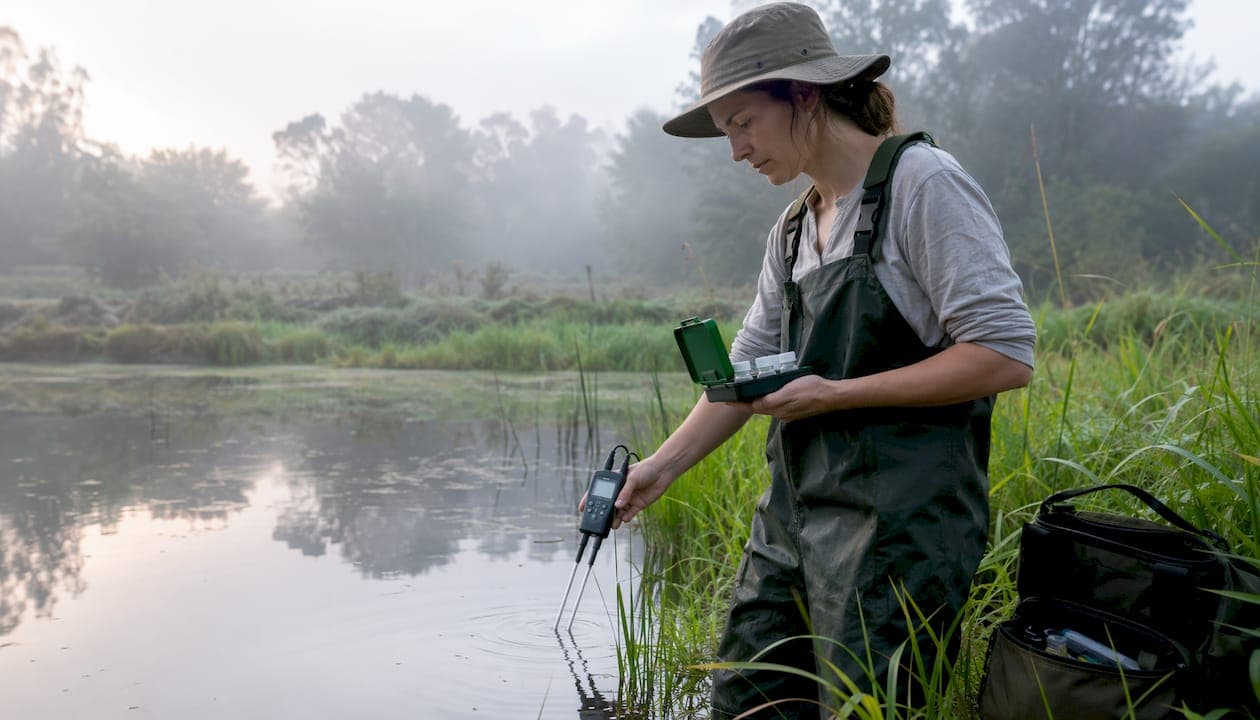
Organic aquatic food production is a specialized form of aquaculture where fish, shellfish, crustaceans, and algae are farmed under strict ecological and welfare standards. The core principle is simple: work with natural biological processes rather than against them. That means no antibiotics, no synthetic growth hormones, and no genetically modified organisms at any stage of production. Species covered range from finfish like salmon and trout to molluscs, crustaceans, and seaweed, raised in systems that include land-based tanks, marine net pens, and managed ponds.
What separates organic aquaculture from conventional farming is not just what producers avoid. It is how the entire system is designed:
- Stocking densities are kept low to reduce stress and protect surrounding ecosystems
- Feed must come from sustainable, traceable sources, with strict limits on synthetic additives
- Animal welfare is treated as a production standard, not an afterthought
- Biodiversity preservation and ecosystem health are built into site management
- Full traceability from water to consumer is mandatory for certification
How organic aquatic food is produced: core practices and methods
Organic aquaculture is best understood as ecosystem-based management that respects biological cycles rather than simply avoiding conventional inputs. The distinction matters because it shapes every operational decision on the farm.
Species selection comes first. Producers choose species suited to local conditions and capable of thriving at low densities without pharmaceutical intervention. Salmon, trout, carp, sea bass, sea bream, and mussels are among the most commonly certified organic species.
Production systems vary by species and geography:
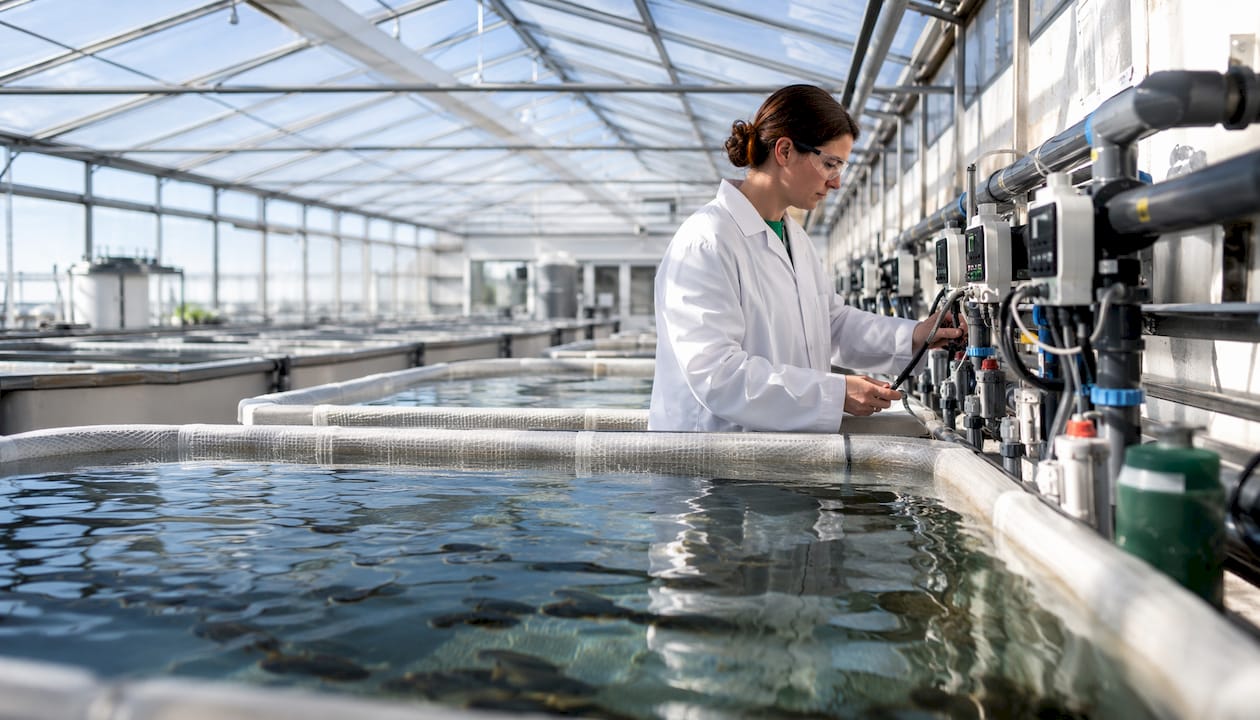
- Recirculating aquaculture systems (RAS) treat and reuse water with minimal discharge, giving producers tight control over temperature, salinity, and pathogen exposure
- Flow-through raceways divert water from natural sources through shallow tanks, commonly used for rainbow trout
- Pond systems rely on natural biological processes and are well-suited to carp and tilapia under organic management
- Marine net pens confine finfish in mesh enclosures anchored in coastal waters, with waste management as a key compliance requirement
Closed-containment systems reduce environmental risks compared to open-net pens and make organic certification compliance significantly more achievable. Disease prevention relies on preventive husbandry: maintaining water quality, avoiding overcrowding, and selecting disease-resistant strains. When treatment is necessary, only approved natural remedies are permitted. Synthetic chemicals are off the table.
Harvesting follows protocols designed to minimize stress. Organic standards require that collection methods cause minimal harm to the animals and do not negatively affect the surrounding natural environment.
What organic fish feed actually requires
Feed is where organic aquaculture gets technically demanding, and where most producers face their steepest compliance challenge.
The foundational rule: at least 50% of aquatic protein in feed must come from seafood by-products, specifically from fish processed for human consumption. This circularity principle keeps organic aquaculture from drawing down wild fish stocks just to feed farmed ones.
- Feed ingredients from the same species being farmed are explicitly prohibited to prevent ecosystem depletion
- Synthetic dyes and growth promoters found in conventional salmon feed are banned; color in the final product must come naturally from diet
- Genetically modified ingredients are prohibited throughout the feed supply chain
- Naturally sourced vitamins and pigments are permitted as nutritional additives
- When certified organic feed is genuinely unavailable, a limited and temporary allowance for conventional feed exists, but this is tightly regulated and time-bound
The sourcing logic is circular by design. By-products from sustainable fisheries, trimmings from human seafood processing, and organic agricultural ingredients form the backbone of compliant feed. Novel ingredients like microalgae, yeast meals, and insect-derived proteins are gaining regulatory attention as future-proof alternatives, particularly as the insect feed sector develops rapidly within organic frameworks.
Pro Tip: When evaluating an organic aquaculture operation, ask specifically about their feed certification chain. Feed compliance is the most common point of failure in organic audits, and a producer who cannot trace every ingredient back to a certified source is not genuinely organic.
How organic aquaculture benefits the environment
The environmental case for organic seafood production is grounded in measurable operational differences, not marketing language.
Stocking densities in organic systems are strictly regulated to protect surrounding ecosystems. Lower densities mean less waste accumulation, reduced oxygen depletion in surrounding waters, and lower disease pressure without chemical intervention. The result is a smaller footprint per kilogram of fish produced.
- Effluent management requirements reduce nutrient loading into waterways
- Prohibition on synthetic chemicals lowers the risk of antibiotic resistance spreading through aquatic environments
- By using by-products from human seafood consumption as feed inputs, organic operations reduce pressure on wild fish stocks
- Ecosystem-based site selection and management preserve local biodiversity rather than displacing it
Organic aquaculture currently represents a small but growing share of EU aquaculture production, reflecting increasing consumer demand for sustainably produced seafood. That share is still small, but the trajectory reflects real market pull rather than regulatory pressure alone.
Globally, aquaculture supplies more than 50% of all seafood produced for human consumption. As that share grows, the production methods used will determine whether aquaculture relieves or compounds pressure on marine ecosystems. Organic certification is one of the few frameworks that legally binds producers to ecological outcomes, not just output targets.
Certification and regulatory standards for organic aquatic food in the U.S.
The U.S. regulatory picture for organic aquaculture is genuinely complicated, and producers need to understand why.
The USDA's National Organic Program (NOP) governs organic certification for crops and livestock, but aquatic animals have never been formally included in the Final Rule. The USDA's National Organic Standards Board established an Aquatic Task Force to develop recommendations, and those were submitted over two decades ago, yet a finalized federal organic aquaculture standard still does not exist. That gap means U.S. producers seeking organic certification for aquatic products typically pursue private certification through internationally recognized bodies.
The Soil Association is the most established certifier in this space. Its aquaculture standards comply with retained EU regulations (EC) 834/2007, (EC) 889/2008, and (EU) 2018/848, and the Soil Association is the only UK certifier accredited by IOAS to certify to the Canadian Organic Regime (COR). Naturland, based in Germany, is another major private certifier with active programs in North America.
| Certification element | Requirement |
|---|---|
| Conversion period | Typically at least 15 months of documented compliance before organic marketing |
| Supply chain inspection | Entire chain from aquatic environment to consumer must be audited |
| Record keeping | Full traceability of inputs, outputs, feed sources, and product movement |
| Environmental assessment | Required for sites producing above threshold volumes |
| Labeling | Must conform to the certifying body's approved product schedule |
Certification involves extensive documentation: water quality records, sediment testing, feed ingredient traceability, veterinary health plans, and environmental impact assessments. Producers must demonstrate compliance at every production stage, not just at point of sale. Annual audits are standard, with corrective action processes triggered whenever a standard is not met.
Innovations in organic aquatic feed: microalgae-fed live brine shrimp
One of the most practical advances in organic aquatic feed is happening at the live feed level, specifically with brine shrimp cultivated on microalgae rather than harvested from the wild.
Wild-harvested brine shrimp carry a well-documented problem: nutritional inconsistency. Animals collected from natural salt lakes are often in a starved or nutritionally depleted state, with protein content that varies by season, location, and collection timing. That variability translates directly into inconsistent fish health outcomes.
Demeterbioscience addresses this with a land-based cultivation system where brine shrimp are fed exclusively on Dunaliella algae, a microalgae strain that delivers consistent high-protein nutrition with at least 40% protein content per batch. The controlled environment eliminates the seasonal variability and starvation conditions that make wild-harvested brine shrimp an unreliable feed source.
- Cultivation in closed land-based systems prevents contamination from wild pathogens
- Exclusive Dunaliella feeding produces predictable nutritional profiles batch to batch
- No wild fish stocks are drawn upon, keeping the feed chain genuinely sustainable
- The system aligns with organic aquaculture's core requirement for traceable, controlled feed inputs
For aquaculture operations, ornamental fish producers, and aquarium facilities, this approach solves a real problem. You can learn more about sustainable feed sourcing and how microalgae-based feeds fit within certified organic production frameworks.
What "organic" actually means in aquatic food standards
The term "organic" applied to aquatic food carries specific legal and technical meaning that differs from its use in terrestrial agriculture, and the distinction is worth understanding clearly.
Organic aquatic food production is not simply "natural" farming or low-input aquaculture. It is a certified system where producers must demonstrate compliance with defined ecological management principles, verified by an accredited third party, at every stage from juvenile sourcing through harvest and processing.
The core standards, as codified in frameworks like the Soil Association's GB Organic Regulation and Naturland's international standards, require:
- Production based on ecological system design and biological process management
- Use of living organisms and mechanical methods rather than synthetic chemical interventions
- Sustainable exploitation of fisheries resources as defined by applicable regulations
- High animal welfare standards specific to each species' behavioral and physiological needs
- Continuous health of the aquatic environment and surrounding terrestrial ecosystems
The IFOAM Basic Standards for Organic Aquaculture, first adopted in 2000, established the global framework that most national and private standards now build on. In the U.S., the absence of a finalized federal rule means that "organic" on a seafood label reflects private certification rather than USDA oversight, which is why understanding which certifying body issued the certification matters when you are evaluating a product's claims.
Challenges that make organic aquaculture genuinely difficult
Organic aquaculture is not a harder version of conventional farming. It is a fundamentally different operating model, and several of its constraints have no easy workaround.
Feed supply is the biggest bottleneck. Certified organic aquatic feed is expensive, often scarce, and subject to supply shocks. Feed represents one of the largest cost drivers in organic aquaculture operations, and when organic-certified ingredients are unavailable, producers face a compliance bind: use non-organic inputs and risk certification, or reduce production. The economic viability of organic aquaculture depends heavily on certified feed costs and consumers' willingness to pay premium prices.
Juvenile sourcing presents a parallel problem. Organic standards require that animals be raised under organic management from birth or hatching, but certified organic juveniles are difficult to source in many markets. Producers who cannot secure organic-certified stock face regulatory barriers before they have raised a single fish.
Regulatory complexity discourages investment. In the U.S., the lack of a federal organic aquaculture standard creates uncertainty for producers considering the transition. Private certification is available but adds cost and complexity, and the absence of USDA backing limits the marketing value of the certification for domestic consumers.
Disease management without synthetic pharmaceuticals requires a higher baseline of husbandry skill. When disease pressure rises, organic producers have fewer tools available, and the consequences of an outbreak in a low-density, chemical-free system can be severe.
Scale economics work against small operators. Closed-containment systems that best support organic compliance carry high capital costs. Recirculating aquaculture systems require significant upfront investment in filtration, monitoring, and energy infrastructure, costs that are difficult to recover at small production volumes.
Key Takeaways
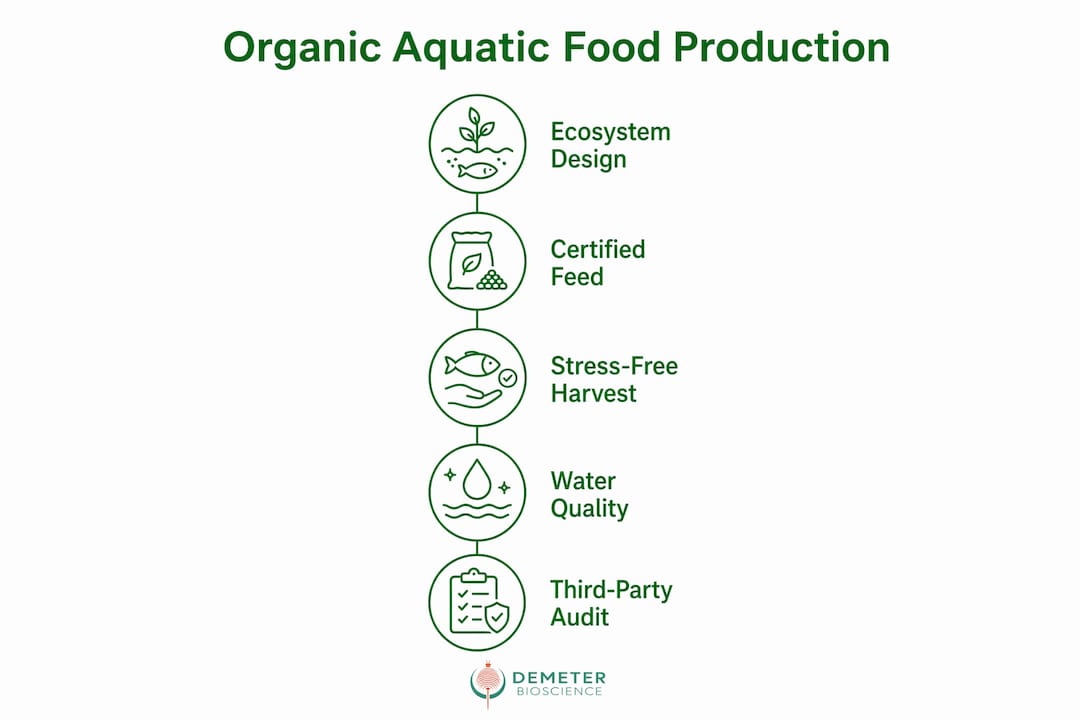
Organic aquatic food production requires ecological system design, certified feed sourcing, and third-party verification at every production stage, from juvenile to final sale.
| Point | Details |
|---|---|
| No synthetic inputs | Antibiotics, synthetic hormones, GMOs, and synthetic dyes are prohibited throughout production. |
| Feed traceability is mandatory | At least 50% of aquatic protein in feed must come from sustainable seafood by-products. |
| Certification requires a documented compliance period | Producers must show at least 15 months of documented compliance before marketing products as organic. |
| U.S. lacks a federal standard | No finalized USDA rule exists for organic aquaculture; private certification through bodies like Soil Association or Naturland fills the gap. |
| Microalgae-fed live feed improves consistency | Land-based brine shrimp fed on Dunaliella algae deliver at least 40% protein, eliminating wild-harvest variability. |
Demeterbioscience produces live brine shrimp cultivated on Dunaliella microalgae in a controlled land-based system, delivering consistent nutrition that wild-harvested alternatives cannot match. Whether you are supplying an aquaculture operation, a public aquarium, or a local fish store, the nutritional reliability of a controlled organic feed source changes what your fish can achieve.
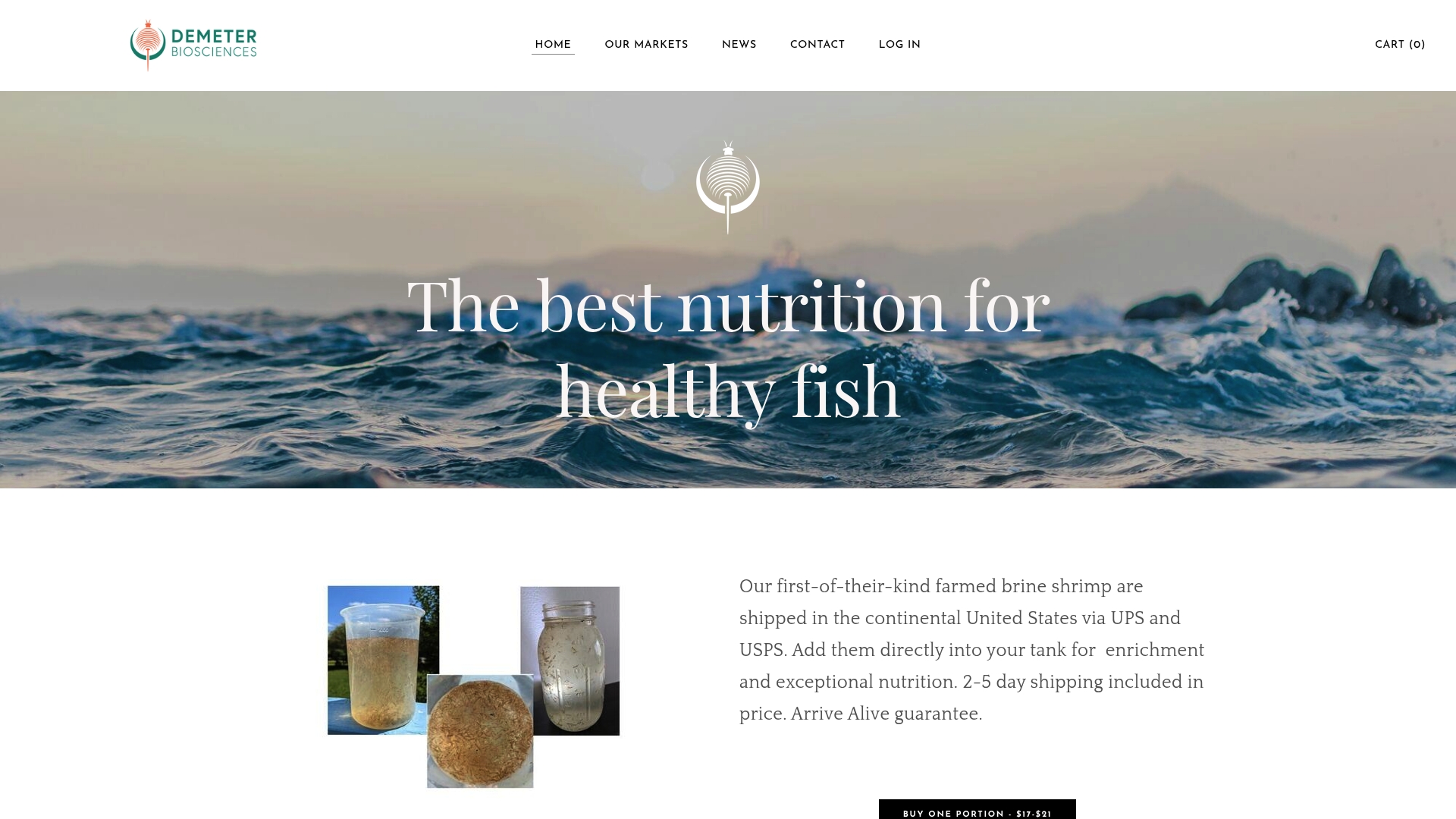
Explore Demeterbioscience's full range of organic brine shrimp products and see how microalgae-fed live feed fits your operation.