

Promoting land-based farmed aquatic products is defined as the deliberate use of marketing, certification, and stakeholder education to grow consumer demand for fish and seafood raised in controlled, soil-based systems rather than open-water environments. The industry term for these systems is land-based aquaculture, which includes Recirculating Aquaculture Systems (RAS) and other closed-loop production models. Aquaculture professionals now have real legislative momentum behind them: New Jersey signed bill A3034 into law in january 2026, formally including aquaculture in state agricultural marketing programs. That single policy shift opens access to certification seals, co-op advertising funds, and traceability tools that were previously unavailable to farmed seafood producers. Consumer demand for traceable, domestically grown protein is accelerating, and land-based aquaculture sits at the center of that trend.
What legislative and market trends support promoting land-based farmed aquatic products?
The regulatory environment for sustainable aquaculture promotion shifted meaningfully in 2026. New Jersey's inclusion of aquaculture in its agricultural marketing program is the clearest example. Producers can now use state-backed certifications to signal product quality and traceability directly to retailers and consumers. That kind of third-party validation closes the credibility gap that generic "sustainable" labels cannot.
Market demand is reinforcing the legislative push. Canada's food and beverage sector shows what happens when an industry commits to domestic sourcing: producers who previously exported most of their output are now redirecting supply toward local chains to capture economic value at home. Retailers and restaurants in that market are actively seeking traceable, locally grown aquatic products. The same appetite exists in the United States, and it is growing.
Several demand drivers are converging right now:
- Supply chain security. Buyers burned by pandemic-era import disruptions want domestic sources they can count on.
- Consumer wellness trends. Shoppers read labels and ask where their protein comes from. Farmed, traceable seafood answers that question clearly.
- Retail differentiation. Grocery chains and food service operators use local origin stories to stand out on the shelf and on the menu.
- Policy alignment. State marketing programs now give producers the tools to tell those stories with official backing.
Pro Tip: Apply for your state's agricultural marketing program as soon as aquaculture is included. Early adopters get first access to co-branded promotional materials and buyer introductions that late entrants have to build from scratch.
What environmental and operational advantages support your marketing message?
Land-based aquaculture's environmental profile is its strongest marketing asset. RAS technology recycles 90–99% of water, making inland fish farming viable in regions that could never support open-net cage operations. That number is not just an engineering achievement. It means a producer in Kansas or Ohio can raise salmon or tilapia with a fraction of the water footprint of conventional aquaculture.
The environmental benefits stack up quickly:
- No fish escapes. Closed systems eliminate the genetic contamination risk that plagues open-net cage operations in coastal waters.
- Zero sea lice. Without ocean exposure, parasites that devastate marine farms simply cannot establish.
- Nutrient capture. RAS effluent fertilizes regenerative farms, turning waste into a value-added input for neighboring agriculture.
- Pollution control. Closed-loop systems contain all discharge, preventing the nitrogen and phosphorus runoff that degrades coastal ecosystems.
- Consistent product quality. Controlled water temperature, oxygen levels, and feed schedules produce fish with predictable size, texture, and flavor.
Statistic callout: RAS systems recycle up to 99% of production water. For context, that means a facility raising 100,000 pounds of fish per year uses roughly the same water as a conventional farm raising a fraction of that volume.
Positioning these facts in your promotional materials does two things. It gives buyers a concrete reason to choose your product over imports. It also pre-empts the skepticism that "sustainable" claims often attract, because the numbers are specific and verifiable.
How to develop compelling promotional strategies for land-based farmed aquatic products
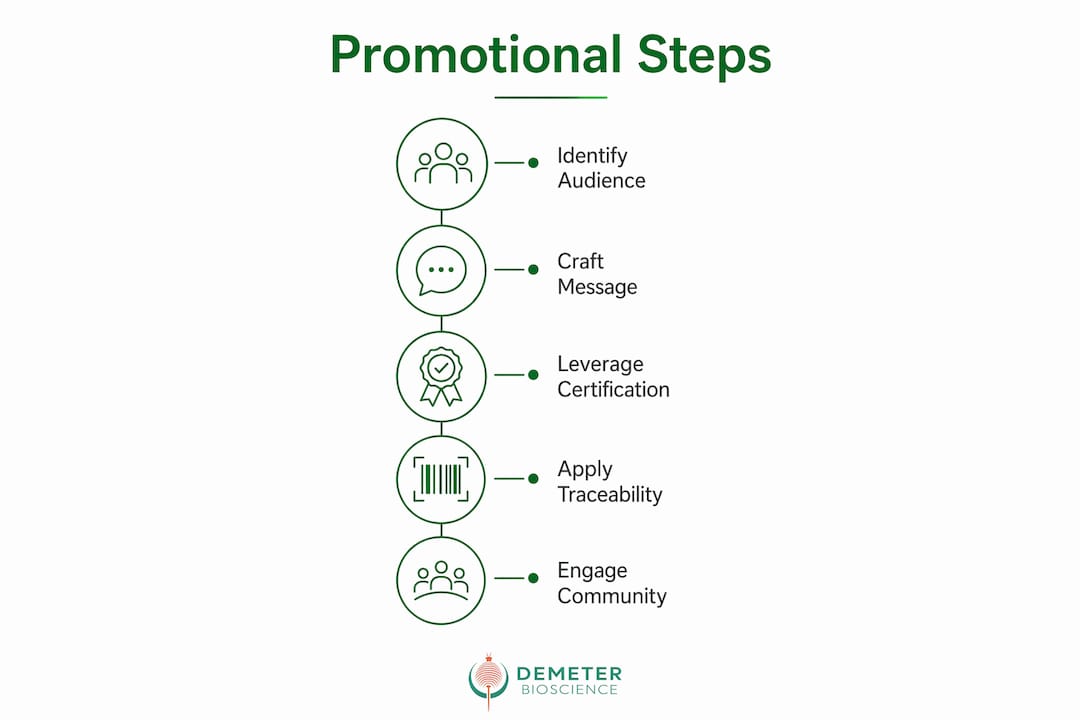
Effective promotion of land-based farmed aquatic products follows a clear sequence. Start with the story, then build the proof, then take it to market.
- Build a domestic origin narrative. Local origin stories resonate with retailers and restaurants more than abstract sustainability claims. Name the state, the county, even the facility. Buyers want to tell their customers where the fish came from.
- Pursue state certification. New Jersey's 2026 program is a model. A state seal on your packaging signals quality to consumers who do not know your brand yet. It also qualifies you for co-op marketing funds that reduce your promotional costs.
- Target food and beverage buyers directly. Chefs and food service directors respond to freshness and supply reliability. Offer farm tours, sample tastings, and guaranteed delivery windows. Those experiences convert faster than any brochure.
- Partner with retailers who prioritize local sourcing. Independent grocery stores and regional chains often have "local" shelf programs. Getting your product into those programs puts your origin story in front of shoppers at the moment of purchase.
- Invest in consumer education. Most shoppers do not know what land-based aquaculture means. Short videos, in-store signage, and QR codes linking to farm footage close that knowledge gap. Demeterbioscience's customer education approach demonstrates how product-level education builds lasting buyer confidence.
The table below maps each strategy to its primary audience and the proof point that makes it credible.
| Promotional strategy | Primary audience | Key proof point |
|---|---|---|
| Domestic origin narrative | Retailers, food service | State of origin, farm name, harvest date |
| State certification seal | End consumers | Official program logo, traceability code |
| Farm tours and tastings | Chefs, buyers | Direct sensory experience, supply reliability |
| Local shelf programs | Grocery shoppers | "Grown in [State]" label, freshness date |
| Consumer education content | General public | Farm footage, water reuse statistics |
Pro Tip: Pair your traceability QR code with a single compelling fact, such as the percentage of water your system recycles. Shoppers scan codes when they see a number that surprises them.
What technical prerequisites support credible promotion and adoption?
Credible promotion of land-based aquatic products starts with operational mastery. Buyers and regulators will scrutinize your claims, and the only defense is a system that performs exactly as described.
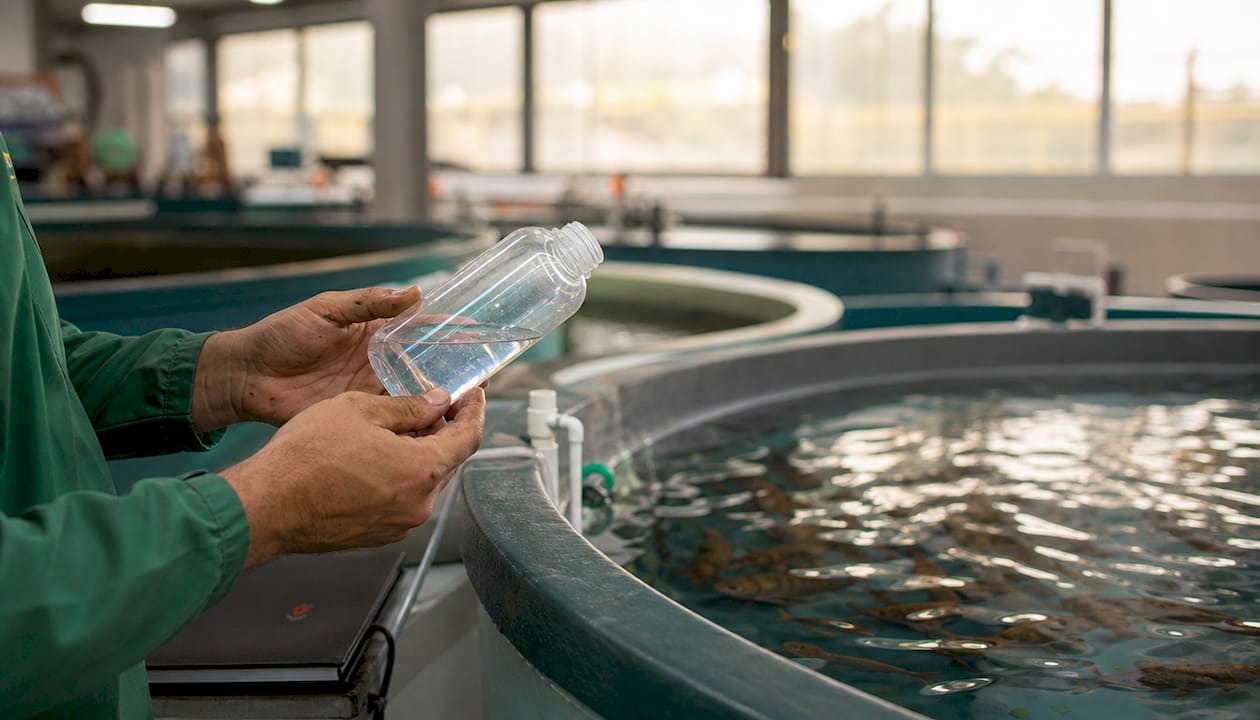
Water parameter control is the foundation of every RAS operation. Minor deviations in dissolved oxygen, pH, or ammonia concentration affect fish health within hours. Operators who cannot demonstrate consistent water quality data cannot credibly claim premium product standards.
The technical prerequisites for a promotable land-based operation include:
- Interdisciplinary expertise. Successful RAS operators combine biological knowledge, veterinary oversight, and mechanical engineering. No single discipline is sufficient.
- Vertical integration. Controlling feed inputs, water treatment, and harvest logistics gives you the consistency that premium buyers require.
- Nutrient reuse systems. Capturing and redirecting effluent to agricultural partners is both an environmental benefit and a cost offset that improves your unit economics.
- Capital planning. High upfront investment and operational complexity are real barriers. Transparent communication about these demands builds stakeholder trust rather than eroding it.
- Documentation culture. Every water test, feed log, and harvest record is a marketing asset. Buyers who ask for traceability data get it immediately.
Sourcing sustainable aquatic feed products that match your system's nutritional standards is equally non-negotiable. Feed quality directly determines the protein content, flavor, and consistency of your final product.
How to troubleshoot common challenges when promoting land-based aquatic products
Promotion barriers fall into three categories: misconceptions, regulatory friction, and distribution gaps. Each requires a different response.
The most common misconception is that land-based aquaculture is a niche or experimental practice. Circular aquaculture systems are now operating at commercial scale across multiple continents, with policy frameworks actively supporting their expansion. Citing specific operating examples and regulatory milestones counters that perception directly.
Skepticism about sustainability claims is the second barrier. Generic language invites doubt. Specific, verifiable data does not. Replace "eco-friendly" with "recycles 99% of production water and produces zero discharge." Replace "sustainable" with "certified under [State] agricultural marketing program."
"Transparency is not a marketing tactic. It is the product. When buyers can trace every fish back to a specific tank, a specific feed batch, and a specific water quality log, the story sells itself."
Distribution challenges are practical, not philosophical. Land-based facilities are often inland, far from traditional seafood distribution networks. Building direct relationships with regional distributors and food service buyers shortens that gap. Continuous communication, including regular harvest updates and supply forecasts, keeps buyers confident in your reliability.
Key Takeaways
Promoting land-based farmed aquatic products requires combining legislative tools, environmental proof points, and specific origin narratives to build durable buyer trust.
| Point | Details |
|---|---|
| Legislative access | New Jersey's 2026 law gives aquaculture producers access to state marketing programs and certification seals. |
| RAS water efficiency | Recirculating systems recycle 90–99% of water, a verifiable claim that anchors sustainability messaging. |
| Origin storytelling | Domestic origin narratives with named locations convert retailers and food service buyers faster than generic claims. |
| Technical credibility | Water parameter mastery and documented traceability records are prerequisites for premium market positioning. |
| Transparency as strategy | Specific, verifiable data replaces vague sustainability language and pre-empts buyer skepticism. |
Why aquaculture promotion works best as a community conversation
Aquaculture professionals sometimes treat promotion as a downstream activity, something that happens after the fish are in the tank. That framing is backward. The most effective promotion starts before the first harvest, when you are still building relationships with neighboring farmers, local distributors, and community stakeholders.
Framing land-based aquaculture as a partner to existing agriculture rather than a competitor changes how rural communities receive it. When your RAS effluent fertilizes a neighboring vegetable farm, that farmer becomes an advocate. When your facility hires locally and buys feed inputs from regional suppliers, the economic case for your operation extends beyond your own balance sheet.
Stewardship is the word I keep coming back to. Water integrity, product consistency, and community trust are not separate goals. They are the same goal expressed at different scales. Operators who understand that connection build sustainable aquaculture benefits that outlast any single marketing campaign.
The education piece matters more than most professionals expect. Urban consumers and rural stakeholders alike need plain-language explanations of what RAS is, why it matters, and what it produces. Knowledge-sharing is not a soft skill. It is the mechanism by which a niche production method becomes a mainstream food category.
— Demeter
Demeterbioscience: a feed partner for land-based aquaculture professionals
Consistent product quality starts with consistent nutrition, and that begins at the feed level.
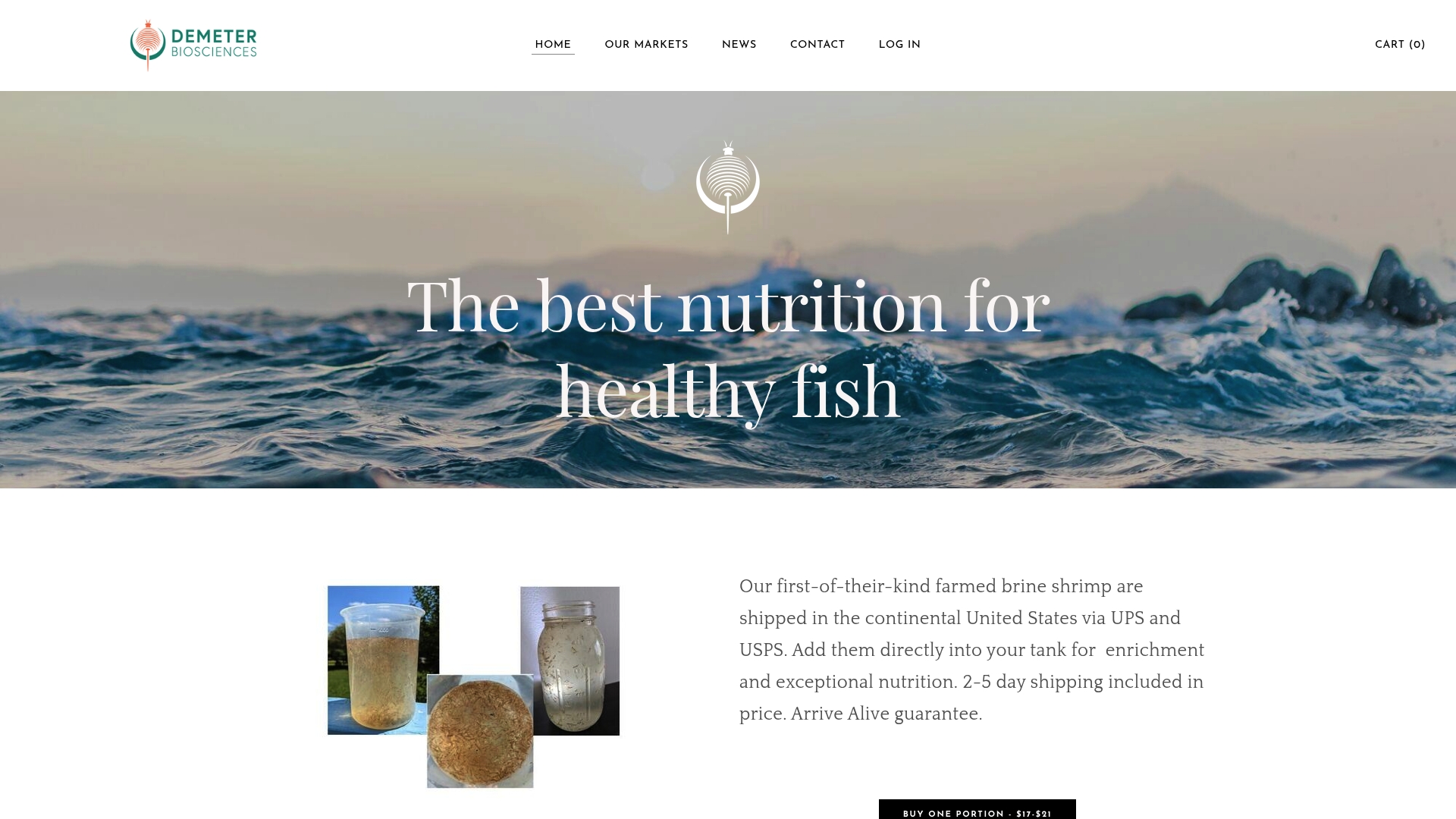
Demeterbioscience produces live brine shrimp raised exclusively on the microalgae Dunaliella in controlled, land-based systems, delivering at least 40% protein content with none of the seasonal variability found in wild-harvested alternatives. For aquaculture professionals who need a reliable, traceable feed input to support premium product claims, Demeterbioscience offers direct shipments, monthly subscription plans, and bulk retail orders scaled to facility size. Every batch comes from a controlled cultivation environment, giving you the documentation and consistency that buyers and certifiers expect. When your promotion depends on product integrity, your feed supply has to match that standard.
FAQ
What is land-based aquaculture?
Land-based aquaculture is the practice of raising fish and other aquatic species in controlled, soil-based systems such as Recirculating Aquaculture Systems (RAS), rather than in open-water cages or ponds. These systems recycle up to 99% of production water and eliminate environmental risks like fish escapes and sea lice.
How does New Jersey's 2026 legislation help aquaculture producers?
New Jersey's bill A3034, signed in january 2026, formally includes aquaculture in the state's agricultural marketing program. Producers can now access state-backed certification seals, co-op advertising funds, and traceability tools previously reserved for land-based agriculture.
What makes a "grown domestically" claim credible to buyers?
Credible domestic origin claims include a named state or facility, a harvest date, and a verifiable traceability code. Retailers and food service buyers respond to specific proof, not generic language, so pairing origin claims with water quality data or state certification seals closes the deal faster.
Why do RAS systems support stronger marketing claims than open-net farms?
RAS systems produce verifiable, documented data on water quality, feed inputs, and harvest conditions that open-net farms cannot match. That documentation is the foundation of premium positioning, state certification eligibility, and buyer trust in traceable seafood supply chains.
How can aquaculture professionals overcome consumer skepticism about farmed seafood?
Replace vague sustainability language with specific, verifiable numbers such as water recycling rates, discharge levels, and certification program names. Consumer education content, including farm footage and QR-linked traceability records, converts skeptics by making the production process visible and concrete.