
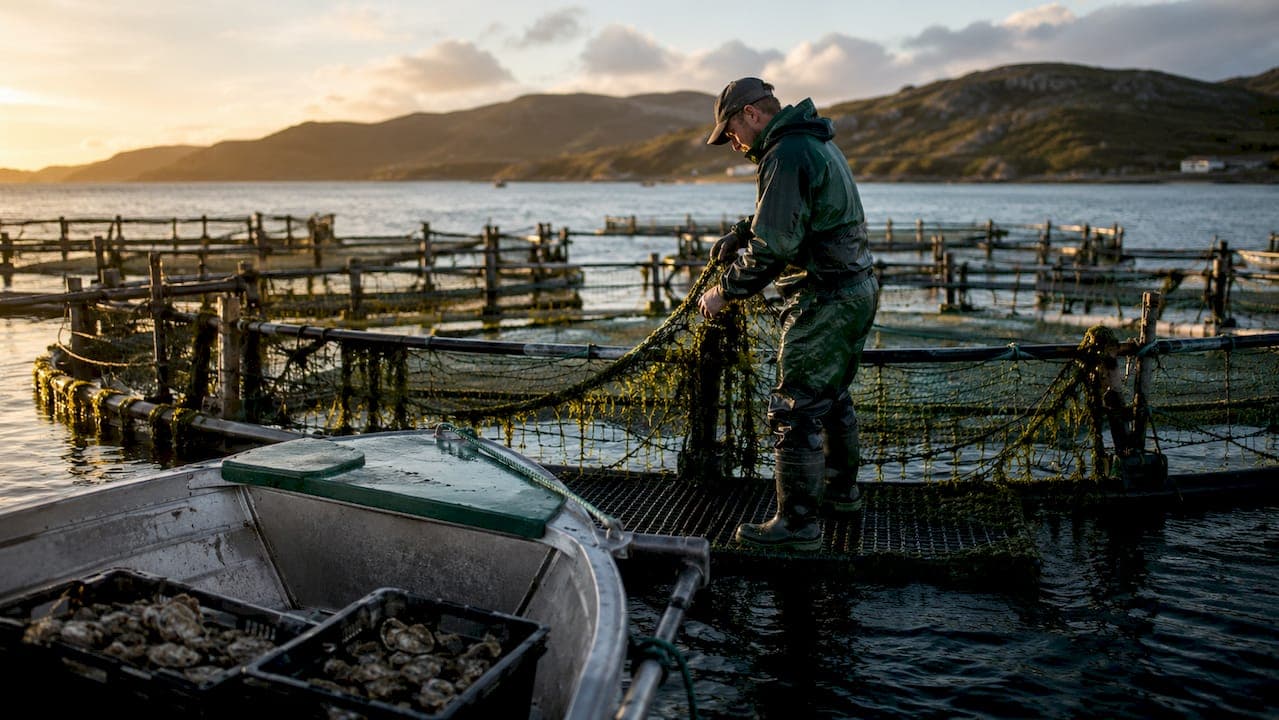
Sustainable aquaculture is defined as the practice of farming aquatic organisms under controlled conditions that protect ecosystems, maintain consistent yields, and support local economies. Why sustainable aquaculture benefits local retailers comes down to three concrete advantages: predictable supply, lower sourcing costs, and a growing consumer base that pays more for responsibly raised seafood. The Maine Aquaculture Association reports that Maine's aquaculture sector grew by 51% between 2014 and 2023, contributing $208.1 million annually to the local economy. That growth signals a market shift retailers cannot afford to ignore. Certifications like the Aquaculture Stewardship Council (ASC) standard give retailers a credible sourcing framework that consumers recognize and trust.
Why sustainable aquaculture benefits local retailers economically
Sustainable aquaculture gives local retailers something wild fisheries cannot: a year-round, predictable supply of seafood. Wild catch fluctuates with seasons, weather, and fish population cycles. Farmed aquaculture removes those variables, letting retailers plan inventory, set stable prices, and reduce the cost of last-minute sourcing.

The economic numbers behind local aquaculture are concrete. Maine's aquaculture industry generated $105.9 million in direct output, $57.5 million in supply chain effects, and $44.7 million in household spending effects in a single reporting period. Those figures show that when retailers source locally, money circulates within the community rather than leaving it.
Proximity to production also cuts logistics costs. Farming near consumer markets reduces transport emissions and fuel consumption compared to importing seafood from distant fisheries. For a local retailer, that means lower freight bills and a fresher product on the shelf.
The job creation effect compounds the benefit. Maine aquaculture added 1,720 new jobs over the same nine-year period. More local jobs means more local customers with spending power, and those customers tend to shop where they feel a community connection.
Key economic advantages for local retailers include:
- Stable pricing: Farmed yields reduce the price spikes tied to wild catch shortages.
- Reduced import dependency: Local sourcing cuts exposure to currency fluctuations and international shipping delays.
- Supply chain transparency: Shorter supply chains make traceability easier and cheaper to document.
- Community reinvestment: Local sourcing keeps revenue within the regional economy, strengthening the customer base.
How sustainable aquaculture aligns with retailer environmental values
Sustainable aquaculture reduces pressure on wild fish populations by shifting production to controlled land-based or near-shore systems. That shift matters to retailers because consumer scrutiny of sourcing practices has intensified. A retailer that sources from certified farms signals environmental responsibility without relying on vague marketing claims.
Closed-loop systems like recirculating aquaculture systems (RAS) and aquaponics take environmental performance further. Circular aquaculture systems concentrate waste 10–100 times compared to flow-through systems, allowing operators to convert that waste into fertilizer or feed inputs. For retailers, this means their supplier is turning a cost center into a revenue stream, which supports long-term price stability.
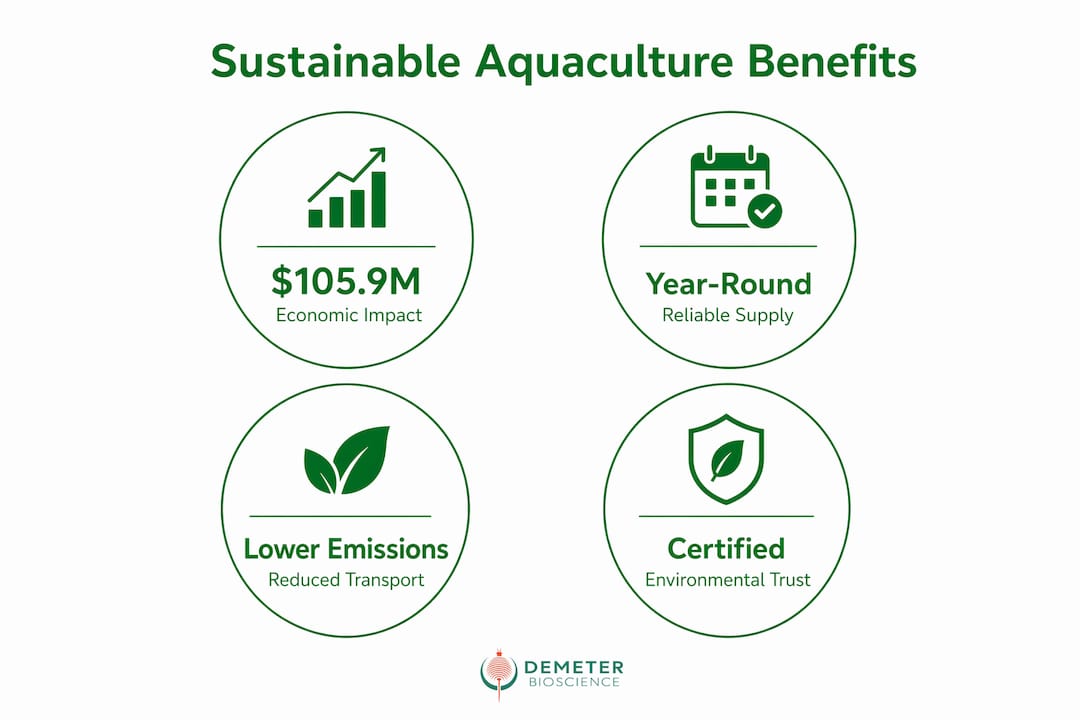
The Aquaculture Stewardship Council (ASC) certification provides retailers with a third-party verified signal of responsible sourcing. Buyer commitment drives certification: when retailers require ASC-certified product, farms invest in better practices to retain that business. The retailer's purchasing decision directly improves farm-level environmental outcomes.
Retailers who source from farmed fish feed operations also benefit from the environmental advantages of controlled nutrition systems, which avoid the bycatch and habitat damage associated with wild feed harvesting.
Pro Tip: Request a life-cycle assessment from your aquaculture supplier, not just a certification label. Holistic environmental reporting covers water use, feed sourcing, and waste management, giving you a stronger sustainability claim than a logo alone.
Retailers who go beyond the label by requiring full life-cycle assessments build stronger brand alignment and avoid the credibility risk of "siloed" sustainability claims that only address one part of the supply chain.
How does sustainable aquaculture improve consumer engagement for retailers?
Consumers in 2026 favor local and sustainably sourced products, and they reward transparency with loyalty. Retailers who make their aquaculture sourcing visible, whether through in-store signage, QR codes linking to farm profiles, or on-site production displays, give shoppers a reason to return.
The most compelling example of retail-integrated aquaculture comes from a French retailer that installed a 400 m² aquaponics farm inside its store, combining fish and vegetable production in a closed circuit system. The farm educated customers, improved perceived product freshness, and made food production tangible. Retailers who replicate even a scaled-down version of that model create a differentiated shopping experience that no online competitor can match.
A 2026 study of Virginia independent food retailers confirmed that sustainability aligns with profit when it matches specific customer expectations. Retailers who understand their customer base before investing in sustainable sourcing see better returns than those who adopt sustainability as a blanket policy.
Four steps to build consumer engagement through sustainable aquaculture:
- Display sourcing information prominently. Post farm names, locations, and certifications at the point of sale. Shoppers who know where their food comes from spend more.
- Use QR codes linked to farm profiles. A two-second scan gives customers full traceability without cluttering shelf space.
- Host in-store tasting or educational events. Live demonstrations of aquaponics or brine shrimp cultivation create memorable brand moments.
- Train staff on the sourcing story. A staff member who can explain why algae-fed shrimp taste better and carry more protein converts browsers into buyers.
Pro Tip: Retailers who tie sustainability messaging to specific product benefits, such as higher protein content or fresher flavor, convert more customers than those who lead with environmental claims alone.
Practical steps for integrating sustainable aquaculture into your supply chain
Integrating sustainable aquaculture into a retail supply chain starts with supplier evaluation. The process does not require a large budget, but it does require clear criteria.
Evaluate suppliers against these benchmarks:
- Certification status: Prioritize ASC-certified farms or farms actively working toward certification. Certification signals that a third party has verified environmental and social standards.
- Proximity: Shorter supply chains reduce transport costs and improve freshness. A local or regional farm is preferable to a distant certified farm when quality is comparable.
- Production method: Closed-loop systems like RAS or aquaponics carry lower environmental risk than open-net systems. Ask suppliers directly about their waste management and water use practices.
- Value-added processing capacity: Urban aquaculture operations that offer filleting, vacuum packaging, or portioning produce 72.1% of national output despite fewer farms. Suppliers with processing capacity reduce your post-harvest losses and simplify inventory management.
Once you have identified qualified suppliers, build the relationship formally. A written sourcing agreement that specifies delivery schedules, quality standards, and certification requirements protects both parties and gives your sustainability claims legal grounding.
Product diversification is the next lever. Sustainable aquaculture covers more than finfish. Live feeds, microalgae products, and ornamental species represent growing retail categories. Demeterbioscience, for example, supplies live brine shrimp cultivated on the microalgae Dunaliella, delivering at least 40% protein content with consistent nutritional quality. That product fits ornamental fish stores, aquarium retailers, and specialty food retailers looking to expand their sustainable offerings.
Supply chain transparency tools complete the picture. Digital traceability platforms let retailers share sourcing data with customers in real time, turning a back-office compliance exercise into a front-of-store marketing asset.
Key Takeaways
Sustainable aquaculture delivers economic stability, environmental credibility, and consumer loyalty to local retailers who source and communicate their supply chain choices with specificity.
| Point | Details |
|---|---|
| Economic stability | Local aquaculture provides year-round supply and reduces price volatility tied to wild catch shortages. |
| Community economic impact | Maine's aquaculture sector contributed $208.1 million annually and created 1,720 jobs, showing direct local benefit. |
| Environmental credibility | ASC certification and life-cycle assessments give retailers verified sustainability claims beyond basic labeling. |
| Consumer engagement | Visible sourcing, in-store displays, and staff education convert sustainability into measurable sales loyalty. |
| Supply chain integration | Evaluating suppliers by certification, proximity, and processing capacity reduces costs and post-harvest losses. |
What I've learned about sustainability as a retail strategy
The retailers who get the most out of sustainable aquaculture are not the ones with the biggest sustainability budgets. They are the ones who treat sourcing as a product feature, not a compliance checkbox.
The most common mistake I see is retailers who stock a certified product, put a logo on the shelf tag, and call it done. That approach misses the point entirely. Customers do not buy certifications. They buy stories, flavors, and trust. A retailer who can tell a customer exactly which farm raised their fish, what those fish ate, and why that matters to their health will outsell a competitor with a better logo every time.
Closed-loop systems like aquaponics and RAS are where the real opportunity sits for forward-thinking retailers. When waste becomes fertilizer and water gets recycled, the economics of sustainable production improve year over year. Retailers who partner with these operations early lock in pricing advantages before the broader market catches on.
The ornamental fish and specialty aquaculture segment is particularly underserved. Live feeds with verified nutritional profiles, like the microalgae-fed brine shrimp Demeterbioscience produces, give specialty retailers a product that wild-harvested alternatives simply cannot match for consistency. That consistency is what builds repeat customers.
Sustainability and profit are not in tension. They are the same goal, approached from different angles.
— Demeter
Demeterbioscience's sustainable aquaculture products for local retailers
Local retailers looking to act on the economic and environmental advantages covered in this article have a direct path forward with Demeterbioscience.
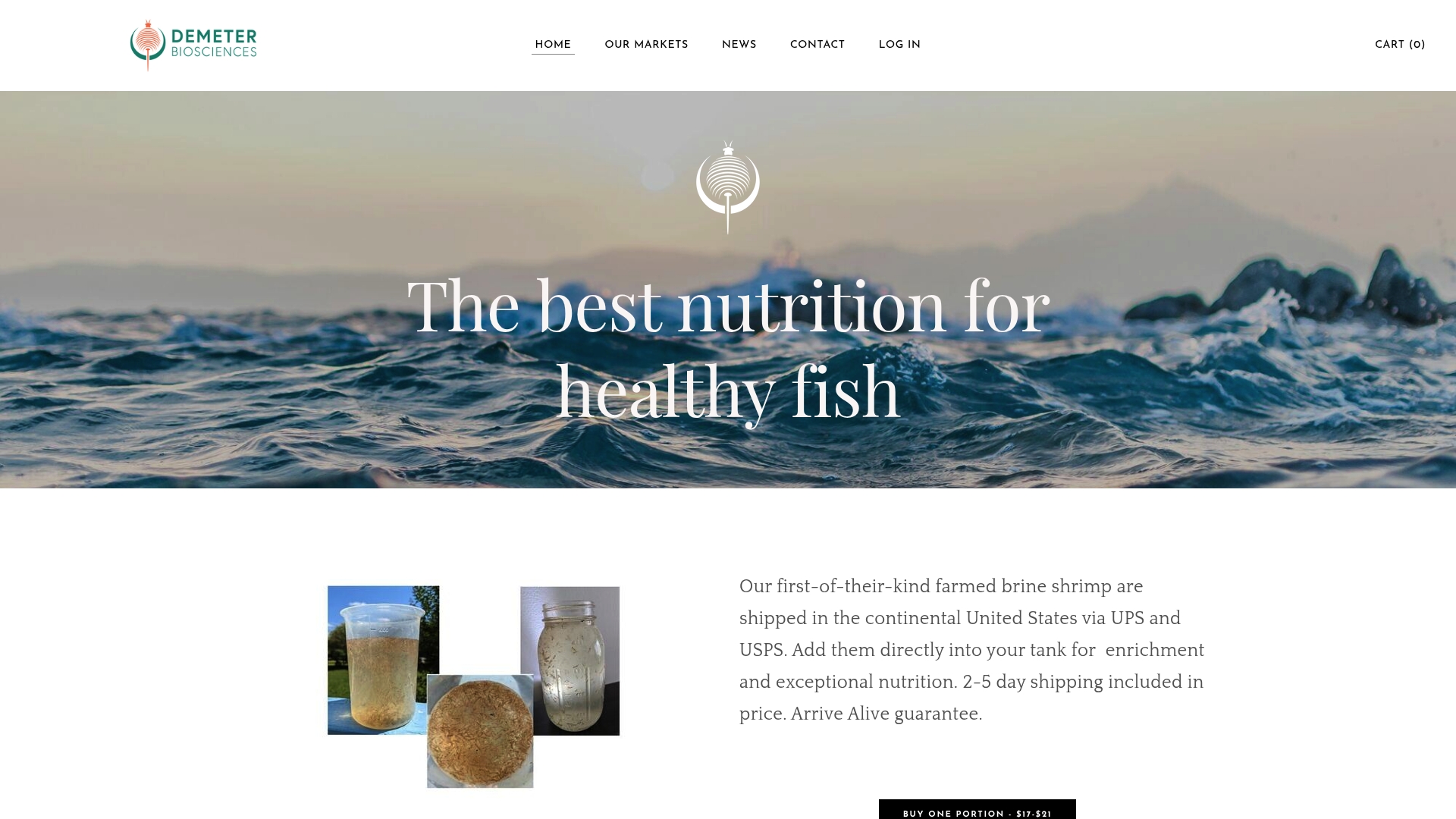
Demeterbioscience produces live brine shrimp cultivated on the microalgae Dunaliella in land-based, organic, closed systems. Every batch delivers at least 40% protein content, a consistency that wild-harvested brine shrimp cannot guarantee due to seasonal starvation conditions in natural ecosystems. Retailers can order through bulk retail packages designed for fish stores and aquarium retailers, or set up monthly subscription plans for predictable restocking. For retailers interested in the broader role of microalgae as fish feed, Demeterbioscience's research-backed approach offers a clear entry point into sustainable aquaculture supply.
FAQ
What is sustainable aquaculture?
Sustainable aquaculture is the controlled farming of aquatic organisms using methods that protect ecosystems, minimize waste, and maintain consistent yields. It differs from wild fisheries by removing seasonal variability and reducing pressure on natural fish populations.
How does aquaculture support local retailers financially?
Local aquaculture provides year-round supply stability, reduces transport costs, and keeps purchasing dollars within the regional economy. Maine's aquaculture sector contributed $208.1 million annually and added 1,720 jobs, demonstrating the direct financial impact on local communities.
What certifications should retailers look for in aquaculture suppliers?
The Aquaculture Stewardship Council (ASC) certification is the most recognized third-party standard for responsible aquaculture sourcing. Retailers should also request life-cycle assessments to verify environmental performance beyond the certification label.
How does on-site aquaculture improve customer loyalty?
Retail-integrated aquaponics farms make food production visible and educational, which increases perceived product quality and supports premium pricing. A 2026 study confirmed that sustainability practices aligned with customer expectations directly improve retailer profitability.
What aquaculture products work best for specialty retailers?
Live feeds with verified nutritional profiles, such as microalgae-fed brine shrimp, are well suited for ornamental fish stores and aquarium retailers. These products offer consistent protein content that wild-harvested alternatives cannot reliably provide.