
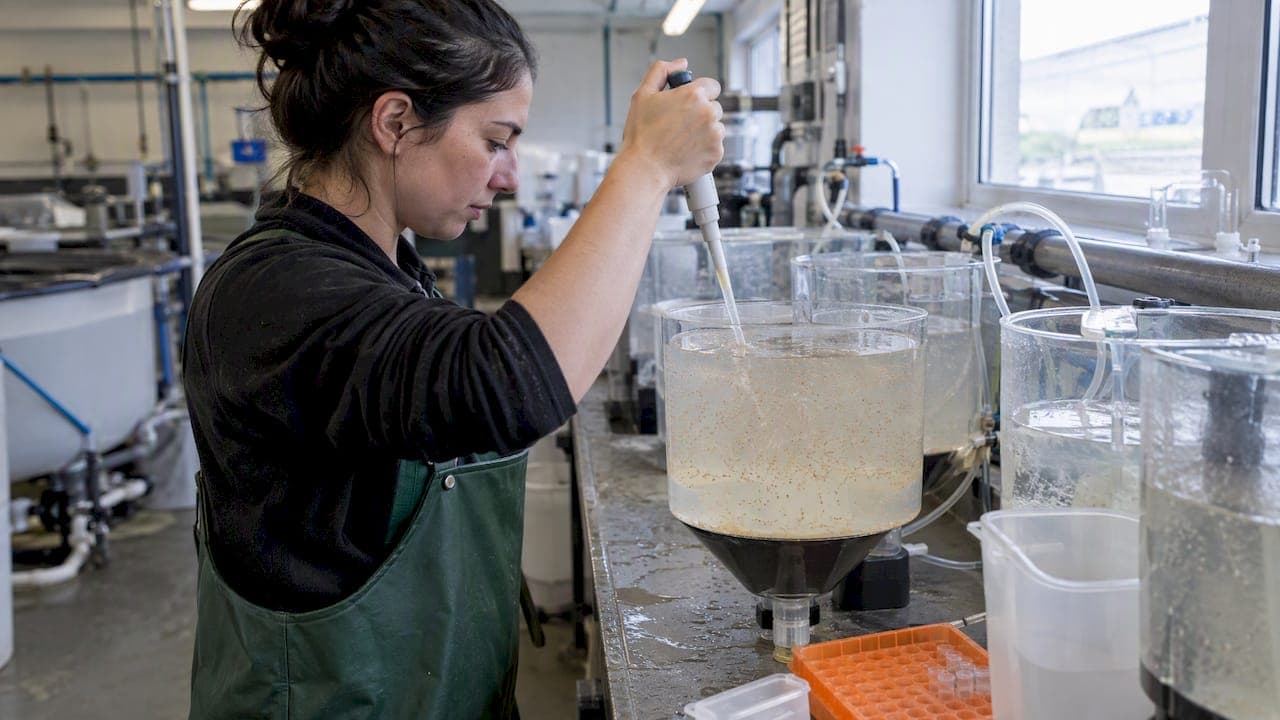
Yes, rotifers, Artemia, and other live feeds can carry and transmit bacterial and viral pathogens, and documented outbreaks tie them directly to larval mortality. Control priorities, in order, are sourcing from tested and traceable suppliers, routine monitoring and quarantine before first use, targeted non-antibiotic interventions when pathogens are detected, and avoiding indiscriminate antibiotic use. Trials with phage and endolysin treatments have already shown these tools can knock down Vibrio loads without wrecking the live feed's microbiome.
TL;DR:
- Routine testing with RT-qPCR for viruses and selective culture media for Vibrio provides early detection and prevents outbreaks in live feeds.
- Each live feed type carries specific risks, with rotifers frequently transmitting NNV and Vibrio, while Artemia eggs can harbor surface contamination.
- Non-antibiotic interventions such as probiotics, phages, and microalgae feeding effectively reduce pathogen loads without disrupting the microbiome.
- Sourcing from land-based, microalgae-fed Artemia reduces variability, pathogen exposure, and enhances traceability for better biosecurity.
- Proper handling, quarantine, and documentation of live feed batches are essential for limiting pathogen spread and preventing antibiotic resistance buildup.
Table of Contents
- Key pathogens documented in live feeds and their impacts
- How live feeds acquire, retain, and transmit pathogens
- Detecting and monitoring pathogens in live-feed cultures
- Mitigation strategies proven in studies: probiotics, phage therapy, and disinfection
- Hatchery biosecurity and handling best practices for live feeds
- Antimicrobial resistance: evidence, risks, and operational implications
- Farmed, microalgae-fed brine shrimp as a sourcing option
- Weighing pathogen suppression against microbiome health
- Where farmed brine shrimp fit into a risk-reduction plan
- FAQ
- Sources
Key pathogens documented in live feeds and their impacts
Live feeds, including brine shrimp and rotifers, act as significant vectors for horizontal disease transmission and often carry higher microbial loads than the surrounding culture water, according to research on rotifers and betanodavirus transmission. That single fact reframes how hatchery managers ought to think about feed: not as a neutral nutrient delivery system, but as a potential disease pathway that needs the same scrutiny as broodstock or incoming water.
Vibrio spp. remain the most frequent bacterial hazard in live feed cultures. These opportunistic bacteria colonize rotifer and Artemia cultures readily, and under stress or high density they proliferate fast enough to cause mass larval die-offs. Because many Vibrio species are normal members of marine microflora, their presence alone does not confirm disease. Density, strain virulence, and host condition all matter, a point echoed in reviews of opportunistic bacterial disease drivers in aquaculture systems.
Betanodaviruses (NNV) pose a different kind of threat. Rotifers and Artemia can internalize viral particles and carry them without necessarily supporting replication, yet experimental feeding of infected live feeds to European sea bass larvae has produced high mortality rates, confirming oral transmission as a real pathway rather than a theoretical risk. This matters operationally: a feed culture can test clean on casual inspection while still harboring enough viral load to trigger an outbreak once ingested by susceptible larvae.
Monodon baculovirus (MBV) and other crustacean-associated viruses show up less often in the live feed literature but remain relevant where shrimp postlarvae share culture space or water with live feed production. Reports of antibiotic-resistant bacteria recovered from feed cultures add another layer of concern, since a contaminated feed culture can become a reservoir for resistance genes as well as pathogens themselves.
Different live feed types tend to carry different risk profiles:
- Rotifers: frequently implicated in NNV transmission and Vibrio accumulation due to their filter-feeding behavior and dense culture conditions.
- Artemia (brine shrimp): can internalize both viral and bacterial agents during nauplii hatching and enrichment, with eggs themselves sometimes carrying surface contamination.
- Copepods: less studied but documented as hosts for Vibrio enrichment in experimental trials, particularly where cultures run at warmer temperatures.
The practical takeaway is that no live feed type is inherently safe. Each carries its own exposure window, whether at the egg, nauplii, or adult stage, and each needs its own point of intervention.
How live feeds acquire, retain, and transmit pathogens
Understanding the mechanics of contamination helps pinpoint where controls actually work. Rotifers and Artemia are filter feeders by design, pulling particles from the water column as they feed. That same mechanism that makes them efficient at concentrating microalgae also makes them efficient at concentrating bacteria and viral particles suspended in culture water. Once internalized, these agents do not simply pass through: studies on rotifer-mediated betanodavirus transmission show the organisms can retain viable virus particles internally, turning the live feed itself into a delivery vehicle for larvae that consume it.
A second route runs through surface adherence rather than ingestion. Bacteria form biofilms on the exoskeletons of Artemia nauplii and on rotifer lorica, and these surface populations transfer during feeding events through fecal-oral contact between larvae and feed organisms. This is a distinct mechanism from internal carriage, and it means that even a feed culture with low internal pathogen load can still deposit meaningful bacterial numbers directly into a larval tank.
A distinction worth holding onto operationally: mechanical carriage is not the same as replication-permissive infection. A rotifer or Artemia nauplius can transport a virus without the virus actually replicating inside that host. This matters for treatment design, because killing or disinfecting the live feed organism does not guarantee the pathogen inside or on it has been neutralized. Internalized particles can sit inside gut compartments that a brief external rinse never reaches.
That is precisely why water-only disinfection so often falls short. Treating the tank water, or even briefly dipping feed organisms in a disinfectant bath, addresses what is suspended in the water column or sitting on exposed surfaces. It does nothing for an agent already inside the feed organism's gut. Once internalization occurs, the pathogen travels with the feed into the larval tank regardless of how clean the surrounding water looks.
Key mechanisms to track:
- Filter-feeding internalization during active feeding on contaminated algae or particulate matter.
- Surface biofilm formation and adherence to exoskeletons and lorica.
- Fecal-oral transfer during larval consumption of live feed.
- Egg and nauplii surface contamination carried over from broodstock or hatching water.
Pro Tip: Treat internalization as the default assumption for any live feed culture that has not been tested, not the exception, and design disinfection protocols around reaching internal compartments rather than just rinsing exteriors.
Detecting and monitoring pathogens in live-feed cultures
A monitoring program only works if it tests the right thing, at the right frequency, with a plan for what happens when something comes back positive. The toolkit itself is well established:
- Run RT-qPCR for viral targets such as NNV, since molecular diagnostics are necessary for effective routine monitoring and visual inspection cannot detect viral presence, a point made directly in the rotifer transmission study.
- Use selective culture media, including TCBS agar, for routine Vibrio screening, which remains the practical workhorse for bacterial load estimation in hatchery labs.
- Sample both the organism and the water separately, since pathogen concentration in the feed organism itself can diverge sharply from what is measured in the surrounding culture water.
- Pool samples thoughtfully, large enough to catch low-prevalence contamination, but not so large that a single hot sample gets diluted below detection thresholds.
- Set a testing cadence tied to production cycles, testing incoming batches before use, then at defined intervals during active culture rather than only when larvae start showing symptoms.
- Define escalation steps in advance, so a positive Vibrio culture or detectable NNV signal triggers a known response (quarantine hold, targeted treatment, or batch rejection) rather than an ad hoc decision under time pressure.
- Keep traceability records for every batch tested, supporting both internal biosecurity audits and the documentation that WOAH's Aquatic Animal Health Code expects for establishment-level biosecurity and trade.
Sample handling matters as much as the test itself. Delayed processing, poor cold-chain handling, or sampling only visibly healthy-looking organisms can all produce false negatives that mask a real problem until it shows up as larval mortality. A monitoring program that looks rigorous on paper but skips these handling details will still miss outbreaks.
Mitigation strategies proven in studies: probiotics, phage therapy, and disinfection
The direction of the research over the past several years has been consistent: targeted, non-antibiotic tools can suppress pathogenic bacteria in live feeds while leaving the broader microbial community largely intact, which matters because a live feed's microbiome contributes to its own nutritional and health value.
Probiotic enrichment is the most studied of these approaches. Trials using selected bacteria and yeasts, including strains like Lactobacillus sakei, Bacillus amyloliquefaciens, Candida parapsilosis, and Pseudoalteromonas flavipulchra, have reduced Vibrio counts in Artemia, rotifers, and copepods under controlled enrichment protocols, according to research on selected bacteria and yeasts for Vibrio control. Accumulation and persistence of these protective strains vary by feed type, meaning a probiotic regime validated for rotifers will not automatically transfer to Artemia without its own verification trial.
Lytic phages and endolysins represent a newer but increasingly well-documented line of defense. Probiotic enrichment and lytic phage or endolysin therapies significantly reduce Vibrio spp. loads in live feeds without broad microbiome disruption under validated exposure regimes, per phage and endolysin intervention research. Multi-log reductions were achieved with exposure times short enough to fit within normal hatchery handling windows, which is the detail that makes these tools practical rather than purely theoretical. Separate work examining endolysin and phage treatment on rotifer and larval microbiota found that exposure under validated conditions reduced Vibrio spp. without obvious toxicity to the rotifers or the larvae feeding on them, preserving microbial diversity in some tested matrices, according to research on rotifer and larval microbiota effects.

Microalgae feeding itself appears to play a protective role beyond nutrition. Feeding microalgae to rotifers and Artemia decreased viral detection in those cultures in experimental trials, and microalgae supernatant affected NNV viability directly, based on research into microalgae feeding and NNV transmission. That finding gives diet composition a second job beyond growth and survival: it may double as a mild viral control lever.
Disinfection of eggs and nauplii remains a standard, lower-tech but still essential layer. Washing Artemia eggs and nauplii with iodophores or formalin, combined with clean seawater rinses, is considered a practical biosecurity measure when applied and rinsed correctly, per guidance on egg and nauplii disinfection. The limitation is dose dependent: too weak a formalin wash leaves contamination intact, while too aggressive a treatment can damage hatching rates, so protocols need calibration rather than a one-size approach.
- Probiotic strains like L. sakei and B. amyloliquefaciens reduced Vibrio counts across multiple live feed types in enrichment trials.
- Phage and endolysin exposure achieved multi-log Vibrio reductions within hatchery-compatible timeframes.
- Microalgae feeding reduced viral detection in rotifer and Artemia cultures in controlled experiments.
- Iodophore or formalin egg washes remain standard practice when concentration and rinse steps are followed precisely.
Probiotic enrichment and lytic phage or endolysin therapies significantly reduce Vibrio spp. loads in live feeds without broad microbiome disruption under validated exposure conditions, which is the core evidence supporting a shift away from blanket antibiotic use toward targeted biological controls.
Routine antibiotic dosing is discouraged for a reason that goes beyond resistance risk alone: it treats the whole microbial community as a problem to eliminate rather than a system to manage, often removing beneficial bacteria alongside pathogens. Before scaling any new treatment, whether probiotic, phage, or endolysin, run it at small scale first and measure both pathogen reduction and microbiome impact rather than assuming a published result transfers directly to a different facility's water chemistry and culture density.
Hatchery biosecurity and handling best practices for live feeds
Operational discipline closes the gap that lab-validated treatments cannot cover on their own. A workable biosecurity routine for live feeds runs through four stages:
- Source verification. Request pathogen-free declarations, recent testing history, and traceability documentation from any live feed supplier, and treat a supplier's willingness to share this paperwork as a baseline qualification rather than a bonus.
- Quarantine on arrival. Hold incoming batches separately from active production systems for a defined period, running RT-qPCR or culture-based testing before the batch ever reaches a larval tank.
- Transport and storage hygiene. Disinfect containers between uses, maintain stable temperature and aeration during transit, and keep separate equipment for different batches to prevent cross-contamination between an untested new arrival and an already-cleared culture.
- Feeding protocol discipline. Time feeding events to minimize how long live feed sits in larval tanks, dose conservatively rather than flooding tanks with excess, and remove uneaten feed promptly before it decomposes and feeds opportunistic bacterial growth.
Staff hygiene threads through all four stages. Hands, nets, and tools moving between an unquarantined batch and an established culture are one of the simplest and most overlooked transmission routes in a hatchery setting. A documented step-by-step approach to these controls, including sourcing checklists and quarantine timing, is covered in more operational detail in our breakdown of live feed biosecurity controls.
Pro Tip: Log every batch's quarantine test result against its source lot number, not just its arrival date. When an outbreak investigation happens months later, that link is often the only way to trace the problem back to its origin.
Setting up a dedicated feeding station with its own equipment, rather than sharing nets and containers across the facility, further reduces cross-contamination risk and is worth planning before a facility scales up production volume, a topic explored further in our guide to setting up a brine shrimp feeding station.
Antimicrobial resistance: evidence, risks, and operational implications
Live feeds are not just pathogen carriers, they can also be reservoirs for antibiotic resistance. Studies have detected florfenicol-resistant Vibrio spp. and antibiotic-resistance genes in Artemia and rotifer cultures used in larviculture, according to research on antimicrobial-resistant bacteria in live feeds from 2020. High levels of resistant bacteria and resistance genes showing up in cultures meant to nourish larvae is a direct consequence of routine antibiotic use in hatchery feed production over time.
The downstream consequences extend past any single facility. Resistant bacteria surviving in live feed cultures narrow the treatment options available when a genuine outbreak occurs, since the antibiotics a facility might reach for in an emergency may no longer work against the strains already established in its feed supply. Resistant organisms released into effluent water can also spread into surrounding environments, compounding resistance pressure beyond the hatchery itself.
Reducing that pressure means shifting away from antibiotics as a default tool:
- Prioritize non-antibiotic interventions, probiotics, phages, and endolysins, as first-line responses to detected contamination.
- Improve husbandry fundamentals, stocking density, water quality, and stress reduction, since opportunistic Vibrio proliferation is often a symptom of underlying system stress rather than a problem antibiotics alone can fix.
- Add resistance gene surveillance to routine testing, not just pathogen presence or absence, so a facility can see resistance trends building before they become a crisis.
Farmed, microalgae-fed brine shrimp as a sourcing option
Our brine shrimp are raised in land-based, organic, sustainable systems where brine shrimp feed exclusively on the microalgae Dunaliella, producing a consistent nutritional profile with at least 40% protein content across batches. That controlled environment is the structural answer to the variability that wild-harvested feed introduces: no seasonal nutrient swings, no starvation-stressed animals with unpredictable pathogen susceptibility.
- Some Artemia cultures use controlled, land-based systems rather than open ponds exposed to wild pathogen reservoirs.
- Feeding exclusively on Dunaliella microalgae may support protective diet effects documented in viral detection studies.
- Testing and traceability documentation can support a hatchery's own biosecurity program.
For hatcheries building out a biosecurity plan, documented production controls and a supplier's willingness to share testing records are not minor details, they are the foundation that routine monitoring and quarantine protocols depend on. We cover the practical side of this in our guide to live feed biosecurity, which pairs with the sourcing checklist outlined earlier in this piece.
Weighing pathogen suppression against microbiome health
The instinct to sterilize a live feed culture completely is understandable and usually wrong. Live feeds carry their own beneficial microbial communities, and aggressive, broad-spectrum interventions tend to take those out along with the pathogens, leaving a nutritionally weaker feed even when the immediate disease risk drops.
The more defensible approach is layered: prevent introduction through sourcing and quarantine first, monitor routinely so problems surface before symptoms do, and reach for targeted controls, phages, endolysins, specific probiotic strains, only when a real detection calls for it. Test any new intervention at small scale before rolling it out facility-wide, since a phage or probiotic that worked in a published trial still needs its own validation against your water chemistry and culture density. Investing in supplier relationships that provide real documentation removes a surprising amount of uncertainty from this entire process, often more than another round of in-house testing would.
— Demeter
Where farmed brine shrimp fit into a risk-reduction plan
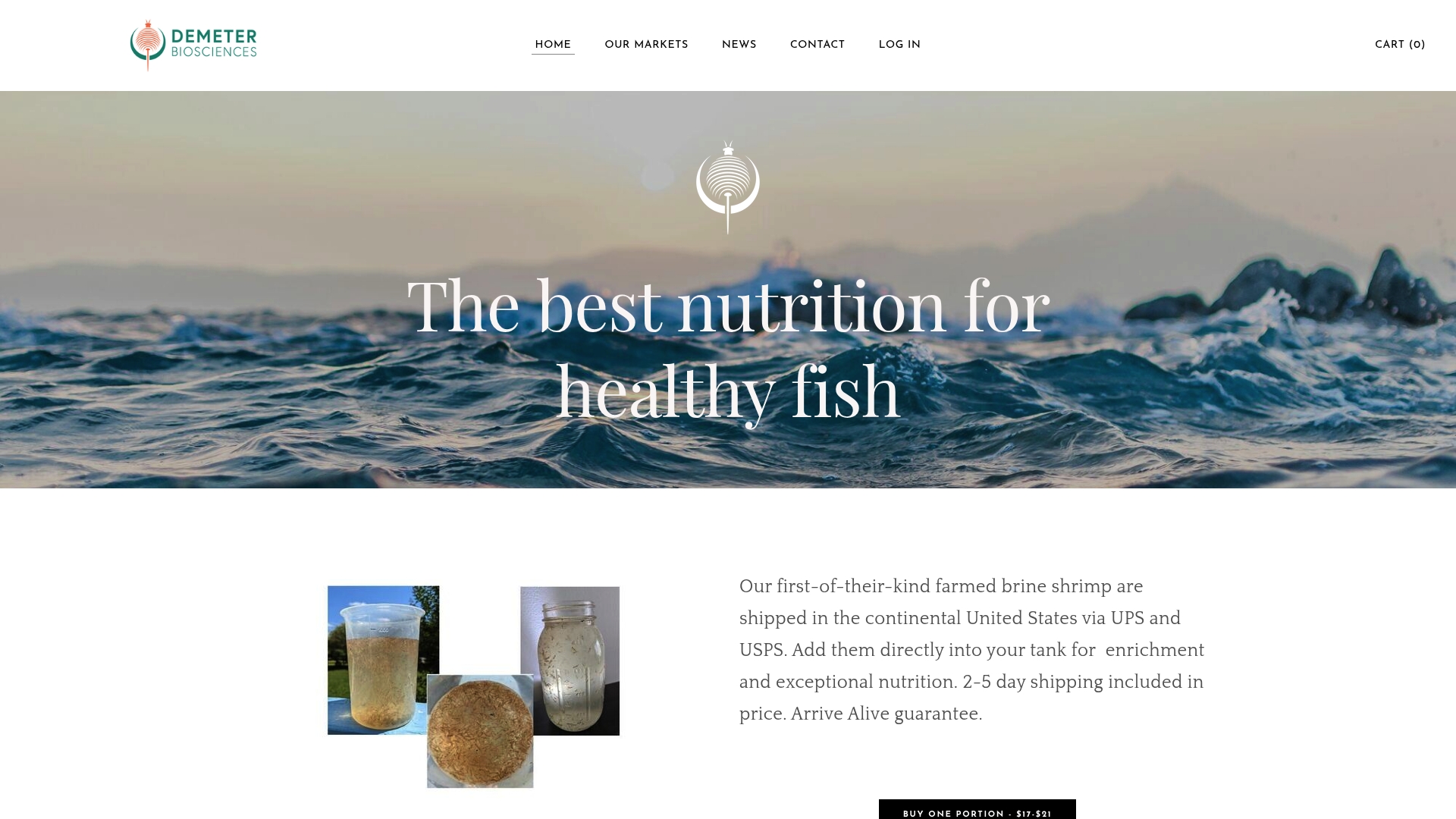
Supply-chain control is one of the few levers a hatchery can pull before a pathogen ever reaches its tanks, and that is where farmed, microalgae-fed Artemia earns its place in a biosecurity plan. Sourcing from a controlled, land-based system removes the seasonal variability and starvation stress that wild-harvested brine shrimp carry, and it gives a hatchery documentation to work with rather than guesswork.
We supply live brine shrimp direct to hatcheries, research institutions, and retailers, along with phytoplankton, membership plans, and gift cards for facilities that want a recurring, predictable supply rather than a one-off order. Live brine shrimp are available from $17 to $35 per order, phytoplankton runs $20, and our monthly membership for recurring shipments is $25 per month. If your procurement process requires health declarations or custom testing documentation before an order goes through, reach out and request those records as part of your sourcing checklist.
FAQ
What are the five most common pathogens found in live feeds?
The most frequently documented pathogens in live feed cultures are Vibrio species, betanodavirus (NNV), and, in crustacean-adjacent systems, Monodon baculovirus (MBV). Research consistently points to Vibrio and NNV in rotifers and Artemia as the two hazards with the strongest documented link to larval mortality, with resistant bacterial strains forming an additional concern in contaminated cultures.
How do live feeds pick up and carry these pathogens?
Rotifers and Artemia internalize bacteria and viral particles through normal filter feeding, pulling contaminated particles from culture water into their gut. Pathogens also adhere to exoskeleton surfaces and biofilms, transferring to larvae through fecal-oral contact during feeding, as described in transmission mechanism research.
Can antibiotics safely control pathogens in live feed cultures?
Routine antibiotic use is discouraged because it drives resistance without reliably solving the underlying problem. Studies have found florfenicol-resistant Vibrio and resistance genes already present in Artemia and rotifer cultures, as documented in research on antimicrobial resistance in live feeds, making targeted non-antibiotic tools the safer first-line approach.
Which bacteria cannot be transmitted through food, including live feed?
Pathogen transmissibility through feed depends on the specific organism's biology, and no universal list of excluded bacteria applies across contexts. Live feed research focuses on documented risks like Vibrio species rather than ruling out transmission routes for bacteria generally, so a facility's own testing program is the reliable way to confirm what a given culture is or is not carrying.
What is the most reliable way to detect pathogens in a live feed culture before use?
RT-qPCR remains the standard for viral detection since visual inspection cannot reveal a virus like NNV, while selective culture media such as TCBS agar is the practical tool for routine Vibrio screening. Combining both, tested on a defined schedule rather than only when larvae show symptoms, gives hatcheries the earliest possible warning, as outlined in rotifer transmission research.
Sources
- Role of Rotifers in Betanodavirus Transmission to European Sea Bass Larvae
- WOAH Aquatic Animal Health Code — control of pathogens in feed (2024)
- Phage and endolysin interventions in live feeds and associated microbiota