
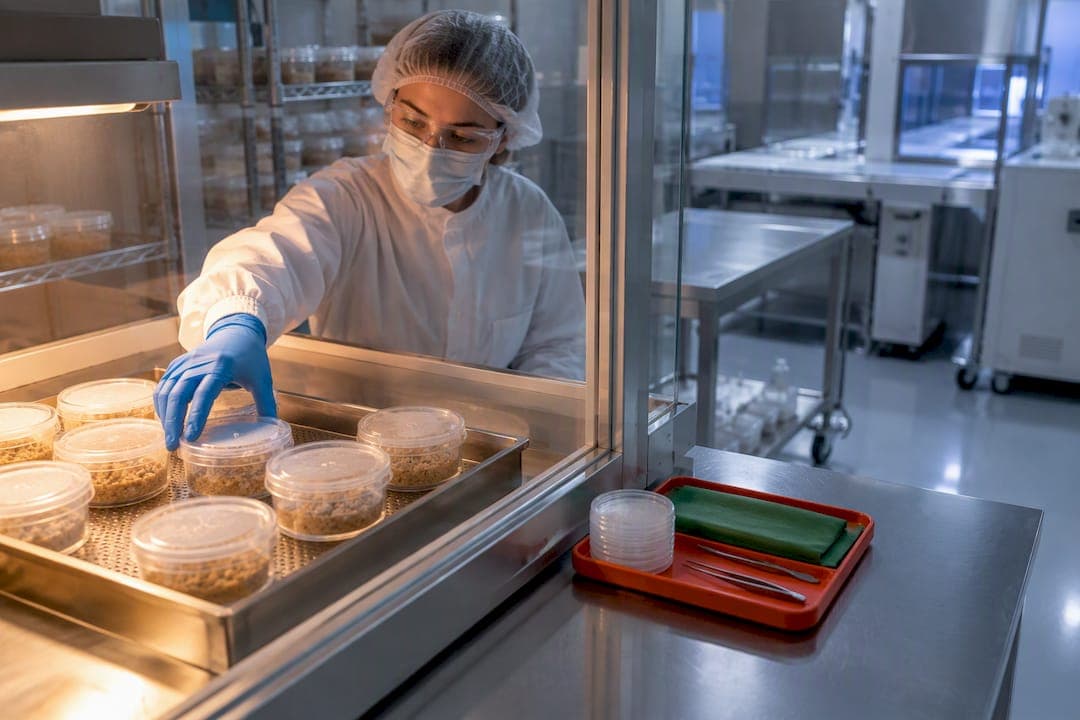
Live feeds are higher-risk vectors for pathogens than processed diets, and the single highest-impact action a producer can take is to quarantine and verify every new live-feed lot before it reaches vulnerable stock. That means confirming supplier records, holding incoming batches in isolation, and testing before exposure. From there, hygienic hatching, controlled enrichment, and routine culture monitoring close most of the remaining gaps.
TL;DR:
- Quarantine and verify every live-feed shipment through testing, inspections, and documentation before exposing it to sensitive larval populations.
- Source live feed from land-based, closed systems with documented pathogen testing and strict handling protocols to reduce contamination risk.
- Use decapsulation, controlled water chemistry, and equipment hygiene during hatchery operations to minimize bacterial proliferation before larvae are introduced.
- Replace routine antibiotics with probiotic supplements, like Bacillus or Lactobacillus, to suppress Vibrio bacteria and improve larval survival sustainably.
- Maintain rigorous supply chain controls, including disinfection, proper sequencing of farm visits, and dedicated handling zones, to prevent pathogen transfer from feed delivery.
Table of Contents
- Sourcing and supplier verification for live feeds
- Hatchery protocols that reduce contamination
- Enrichment, storage, and transport of live feed
- Microbial management without routine antibiotics
- Feed-mill, handling, and on-farm delivery controls
- Monitoring, testing, and routine surveillance for live-feed cultures
- SOPs, staff training, and building a biosecurity culture
- How a source-controlled, land-based supplier reduces live-feed risk
- Pragmatic risk management when live feed is necessary
- Demeter Biosciences: a source-controlled live brine shrimp option
- Sources
- FAQ
Sourcing and supplier verification for live feeds
The safest live-feed program starts before the product arrives on site. Wild-caught or loosely regulated live feed sources carry unpredictable pathogen loads, while closed, land-based production systems give you a paper trail and a controllable diet. WOAH's aquatic animal health guidance treats feed as a distinct transmission pathway and recommends sourcing from certified, disease-free production with documented processing and handling controls rather than assuming any live feed is inherently safe.
Ask any prospective supplier for documentation before placing a standing order. A supplier who cannot produce these records is a red flag, regardless of price or delivery speed.
- Production SOPs covering broodstock or cyst origin, water source, and diet composition.
- Pathogen testing records, including frequency and the specific organisms screened.
- Traceability data linking each shipment back to a specific production batch.
- Packaging and shipment handling protocols, including temperature control during transit.
- References or history with other commercial hatchery or farm customers.
Closed or land-based systems with controlled diets give you a meaningful advantage over wild harvest, since the producer can document exactly what the animals were fed and what water source they touched. Commercial rotifer suppliers such as Walnut Creek Pets illustrate the range of live-feed products on the market, and the same verification questions apply whether you're sourcing rotifers, Artemia cysts, or another live organism: what's the testing frequency, and can you see the records.
Once a shipment arrives, the intake process matters as much as the sourcing decision. Every incoming lot should go through a dedicated reception check before it touches any production water.
Set up a quarantine holding area physically separated from your main production tanks, with its own equipment and drains. New shipments sit there until intake inspection and any required testing clear. That inspection should confirm sealed packaging with no visible damage, water temperature within the expected range for the species and transit time, and labeling that matches the paperwork you received. A practical quarantine protocol built for live food gives a useful template that scales from a hobbyist tank to a commercial holding system. Isolate, inspect, test, and only then integrate.
Pro Tip: Keep a standing log of every incoming lot's supplier, batch number, and inspection result. When a health event happens later, that log is the fastest way to trace back to the source.
Hatchery protocols that reduce contamination
The hatching stage is where variability turns into risk. Uneven water chemistry, contaminated cysts, or sloppy timing all create openings for bacterial proliferation before the nauplii ever reach a larval tank. Extension guidance from Virginia Tech lays out the core sequence for Artemia hatching, and the same logic extends to other live-feed hatching operations.
Decapsulation, the process of removing the outer shell from Artemia cysts using a chlorine-based solution, removes a common site of bacterial attachment on the cyst surface. It's not mandatory for every operation, but it materially reduces the microbial load entering the hatching tank. Because the process involves hazardous chemicals, it demands careful handling and disposal.
- Hydrate cysts in fresh or salt water for the manufacturer's recommended period before treatment.
- Prepare the decapsulation solution (typically a sodium hypochlorite mix) at the concentration specified for your cyst volume, in a ventilated area with proper PPE.
- Monitor the reaction closely. Cysts will change color as the shell dissolves, usually within a few minutes.
- Rinse thoroughly with dechlorinated water until no chlorine odor remains, then neutralize any residual chlorine with a sodium thiosulfate rinse.
- Dispose of spent decapsulation solution according to your facility's chemical waste protocol, never into open drains connected to culture water.
- Transfer decapsulated cysts directly into a clean, aerated hatching cone.
Water chemistry stability during hatching directly affects both hatch rate and contamination risk. According to Virginia Tech Extension, target parameters for Artemia hatching are a pH of 8.0 to 9.0 and a temperature of 26 to 30°C, with stable salinity throughout the cycle. Drift outside these ranges slows hatch synchronization, which extends the time cysts and early nauplii sit in water that's accumulating organic waste and supporting bacterial growth.
Equipment hygiene reinforces the chemistry controls. Cone-bottom hatching tanks allow uneaten shell debris and unhatched cysts to settle and be removed rather than recirculating through the water column. Filtered or UV-treated water going into the hatching cone cuts down on the bacterial and parasite load entering the system in the first place, and a small amount of antifoam agent keeps surface tension from trapping nauplii at the air-water interface where they're more vulnerable to stress and bacterial colonization. Timing the harvest matters too: pulling nauplii promptly after peak hatch, rather than leaving them in spent hatching water, avoids the nutrient decline and bacterial buildup that follows as unhatched cysts and shell fragments decompose. A closer look at Artemia nauplii biology and hatching walks through the full cycle in more detail for hatchery technicians building out a standard procedure.
Enrichment, storage, and transport of live feed
Enrichment boosts the nutritional value of live feed before it reaches larval stock, typically by feeding nauplii a lipid-rich emulsion or algae paste for a set period. Done carelessly, it also creates a window for bacterial proliferation, since enrichment tanks are warm, nutrient-dense, and held for hours at a time.
Run enrichment in dedicated tanks that never double as hatching or holding vessels. Rinse nauplii thoroughly in clean water immediately after harvest and before they go into the enrichment tank, which removes residual hatching debris and reduces the organic load feeding bacterial growth during the enrichment window. Standardize enrichment time and product across batches so your team isn't guessing at duration, and keep separate nets, buckets, and siphons for enrichment versus hatching versus quarantine handling.
- Rinse nauplii post-hatch before transferring to enrichment tanks.
- Use a fixed, documented enrichment duration and product for every batch.
- Maintain separate equipment for hatching, enrichment, and quarantine stages.
- Check dissolved oxygen and temperature during enrichment, since crowded tanks deplete oxygen fast.
Storage and transport are where a lot of otherwise well-run operations lose control. Live feed held too long, too warm, or too crowded starts shedding waste products that feed bacterial growth well before any visible signs of stress appear in the organisms themselves. For same-day transport, keep density moderate and container temperature close to the enrichment tank's temperature to avoid shocking the organisms. For overnight holds, drop the temperature slightly to slow metabolism and reduce waste production, and never exceed the density your oxygen supply can support for the full holding period.
Transport containers need their own sanitation cycle, and staff handoffs are a common point of failure. A container that touched a quarantine batch should never go back into production circulation without a full disinfection cycle first, and the same rule applies to nets, scoops, and any tool that crossed from an isolation zone into general use.
Pro Tip: Color-code buckets, nets, and containers by zone (quarantine, hatching, enrichment, transport) so cross-contamination from a mislabeled tool becomes visually obvious to any staff member, not just the person who set up the system.

Microbial management without routine antibiotics
Reaching for antibiotics as a default fix for live-feed contamination tends to backfire. A review of commercial live-feed cultures found high levels of florfenicol-resistant Vibrio and other resistant bacteria already circulating in production systems, a signal that routine medication has been selecting for resistance rather than solving the underlying contamination problem. Non-antibiotic strategies are both more sustainable and, in most documented cases, more effective at the culture level.
Probiotic supplementation has the strongest evidence base among the alternatives. Research on live-feed cultures shows that Bacillus and Lactobacillus strains, along with purple non-sulfur bacteria (PNSB), suppress Vibrio populations in Artemia cultures while improving survival and growth outcomes in the larvae that eat them. These probiotics work through bioencapsulation: the live feed organism ingests the beneficial bacteria during enrichment, then delivers them to the larval predator along with its normal nutritional payload.
- Add Bacillus or Lactobacillus cultures during the enrichment phase rather than directly to hatching water.
- Use PNSB supplementation where water color and photoperiod allow effective growth.
- Track survival and growth metrics after switching to a probiotic regimen to confirm it's working in your specific system.
- Reserve any antibiotic use for cases confirmed by testing, never as a routine preventive measure.
Salinity manipulation offers a chemical-free lever specific to Artemia culture. Research on high-salinity Artemia rearing found that culturing Artemia franciscana at 80 to 110 PSU reduced Vibrio populations by more than 90% in some experimental trials while maintaining nauplii survival. That's a meaningful microbial control tool, but it comes with a tradeoff: elevated salinity puts osmotic stress on the culture organism, and the threshold that suppresses Vibrio without harming your target species will vary by water system and species. Pilot any high-salinity protocol at small scale before rolling it out across your full production volume.
When antibiotic use does seem warranted, treat it as a targeted, tested intervention rather than a standing practice. Culture-based resistance testing should guide the specific compound and dose, since applying an antibiotic blind, without knowing what's already resistant in your system, is how resistant strains spread further.
Feed-mill, handling, and on-farm delivery controls
Live-feed biosecurity doesn't stop at the hatchery door. The larger feed and delivery chain, from mill to truck to farm gate, carries its own contamination risks that can undo careful hatchery work in a single delivery. A NOAA review of marine aquaculture biosecurity practices identifies feed storage, pest control, and transport vehicle disinfection as key controls for limiting pathogen transfer between farms, and notes that even processed feeds aren't guaranteed pathogen-free, which makes live-feed handling controls that much more important.
Route planning matters more than most operations give it credit for. A delivery vehicle that visits multiple farms in a single run should service your highest-health-status sites first and disinfect thoroughly between stops, rather than treating disinfection as an end-of-day task. The same NOAA review flags vehicle sequencing and inter-farm disinfection as among the more overlooked levers in feed-related disease spread.
- Disinfect delivery vehicles between farm stops, not just at the end of a route.
- Sequence deliveries to visit high-health or juvenile-stock sites before lower-health sites.
- Store live-feed supplies in a zone physically separate from general feed materials.
- Maintain pest control specifically around live-feed storage areas, since rodents and insects are common vectors.
- Restrict live-feed handling to designated staff wearing dedicated PPE, separate from general feed-handling gear.
On the receiving end, dedicated storage zones and clear personnel boundaries do most of the work. Staff who handle live feed shouldn't move directly into general feed operations without a change of PPE and a hand hygiene step in between, since cross-traffic between those two roles is a quiet but common way contamination spreads across an otherwise well-controlled site. Feed-mill audits, whether done with a paper checklist or a mobile audit tool, help catch gaps in vehicle disinfection and storage separation before they turn into a documented health event.
Monitoring, testing, and routine surveillance for live-feed cultures
Testing turns a biosecurity plan from a set of good intentions into something you can verify. Without routine monitoring, contamination problems surface only after larvae start dying, which is far too late to act on.
A workable surveillance schedule combines a few core test types at different frequencies depending on your operation's scale and risk tolerance.
- Heterotrophic plate counts on culture water, run at each new batch and on a routine schedule for standing cultures, to catch general bacterial load trends.
- Vibrio-targeted assays, since Vibrio species are the most consistently documented pathogen risk in live-feed cultures.
- Periodic screening for antibiotic resistance genes (ARGs), particularly if your operation has used antibiotics historically or sources from suppliers who have.
- Visual and behavioral inspection of nauplii for lethargy, abnormal color, or clumping, done at every batch regardless of lab testing cadence.
| Test type | Recommended frequency | Primary purpose |
|---|---|---|
| Heterotrophic plate count | Every new batch, plus routine interval for standing cultures | General bacterial load trend |
| Vibrio-targeted assay | Every new supplier lot, periodic for standing cultures | Detect the most common live-feed pathogen risk |
| ARG screening | Periodic, or after any antibiotic use | Detect resistant bacteria before spread |
| Visual and behavioral inspection | Every batch | Early sign of stress or contamination |
New batches should sit in quarantine until test results come back or a validated treatment has been applied, not until a fixed calendar deadline passes. Release criteria should be written into your SOP in advance, so no one has to make a judgment call under time pressure when a shipment is due.
Keep a corrective action log alongside your test records: what triggered the flag, what action was taken, and the outcome. A repeated failure from the same supplier or the same holding tank is a pattern worth escalating to a veterinary consultant, and in some cases the right call is disposal of the batch rather than continued monitoring.
SOPs, staff training, and building a biosecurity culture
Written protocols only work when the people running daily operations actually follow them, and that comes down to training, documentation, and consistent enforcement rather than the protocol document itself.
Core SOPs should cover intake and quarantine, cleaning and disinfection between zones, enrichment timing and product, and a clear emergency response plan for a confirmed contamination event. Each should be short enough that a technician can reference it mid-shift, not a document that lives in a binder no one opens.
- Write intake, cleaning, enrichment, and emergency SOPs as short, checklist-style documents.
- Train every new hire on each SOP before they handle live feed independently.
- Run periodic competence checks, not just a one-time onboarding session.
- Build small, visible incentives for consistent SOP compliance rather than relying on penalties alone.
Audit cadence keeps SOPs from drifting out of use over time. A monthly or quarterly walkthrough, using a mobile checklist tool or even a simple paper form, gives you a documented record of what's actually happening on the floor versus what the SOP says should happen, and that gap is usually where the next contamination event originates.
Pro Tip: Have a different staff member run each audit cycle. A fresh set of eyes catches shortcuts that the regular team has stopped noticing.
How a source-controlled, land-based supplier reduces live-feed risk
Closed, land-based production removes several of the variables that make wild-harvested live feed unpredictable. A diet-controlled, closed system also means the producer isn't exposed to whatever pathogens happen to be circulating in open ocean or estuary water that season.
That kind of control doesn't remove the need for your own verification. Before integrating any supplier into a biosecurity plan, confirm the following.
- Request documented testing frequency and the specific pathogens screened.
- Ask for production records tying each shipment to a traceable batch.
- Review the supplier's enrichment and shipping SOPs for consistency with your intake requirements.
- Run a small trial order through your full quarantine and testing process before committing to a standing supply arrangement.
Treat any supplier claim, including a source-controlled one, as a starting point for verification rather than a substitute for your own intake testing.
Pragmatic risk management when live feed is necessary
Live feed earns its place in a larval rearing program when a species won't take formulated diets early on, and there's often no substitute during those first vulnerable weeks. But it's worth asking, batch by batch, whether a formulated or enriched alternative could cover a given stage before defaulting to live feed out of habit. The tradeoffs matter here more than the biology usually gets credit for.
For operations working with a limited budget, three controls carry most of the risk reduction: verified sourcing with real documentation, a quarantine holding period that's actually enforced rather than skipped under deadline pressure, and basic routine testing rather than none at all. Everything else in this piece improves on that foundation, but skipping these three is where most contamination events start. Audit your suppliers regularly, not just at onboarding, and revisit your own protocols as your operation scales.
— Demeter
Demeter Biosciences: a source-controlled live brine shrimp option
Demeter Biosciences supplies live brine shrimp raised in controlled land-based systems fed on microalgae, available as direct shipments, subscription plans, and bulk packages for institutional buyers.
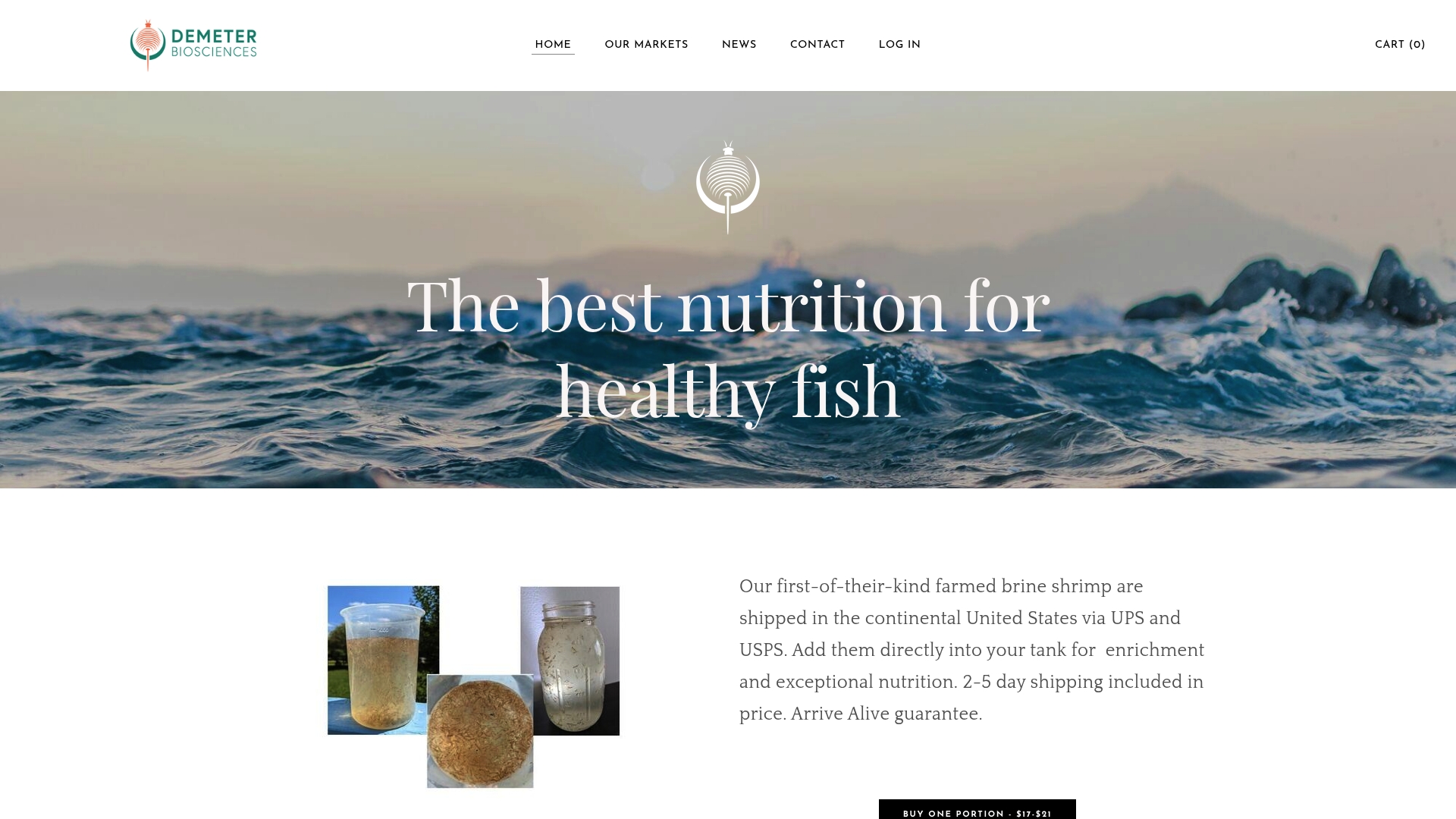
Running a trial order is the fastest way to evaluate a new live-feed source without committing your full production volume to it. Request the same records you'd ask of any supplier during that trial: testing frequency, batch traceability, and shipping handling details, then run the shipment through your own quarantine and intake process exactly as you would any other new source.
- Order live brine shrimp directly for a trial run.
- Set up recurring supply through the Demeter Biosciences membership for predictable monthly shipments.
- Reach out through the bulk order page for hatchery-scale or institutional procurement.
Sources
The protocols in this piece draw on extension hatchery guidance, international aquatic health frameworks, and peer-reviewed live-feed research, each worth reading in full before finalizing a facility SOP. Virginia Tech Extension's Artemia culture guide covers hatchery parameters and decapsulation procedure in detail, while WOAH's aquatic animal health guidance frames feed biosecurity within a broader international risk management context.
For microbial management specifics, the review of probiotic strategies in live-feed cultures and the study on antibiotic-resistant bacteria in commercial Artemia both offer more technical detail than a single article can cover. The NOAA marine aquaculture biosecurity review is the strongest reference for feed-mill and delivery-chain controls specifically.
None of these substitute for facility-specific advice. Contact a diagnostic lab or aquatic veterinary authority before finalizing testing schedules or treatment decisions for your own operation.
- Artemia Culture for Intensive Finfish and Crustacean Larviculture (VT Extension)
- High prevalence of antibiotic-resistant bacteria in live-feed cultures (PMC article)
- WOAH aquatic animal health guidance (2025)
- Review of best practices for biosecurity and disease management for marine aquaculture (NOAA review)
FAQ
What makes live feed riskier than processed feed?
Live feed can carry active pathogens, including Vibrio species and antibiotic-resistant bacteria, that processed or frozen feed typically does not because processing steps reduce or eliminate live microbial load. Extension guidance recommends treating live feed as inherently higher risk and sourcing it only from producers with documented biosecurity measures and testing.
How long should new live-feed batches stay in quarantine?
Quarantine should last until intake testing results come back or until a validated treatment protocol has been completed, rather than a fixed number of days set in advance. Release criteria should be written into your standard operating procedure so staff aren't making that call under time pressure.
Can probiotics really replace antibiotics in live-feed cultures?
Probiotic strains including Bacillus, Lactobacillus, and PNSB have been shown to suppress Vibrio populations in Artemia cultures while improving survival and growth in the larvae fed on them. Routine antibiotic use, by comparison, has been linked to rising rates of resistant bacteria in commercial live-feed systems, making probiotics the preferred first-line strategy.
Does high salinity actually reduce pathogens in Artemia cultures?
Research on Artemia franciscana found that culturing at 80 to 110 PSU reduced Vibrio populations by more than 90% in some trials while nauplii survival held steady. The right threshold varies by system, so small-scale piloting is recommended before full adoption.
What should I verify before switching live-feed suppliers?
Request documented testing frequency, production records tying shipments to traceable batches, and the supplier's enrichment and shipping protocols before committing to a standing order. Running a trial shipment through your own quarantine and testing process is the most reliable way to confirm those claims hold up in practice.