
Federal permits and health certificates apply to many live aquatic feed shipments, but the rule that actually stops an order at the door is usually the destination state's own code, not a federal one. Before you buy or ship live brine shrimp anywhere in the United States, check APHIS's live animal import guidance and your destination state's fish and wildlife or agriculture rules. Skip either step and you risk a hold at the port or a rejected shipment.
TL;DR:
- Federal permits are usually not the main barrier; destination state rules often impose stricter requirements that can prevent shipment clearance.
- Shipping water and packing media requires documentation of water quality and disinfection to mitigate pathogen and invasive organism risks.
- Shipping delays or rejections frequently result from incomplete paperwork, missing permits, or unverified water and health records.
- Land-based, controlled-environment production offers more consistent and well-documented sources compared to wild-harvested brine shrimp.
- Ordering early, verifying permits and species status, and maintaining thorough records are essential to avoid costly port holds and enforcement penalties.
Table of Contents
- What Federal Rules Govern Live Fish Food Regulations?
- Do State Rules Override Federal Aquaculture Feed Rules?
- How Do You Apply for Import and Interstate Shipping Permits?
- Why Does Shipment Water Matter for Biosecurity Compliance for Fish Food?
- What Happens If You Don't Comply?
- Your Pre-Order Compliance Checklist for Live Brine Shrimp
- Why Controlled Farming Changes the Compliance Conversation
- Ordering Compliant, Traceable Live Brine Shrimp
- Sources
- FAQ
What Federal Rules Govern Live Fish Food Regulations?
Three federal players matter here: USDA's APHIS Veterinary Services, the U.S. Fish and Wildlife Service, and NOAA where marine species cross into federal fisheries' jurisdiction. APHIS handles the paperwork side of live fish food regulations for imports, and it requires an import permit plus a veterinary export health certificate for many live fish, fertilized eggs, and gametes entering the country. Certain pathogens and species, including specific viral concerns like TiLV, trigger mandatory permitting regardless of quantity.
50 CFR §16.13 is the other federal lever. It sets testing, certification, and disinfection standards for listed fish, mollusks, and crustaceans, and it restricts release or movement of imported organisms without state authorization. This is also where the Lacey Act's injurious wildlife provisions live. If a species gets listed as injurious, the U.S. Fish and Wildlife Service can block or heavily restrict its trade, so checking current listings is not optional busywork.
Two forms come up constantly in this process:
- VS Form 17-129: the application for an APHIS import permit.
- VS Form 17-29: the declaration form presented at the port of entry.
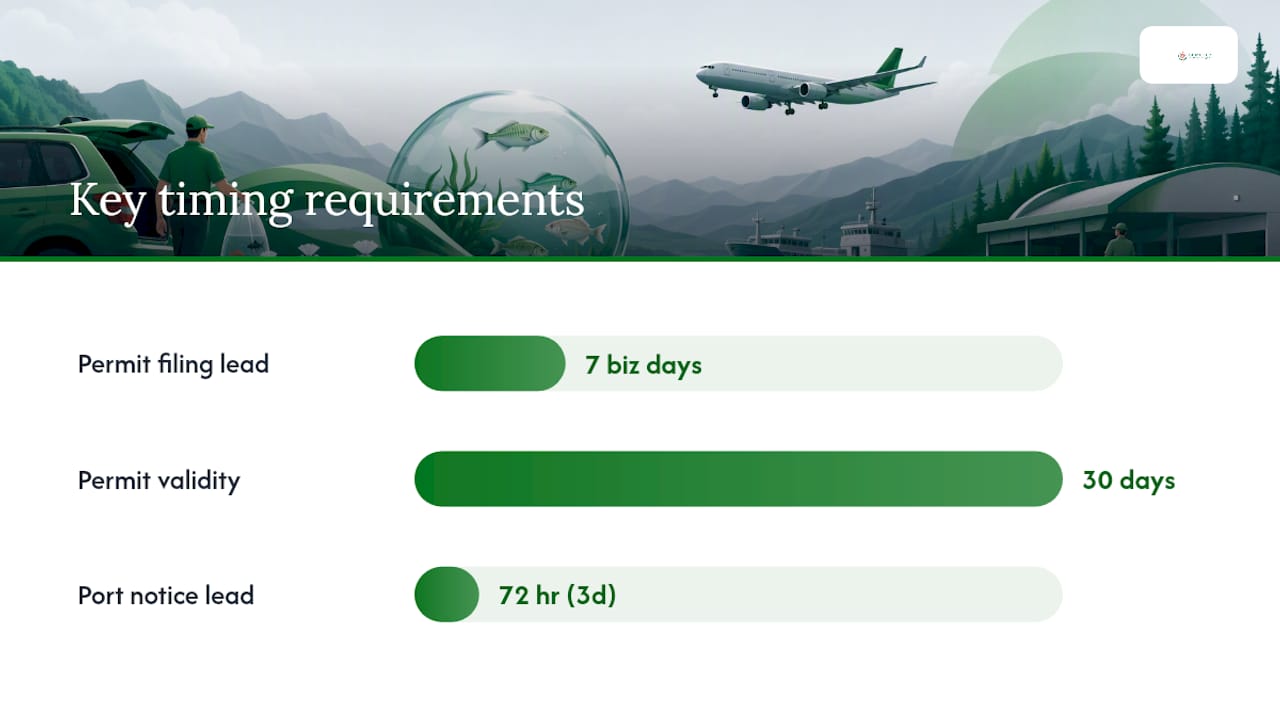
Both are filed through APHIS eFile, and a completed import permit is generally valid for about a month from issuance. That limited validity period can catch people off guard when a shipment gets delayed for reasons that have nothing to do with paperwork.
Do State Rules Override Federal Aquaculture Feed Rules?
Yes, in practice they often do. Federal aquaculture feed rules set a floor, but individual states layer on stricter requirements based on their own invasive species concerns, native pathogen profiles, and bait-fishing traditions. A species that clears every federal hurdle can still get turned away by a state agency that treats it differently.
California is the clearest example. Under California Code of Regulations Title 14, Section 236, brine shrimp are listed as importable without a state import permit. Compare that to states that require annual health testing and biosurveillance for pathogens like viral hemorrhagic septicemia before any live fish product crosses the border, a pattern documented across a wide swath of states in a PLOS ONE mapping study on live fish movement.
A three-step check keeps you out of trouble:
- Identify the state wildlife or agriculture agency with authority over live aquatic imports in your destination state.
- Ask directly whether brine shrimp or your specific species requires a permit, and get the fee schedule in writing (many states charge a standard fee for import permits, though this varies by state).
- Save the agency's written response and any permit number for your own records before you place an order.
How Do You Apply for Import and Interstate Shipping Permits?
Timing drives almost everything in the import and interstate shipping mechanics. If your shipment needs an APHIS import permit, file VS Form 17-129 through APHIS eFile at least seven business days before your intended ship date. Rushed applications are the single most common cause of missed shipping windows.
Your documentation packet on arrival typically needs to include:
- The original APHIS import permit, still within its 30-day validity window.
- An endorsed veterinary export health certificate from an accredited veterinarian.
- A cleaning and disinfection certificate for shipping containers and media, where required.
- The completed Declaration, VS Form 17-29, presented to the port veterinarian.
Shipments must enter through a designated port, and arriving anywhere else risks automatic refusal no matter how clean your paperwork is. Some ports require 72-hour advance notification so a port veterinarian can be scheduled for inspection. Skip that notice and your shipment sits in limbo while someone tries to track down an inspector.
Pro Tip: Build a standing relationship with one port veterinarian's office if you order regularly. Repeat importers who notify early and consistently tend to get faster inspection turnarounds than one-off shippers who show up cold.
Budget for port inspection user fees on top of the permit itself. They're rarely large individually, but they add up fast for institutions placing frequent bulk orders.
Why Does Shipment Water Matter for Biosecurity Compliance for Fish Food?
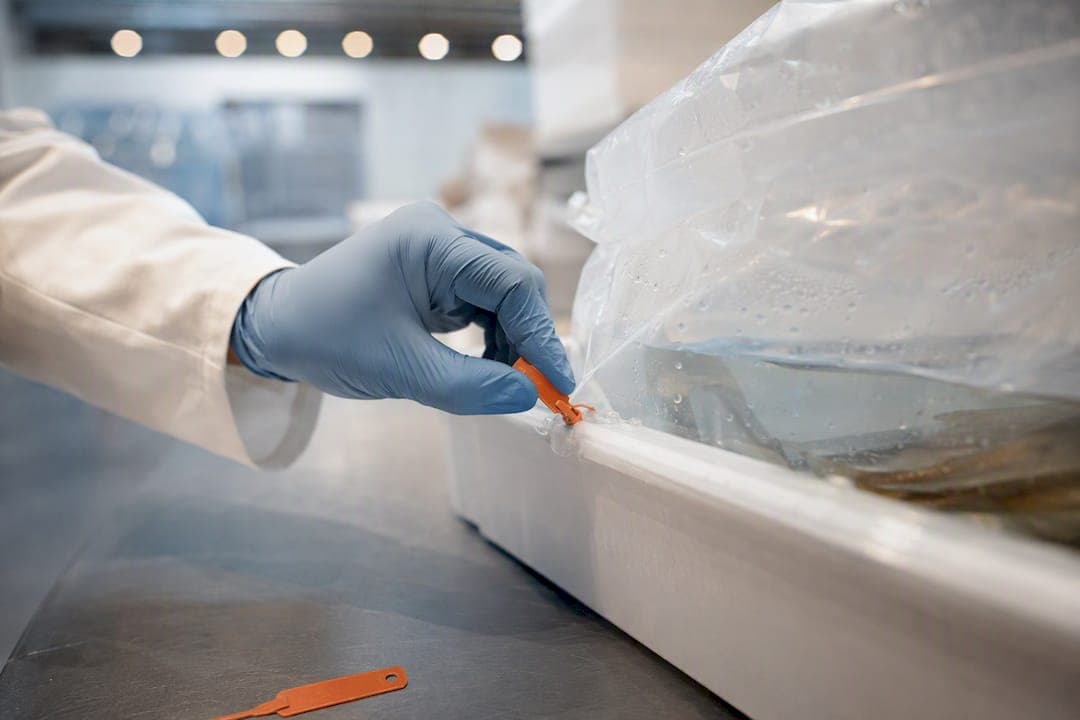
Shipping water and packing media are not incidental. Port veterinarians and state inspectors treat them as regulated cargo in their own right, because untreated water is a direct pathway for pathogens and invasive organisms to enter a new ecosystem. Compliance for fish food increasingly hinges on documenting what's in that bag, not just what's swimming in it.
Documentation that reduces inspection friction includes:
- A cleaning and disinfection certificate covering containers, transport water, and any reused packing materials.
- Health or test records for the source population, especially for pathogens named under 50 CFR §16.13.
- A clear chain-of-custody record showing where the organisms were raised and how they were transported.
Inspectors flag shipments for visible signs of disease, cloudy or undocumented water, or missing paperwork on media treatment. Any one of those triggers a closer look, and a closer look means delay.
This is where farming method actually changes your risk profile. Live food raised in a controlled, land-based system fed on a consistent algae diet, rather than pulled from a wild pond with unknown exposure history, gives you a documented production record instead of a guess. That paper trail is exactly what a port veterinarian wants to see, and it's a big part of why practical quarantine protocols matter even for farmed stock headed to a retail tank.
Pro Tip: Ask any supplier for their most recent water quality and health records before you order, not after a shipment gets flagged. A supplier who can't produce that documentation quickly is a red flag on its own.
What Happens If You Don't Comply?
Noncompliance carries real teeth. Statutes tied to the National Ballast Water Control Program and the Aquatic Nuisance Prevention and Control Act allow for civil penalties when regulated organisms are introduced without authorization, and those penalties can be substantial for repeat or willful violations.
More commonly, though, you'll face administrative friction rather than a courtroom: shipments held at the port, delayed release pending additional paperwork, forced return to origin, or outright destruction when the organisms can't be cleared. None of that is cheap, and none of it is fast.
The mitigation is unglamorous but effective. Keep every permit, certificate, and inspection record on file. Build a contingency budget for holds, because they happen even to careful shippers. And treat correct paperwork as part of the cost of the shipment, not an afterthought bolted on at the last minute.
Your Pre-Order Compliance Checklist for Live Brine Shrimp
Run through this sequence before every order, especially your first one to a new state or institution:
- Classify the move. Is this an international import, or an interstate shipment within the U.S.? The rules that apply differ sharply.
- Check species status. Confirm brine shrimp aren't subject to any current injurious species listing and whether your destination state requires a specific permit.
- Request supplier documentation. Ask for production records, health testing history, and cleaning/disinfection certificates before you commit to an order. Guidance on what to request is covered in sourcing sustainable aquatic feed.
- File permits early and confirm the port. Submit APHIS paperwork at least seven business days out, notify the port veterinarian if your entry point requires it, and confirm you're using a designated port.
- Keep records and a contingency budget. Save every document and set aside funds in case of an inspection hold.
| Step | What to verify | Typical timing |
|---|---|---|
| Classify shipment | Import vs. interstate | Before ordering |
| Confirm species/state status | Permit required? Fee amount? | 1–2 weeks before order |
| Request supplier records | Health, water, disinfection certificates | Before or at order |
| File federal permit | VS Form 17-129 via APHIS eFile | 7+ business days before ship |
| Arrival prep | Designated port, 72-hour notice if required | Day of shipment |
Why Controlled Farming Changes the Compliance Conversation
Wild-harvested brine shrimp carry an unpredictable exposure history: seasonal die-offs, starvation stress, and unknown contact with whatever else lives in that lake. A land-based system feeding a single algae source, Dunaliella, produces the opposite: consistent nutrition and a documented environment from hatch to shipment.
That consistency matters for more than fish health. When a port veterinarian or a state agency asks for production records, "we can show you exactly what these animals ate and where they were raised" is a very different conversation than "they came from a wild harvest." We'd encourage every buyer, whether you're a hobbyist or a research institution, to ask suppliers for that documentation before you order, not after an inspector asks for it.
— Demeter
Ordering Compliant, Traceable Live Brine Shrimp
Some suppliers offer documented, land-based production records for every batch, built on a consistent algae diet instead of the seasonal guesswork of wild harvest. That's the practical edge when a port inspector or a state agency asks where your live feed actually came from.
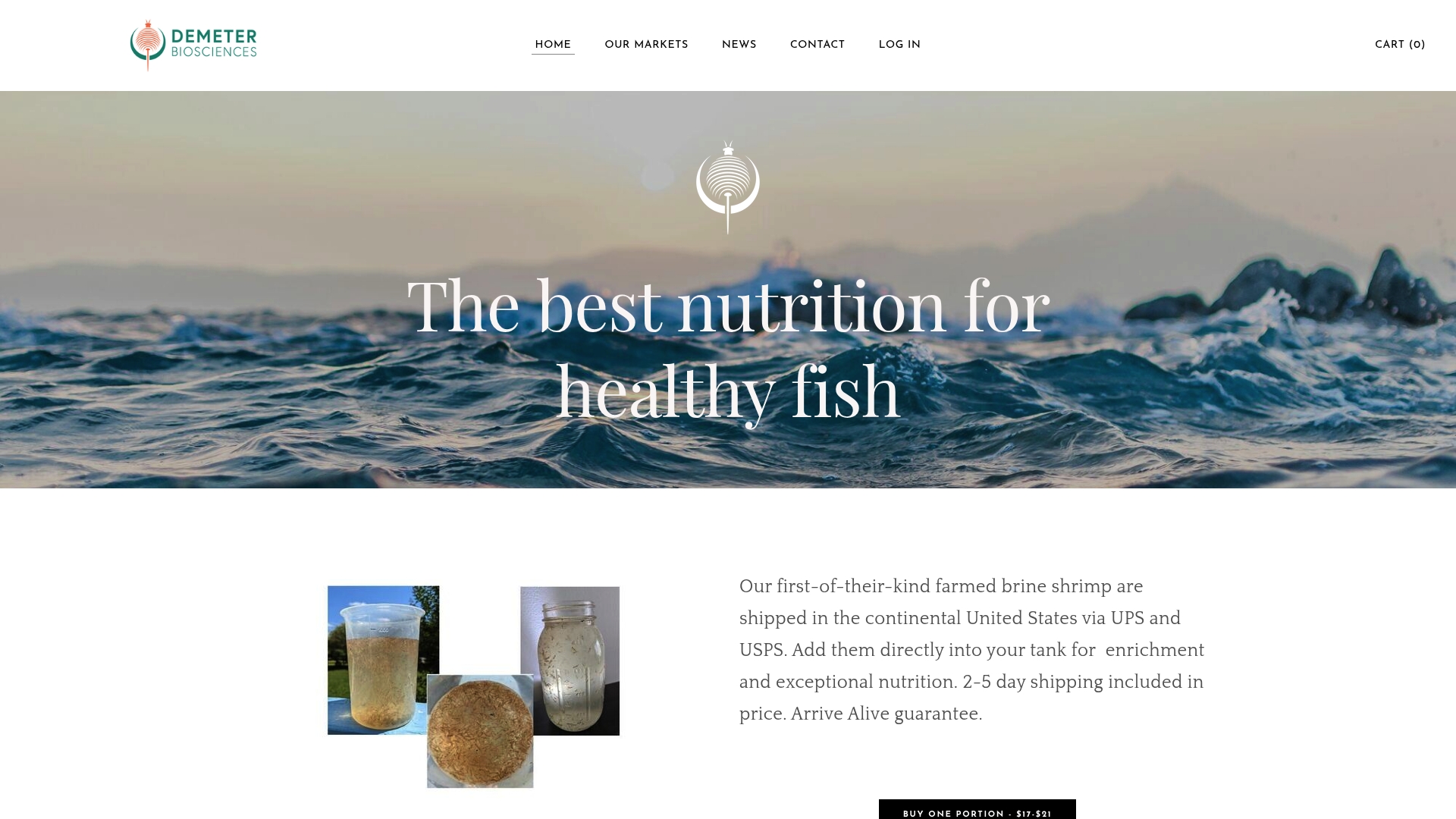
Hobbyists can order live brine shrimp directly or set up a monthly membership for recurring shipments with consistent documentation attached to every order. Museums, research institutions, and pet retailers with higher-volume needs can request a bulk order and ask for production and health records upfront, before an inspection ever becomes a question. If you're weighing a subscription against one-off orders, browse the current featured products and pick the option that matches your ordering cadence.
This article is general information, not a substitute for advice from a qualified lawyer. Consult a qualified legal professional about your own circumstances before acting on anything here.
Sources
- Importing Fish, Fertilized Eggs, and Gametes into the United States
- 50 CFR § 16.13 - Importation of live or dead fish, mollusks, and crustaceans, or their eggs
FAQ
Do I Need a Federal Permit to Buy Live Brine Shrimp?
Domestic purchases of farmed brine shrimp within the U.S. generally don't trigger APHIS import permitting, since that requirement targets international imports and specific listed pathogens or species. Always confirm with APHIS's guidance if you're uncertain about your specific shipment type.
Does Every State Require a Permit for Brine Shrimp?
No. California allows brine shrimp import without a state permit, while other states require health testing or permit fees around $25 for similar movements. Regulations for live bait and live feed organisms vary enough that you should always confirm directly with your destination state's wildlife or agriculture agency.
What Documents Does a Live Fish Food Shipment Need?
A compliant shipment typically needs an import permit where applicable, an endorsed veterinary health certificate, a cleaning and disinfection certificate, and the VS Form 17-29 declaration. Requirements shift based on whether the shipment is international or interstate.
What Happens If a Shipment Gets Held at the Port?
Held shipments face delayed release, forced return, or destruction if documentation can't be resolved quickly, and civil penalties can apply under aquatic nuisance prevention statutes for unauthorized introductions. Keeping complete records and a contingency budget is the best defense against costly delays.
How Much Does Demeterbioscience's Live Brine Shrimp Cost?
Live brine shrimp from Demeterbioscience runs $17 to $35 depending on order size, with bulk institutional pricing available separately. A monthly membership for recurring shipments is priced at $25 per month.