

A fish store inventory live products checklist is a systematic record that captures species data, health status, tank assignments, and water parameters to maintain operational control over live aquatic stock. Unlike dry goods, live inventory changes daily. Fish die, quarantine periods end, batches split across tanks, and supplier quality varies by shipment. Aquarium store managers who treat livestock tracking the same way they track bags of gravel will lose stock and money. This guide gives you a practical live aquatic products stocking checklist built for the realities of running a retail fish operation in 2026.
1. Core data fields every live fish inventory checklist must include
An effective live aquatic inventory record must include nine core data points: species common name, scientific name, quantity, origin or supplier, arrival date, tank assignment, current size, feeding requirements, and health status including quarantine notes and medication history. Each field serves a specific operational purpose. Scientific names prevent confusion when common names overlap across regions. Arrival dates anchor your quarantine timeline.
- Species common name and scientific name: Prevents ordering duplicates under different trade names.
- Quantity and batch number: Links each group of fish to a specific shipment.
- Supplier or origin: Identifies which vendor is responsible for quality issues.
- Arrival date and quarantine log: Tracks how long fish have been in your system and when they cleared isolation.
- Health status and medication history: Records treatments applied and any disease events.
- Tank assignment and capacity: Shows where each batch lives and whether the tank is at, near, or over its bioload limit.
- Current size and feeding requirements: Supports daily care routines and flags fish approaching adult size.
Pro Tip: Record the scientific name at the point of receiving, not at the point of sale. Supplier invoices sometimes use regional trade names that differ from what your staff calls the fish.
2. How to integrate water quality monitoring into your live inventory system

Water quality and livestock inventory are not separate systems. They are the same system. Proactive water quality monitoring is the primary method for reducing die-offs, and it belongs inside your inventory checklist, not in a separate notebook on the shelf.
The parameters to track per tank, logged at each check:
| Parameter | Target Range | Alert Threshold |
|---|---|---|
| Ammonia | 0 ppm | Above 0.25 ppm |
| Nitrite | 0 ppm | Above 0.25 ppm |
| pH | Species-specific | Outside ±0.5 of target |
| Temperature | Species-specific | Outside ±2°F of target |
| Dissolved oxygen | Above 6 mg/L | Below 5 mg/L |
Die-off rates correlate directly with environmental triggers like ammonia spikes and temperature shifts. Ignoring these can cause 30–50% losses in poorly managed setups. That is not a minor shrinkage problem. That is a supplier invoice you paid for fish that are now dead.
Set written alert thresholds for each parameter and assign a staff member to act when a reading crosses the line. Linking tank condition logs to your mortality records lets you identify patterns. If a specific tank consistently shows elevated ammonia before a die-off event, the problem is filtration capacity, not supplier quality.
Pro Tip: Log water parameters at the same time each day. Readings taken at random hours introduce variability that makes trend analysis unreliable.
3. Batch tracking, quarantine records, and mortality analytics
The most important structural shift in aquarium stock management is treating livestock as dynamic batches, not static SKUs. Tracking livestock as batches tied to suppliers allows you to identify quality issues and mortality trends that would otherwise stay hidden inside your general shrinkage numbers.
A batch record should follow these steps:
- Assign a batch ID at receiving. Link it to the supplier invoice, arrival date, and species.
- Open a quarantine record. Log daily observations, any treatments applied, and the date the batch cleared isolation.
- Track splits and moves. When a batch moves from quarantine to a sales tank, or splits across two tanks, update the record. Failing to track batch splits complicates inventory and causes losses.
- Log every mortality event. Record the date, the batch ID, the tank, and the suspected cause.
- Run monthly mortality analytics. Group deaths by supplier, species, and tank to find patterns.
Aquarium operations fail when they rely on tribal knowledge. When a long-term employee leaves, that knowledge walks out the door. Batch-level records tied to suppliers give you the data to run root cause analysis on quality problems and hold vendors accountable with evidence, not memory.
Mortality analytics also reveal environmental issues. If deaths cluster in one tank regardless of species or supplier, the tank itself is the problem. If deaths cluster around one supplier regardless of tank, the supplier is the problem. You cannot make that distinction without batch-level records.
4. Stocking planning checklist: size, temperament, and bioload
The most common error in aquarium inventory planning is ignoring adult size and temperament. Many juvenile fish are sold at two inches and grow to twelve. A tank that looks appropriately stocked in january can be dangerously overcrowded by june.
Your stocking planning checklist should verify each of these before adding new stock:
- Adult size, not juvenile size: Check the species' maximum adult length, not the size at purchase.
- Swimming zone: Confirm the tank has open space in the correct zone. Top, middle, and bottom swimmers compete for different areas.
- Temperament and aggression: Identify territorial species before placing them with community fish. Stocking compatible fish that respect predator-prey relationships and bioload limits leads to healthier tanks and reduces aggression.
- Bioload relative to filtration: Calculate the filtration capacity of the tank before adding fish, not after.
- Maintenance capability: A tank that requires daily water changes to stay stable is not a viable retail display.
- Gradual addition: Ammonia and nitrite levels must reach 0 ppm for several weeks before adding new livestock. Biological filtration needs time to catch up.
The old inch-per-gallon rule is outdated and unreliable. A ten-inch oscar and ten one-inch neon tetras are not equivalent stocking loads. Plan based on swimming zones, species filtration demands, and your team's actual maintenance schedule.
5. Counting methods for high-volume and high-value species
Not all live inventory gets counted the same way. High-volume species like feeder goldfish or small tetras use estimated gallon-to-count ratios with regular physical counts for calibration. Larger or higher-value specimens get counted individually for accuracy.
Build your counting method into the checklist itself. For each tank, specify whether the count method is estimated or individual. Schedule physical calibration counts weekly for high-volume tanks and after every significant mortality event. This keeps your inventory numbers close to reality without requiring a full count every day.
For live food products like brine shrimp, the counting method shifts entirely. You track volume or weight per shipment, not individual organisms. Demeterbioscience supplies live brine shrimp in consistent batch quantities, which makes inventory tracking straightforward. Each shipment arrives with a known quantity and a guaranteed minimum of 40% protein content, so your feeding records stay accurate without guesswork.
6. Freshwater vs. saltwater inventory: where the checklist differs
A freshwater fish inventory guide and a saltwater fish product checklist share the same core structure but differ in several critical fields. Saltwater systems require additional parameters: salinity, alkalinity, and calcium levels for reef tanks. Freshwater systems focus more on pH range and hardness compatibility across species.
The quarantine protocol also differs. Marine fish are more sensitive to shipping stress and often require longer quarantine periods. Your checklist should reflect the species-specific quarantine window, not a single standard number applied to everything. A freshwater platy and a marine tang do not share the same recovery timeline.
Compatibility tracking is more complex in saltwater retail. Reef-safe status, predator classification, and coral compatibility all belong in the inventory record for marine species. These fields directly affect where a fish can be displayed and what it can be sold alongside.
Key Takeaways
A fish store's live inventory checklist works only when it tracks species data, water quality, batch history, and stocking compatibility as one connected system.
| Point | Details |
|---|---|
| Track nine core data fields | Record species name, quantity, supplier, arrival date, tank, size, feeding needs, and health status for every batch. |
| Link water quality to inventory | Log ammonia, nitrite, pH, temperature, and dissolved oxygen per tank and connect readings to mortality events. |
| Use batch tracking, not SKUs | Treat livestock as dynamic batches tied to suppliers to enable mortality analytics and root cause analysis. |
| Plan stocking by adult size and bioload | Check adult size, swimming zone, temperament, and filtration capacity before adding any new stock. |
| Match counting method to species value | Use estimated ratios for high-volume species and individual counts for high-value or large specimens. |
What I've learned from watching stores skip the checklist
Most aquarium store losses are not random. They follow patterns that a basic checklist would catch in the first month. I have seen stores lose entire batches of marine fish because no one tracked the quarantine window. The fish went straight from the shipping bag to the sales tank, and a week later the whole display crashed.
The stores that run well are not necessarily the ones with the best suppliers or the most experience. They are the ones that write things down. A staff member who logs water parameters every morning at 9:00 AM will catch an ammonia spike before it becomes a die-off. A manager who reviews monthly mortality reports by supplier will stop reordering from the vendor whose fish never survive the first two weeks.
The shift from memory to records is uncomfortable at first. It feels like extra work. But the data pays for itself the first time you use a mortality trend to negotiate a credit with a supplier, or the first time a new employee can manage a tank correctly because the care notes are written down. Consistent nutrition records and health logs are not administrative overhead. They are the operating system of a healthy store.
— Demeter
Live nutrition that fits your inventory system
Demeterbioscience produces farmed live brine shrimp fed exclusively on the microalgae Dunaliella, guaranteeing at least 40% protein content per shipment. That consistency matters for inventory management because your feeding records stay accurate. You know exactly what your fish are receiving, and you can track nutritional inputs alongside health outcomes in the same system.
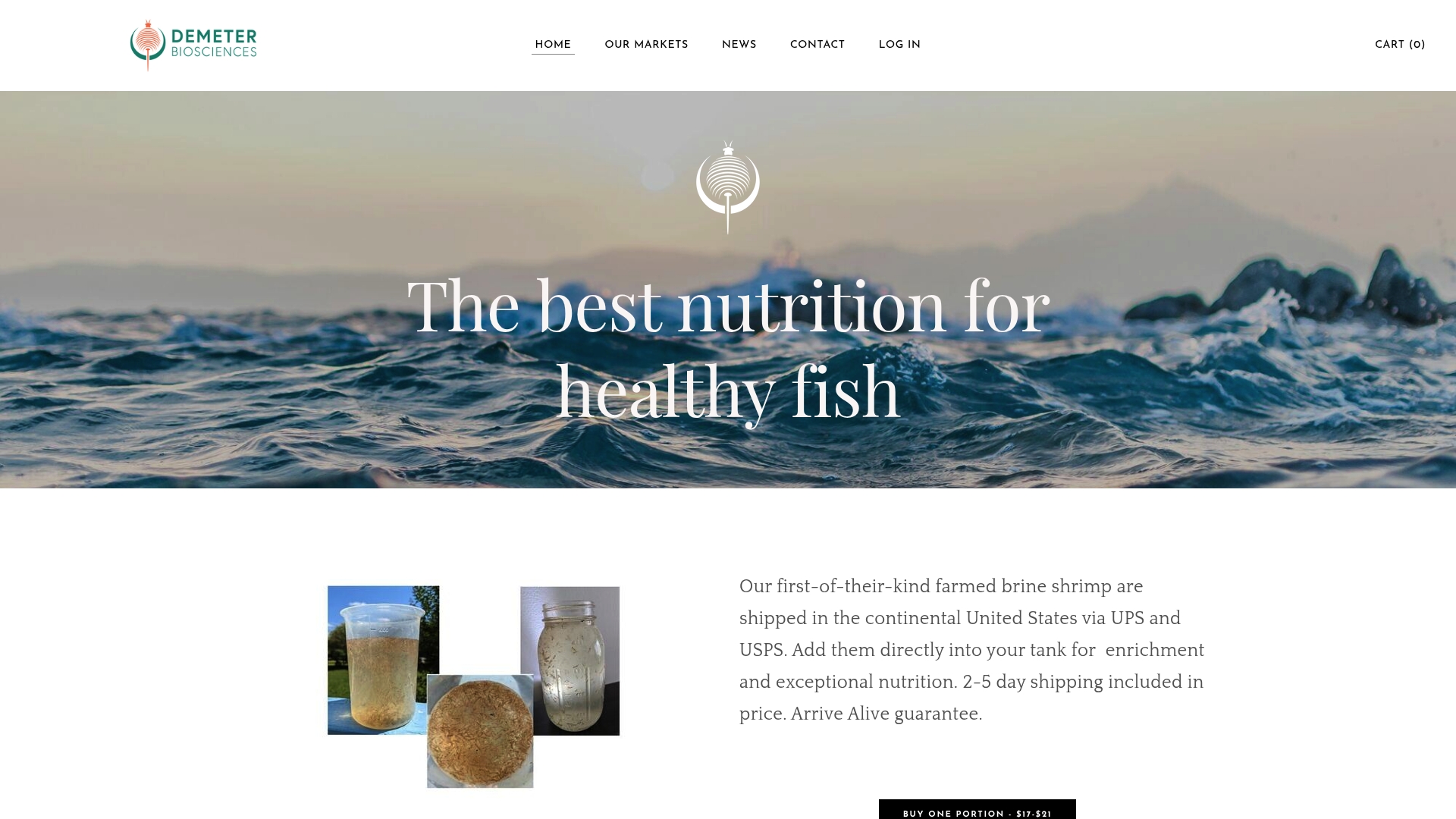
Demeterbioscience offers bulk retail packages designed for aquarium stores, along with monthly subscription plans that align with your reorder schedule. Because the brine shrimp are land-farmed in controlled conditions, you avoid the seasonal variability that makes wild-harvested live food difficult to plan around. If you want to learn more about how live food benefits your store, Demeterbioscience has resources built specifically for retail operations.
FAQ
What should a live fish inventory checklist include?
A live fish inventory checklist must include species name, scientific name, quantity, supplier, arrival date, tank assignment, current size, feeding requirements, and health status with quarantine notes. These nine fields provide the financial and operational control needed to manage live stock accurately.
How do I track fish inventory for high-volume species?
High-volume, low-cost species use estimated gallon-to-count ratios supplemented by regular physical counts for calibration. Larger or higher-value fish get counted individually to maintain accuracy.
Why is the inch-per-gallon rule unreliable for stocking?
The inch-per-gallon rule ignores swimming zones, species-specific filtration demands, and adult size. A ten-inch fish and ten one-inch fish create very different bioloads, so stocking decisions should be based on filtration capacity and behavioral compatibility instead.
How does water quality monitoring connect to inventory management?
Water parameter logs tied to specific tanks and batches let you correlate die-off events with environmental triggers like ammonia spikes or temperature shifts. This connection turns mortality data into a diagnostic tool rather than just a loss record.
What is batch tracking and why does it matter for aquarium stores?
Batch tracking assigns a unique ID to each group of fish linked to a supplier and arrival date, then follows that group through quarantine, tank moves, and mortality events. It lets you identify whether losses come from a specific supplier, a specific tank, or a specific species, which static SKU tracking cannot do.