
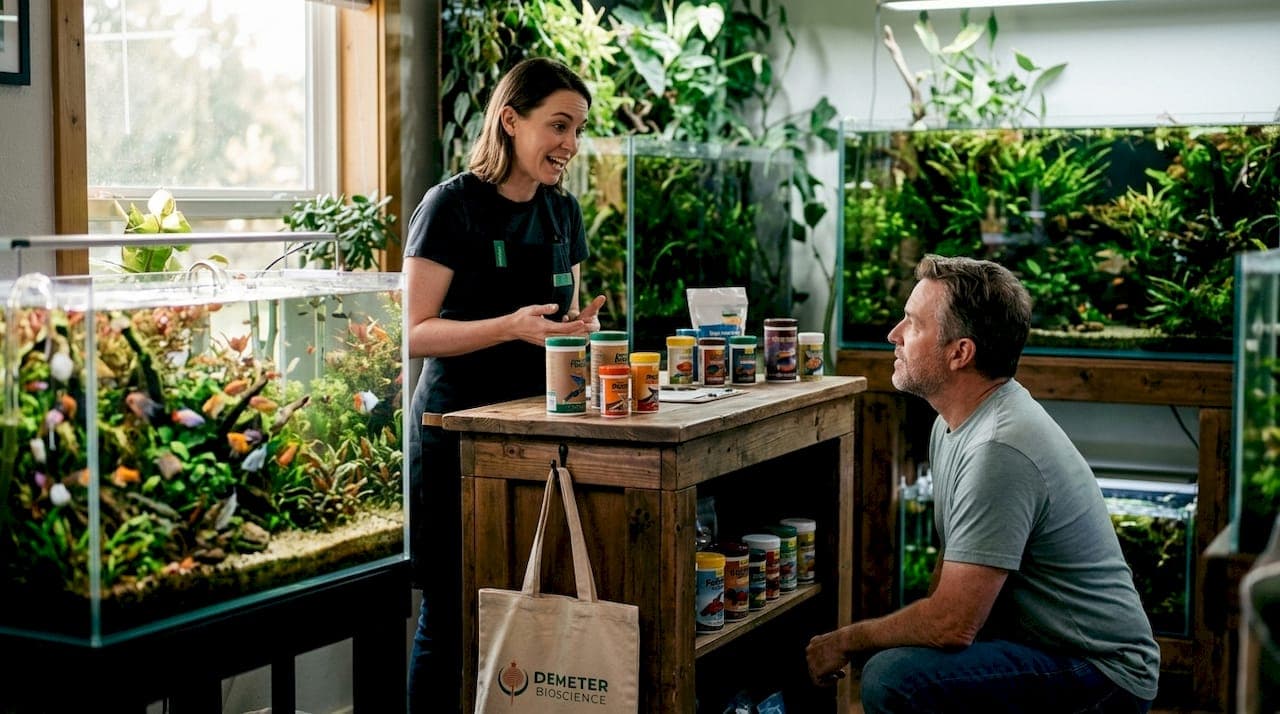
Proper fish nutrition is defined as the practice of matching each species' dietary requirements to the right food type, feeding frequency, and nutrient profile to support health, growth, and coloration. Fish keepers who understand this principle see measurably healthier tanks. Overfeeding and poor food choices are the leading causes of aquarium water quality problems, and most of those problems are preventable with the right knowledge. This guide gives you the tools to educate customers on nutritional fish food clearly, confidently, and in a way that sticks.
What nutritional components do aquarium fish need?
Fish nutrition forms the foundation of aquarium health, influencing immunity, coloration, and growth. A varied diet minimizes health issues across every species. Understanding the core nutrients helps you explain food labels and product choices to customers without overwhelming them.
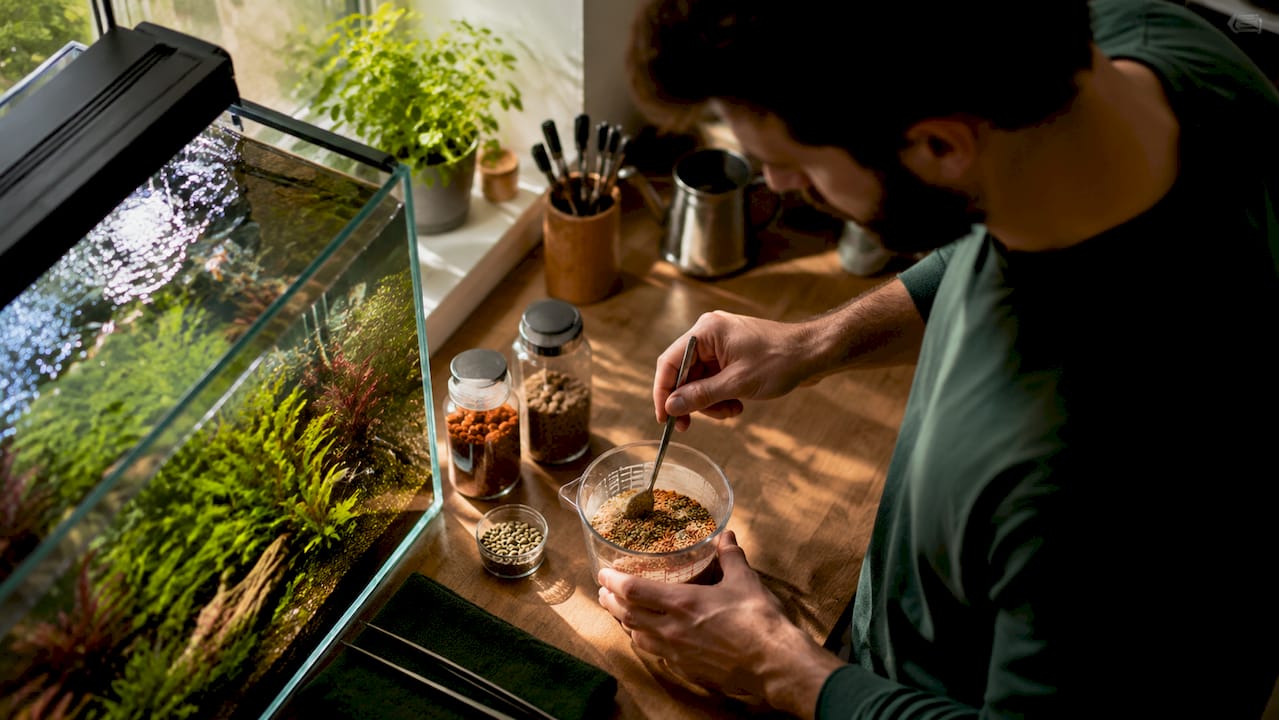
Protein
Protein is the most debated nutrient in fish food, and for good reason. Carnivores require protein exceeding 40% of their diet, while herbivores need far less and rely more on fiber and plant-based ingredients. Feeding a high-protein carnivore diet to a herbivore like a pleco or mbuna cichlid causes digestive stress and excess ammonia in the water.
Fats, vitamins, and pigment nutrients
Fats supply energy and support cell membrane function. Vitamins C and E support immune response and wound healing. Two nutrients that fish keepers frequently overlook are spirulina, which strengthens immunity, and astaxanthin, which drives the red and orange coloration in species like discus and koi. Without astaxanthin in the diet, even genetically vibrant fish fade over time.
Digestibility
Digestibility matters as much as protein content. More digestible foods produce less fecal waste, which means less ammonia and a more stable tank environment. Beginners commonly focus on cost rather than digestibility, and that trade-off shows up in cloudy water and stressed fish within weeks.
Key nutrients to cover when explaining fish food labels:
- Protein source: Named ingredients like whole salmon or shrimp meal outperform generic "fish meal" fillers
- Spirulina: Supports immune function and gut health in most species
- Astaxanthin: Drives coloration in ornamental fish
- Fiber content: Critical for herbivores; low fiber causes bloating and constipation
- Fat percentage: Should match species energy needs; too much fat causes fatty liver disease
Pro Tip: When reading a fish food label, the first three ingredients tell you most of what you need to know. If a named protein source appears first, the food is likely worth the price.
What types of fish food are best for different aquarium species?
Food type selection depends on two factors: where the fish feeds in the water column and what its natural diet consists of. Getting this wrong means fish go hungry even when food is present.
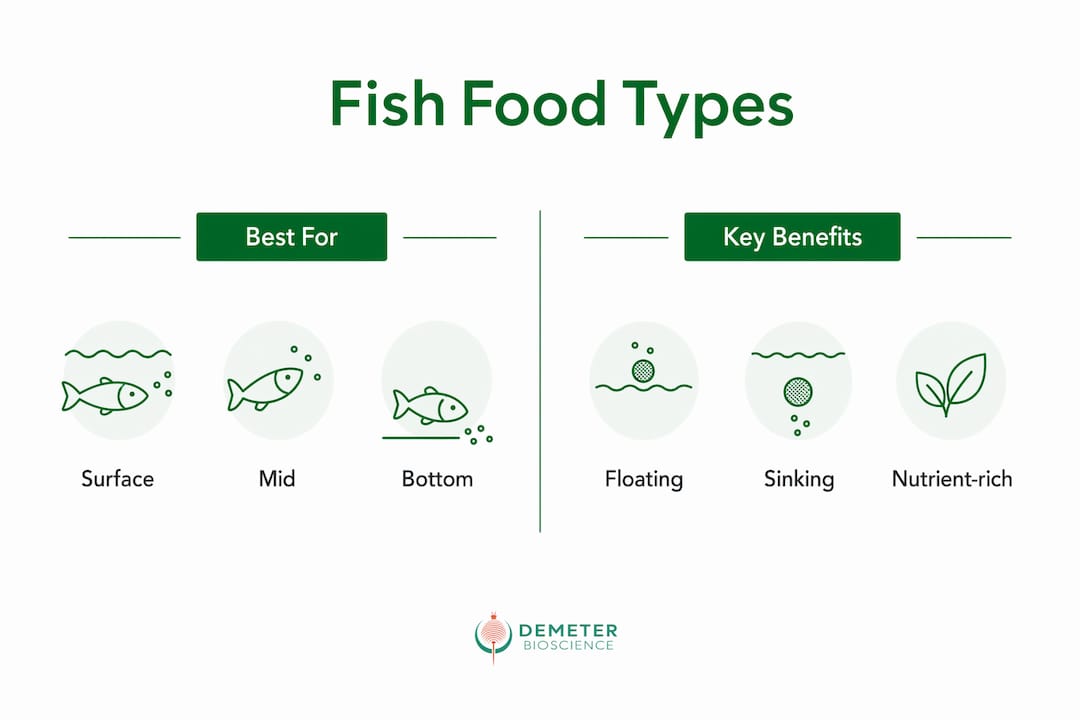
Matching food type to feeding zone is critical. Surface feeders like bettas and gouramis need floating flakes or pellets. Mid-water fish like tetras and rasboras do best with slow-sinking pellets. Bottom feeders like corydoras and plecos require fast-sinking wafers or tablets that reach the substrate before other fish intercept them.
| Food Type | Best For | Key Benefit | Watch Out For |
|---|---|---|---|
| Floating flakes | Surface feeders (bettas, danios) | Easy to portion; widely available | Breaks down fast; can cloud water |
| Sinking pellets | Mid-water and bottom feeders | Reaches all tank levels | Overfeeding risk if uneaten |
| Live food | Picky eaters, breeding fish | Triggers natural feeding response | Pathogen risk if poorly sourced |
| Frozen food | Most species as a supplement | Retains nutrients; no live pathogen risk | Requires proper thawing |
| Freeze-dried food | Occasional treat for most species | Long shelf life; convenient | Lower moisture; can cause bloating |
| Vegetable-based wafers | Herbivores (plecos, mbuna) | High fiber; mimics natural diet | Spoils quickly; remove leftovers fast |
Live food is the gold standard for conditioning fish and triggering spawning behavior in breeding pairs. The trade-off is pathogen risk. Live food sourced from uncontrolled environments can introduce parasites and bacteria into a display tank. Sourcing from reputable, controlled suppliers and quarantining live food before use eliminates most of that risk.
Combining a quality staple food with targeted supplements covers the full nutritional spectrum. A carnivore tank, for example, does well on a high-protein pellet as its base, with live or frozen brine shrimp added two to three times per week for variety and conditioning.
Pro Tip: Rotate between two or three food types each week. Variety prevents nutritional gaps and keeps fish actively engaged at feeding time, which is a reliable sign of good health.
How to implement effective feeding practices to optimize fish health and water quality
Feeding technique matters as much as food selection. The most nutritious food in the world causes water quality problems if it is offered in the wrong amount or at the wrong time.
The core rule is simple: feed only what fish consume within 2–5 minutes, once or twice daily depending on species. Any food that sinks to the substrate and sits there begins decomposing within hours, releasing ammonia and phosphates that fuel algae and stress fish.
Follow these four steps for a feeding routine that protects water quality:
- Measure before you feed. Use a small spoon or pinch method to portion food before dropping it in. Eyeballing directly from the container leads to overfeeding almost every time.
- Watch the clock. Set a two-minute timer. Remove any uneaten food with a net or turkey baster before it reaches the substrate.
- Fast one day per week. Fasting once weekly improves digestion, mimics natural feeding cycles, and reduces waste accumulation. Most fish keepers are surprised to learn that healthy adult fish tolerate a 24-hour fast without any stress.
- Thaw frozen food properly. Thaw frozen foods in tank water before feeding. This prevents digestive shock and reduces phosphate introduction that can trigger algae blooms.
Overfeeding is the single most common aquarium mistake. It degrades water quality faster than almost any other factor, stresses fish, and creates conditions where disease takes hold. A fish that looks hungry is almost always fine. A tank with cloudy water and high ammonia is not.
Frozen food preparation deserves special attention. Many fish keepers drop frozen cubes directly into the tank. The sudden temperature drop shocks the digestive system, and the thawing liquid introduces concentrated nutrients that spike phosphate levels. Thawing in a small cup of tank water for two to three minutes before feeding solves both problems.
How to educate your customers effectively on fish nutrition
Educating customers on nutritional fish food works best when you lead with the fish species, not the product. Customers respond to advice that feels specific to their tank, not generic recommendations that could apply to anyone.
Effective customer education strategies include:
- Start with the species. Ask what fish the customer keeps before recommending any food. A betta owner and a cichlid keeper have almost nothing in common nutritionally.
- Use plain language for labels. Teach customers to look for named protein sources like whole salmon, shrimp meal, or Dunaliella algae rather than vague terms like "fish meal" or "marine protein."
- Warn about the most common mistake. Overfeeding is the leading cause of aquarium problems. Telling customers this directly, with a simple two-minute feeding rule, gives them a concrete behavior to change.
- Recommend quality over price. Dry foods with named protein sources deliver better digestibility and less waste than budget options with filler ingredients. Frame this as a water quality issue, not just a nutrition issue, and customers understand the value immediately.
- Offer feeding schedules in writing. A simple printed or digital card with feeding frequency, portion size, and fasting day recommendations removes guesswork and reduces return visits for water quality problems.
- Connect food quality to tank appearance. Customers care deeply about how their tank looks. Explaining that high-quality, digestible food produces less waste, clearer water, and more vibrant fish color makes the nutritional argument tangible.
The goal is to make customers feel capable, not overwhelmed. Short, specific advice tied to their exact setup builds confidence and loyalty faster than any general product recommendation.
Common challenges and troubleshooting in fish nutrition education
Most fish nutrition problems trace back to three root causes: overfeeding, wrong food type, and poor food quality. Recognizing these patterns helps you correct them quickly.
Common issues and how to address them:
- Cloudy water after feeding: Almost always a sign of overfeeding or low-digestibility food. Reduce portion size and switch to a food with named protein sources.
- Fish refusing new food: Transition gradually by mixing the new food with the current diet over one to two weeks. Abrupt switches cause stress and rejection, especially in species with fixed feeding habits.
- Live food safety concerns: Live food carries pathogen risks if sourced from uncontrolled environments. Recommend suppliers who use controlled cultivation systems, and advise customers to quarantine live food for 24–48 hours before introducing it to a display tank. Demeterbioscience's live food transition guide covers this process in detail.
- Fish losing color: Usually a sign of missing astaxanthin or spirulina in the diet. Adding a color-enhancing food or supplement corrects this within four to six weeks in most species.
- Bottom feeders not eating: The food is not reaching them. Switch to fast-sinking wafers or tablets and feed after lights out when bottom feeders are most active.
Pro Tip: When a customer reports fish health problems, ask about feeding habits before anything else. Overfeeding is the cause far more often than disease or water chemistry.
Transitioning fish to a new diet requires patience. Fish that have eaten one food type for months often reject new options initially. Mixing 25% new food with 75% familiar food for the first week, then gradually shifting the ratio, gives fish time to accept the change without stress.
Key Takeaways
High-quality, species-specific fish food combined with disciplined feeding practices is the most direct path to a healthy aquarium and clear water.
| Point | Details |
|---|---|
| Match food to species | Carnivores need protein above 40%; herbivores need fiber and plant-based ingredients like spirulina. |
| Feed by feeding zone | Surface feeders need floating food; bottom feeders need fast-sinking wafers that reach the substrate. |
| Control portions strictly | Feed only what fish consume in 2–5 minutes and remove leftovers immediately to protect water quality. |
| Fast one day per week | Weekly fasting improves digestion, mimics natural cycles, and reduces waste accumulation in the tank. |
| Prioritize digestibility | Foods with named protein sources produce less waste and support clearer water than filler-based options. |
What I have learned from years of fish nutrition conversations
Most fish keepers come in asking about the best food. The more useful question is whether the food matches the fish. I have seen tanks with expensive, high-protein foods that were slowly poisoning herbivore species because nobody asked what was actually in the tank.
The single biggest shift in customer understanding comes when you connect food quality to water quality. Customers who think of fish food as a cost center change their thinking the moment they realize that cheap, low-digestibility food means more frequent water changes, more algae, and more stressed fish. Frame it that way, and the conversation about quality pays for itself.
Visual demonstrations work better than any explanation. Showing a customer the difference between a food that dissolves in 30 seconds and one that holds its shape for two minutes makes digestibility concrete. That kind of demonstration sticks. A pamphlet does not.
The customers who struggle most are the ones who received no guidance at the point of purchase. They were handed a generic flake food and told to feed twice a day. Specific advice tied to their exact species, tank size, and feeding zone changes outcomes. It also builds the kind of trust that brings customers back.
— Demeter
Demeterbioscience and the case for live brine shrimp
Fish keepers who want to give their aquarium fish the best possible nutrition often reach a point where dry food alone is not enough.
Demeterbioscience produces live brine shrimp fed exclusively on the microalgae Dunaliella, delivering at least 40% protein content with consistent nutritional quality in every shipment. Unlike wild-harvested brine shrimp, which vary seasonally and often arrive in a nutritionally depleted state, Demeterbioscience's land-based cultivation system controls every variable. The result is a live food that triggers natural feeding behavior, supports vibrant coloration, and carries none of the pathogen risks associated with uncontrolled wild sources. Monthly subscription plans and bulk options make it practical for individual fish keepers and local fish stores alike. Learn more about the full brine shrimp product range and find the option that fits your tank.
FAQ
What is the most common fish feeding mistake?
Overfeeding is the leading cause of poor water quality and fish stress in home aquariums. Feed only what fish consume within 2–5 minutes and remove any leftovers immediately.
How do I know if my fish food has good nutritional quality?
Check the ingredient list for named protein sources like whole salmon, shrimp meal, or specific algae species. Generic terms like "fish meal" indicate lower-quality filler ingredients with reduced digestibility.
Is live food safe for aquarium fish?
Live food is safe when sourced from reputable, controlled suppliers. Always quarantine live food for 24–48 hours before introducing it to a display tank to reduce pathogen risk.
How often should aquarium fish be fed?
Most species do well with one to two feedings per day. Fasting fish one day per week supports digestion and reduces waste accumulation without causing any harm to healthy adult fish.
Why is my fish losing color despite regular feeding?
Color loss usually signals a deficiency in astaxanthin or spirulina. Adding a food or supplement that contains these pigment nutrients corrects fading in most ornamental species within four to six weeks.