

A fish store wholesale program is a B2B arrangement where aquarium and fish suppliers give qualified retailers access to discounted live fish and livestock through approved accounts, with pricing visible only after verification. This model separates casual buyers from legitimate retail businesses, protecting supplier margins while giving stores the cost structure they need to compete. Whether you run a single-location aquarium shop or manage purchasing for a regional chain, understanding how these programs work, what they cost, and how to manage the inventory they produce determines whether wholesale buying helps or hurts your bottom line.
What is a fish store wholesale program and how does it work?
A fish store wholesale program is a B2B supply arrangement where suppliers like Corals Depot and Fast Aquatics provide verified retailers with access to live fish, corals, and aquatic livestock at below-retail pricing. The defining feature is gated access. Pricing is not publicly visible. You see it only after your account is approved and you log in.
The approval process is the entry point every retailer must clear. Suppliers typically review applications within 24 to 48 hours of submission. During that window, they verify your business credentials, which usually means a resale certificate, a business license, or proof of a physical retail operation. Submitting incomplete documentation is the most common reason for delays, so gather everything before you apply.
Once approved, you gain access to the wholesale catalog and pricing tiers. Payment terms in most live fish wholesale programs require funds upfront. Fast Aquatics, for example, requires card or ACH payment with no Net terms, settling funds when payment clears. This is standard across the industry because live animal shipments cannot be held pending payment.
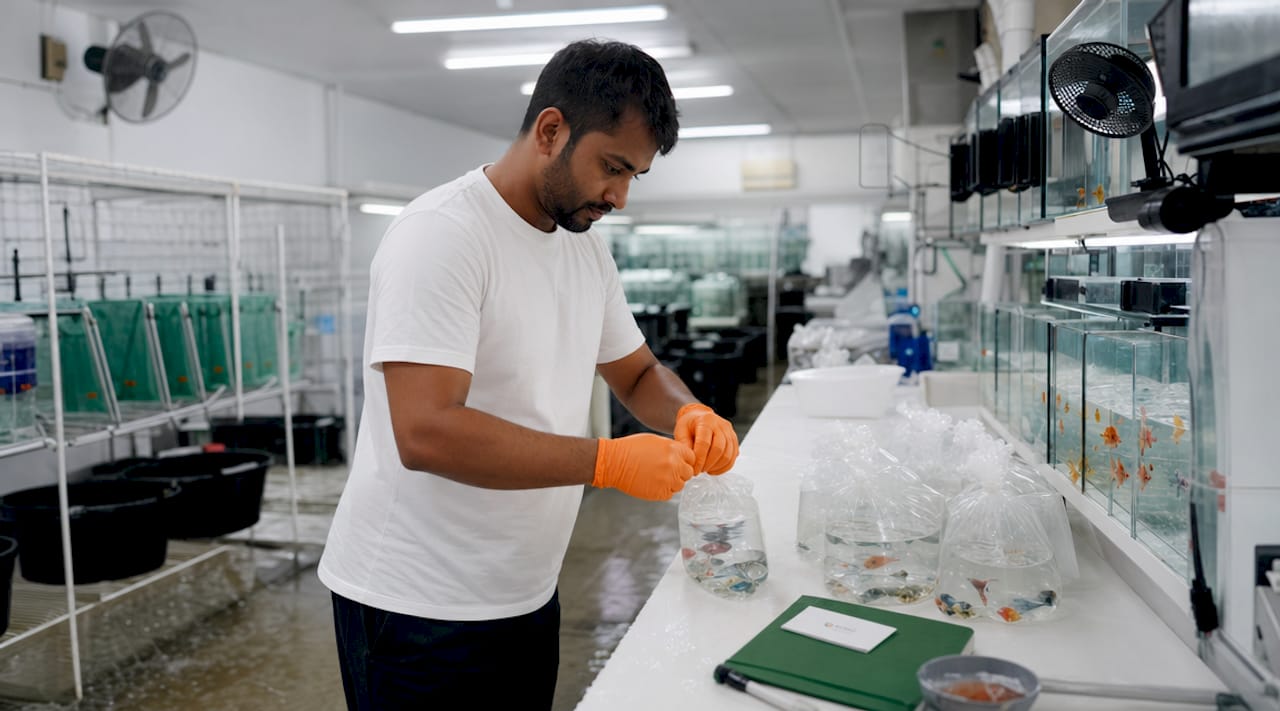
Order structure follows standardized pack sizes rather than individual unit counts. Fast Aquatics offers pack tiers of 25, 50, 100, 250, and 500 units, which simplifies restocking math and shipping logistics. A store running a 100-pack on a four-week rotation, for instance, can project costs and shelf turnover with precision.
Pro Tip: Apply for wholesale accounts before you need the inventory. The 24 to 48 hour review window means you cannot place an emergency order the same day you apply. Build your supplier relationships during slow periods, not when a tank is running low.
What types of suppliers and marketplaces support wholesale fish stores?
Retailers choosing how to set up fish wholesale purchasing face a fundamental structural choice: work directly with a single supplier or buy through a multi-vendor marketplace. Each model distributes responsibility differently, and that difference matters when something goes wrong.
| Model | Fulfillment | Payments | Compliance | Dispute resolution |
|---|---|---|---|---|
| Direct supplier account | Supplier ships directly | Supplier collects | Supplier responsible | Handled between retailer and supplier |
| Multi-vendor marketplace | Individual vendors ship | Platform collects and distributes | Vendors handle animal welfare; platform handles buyer protection | Platform mediates |
In a direct supplier model, you negotiate terms, pricing, and shipping schedules with one company. The relationship is simpler to manage but limits your product range to what that single supplier carries. If they run out of a species or face a disease outbreak, your inventory suffers directly.
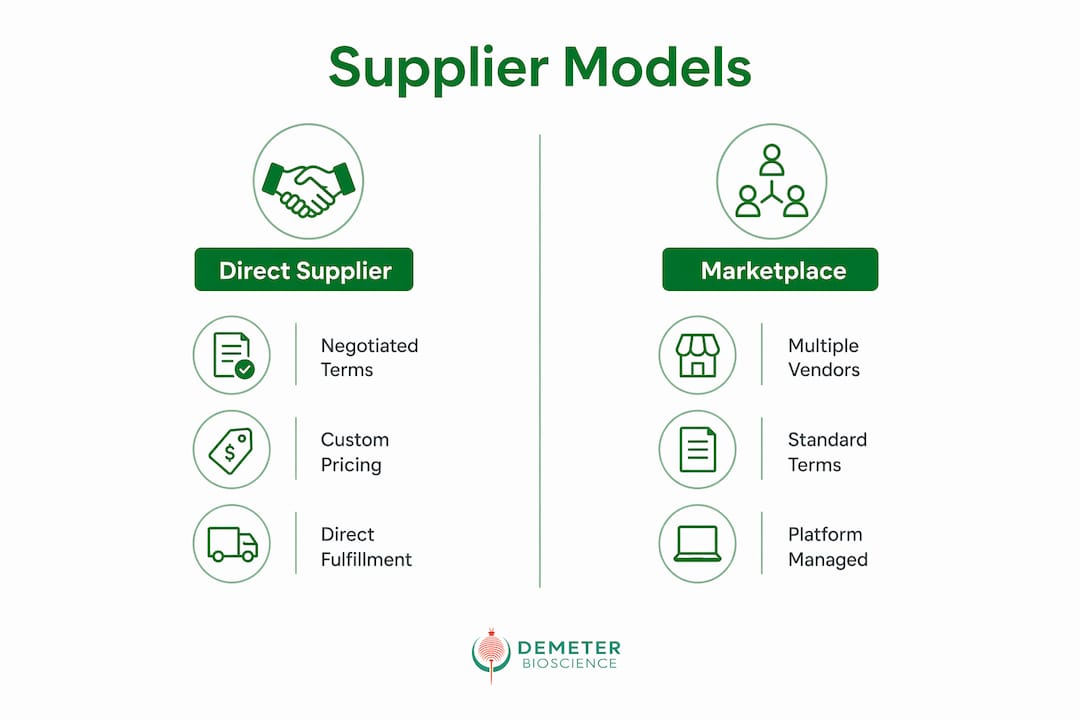
Multi-vendor marketplace models like Fast Aquatics separate vendor and platform responsibilities explicitly. Vendors focus on animal welfare, health compliance, and fulfillment. The platform manages payments, dispute resolution, and buyer protection. For retailers, this reduces complexity considerably. You deal with one checkout process and one claims system regardless of which vendor fulfilled your order.
The tradeoff is less direct control over the vendor relationship. You cannot always negotiate custom terms or request specific conditioning protocols. For stores that prioritize product variety and operational simplicity over customization, marketplace models are the more practical starting point.
How to manage inventory from wholesale fish supply programs
Inventory management in live fish wholesale is categorically different from managing dry goods. Every shipment is perishable, time-sensitive, and subject to mortality risk. The retailers who lose the least money are the ones who treat inventory tracking as a non-negotiable system, not an afterthought.
The foundation is lot-based tracking. Seafood distribution software like Acctivate tracks inventory by supplier, lot number, expiration date, and quarantine status. This level of granularity lets you identify which batch is causing mortality, pull it from sale, and file a claim with accurate documentation. Stores that track only by species name cannot do this.
Here is a practical inventory management sequence for wholesale fish retailers:
- Log every shipment by lot number and arrival date immediately upon receipt. Note the supplier, species, pack size, and any visible health issues.
- Assign quarantine status to new arrivals and track the quarantine period separately from sellable stock. Grand Aquatic, for example, conditions fish for 2 to 4 days before export, but your own quarantine adds another layer of protection.
- Design reorder points around pack tiers and shipping windows, not just individual SKU sales velocity. Aligning your reorder cycle with your supplier's pack sizes and shipment cadence produces better cash flow and fresher stock than reacting to an empty tank.
- File Dead-on-Arrival claims immediately. Both Fast Aquatics and Grand Aquatic require photo evidence within a short window after delivery, typically 4 to 24 hours. Retain original packaging until the claim is resolved.
- Review mortality rates by lot at the end of each restock cycle to identify supplier or shipping patterns that correlate with higher losses.
Pro Tip: Keep a dedicated camera or phone near your receiving area. The moment a DOA shipment arrives, photograph the packaging, the shipping label, and the animals before touching anything. Delayed or incomplete photo evidence is the single most common reason valid claims get rejected.
Understanding live fish food delivery logistics is equally important here. The same time-sensitivity that governs live fish shipments applies to live food products, and managing both in sync reduces the risk of feeding stressed or underfed animals.
What are the main benefits of joining a fish store wholesale program?
The financial case for fish retail distribution programs is straightforward: bulk purchasing lowers your per-unit cost, and lower cost per unit expands your margin at any given retail price. But the operational benefits are just as significant and often overlooked by retailers focused only on the price sheet.
Fish wholesalers deliver cost savings, supply convenience, product freshness, and diversity that individual retail purchasing cannot match. Each of those four factors compounds the others. Here is what that looks like in practice:
- Lower per-unit cost. Buying a 100-pack of coral frags at wholesale pricing versus purchasing 100 individual frags at distributor price can cut your landed cost by 30 to 50 percent depending on species. That margin difference is the difference between a profitable tank section and a break-even one.
- Consistent stock availability. Approved wholesale accounts get priority access to inventory, especially for high-demand or seasonal species. Retailers without wholesale relationships often find popular livestock sold out before they can order.
- Access to specialty livestock. Wholesale programs frequently include rare or specialty species not available through standard distributor channels. This gives your store a product differentiation advantage that casual buyers cannot replicate.
- Simplified supply chain. Standardized pack sizes and scheduled shipping windows mean you spend less time managing individual orders and more time running your store. The benefits of fish store wholesale extend to your feed and nutrition purchasing as well, where consistent quality directly affects livestock health and customer satisfaction.
- Improved cash flow predictability. When your reorder cycles align with fixed pack tiers and shipping schedules, your cash outflows become predictable. That predictability makes budgeting and staffing decisions easier to manage.
The combination of lower costs, better product access, and operational consistency makes wholesale program participation one of the highest-return decisions a fish retailer can make.
Key takeaways
A fish store wholesale program delivers its full value only when retailers combine approved account access with disciplined inventory management and supplier selection aligned to their store's size and product mix.
| Point | Details |
|---|---|
| Gated pricing access | Wholesale pricing is visible only after account approval, so apply early with complete documentation. |
| Upfront payment is standard | Most live fish wholesale programs require card or ACH payment with no Net terms before shipment. |
| Pack tiers drive reorder strategy | Align restock cycles to supplier pack sizes (25, 50, 100, 250 units) for better cash flow and fresher stock. |
| DOA claims require speed | Photo evidence must be submitted within 4 to 24 hours of delivery; retain original packaging until resolved. |
| Marketplace models reduce complexity | Multi-vendor platforms handle payments and disputes, letting retailers focus on inventory rather than vendor negotiations. |
What I've learned from working inside the wholesale fish supply chain
The retailers who struggle most with wholesale programs are not the ones who pick the wrong supplier. They are the ones who treat approval as the finish line instead of the starting point. Getting access to wholesale pricing is easy compared to building the inventory discipline that makes that pricing profitable.
The detail that catches most stores off guard is the relationship between pack sizes and cash flow. Ordering a 250-unit pack because the per-unit price is lower than the 100-unit tier only makes sense if your tank capacity and sales velocity can absorb that volume before mortality climbs. I have seen stores chase the lowest per-unit cost and end up with higher total losses than if they had ordered the smaller tier at a slightly higher unit price.
The other thing worth saying plainly: supplier selection matters more than pricing. A supplier with consistent health protocols, reliable quarantine practices, and a clear DOA claims process is worth more than one offering a 10 percent lower price with opaque fulfillment. Reducing fish mortality through live nutrition practices is part of that equation too. The feed you stock alongside your live fish directly affects how long those animals stay healthy and sellable.
Start with one wholesale relationship, learn its rhythms, and then expand. Trying to manage three new supplier accounts simultaneously while building your tracking systems is a reliable way to lose money in the first quarter.
— Demeter
How Demeterbioscience supports your wholesale fish store
Demeterbioscience produces farmed live brine shrimp fed exclusively on the microalgae Dunaliella, delivering at least 40% protein content with none of the nutritional variability found in wild-harvested alternatives. For fish stores running wholesale programs, consistent feed quality directly affects livestock health between arrival and sale.
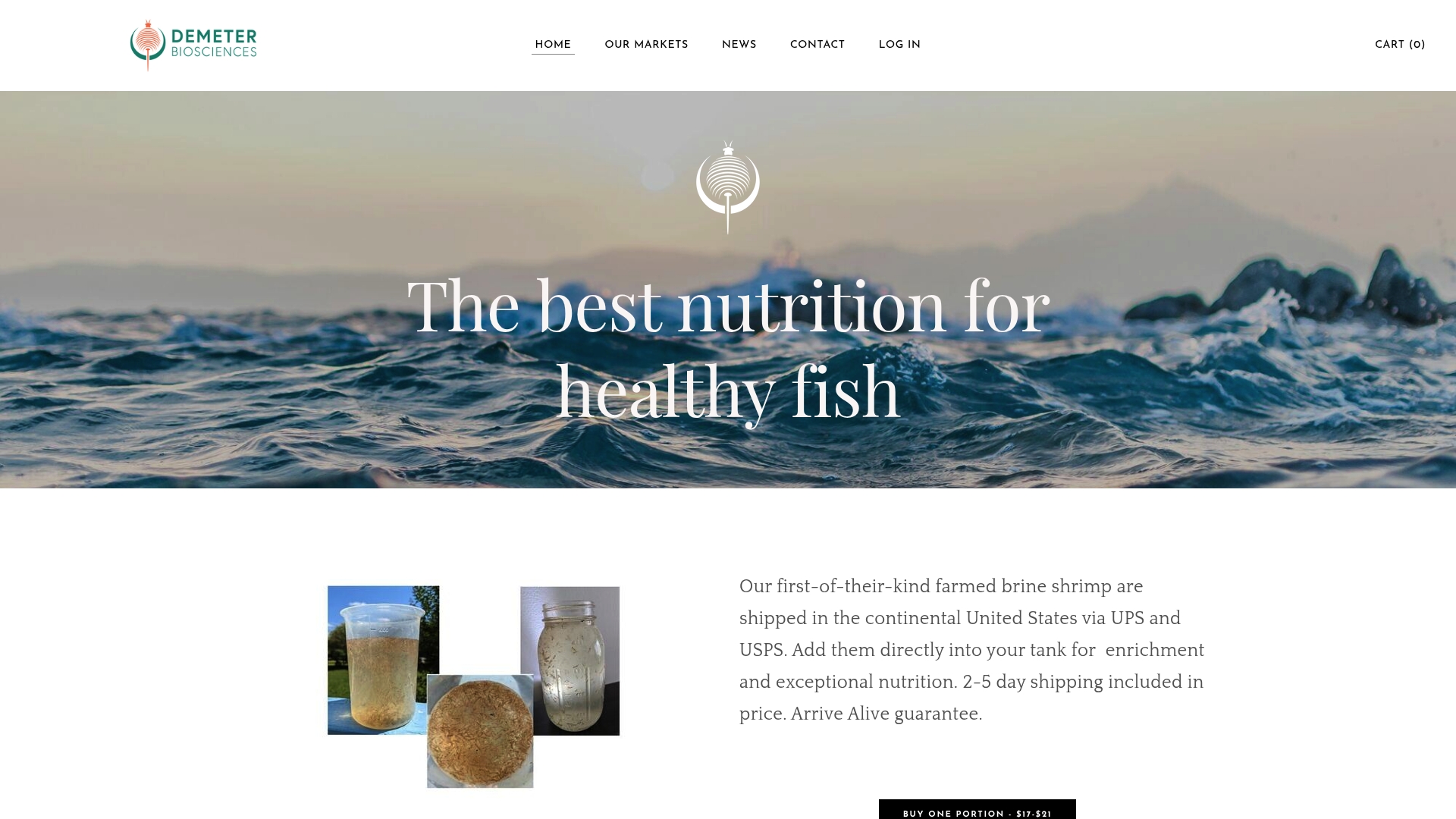
Demeterbioscience offers bulk retail brine shrimp packages designed specifically for local fish stores and aquarium retailers, with subscription options that align to your restocking cadence. If you are building out your wholesale supply chain and want a feed partner whose quality does not fluctuate with the season, contact Demeterbioscience to discuss wholesale collaboration.
FAQ
What is a fish store wholesale program?
A fish store wholesale program is a B2B supply arrangement where verified retailers access discounted live fish and aquatic livestock through approved supplier accounts, with pricing visible only after login. Suppliers like Corals Depot require business verification before granting wholesale access.
How long does wholesale account approval take?
Most suppliers complete wholesale account reviews within 24 to 48 hours of receiving a complete application. Submitting incomplete documentation, such as a missing resale certificate or business license, is the most common cause of delays.
What are standard order minimums in fish wholesale programs?
Order minimums vary by supplier. Grand Aquatic requires a minimum shipment of 6 boxes with 100% advance payment, while pack-based suppliers like Fast Aquatics structure orders around tiers of 25, 50, 100, 250, or 500 units.
How do DOA claims work in live fish wholesale?
Dead-on-Arrival claims require photo evidence submitted within a short window after delivery, typically 4 to 24 hours depending on the supplier. Retaining original packaging and photographing animals before handling strengthens claim validity.
What is the difference between a direct supplier and a wholesale marketplace?
A direct supplier account means you negotiate and transact with one company that handles fulfillment, compliance, and disputes. A wholesale marketplace like Fast Aquatics separates vendor fulfillment from platform-managed payments and buyer protection, reducing retailer complexity when sourcing from multiple vendors.