

Fish food supply inconsistency is defined as the recurring failure to deliver stable quantities and consistent nutritional quality of aquatic feed ingredients, driven primarily by environmental disruptions, fisheries regulation, and ingredient market volatility. For aquarium hobbyists and aquaculture professionals alike, understanding what causes fish food supply inconsistency is the first step toward protecting the health of aquatic animals. The core problem traces back to three converging forces: climate events like El Niño that devastate wild fisheries, international catch quotas that restrict harvest volumes, and feed manufacturers pivoting between ingredients when primary sources run short. Each force compounds the others, and 2026 has made that dynamic impossible to ignore.
What causes fish food supply inconsistency in global feed markets?
Environmental events are the single largest driver of fish feed supply problems. El Niño raises ocean surface temperatures off the coast of Peru, pushing anchovy populations deeper and further offshore. Peruvian anchoveta fisheries supply the majority of the world's fishmeal and fish oil, so when those stocks collapse, the entire global aquafeed ingredient market feels the pressure.
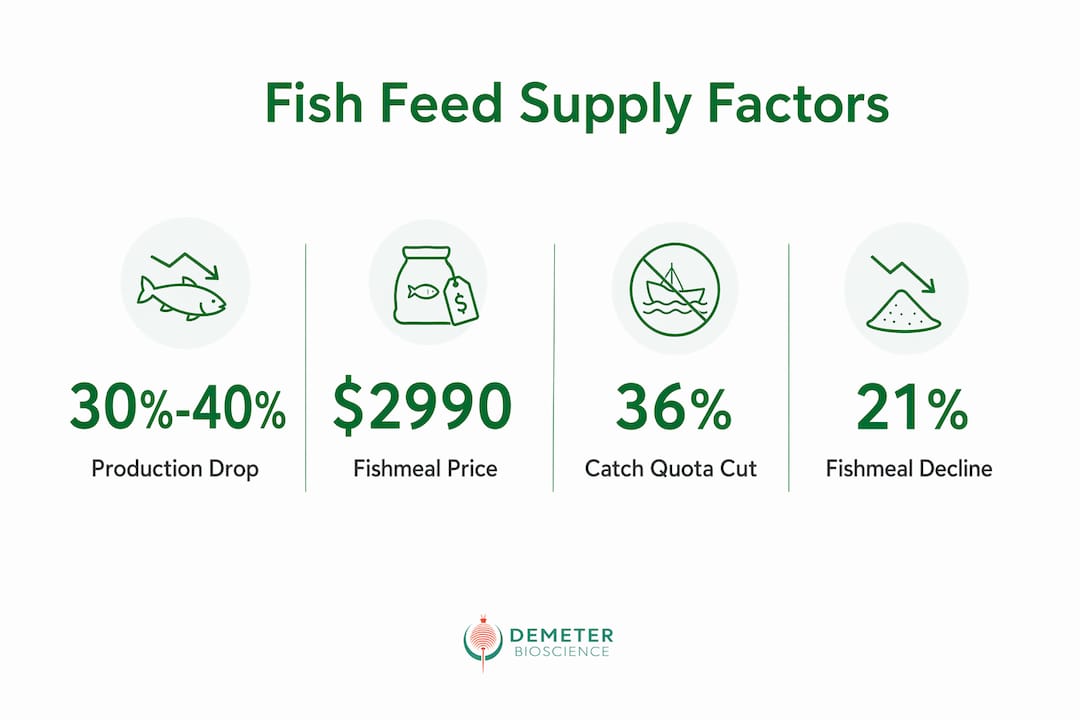
Global fishmeal and fish oil production dropped 30–40% year on year due to the strong El Niño event that extended fishing bans across Peruvian waters in 2026. That scale of reduction is not a temporary blip. It forces every feed manufacturer that relies on marine ingredients to scramble for alternatives simultaneously, which drives prices up across the board.

Wholesale fishmeal prices reached $2,990 per metric ton in june 2026, nearly double the cost from the previous year. When raw material costs double in twelve months, feed manufacturers cannot absorb the difference. Those costs pass through the supply chain directly to retailers, aquaculture operations, and ultimately to the fish in your tank or pond.
Production decline at a glance
| Metric | 2025 Baseline | 2026 Status |
|---|---|---|
| Fishmeal production (April) | Prior year level | Down 21% year on year |
| Cumulative fishmeal output | Prior year level | Down 26% through mid-2026 |
| Wholesale fishmeal price | ~$1,500/metric ton | $2,990/metric ton (june 2026) |
| Anchovy catch quota | Prior year level | Down 36% from 2025 |
Supply chain fragility to regional shocks forces buyers to hold more inventory and pay premium prices just to secure baseline availability. That behavior tightens supply further, creating a feedback loop that keeps prices elevated long after the original environmental trigger has passed.
How do fisheries regulations contribute to fish feed supply problems?
Regulatory decisions amplify what environmental events start. When fish stocks decline, fisheries management bodies respond by cutting catch quotas. Those cuts protect ecosystems in the long run, but they create immediate and severe supply gaps in the short term.
Regulatory catch quotas for anchovies in 2026 are 36% lower than in 2025, compounding the production losses already caused by El Niño. A 36% quota reduction on top of a weather-driven fishing ban produces a supply shortfall that no amount of inventory management can fully offset.
Regional bans create their own localized crises. Western Australia's december 2025 demersal fishing ban triggered price spikes of 25–40% for regional fish species and forced wholesalers to restructure their supply chains almost overnight. Seafood wholesalers in that region reported price increases of 15–20% for primary stocks in early 2026. That is a meaningful cost increase for any operation running on thin margins.
The key regulatory factors driving fish food supply issues include:
- Quota reductions tied to conservation assessments that restrict total allowable catch volumes
- Seasonal fishing bans imposed when stock surveys show populations below sustainable thresholds
- Regional closures that eliminate local supply and force buyers to source from distant markets at higher freight costs
- Extended ban periods triggered when environmental conditions prevent stock recovery between seasons
Supply cuts are painful yet necessary cycles to avoid ecosystem collapse, protecting reproductive fish stocks for long-term sustainability. The tension between short-term supply needs and long-term ecosystem health is real, and it will not resolve itself quickly.
Pro Tip: Monitor quarterly stock assessment reports from fisheries bodies like IMARPE (Peru's Marine Institute) and AFMA (Australian Fisheries Management Authority). These reports signal quota changes weeks before they take effect, giving you time to adjust purchasing or feeding programs.
How do manufacturers respond to ingredient scarcity, and what does that mean for feed quality?
Feed manufacturers do not stop producing when fishmeal runs short. They substitute. Feed manufacturers employ substitution economics, pivoting rapidly between ingredients like soybean meal, pea protein, and other plant-based alternatives to maintain production volume. The problem is that substitution changes the nutritional profile of the feed, often without any visible change to the product label.
"Ingredient substitutions shift nutritional profiles, often without label changes, risking stunted fish growth and health problems in aquaculture. Feed pricing is shaped not only by raw material scarcity but also by broader factors like energy costs, logistics, and manufacturers' ability to reformulate efficiently."
Plant-based protein ingredients like soybean meal and pea protein contain antinutritional factors that can impair fish digestion if not properly processed. Fermentation and heat treatment improve nutrient bioavailability, but not every manufacturer applies these steps consistently. When they do not, fish absorb less protein and essential fatty acids than the label suggests.
The downstream effects of ingredient substitution include:
- Altered amino acid profiles that reduce muscle development and immune function in fish
- Lower omega-3 content when fish oil is replaced with plant-derived lipids lacking EPA and DHA
- Digestibility gaps caused by antinutritional factors in raw plant proteins
- Water quality degradation from undigested feed increasing ammonia and nitrate loads in aquatic systems
Inconsistent feed quality alters fish metabolic health and water quality, requiring adjustments in feeding frequency and filtration. Aquaculture practitioners often underestimate how quickly a formulation change can destabilize a system that was previously balanced.
What are the practical impacts on aquarium hobbyists and aquaculture professionals?
The effects of fish feed supply problems land differently depending on your scale, but they land on everyone. Aquarium hobbyists notice it first as product unavailability or sudden price increases at their local fish store. Aquaculture professionals feel it as cost pressure, inconsistent growth rates, and the need to adapt feeding protocols mid-cycle.
Maintaining consistent nutrition in fish becomes significantly harder when the feed itself changes formulation between batches. Fish that have adapted to one nutritional profile can show stress responses when that profile shifts, even if the change appears minor on paper.
The most common practical impacts include:
- Fluctuating feed availability that forces last-minute product switches and disrupts established feeding regimens
- Batch-to-batch nutritional variation in commercial feeds reformulated under ingredient pressure
- Stunted growth or poor coloration in fish receiving feeds with reduced protein or omega-3 content
- Increased disease susceptibility linked to compromised immune function from nutritional deficits
- Water quality instability caused by poorly digested feed increasing biological oxygen demand
Pro Tip: Keep a 30-day buffer stock of your primary feed and track batch numbers. If you notice behavioral changes or water parameter shifts after opening a new bag, compare batch numbers and test your water chemistry before assuming a disease issue.
What innovations and sustainability efforts can stabilize fish food supply?
The long-term answer to fish feed supply problems lies in reducing dependency on wild-caught marine ingredients. Research into alternative protein and lipid sources has accelerated significantly, driven by the exact supply pressures described above.
Emerging alternatives and their trade-offs:
- Microalgae (including Dunaliella and Schizochytrium) provide direct omega-3 fatty acids, particularly DHA, without requiring a fish intermediary. Demeterbioscience cultivates brine shrimp exclusively on Dunaliella algae, delivering at least 40% protein content with consistent nutritional quality independent of wild fishery cycles.
- Microbial meals derived from bacteria and yeast offer high protein density and can be produced year-round in controlled environments, though scaling production remains a cost challenge.
- Insect meal from black soldier fly larvae provides a digestible protein source with a lower land and water footprint than soybean meal, but regulatory approval varies by market.
- Single-cell proteins produced through fermentation show strong amino acid profiles and are gaining traction in commercial aquafeed formulations.
Biofloc and recirculating aquaculture systems (RAS) offer synergy by enhancing nutrient utilization and water quality, potentially mitigating feed inefficiency related to supply variation. These systems allow operators to extract more nutritional value from each unit of feed, which matters enormously when feed costs have doubled. However, biofloc and RAS require intensive management of parameters like carbon/nitrogen balance and aeration to avoid fish health issues.
| Approach | Supply stability | Nutritional completeness | Management complexity |
|---|---|---|---|
| Wild fishmeal-based feed | Low (weather/quota dependent) | High | Low |
| Plant protein substitution | Medium | Medium (antinutritional factors) | Medium |
| Microalgae-based feed | High (controlled production) | High (direct omega-3) | Medium |
| Biofloc/RAS systems | High (closed loop) | High (nutrient recycling) | High |
Understanding sustainable fish food options is no longer optional for serious aquaculture operators. The supply volatility of 2026 has made that clear.
Key Takeaways
Fish food supply inconsistency stems from three compounding forces: environmental disruptions like El Niño, regulatory quota reductions, and ingredient substitution by feed manufacturers, all of which degrade feed quality and availability for aquarium hobbyists and aquaculture professionals.
| Point | Details |
|---|---|
| Environmental events drive shortages | El Niño caused a 30–40% drop in global fishmeal production, pushing prices to $2,990 per metric ton in june 2026. |
| Regulations amplify scarcity | A 36% anchovy quota cut in 2026 compounded weather-driven fishing bans, creating severe supply gaps. |
| Substitution changes feed quality | Manufacturers pivot to plant proteins under scarcity, shifting nutritional profiles and risking stunted fish growth. |
| Practical effects are measurable | Hobbyists and professionals face batch-to-batch variation, poor fish health, and water quality instability. |
| Controlled production offers stability | Microalgae-fed and land-based systems bypass wild fishery volatility and deliver consistent nutritional profiles. |
Why I think the industry underestimates the feed quality problem
The conversation about fish food supply inconsistency almost always focuses on price. Price is visible. Price shows up in invoices and purchasing reports. What does not show up as clearly is the slow degradation of feed quality that happens when manufacturers reformulate under pressure.
At Demeterbioscience, we work with controlled cultivation systems precisely because we have seen what happens when the ingredient supply chain fails. Brine shrimp fed exclusively on Dunaliella algae deliver a consistent nutritional profile every time, regardless of what is happening in Peruvian waters or what quota a fisheries body just announced. That consistency is not a marketing claim. It is a structural advantage of land-based, controlled production.
The uncomfortable truth is that most aquarium hobbyists and many aquaculture professionals do not know when their feed has been reformulated. The bag looks the same. The label reads the same. But the fish tell you something has changed, if you know what to look for: slower growth, faded color, increased aggression, or a sudden spike in ammonia. By the time you connect those symptoms to a feed change, weeks of suboptimal nutrition have already passed.
My advice: treat feed consistency as a water quality parameter. Monitor it with the same rigor you apply to pH or dissolved oxygen. Diversify your feed sources, maintain buffer stock, and prioritize suppliers who can demonstrate production stability rather than just price competitiveness. The cost of inconsistency always exceeds the cost of preparation.
— Demeter
How Demeterbioscience supports consistent fish nutrition
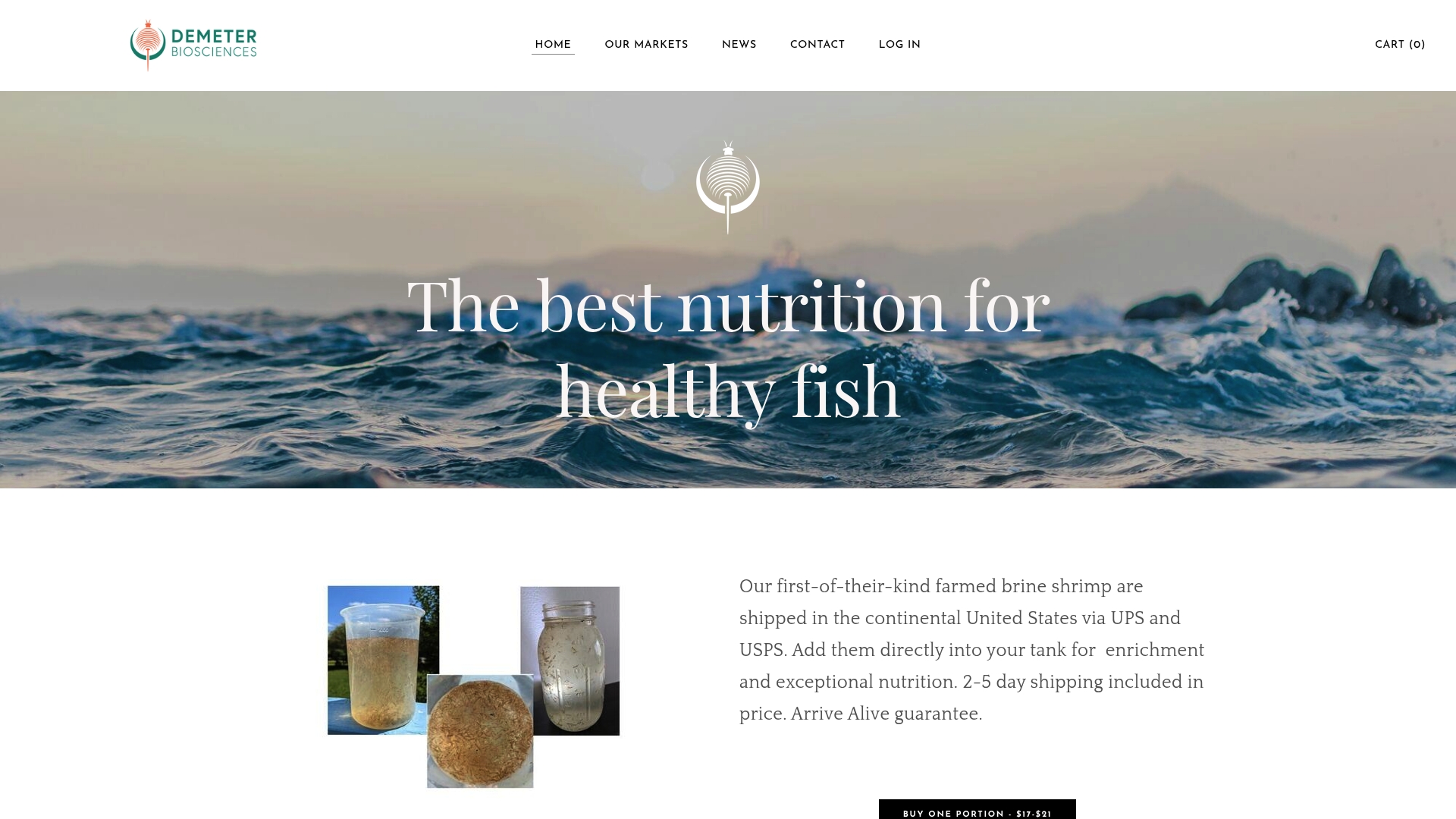
Supply volatility in wild-caught marine ingredients is a structural problem, not a temporary one. Demeterbioscience addresses it directly by producing live brine shrimp in land-based, controlled systems fed exclusively on Dunaliella algae. Every batch delivers at least 40% protein content, independent of El Niño cycles, fishing bans, or quota changes. For aquaculture professionals managing large operations, bulk brine shrimp orders provide a steady live feed supply that complements variable dry feed availability. Monthly subscription plans and direct-to-consumer shipments give aquarium hobbyists the same reliability. When your dry feed formulation shifts without warning, a consistent live feed source keeps your fish on stable nutrition.
FAQ
What is the main cause of fish food supply inconsistency?
Environmental events like El Niño are the primary cause, disrupting Peruvian anchovy fisheries that supply most of the world's fishmeal and fish oil. Regulatory quota cuts and ingredient substitution by manufacturers compound the problem further.
How do fishing quotas affect fish feed availability?
Quota reductions restrict the total volume of fish that can be harvested, directly reducing fishmeal and fish oil production. In 2026, anchovy quotas were cut 36% below 2025 levels, causing a 26% cumulative decline in fishmeal output.
Why does fish feed quality change between batches?
Feed manufacturers substitute plant proteins for fishmeal when marine ingredient supplies run short. These substitutions shift amino acid and omega-3 profiles, often without label changes, leading to batch-to-batch nutritional variation.
How can I protect my fish during feed supply disruptions?
Maintain a 30-day buffer stock of your primary feed, track batch numbers, and monitor water parameters after switching to a new batch. Adding a consistent live feed source like farmed brine shrimp helps stabilize nutrition when dry feed formulations change.
Are there stable alternatives to fishmeal-based fish food?
Microalgae-based feeds and land-based live feed production offer the most consistent nutritional profiles because they operate independently of wild fishery cycles. Biofloc and RAS systems also improve feed efficiency, though they require intensive management to function correctly.