
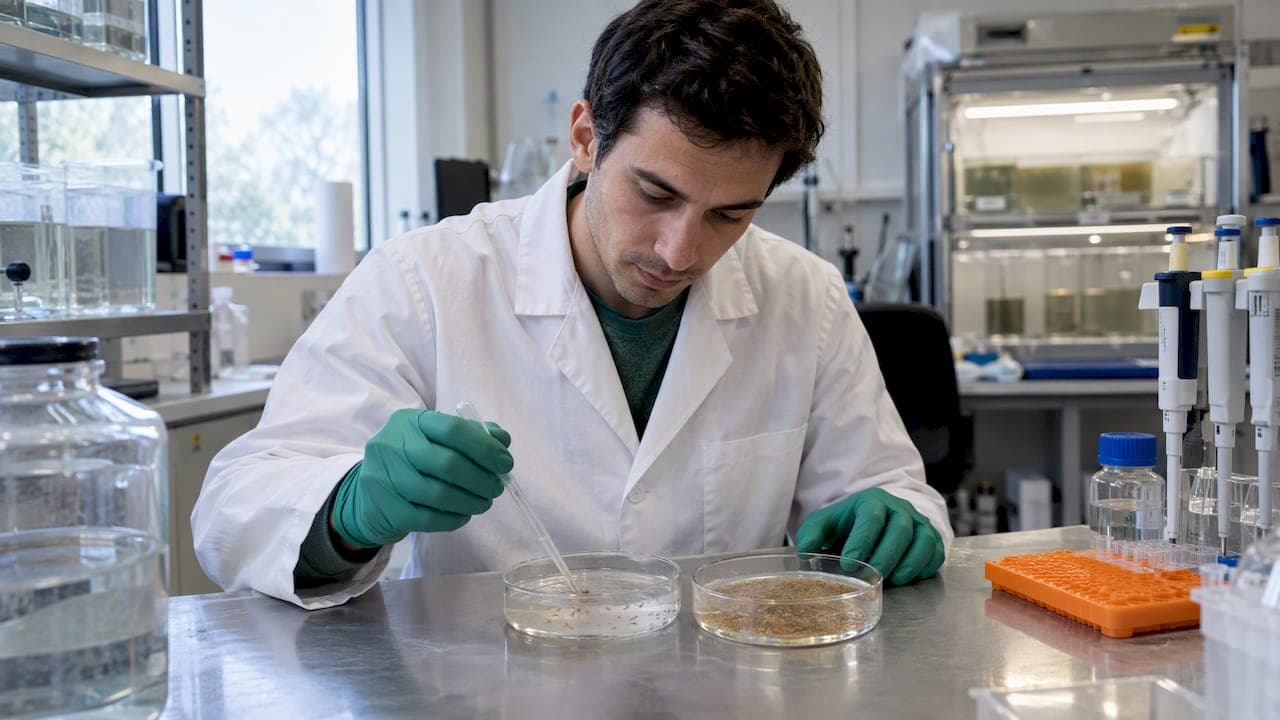
If a supplier can hand you a hatch test and a strain ID, you're looking at the real thing. Before you commit to a batch, ask for cold storage records and confirm the cysts have been kept near 39°F, since temperature abuse before shipping degrades hatch performance regardless of what the label claims.
TL;DR:
- Confirm hatch rates with documented test conditions, aiming for 90% or higher under consistent protocols at 26-30°C, salinity 35‰, and pH 8.0-9.0.
- Always verify strain identity as Artemia franciscana to prevent variability, and request batch harvest dates and microbial screening for contamination risks.
- Store dry cysts in airtight containers at 4°C, and use refrigerated decapsulated cysts within a week for reliable viability.
- Follow precise hatching procedures, including continuous light and aeration, with harvest timing based on hour peak hatch, usually between 18-24 hours.
- Weigh costs against quality, noting that verified batches with hatch guarantees and strain IDs are more expensive but reduce experiment waste and variability.
Table of Contents
- What makes brine shrimp research-grade
- How to hatch research-grade cysts in 24 hours
- Storage, decapsulation, and enrichment decisions that shift your results
- Quality checklist before you order research-grade cysts
- Why source-controlled, algae-fed production reduces batch variance
- What research-grade brine shrimp cost and why
- Choosing between decapsulated and standard cysts for your study
- Where to source research-grade brine shrimp for your lab
- FAQ
- Sources
- Curated manuals and protocols for full SOPs
What makes brine shrimp research-grade
Hatch rate is the first number worth checking, and the bar for research-grade cysts sits at 90% or above under standard conditions, which requires documented hatching at 26–30°C, 35‰ salinity, and pH 8.0–9.0. A guaranteed hatch percentage without a stated test method is close to meaningless: ask what temperature, salinity, and timeframe the supplier used to generate that number.
Strain identity matters more than most buyers realize. Artemia franciscana is the standard research organism, and most toxicity and feeding studies are built around it, so mixing strains between batches introduces a variable you didn't plan for. Batch history, meaning harvest date and processing record, lets you trace an anomalous result back to its source instead of guessing.
Microbiological cleanliness is non-negotiable for toxicology or larval-rearing work, where a contaminated batch can confound a dose-response curve or seed disease in a rearing tank. Nutritional consistency carry similar weight: cysts fed a variable or starvation-prone diet in the wild produce nauplii with unpredictable HUFA and protein content, which shows up as noise in any assay sensitive to larval condition.
What to request from a supplier before you order:
- A hatch percentage figure paired with the exact test conditions used to generate it.
- Written confirmation of Artemia franciscana strain and the batch's harvest date.
- A microbial screening result or at least a statement of processing hygiene.
- A nutritional profile, especially protein and HUFA content, for the specific batch.
How to hatch research-grade cysts in 24 hours
A clean, reproducible hatch depends on hitting a narrow set of numbers rather than approximating them. The targets below come from extension hatching protocols and hold for both lab-scale and small production setups.
- Fill a conical hatching vessel with water at 26 to 30°C and salinity of 35‰ (roughly 1.026 specific gravity).
- Adjust pH to 8.0 to 9.0 using sodium bicarbonate, checking with a calibrated meter rather than test strips.
- Stock cysts at no more than 2 grams per liter for standard (non-decapsulated) cysts, or up to 5 grams per liter for decapsulated cysts.
- Run continuous illumination and strong aeration from the moment cysts hit the water, since both cues are required to trigger synchronized hatching.
- Monitor dissolved oxygen and keep it above 4 milligrams per liter; densities over 2 grams per liter typically need supplemental pure oxygen to hold that threshold.
- Expect hatching between 18 and 24 hours for standard cysts; decapsulated cysts often hatch closer to 16 hours.
- Harvest promptly once hatching peaks, before nauplii molt into Instar II, since Instar I carries the richest yolk-derived nutrition.
- Rinse harvested nauplii briefly in clean saltwater to remove hatch debris and residual cyst shells before introducing them into an assay or tank.
Pro Tip: Run a small-scale test hatch from every new batch before committing it to a full experiment: a 20-minute count under a dissecting scope tells you whether the batch meets its stated hatch rate.
Storage, decapsulation, and enrichment decisions that shift your results
Dry cysts keep best in airtight containers refrigerated at 4°C, with working aliquots pulled into a small fridge for daily use rather than cycling the main stock in and out of cold storage repeatedly. Decapsulated cysts stored under refrigeration in brine remain viable for several days to about a week; for longer storage, dehydrating decapsulated cysts in saturated brine before sealing them cold extends shelf life substantially.
Decapsulation removes the cyst shell and provides advantages including reduced gut impaction risk and quicker hatching. The tradeoff is handling: decapsulation involves chlorine-based chemical treatment and demands sterile technique to avoid introducing contamination.
- Decapsulated cysts suit toxicology work and larval species with a narrow gape.
- Standard cysts work fine for routine feeding where shell presence isn't a concern.
- Enrichment should be brief, since extending the window past Instar I lets nauplii molt and burn through their yolk-derived HUFA reserves.
- Document whichever method you choose consistently across replicates, since switching forms mid-study adds an uncontrolled variable.
Quality checklist before you order research-grade cysts
Before placing an order, request documentation that lets you verify the batch rather than take a label on faith.
- Guaranteed hatch percentage along with the test method and conditions used to measure it.
- Strain identification (Artemia franciscana) plus batch ID and harvest or processing date.
- Storage conditions maintained from harvest through shipping, including temperature records.
- Batch hatching test results and, where relevant, microbial screening data.
- For toxicology work, reference-toxicant sensitivity data confirming the batch responds predictably to a known compound.
Order a small sample batch first to validate hatch rate and cleanliness before committing to the volume a full study requires, and expect cold-chain packaging with insulation and ice packs sized for transit time. A batch with no batch ID, no stated hatch guarantee, or vague storage advice is a batch to skip. If a batch fails your acceptance hatch test, document the failure and request a replacement rather than adjusting your protocol to compensate for a bad lot.
Pro Tip: Keep a simple spreadsheet log of batch ID, supplier, hatch rate achieved, and date: three or four entries in, patterns in supplier reliability become obvious.
Why source-controlled, algae-fed production reduces batch variance
Repeated hydration and dehydration cycles before harvest degrade cyst viability, a common problem with wild-harvested stock pulled from variable natural conditions.
- Controlled land-based production means every batch draws from the same diet and environment, not whatever conditions a wild salt lake happened to offer that season.
- Cold-chain handling from our facility reduces the hydration and dehydration cycling that damages cysts before they ever reach a lab.
- We offer bulk institutional ordering alongside subscription shipments, so labs with recurring needs can set up a predictable supply schedule.
That consistency is the point: a nutrition profile that doesn't drift batch to batch is one less variable in an experiment already carrying enough of them.
What research-grade brine shrimp cost and why
Pricing for live brine shrimp runs $17 to $35 per order, depending on quantity and shipping distance. The spread reflects a few real cost drivers rather than arbitrary tiers.
Order volume is the biggest factor: a single-tank researcher ordering a small batch pays less per order than an institution requesting bulk quantities, though bulk orders typically bring the per-unit cost down. Shipping distance and transit time matter too, since live cysts and nauplii need insulated, temperature-controlled packaging, and longer transit routes require more robust (and costlier) packaging to protect viability.
Quality tier plays a role as well. Cysts with documented hatch-rate guarantees, strain verification, and batch QC cost more to produce than unverified wild-harvested stock, because testing and record-keeping add labor on the supplier's end. For labs running recurring experiments, a monthly membership at $25 can work out cheaper per shipment than one-off ordering, since it locks in a predictable supply without repeated setup costs each time.
Decapsulated cysts sometimes carry a premium over standard cysts, reflecting the extra processing step, though the convenience of a faster, cleaner hatch often offsets that cost for sensitive assays. Buyers comparing suppliers should weigh price against what's actually backing it: a cheaper batch with no hatch guarantee or strain ID can cost more in wasted experiment time than a verified batch at a higher price point.

Choosing between decapsulated and standard cysts for your study
Decapsulated cysts earn their cost premium in sensitive assays: toxicology screens, tiny-gaped larvae, and anything where shell fragments could confound results. Standard cysts remain perfectly adequate for routine feeding or cost-sensitive projects where shell presence introduces no real risk. The decision comes down to how much reproducibility your study demands against your budget and handling capacity.
— Demeter
Where to source research-grade brine shrimp for your lab
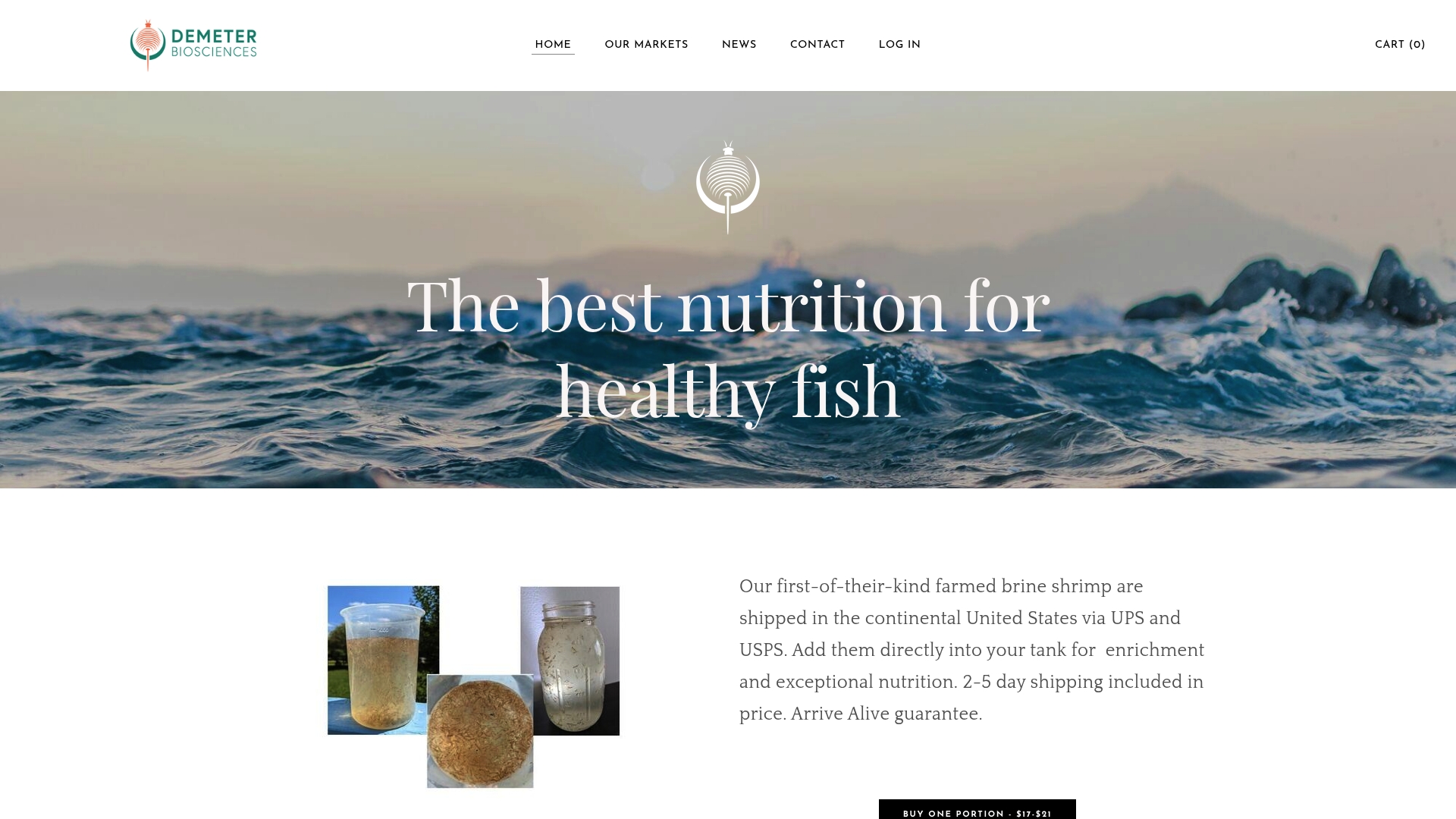
Live brine shrimp raised on a controlled Dunaliella diet, built around hatch-rate and strain-consistency standards, are available. Whether you need a single order to validate a protocol or a recurring supply for an ongoing study, we offer formats to match.
- Order live brine shrimp directly for a one-time batch to test against your acceptance criteria.
- Set up bulk institutional ordering for labs and museums needing larger, recurring quantities.
- Subscribe to the Demeter Biosciences membership at $25 per month for predictable, recurring shipments.
Reach out through our ordering pages to request a batch QC report or sample before committing to a full study order.
FAQ
Do I need to refrigerate brine shrimp eggs?
Yes, dry cysts should be stored in an airtight container at around 4°C for long-term viability. Decapsulated cysts stored in refrigerated brine hold up for about a week, while dehydrated decapsulated cysts kept cold and sealed last considerably longer.
What is the size of brine shrimp?
Researchers typically work with the Instar I to Instar III stages, since standard toxicity assays use Instar II–III larvae.
How to breed your own brine shrimp?
Hatching cysts requires water at 26 to 30°C, salinity of 35‰, and pH 8.0 to 9.0, with continuous light and strong aeration for 18 to 24 hours. Raising hatched nauplii to adulthood for breeding stock takes several additional weeks of feeding and stable water conditions, which is why most labs simply hatch fresh cysts for each experiment rather than maintaining breeding colonies.
How to know when brine shrimp are hatched?
Hatched nauplii appear as tiny swimming specks, visibly distinct from unhatched cysts, which remain still and often cluster near the surface or bottom depending on aeration. Most batches reach peak hatch between 18 and 24 hours under proper conditions, and a dissecting scope makes confirming hatch percentage straightforward.
Sources
- Evaluation of brine shrimp assay protocols (research source)
- Extension publication: Artemia hatching and production (Virginia Tech / outreach)
- Evaluation of Toxicity with Brine Shrimp Assay (peer-reviewed review)
Curated manuals and protocols for full SOPs
For complete standard operating procedures, consult the extension hatching guide, the Artoxkit M toxicity SOP, and our own water parameter breakdown for day-to-day reference.