
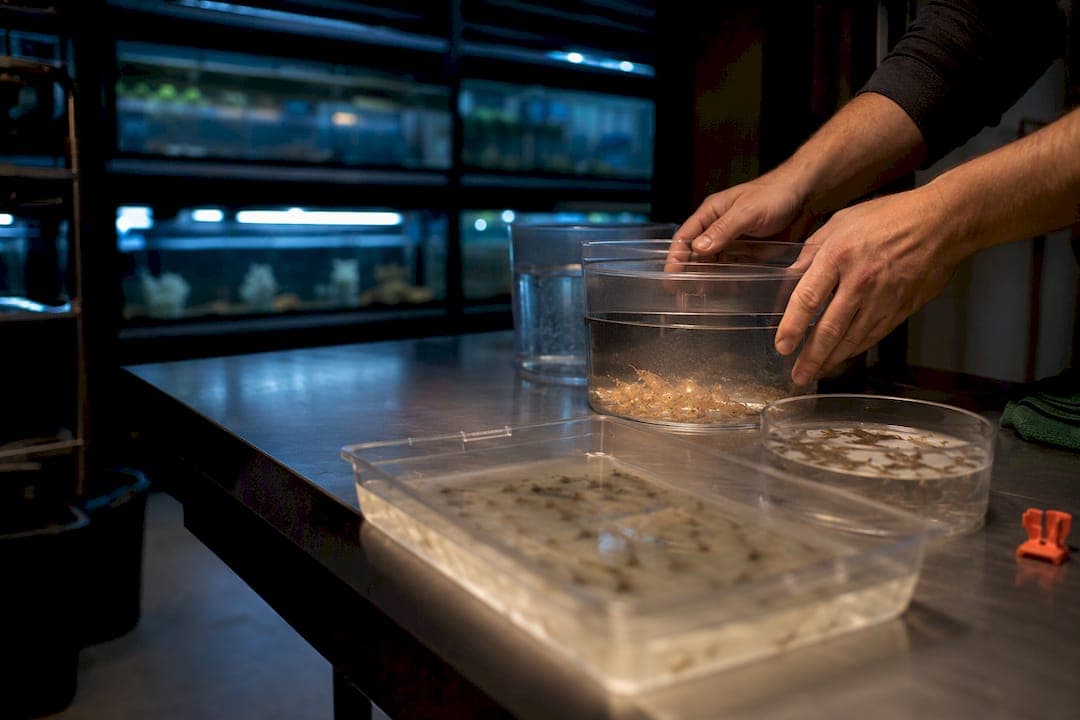
Stock three formats: vacuum-sealed cysts, ready-to-feed or enriched live packs, and a small rotating selection of live cultures for fry and conditioning. The single rule that protects margin is guarding the cold chain from supplier to shelf and labeling every enrichment claim clearly. Suppliers offering controlled-cultivation brine shrimp provide one route into this category without the guesswork of managing your own hatchery.
TL;DR:
- Controlled-cultivation brine shrimp supply offers consistent quality and avoids seasonal shortages associated with wild harvesting.
- Proper handling, including immediate inspection and correct cold-chain management, significantly reduces live-stock loss during shipping and storage.
- Retailers should match product formats to customer segments, with entry-level cysts below and premium, ready-to-feed products at eye level for better sales.
- Regulatory compliance requires checking import permits, keeping documentation, and quarantining new stock to prevent contamination and loss.
- Seasonal demand shifts from breeding and fry-focused products in spring and summer to convenience packs in fall and winter, guiding merchandising adjustments.
Table of Contents
- Where to buy and which purchase formats to stock
- Types of live fish food and merchandising use-cases
- Storage, shipping and on-shelf handling best practices
- Regulatory and compliance checklist for U.S. retailers
- Why farmed, microalgae-fed brine shrimp matter: Demeter's approach
- Educating customers on enrichment and complete diets
- Adjusting merchandising for seasonal demand shifts
- Solving the common problems with live stock: mortality and contamination
- Retailer perspective: measuring success and common pitfalls
- How Demeter Biosciences can supply retailers and hobbyists
- Sources
- FAQ
Where to buy and which purchase formats to stock
Retailers generally source live fish food through three channels: direct farm producers, wholesale distributors, and specialty online retailers. Direct producers tend to offer the most consistent nutritional profiles because they control feed and water conditions, but minimum order quantities can be higher. Wholesalers offer breadth across species and formats with shorter lead times, while specialty online retailers work well for filling gaps between larger shipments.
The purchase format matters as much as the channel. Shell-on cysts appeal to hobbyists who want to hatch their own brine shrimp and control timing. Decapsulated cysts skip the hatching step and suit fry that struggle with shell fragments. Live culture jars, ready-to-feed frozen packs, and combo kits round out the assortment for buyers who want convenience over process.
When placing orders, a few practices reduce waste and stockouts:
- Ask about live-arrival guarantees before committing to a supplier, especially for perishable live cultures.
- Compare subscription or bulk pricing against one-off orders if your store moves consistent volume.
- Confirm packaging standards for overnight shipping, including insulation and heat or cold packs suited to your climate.
- Request lot numbers and origin documentation with each shipment for traceability.
Matching format to buyer segment keeps the shelf from feeling like a single-product afterthought. A hobbyist chasing a breeding project wants shell-on cysts and culture starter kits. A casual buyer who forgot to feed their tank wants a ready-to-feed pack they can use in five minutes.
Types of live fish food and merchandising use-cases
Different species of live feed serve different tank setups, and knowing which one solves which problem is the foundation of a good assortment.
- Artemia (brine shrimp) work as either hatch-your-own cysts or ready-to-feed packs, and they remain the standard first food for many freshwater and marine fry.
- Daphnia and Moina suit freshwater fry rearing; Moina tolerates a wide temperature range and can be cultured at small scale, making it practical for both hobbyists and in-store demo tanks.
- Copepods and phytoplankton fit reef and marine setups where corals and delicate filter feeders need something smaller than brine shrimp nauplii.
- Blackworms and microworms serve larger feeders and bottom-dwelling species that ignore smaller live food entirely.
Mapping these to customer intent helps staff make faster recommendations. Breeders lean toward Artemia and Daphnia for fry survival rates. Conditioning programs for adult fish before spawning often call for a rotation of two or three types. Picky eaters, especially wild-caught or newly acquired fish, sometimes respond to live food when they refuse everything else.
On the shelf, a tiered good/better/best structure turns browsing into buying. Basic shell-on cysts anchor the entry tier, enriched or decapsulated formats sit in the middle, and premium ready-to-feed or subscription-linked products occupy eye-level space where shoppers naturally look first. Combo packs that bundle a starter culture with feeding instructions work well for first-time buyers who are not ready to commit to a full setup.
Pro Tip: Place the premium tier at eye level and the entry tier below it: shoppers scan top-down, and the first product they see anchors their sense of what "normal" costs.
Storage, shipping and on-shelf handling best practices
Handling failures, not sourcing failures, cause most losses in this category. A receiving checklist catches problems before they hit the shelf.
- Inspect live shipments immediately: cloudy water, dead stock, or a broken cold pack are grounds for rejection under most live-arrival guarantees.
- Schedule overnight shipping to arrive early in the business day so staff can transfer stock before temperatures drift.
- Store vacuum-sealed cysts in a cool, dry area away from humidity, which degrades hatch rates faster than almost anything else.
- Keep live cultures in small, aerated vats rather than large static tanks, and do routine partial water changes.
- Handle frozen packs with standard cold-chain practices and never let them thaw and refreeze before sale.
Cyst quality varies by strain and cultivation method, and it shows up directly in hatch results. High-quality Artemia cysts generally hatch a high number of nauplii per gram, indicating good viability, and cysts from controlled cultivation systems tend to show more consistent protein and HUFA content than mixed wild-harvested lots. That range is a useful benchmark when comparing suppliers, since a cyst batch that hatches well below it signals poor storage or an aging lot.
Regulatory and compliance checklist for U.S. retailers
Live aquatic invertebrates fall under federal oversight, and retailers who skip this step risk shipments being held or refused. USDA APHIS regulates the importation of certain live aquatic invertebrates, and permit requirements depend on species and country of origin, though common feeder organisms moved between states are often exempt from plant pest permitting.
Before placing a first order with a new supplier, retailers should:
- Check current APHIS import rules for the specific species and origin before ordering internationally.
- Keep copies of any import permits and supplier origin declarations on file.
- Ask suppliers directly whether their product requires a permit or falls under a standard exemption.
- Train staff to recognize signs of contamination or unfamiliar organisms in shipments and flag them before restocking shelves.
A short quarantine period for new live cultures, even a few days in isolated tanks, catches most contamination issues before they spread to demo tanks or customer purchases.
Why farmed, microalgae-fed brine shrimp matter: Demeter's approach
Wild-harvested brine shrimp come from natural salt lakes where feed availability swings with the season, and that variability shows up in inconsistent protein and fatty acid content batch to batch. Land-based cultivation removes that variable by controlling feed and water conditions year-round. Some producers raise brine shrimp on a diet of microalgae in controlled systems, aiming to deliver more consistent protein content than shrimp pulled from the wild.
For retailers, that consistency translates into a few practical advantages:
- Predictable supply that does not disappear during off-season harvest gaps.
- Subscription and bulk packaging options suited to recurring store orders rather than one-time buys.
- A clear nutrition story staff can repeat at the counter without overselling.
Pro Tip: Run a short hatching demo near the register during slow hours: watching nauplii hatch live sells the product better than any shelf talker can.
Shelf talkers that call out "microalgae-fed" or "consistent protein" give premium SKUs a reason to cost more, and pairing that signage with a subscription sign-up option at checkout turns a one-time sale into recurring revenue.
Educating customers on enrichment and complete diets
Live food solves a feeding-response problem, not a complete-nutrition problem, and retailers who explain that distinction build more trust than ones who just ring up the sale. Live food works well for triggering feeding response and supporting fry development, but it should complement a balanced pelleted or flake diet rather than replace it entirely. Fish fed exclusively on live food, especially unenriched cultures, can end up with nutritional gaps that a pellet or flake diet was formulated to prevent.
Staff should ask two questions before recommending a live-food-only regimen: what species is the customer keeping, and are they using live food as a supplement or as the entire diet? Breeders conditioning adults for spawning have different needs than someone feeding a community tank once a day. A simple in-store rule of thumb works for most conversations: live food a few times a week alongside a daily flake or pellet base covers most tank setups without overcomplicating the sale.
Signage and staff scripts should avoid implying that "live" automatically means "nutritionally complete." Cultivation method and enrichment determine the actual nutrient profile far more than the fact that the food happens to be alive. A cyst hatched fresh and gut-loaded with microalgae before feeding delivers a very different nutrition profile than one fed nothing before it goes in the tank. Framing the sale around that distinction, rather than around "live versus frozen," gives customers a reason to trust the recommendation and come back for the next round.

Adjusting merchandising for seasonal demand shifts
Live food sales move with the aquarium hobby's own calendar. Spring and early summer tend to bring a wave of new tank setups and breeding projects, which pushes demand toward starter cultures and fry-focused products like Daphnia and decapsulated Artemia. Late fall and winter often shift demand toward convenience formats, since fewer hobbyists want to manage a live culture vat when they are indoors less often tending tanks.
Holiday gift-giving season creates a short but real spike in interest from people buying a first aquarium setup as a gift, which favors combo kits and simplified starter packages over advanced culturing supplies. Retailers who shift shelf space ahead of that curve, rather than reacting to it, capture more of the seasonal traffic.
A practical approach is a quarterly assortment review: pull sell-through data every few months and adjust the ratio of hatch-your-own to ready-to-feed stock based on what actually moved. Stores in warmer climates may see less seasonal swing than stores where winter keeps hobbyists indoors and more engaged with existing tanks rather than starting new ones. Either way, treating the live-food shelf as a static category year-round leaves sales on the table during the exact windows when demand is highest.
Solving the common problems with live stock: mortality and contamination
Mortality and contamination cause most of the shrink in this category, and both are largely preventable with consistent handling. Mortality in transit usually traces back to temperature swings or overcrowded shipping containers, which is why confirming a supplier's live-arrival guarantee and packaging standards matters before the first order ever ships. On the shelf, overcrowded culture vats or infrequent water changes cause die-offs that look like a supplier problem but are actually a handling problem.
Contamination tends to show up as unwanted organisms riding along in a culture jar or cyst batch, from hydra to unwanted rotifers. A short quarantine period for new stock, combined with visual inspection under basic magnification, catches most of it before it reaches a customer's tank. Cross-contamination between species is another risk: using the same net or siphon across multiple culture vats without rinsing spreads problems fast.

The fix for both issues is procedural rather than technical. Keep a simple log of mortality rates by supplier and batch so patterns show up early rather than after a season of losses. Dedicate separate equipment to each culture type, rinse it between uses, and train staff to reject shipments that fail a basic visual check rather than hoping the stock recovers on the shelf. None of this requires specialized equipment, just consistency applied every time a shipment arrives.
Retailer perspective: measuring success and common pitfalls
Track sell-through by SKU, shrink from spoilage or returns, and repeat-purchase rates on subscription products. Those three numbers tell you more about a live-food program's health than gut feel ever will.
The pitfalls are almost always operational rather than strategic: vague labeling that never explains enrichment, mixing perishable cultures with shelf-stable frozen packs on the same display, or overstocking live cultures that die before they sell. Fix the handling and the merchandising mostly takes care of itself.
— Demeter
How Demeter Biosciences can supply retailers and hobbyists
Sourcing live brine shrimp does not have to mean building and maintaining your own hatchery. Certain suppliers raise brine shrimp on controlled, microalgae-fed diets and ship them directly, providing retailers a supply option that does not depend on wild-harvest seasons or farm producer minimum order thresholds.
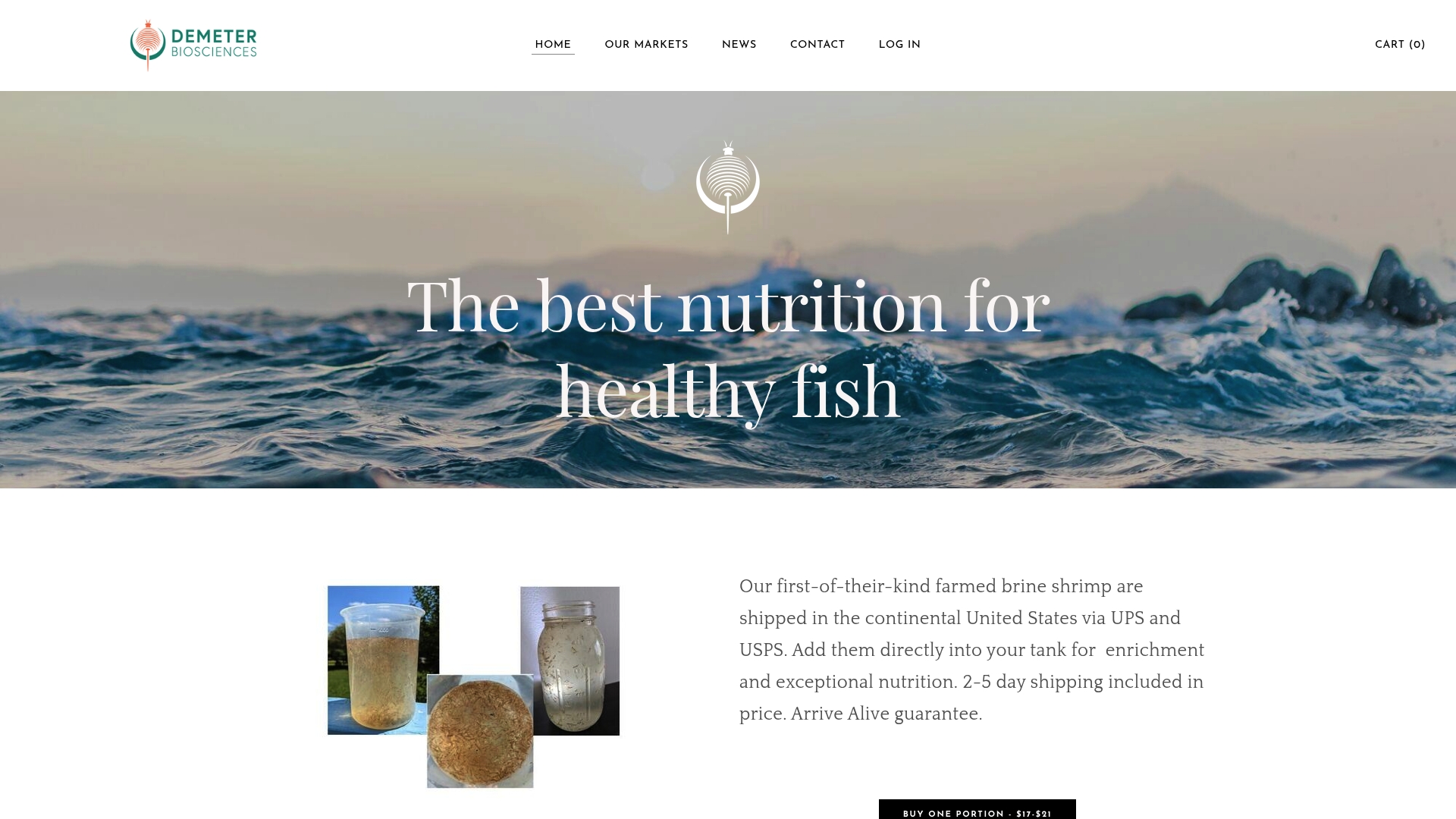
What matters for a retail pilot:
- Live brine shrimp available as direct shipments for hobbyists or as trial stock for a store shelf.
- A Demeter Biosciences membership at $25 per month for recurring shipments, useful for building a subscription program at the register.
- Bulk store brine shrimp orders sized for retail-ready packaging and institutional buyers.
Start with a small retail pack to test sell-through, or reach out through the bulk order page for wholesale pricing before committing shelf space.
Sources
- Artemia production for marine larval fish culture
- What do fish eat? Your guide to feeding pet fish
- Pet food, fish bait, and animal feed | APHIS
- Culture techniques of Moina
FAQ
What is the best live food for fish?
The best choice depends on the fish's life stage and tank type: Artemia (brine shrimp) works broadly across freshwater and marine setups, while Daphnia and Moina suit freshwater fry rearing specifically. Moina tolerates a wide temperature range, making it a practical, low-maintenance option for small-scale culturing.
Where can I buy live daphnia culture?
Live Daphnia and Moina cultures are available through specialty online aquarium retailers, some local fish stores that maintain their own culture vats, and wholesale suppliers who ship starter cultures. Ask about live-arrival guarantees before ordering, since Daphnia cultures are sensitive to temperature swings in transit.
How to culture live fish food?
Small-scale culturing works well for Daphnia, Moina, and microworms using aerated vats with routine partial water changes to keep populations healthy. Moina in particular can be maintained at small scale with basic equipment, making it a common starting point for hobbyists and in-store demo tanks.
Where can I buy live fish food?
Live fish food is available through direct farm producers, wholesale distributors, and specialty online retailers, each offering different formats from hatchable cysts to ready-to-feed packs. There are options for direct-to-consumer live brine shrimp shipments and bulk orders for retailers looking to stock a reliable supply.
How should I store vacuum-sealed brine shrimp cysts?
Vacuum-sealed cysts keep best in a cool, dry location away from humidity, which preserves hatch rates far longer than exposure to air or moisture. Once a seal is broken, cysts should be used within a limited window rather than repackaged for extended storage.