
Switch to virgin-plastic-free, high-barrier fiberboard or certified mono-material films now, and open supplier co-development conversations this week. That's the short answer for sustainable packaging in aquatic nutrition products. The longer answer is a structured playbook, and it starts with three immediate actions:
- Run a packaging audit across your top 20 SKUs and record plastic weight per unit.
- Identify 5 SKUs suited to fiber or mono-material pilots (dry pellets and snacks first, live-feed shipments second).
- Contact your top two suppliers and propose a co-development pilot, referencing the Aquarium Conservation Partnership's purchasing guide as a shared framework.
Demeterbioscience follows this exact sequence for its live brine shrimp and fish meal lines. The New England Aquarium's Plastic S.T.O.P.S. initiative proved the model works at institutional scale, reporting 5.5% overall sales growth during a 2024 pilot period.
Key Takeaways
Sustainable packaging for aquatic nutrition products requires an audit-first approach, barrier-validated material selection, and supplier co-development to succeed at scale.
| Point | Details |
|---|---|
| Audit before you act | Record plastic weight per SKU before selecting any alternative material. |
| Barrier testing is mandatory | Run humidity, drop, and cold-chain tests before scaling any pilot format. |
| Certifications must be verifiable | Require FSC, BPI, or How2Recycle documentation, not just label claims. |
| Collective purchasing moves suppliers | Multi-institution or multi-year volume commitments reduce supplier tooling risk. |
| Quick wins fund harder transitions | Dry-SKU pilots generate data and credibility to support live-shipment changes. |
Table of Contents
- Why does sustainable packaging matter for aquatic nutrition products?
- What material options should you consider, and what are the real trade-offs?
- How do you design a pilot and test packaging for aquatic feed?
- How do you source and contract sustainable packaging at scale?
- What do real case studies tell us about outcomes?
- How do you implement this across your full SKU range?
- The part most playbooks skip
- Sources
Why does sustainable packaging matter for aquatic nutrition products?
The pressure is coming from three directions at once: institutional procurement requirements, consumer expectations, and incoming regulatory scrutiny on single-use plastics. The ACP's purchasing guide flags that animal feed alone accounts for 23% of reporting members' procurement-related greenhouse gas emissions. Aquariums, pet retailers, and research institutions are now writing sustainability criteria directly into vendor RFPs. If your packaging doesn't meet those criteria, you lose the bid.
The harder constraint is technical. Aquatic nutrition packaging must handle conditions that most food packaging never faces:
- Moisture barrier: live brine shrimp shipments and refrigerated feeds generate condensation that degrades fiberboard unless barrier layers are engineered in.
- Odor containment: fish meal and wet feeds produce volatile compounds; a leaky seal contaminates adjacent products in a retail display.
- Leak resistance: liquid-filled specimen bags and wet-pack containers must survive drop events and temperature swings without failure.
- Food-contact safety: any material touching live or prepared aquatic feed must meet FDA food-contact regulations (21 CFR).
- Cold-chain integrity: refrigerated and live shipments require insulation performance that most paper-only solutions cannot yet match alone.
"Eliminating single-use plastics where possible, buying in bulk, and engaging suppliers to source reusable or alternative materials" is the ACP's core procurement recommendation for institutions managing aquatic supply chains.
These constraints don't make sustainable packaging impossible. They make material selection and barrier testing non-negotiable steps before any pilot scales.
What material options should you consider, and what are the real trade-offs?
Four categories cover most aquatic nutrition packaging needs. Each has a different performance profile, and none is universally superior.
| Material category | Barrier performance | End-of-life | Key certifications | Best fit |
|---|---|---|---|---|
| FSC-certified cartonboard with engineered barrier | Moderate to high (moisture, odor) with modern coatings | Recyclable (check local MRF acceptance) | FSC, FDA food-contact | Dry pellets, snack packs, retail display boxes |
| Certified compostable films (BPI/ASTM D6400) | Moderate moisture; lower odor barrier | Industrially compostable | BPI, ASTM D6400/D6868 | Dry feeds, sachets, inner liners |
| Mono-material recyclable films (PE-only or PP-only) | High moisture and odor barrier | Recyclable via store-drop programs | How2Recycle label | Wet feeds, refrigerated packs, subscription pouches |
| Reusable specimen containers | High (rigid, sealed) | Reusable; recyclable at end of life | FDA food-contact grade | Live shipments, wholesale bulk, museum retail |
Modern engineered cartonboard with multi-layer coatings can approach plastic-level barrier performance for dry and refrigerated applications. The coating chemistry matters: water-based barriers are recyclable; wax or PE laminate coatings are not. Specify which you need before ordering samples.
Oxo-biodegradable foams (like REFOAM) are worth a separate note. They behave identically to standard polystyrene in cold-chain transport, but their degradation requires sunlight and oxidation exposure. In a dry warehouse or landfill, they persist.
Reusable specimen containers often reduce pack-out labor because they fill and seal faster than double-bagging. The savings show up in labor and shipping loss rates, not in per-unit price comparisons.
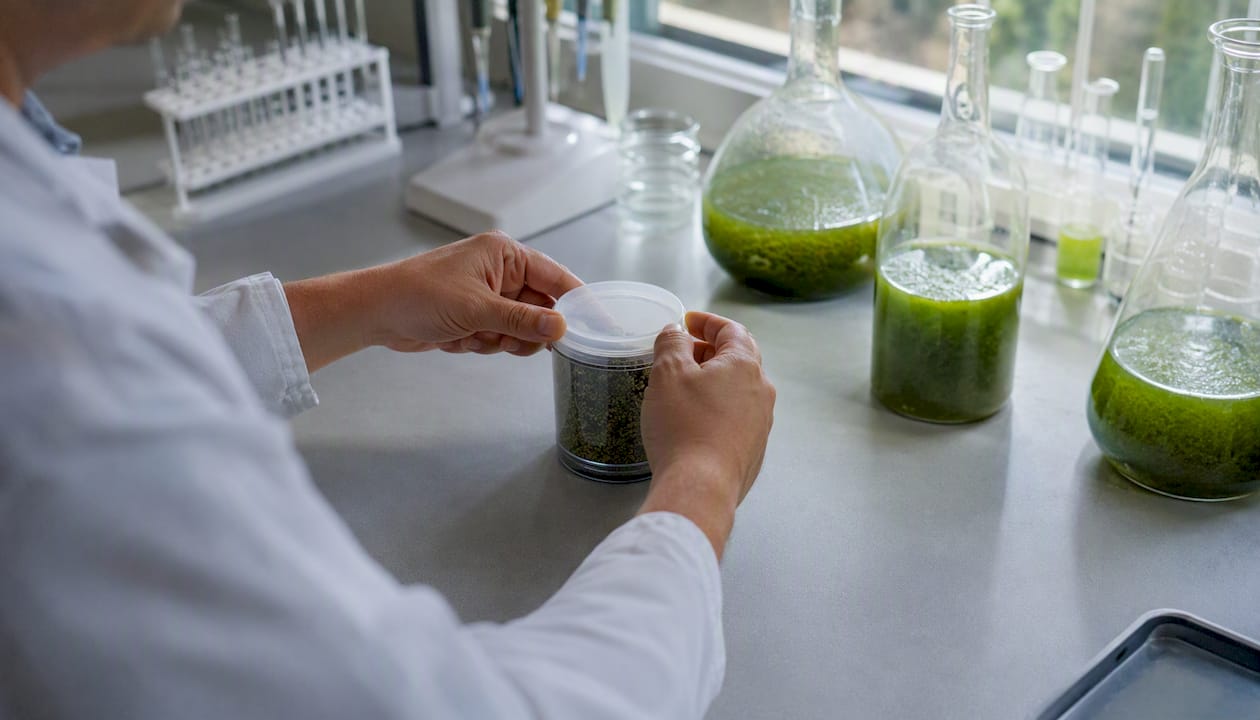
Pro Tip: For live brine shrimp shipments, pilot rigid specimen cups with sealed lids before committing to any film-based alternative. The barrier and biosecurity performance is easier to validate, and the reuse story resonates with aquarium hobbyists and institutional buyers alike.
How do you design a pilot and test packaging for aquatic feed?
A pilot without defined pass/fail criteria is just an experiment. Here's a structured sequence:
- Select 3–5 SKUs spanning at least two format types (e.g., dry pellets, live-feed shipment, snack pack). Use your live-product inventory checklist to identify candidates with the highest plastic content per unit.
- Define success metrics before testing: moisture ingress threshold, acceptable odor transfer score, maximum leak rate, target pack-out time, and customer return rate.
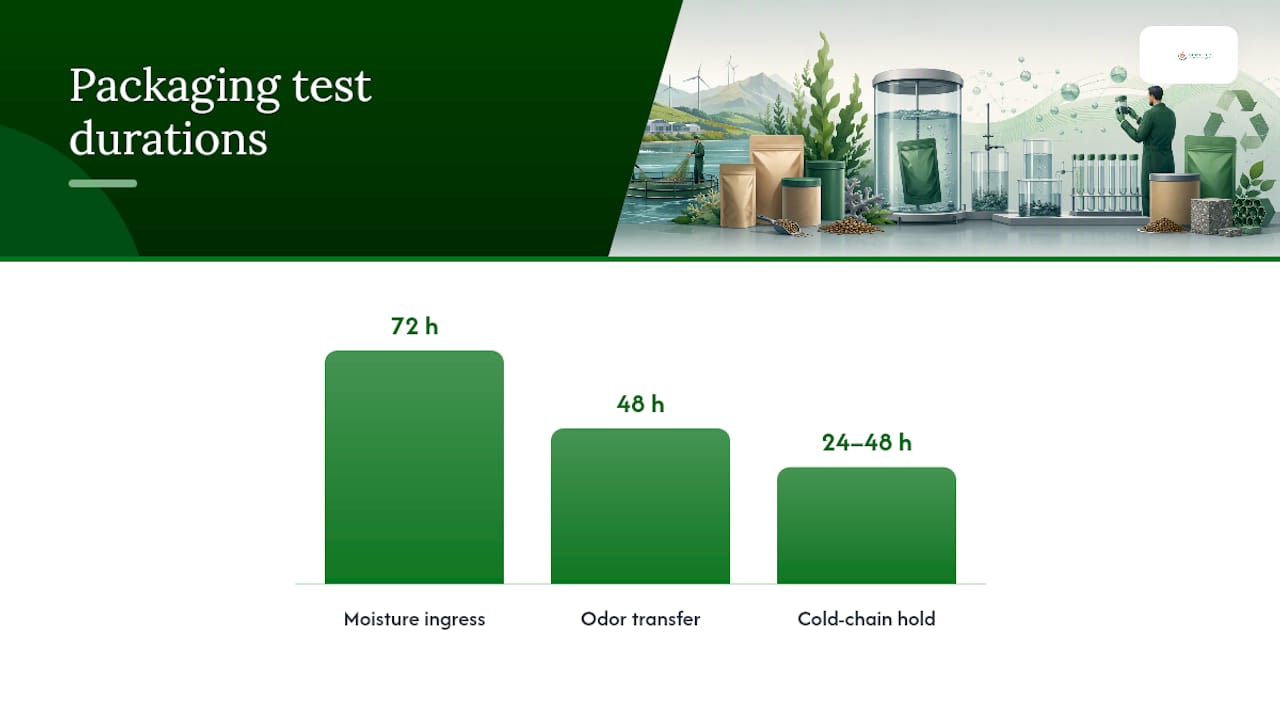
- Run accelerated humidity tests at 85% RH / 40°C for 72 hours minimum on all fiber and compostable film candidates.
- Conduct drop-and-leak tests per ISTA 2A or equivalent: three drops from 36 inches on each face and corner.
- Cold-chain hold tests: refrigerated and live shipments must hold temperature for the full expected transit window (typically 24–48 hours for live brine shrimp).
- Microbial safety checks: for live-product packaging, verify no microbial ingress through seals or closures after transit simulation.
- Operational validation: time pack-out for each format, run unpack trials with 10–15 end customers, and record any handling complaints.
- Record results in a structured log (SKU, material, test type, result, pass/fail, notes) and review against your baseline metrics before scaling.
| Test | Protocol | Pass threshold |
|---|---|---|
| Moisture ingress | 85% RH / 40°C / 72 hrs | No visible ingress; weight gain below spec |
| Odor transfer | Sealed panel test, 48 hrs | No detectable transfer to adjacent product |
| Drop/leak | ISTA 2A, 36-inch drop | Zero leaks across 10 units |
| Cold-chain hold | Transit simulation, 24–48 hrs | Temperature within spec at delivery |
| Pack-out time | Timed trial, 50 units | Within 10% of current baseline |
How do you source and contract sustainable packaging at scale?
Collective purchasing is the fastest way to move a supplier. The ACP model works because multiple institutions signal demand simultaneously, which reduces the supplier's tooling and formulation risk. If you're a smaller brand, join a purchasing coalition or approach your top supplier with a multi-year volume commitment in exchange for co-development investment.
Contract clauses that should be non-negotiable in every sustainable packaging RFP:
- Verifiable certification claims: FSC chain-of-custody, BPI certification number, or How2Recycle label code, all auditable on request.
- Recycled-content minimums: state the percentage and the measurement standard (e.g., post-consumer recycled content per ISO 14021).
- Phase-out timelines: agree a date by which virgin-plastic formats are discontinued for specified SKUs.
- Supply continuity guarantees: require 90-day inventory buffer for alternative materials during transition.
- Track-and-report requirements: supplier provides quarterly plastic-weight data per SKU.
Supplier conversation starters:
- "We're committing to X% plastic reduction by [date]. What co-development investment can you make if we guarantee Y units per year?"
- "Which of your current barrier coatings are recyclable or compostable, and what's the lead time to switch?"
- "Can you provide FSC chain-of-custody documentation for all fiberboard components?"
For sourcing guidance specific to aquatic feed supply chains, the sustainable aquatic feed sourcing guide covers supplier evaluation criteria in detail.
Pro Tip: Short-term cost-sharing on tooling changes (split the mold or die-cut cost 50/50) is often the single fastest way to get a supplier to move. Frame it as a shared investment, not a vendor concession.
What do real case studies tell us about outcomes?
The New England Aquarium's Plastic S.T.O.P.S. program is the most documented institutional example in the aquatic sector. Their audit-driven, vendor-collaborative approach followed a four-phase loop: audit, phase out, innovate, communicate. The reported pilot results from February through August 2024 showed 3% growth in apparel and plush, a 6.8% increase in per-capita spending, and 5.5% overall sales growth versus the prior year.
The Plastic S.T.O.P.S. pilot demonstrated that removing virgin plastic from retail operations did not suppress sales. Per-capita spending increased and average transaction value climbed during the same period.
At industrial scale, Cargill's aqua nutrition packaging initiative estimated saving 72 tonnes of plastic in 2023 by switching to bags with 15% less plastic in specific markets. That's a meaningful proof point: incremental reductions across high-volume SKUs compound quickly.
For cold-chain transport, Fiber Box offers a fiber-based solution using wood fiber and industrial hemp that has passed cold-chain testing and won industry recognition including a German Packaging Award. It's a direct answer to the "fiber can't handle refrigerated seafood" objection.
The translation to brand-level pilots is straightforward: start with your highest-volume dry SKU (easiest barrier requirements), document the baseline, run the pilot, and publish the result internally. That data funds the next, harder transition.
How do you implement this across your full SKU range?
Map each SKU against four attributes to assign a packaging approach:
| SKU attribute | Recommended material category | Pilot priority |
|---|---|---|
| Dry, ambient, retail display | FSC cartonboard with barrier coating | High |
| Dry, ambient, e-commerce | Mono-material PE pouch or FSC cartonboard | High |
| Refrigerated, prepared feed | Mono-material PP or fiber with barrier | Medium |
| Live shipment, direct-to-consumer | Reusable specimen container | High |
| Bulk institutional, dry | FSC cartonboard case or bulk bin | Medium |
Rollout checklist:
- Complete packaging audit; record plastic weight per SKU.
- Rank SKUs by plastic content and pilot feasibility.
- Select 3–5 pilot SKUs; assign internal owner per SKU.
- Run barrier and shelf-life tests (see Section 4 protocols).
- Negotiate co-development terms with top supplier.
- Verify all certification claims before printing labels (FSC, BPI, How2Recycle).
- Launch pilot; track pack-out time, returns, and per-SKU sales weekly.
- Review at 90 days; scale passing SKUs, iterate failing ones.
- Publish internal results and update procurement KPIs.
- Expand to next tier of SKUs with lessons from pilot.
Pro Tip: Total cost of ownership includes transition waste (rejected test runs, obsolete inventory), labor time changes, and any tooling investment. Track all three from day one. Brands that only compare unit prices routinely underestimate savings from reduced returns and faster pack-out.
The part most playbooks skip
The audit is where most teams lose momentum. They scope it too narrowly (packaging only, not plastic content inside products), or they skip baseline metrics entirely and then can't prove the pilot worked. Institutional transitions that succeeded, including the New England Aquarium's, all started with data visibility: inventory tags, plastic-weight logs, and SKU-level tracking before a single material changed.
The other common mistake is expecting a single-SKU replacement to solve the problem. Sustainable packaging is iterative. A mono-material pouch that passes barrier testing for dry pellets won't work for live brine shrimp shipments. Use quick wins on dry SKUs to build internal credibility and fund the harder live-shipment transitions.
Greenwashing risk is real and specific: a "compostable" claim on packaging that requires industrial composting facilities (which most U.S. consumers don't have access to) is misleading under FTC Green Guides. Require BPI certification and state the end-of-life pathway explicitly on the label. Customers who read nutrition labels read packaging claims too.
Sources
- Plastic S.T.O.P.S.: Lessons for a more responsible retail experience
- ACP Sustainable Purchasing Guide_March 2024
- 2023 ESG report — Aqua Nutrition (Cargill)
Keep records of every audit, test result, and certification document. Public reporting aligned with institutional procurement expectations is the clearest defense against greenwashing allegations and the strongest signal to buyers that your claims are real.
This article provides general informational guidance on packaging practices and does not constitute legal, regulatory, or professional compliance advice. Confirm current FDA food-contact regulations, FTC Green Guides requirements, and applicable state laws with a qualified professional before finalizing packaging claims or materials.
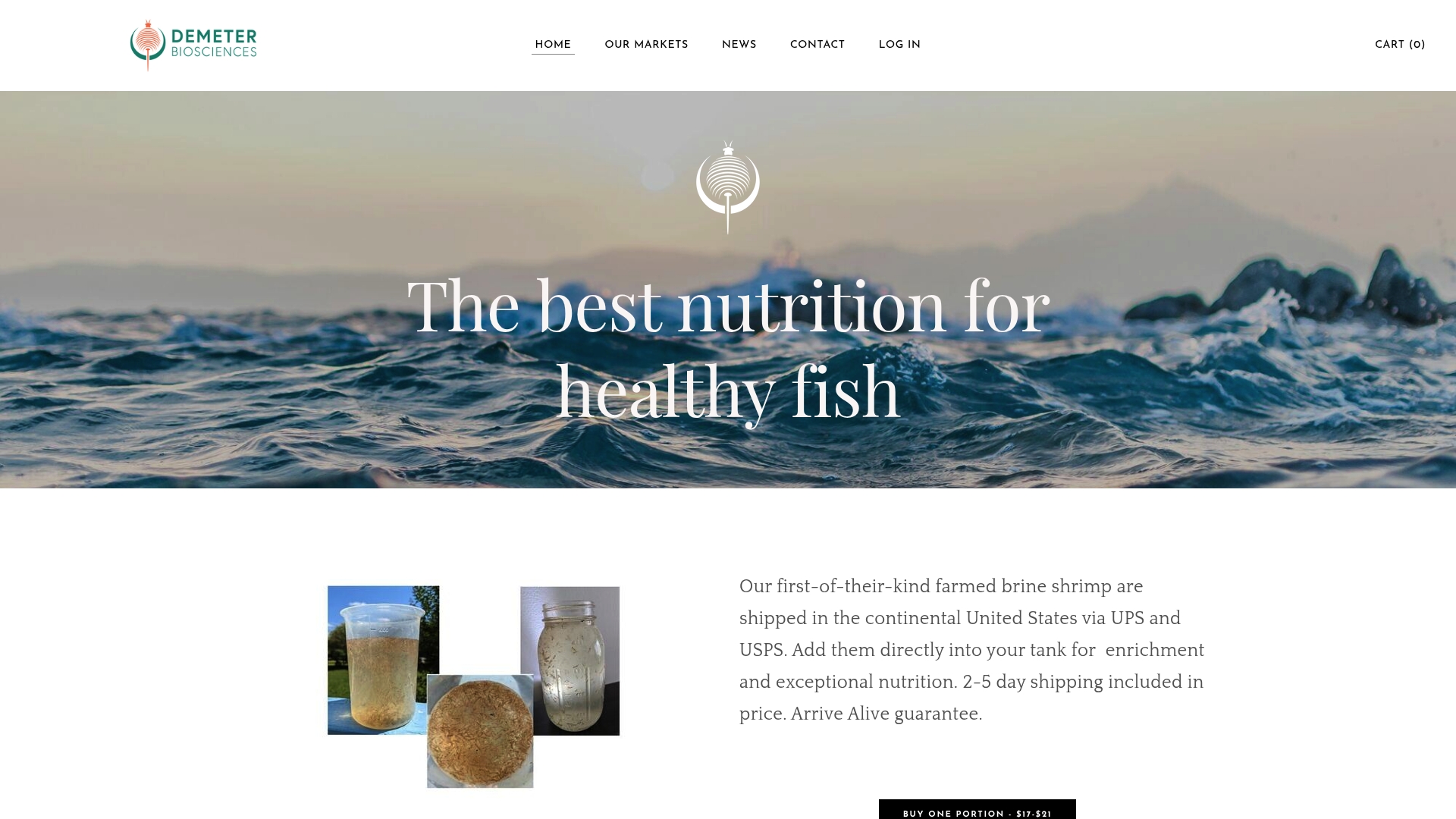
Demeterbioscience's live brine shrimp are produced in land-based, algae-fed systems designed for consistent nutritional quality and minimal environmental footprint. For stores and institutions planning bulk sustainable packaging transitions, bulk brine shrimp orders are available with packaging options suited to retail and institutional needs. Contact Demeterbioscience to discuss co-development packaging pilots or subscription formats for your operation.