
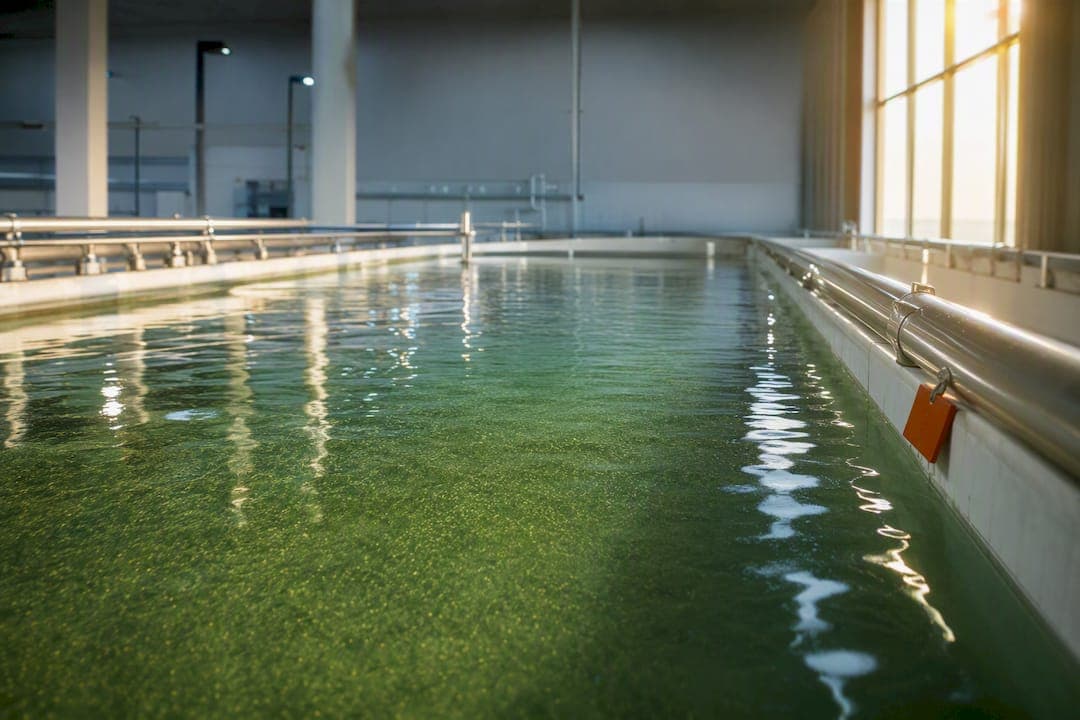
Get Dunaliella-fed live Artemia from a vetted supplier like Demeter Biosciences instead of relying on wild-harvested or unenriched brine shrimp. Dunaliella-fed nauplii carry higher beta-carotene and improved fatty-acid profiles, which support enhanced fish pigmentation, growth, and immune response. This product is available as single live shipments, monthly subscriptions, and bulk orders for institutions. Start with a trial order, confirm the results, then scale up.
TL;DR:
- Combining Dunaliella with other microalgae like Chlorella improves growth, immune response, and pigmentation in Artemia more effectively than using Dunaliella alone.
- Land-based cultivation provides consistent nutrition year-round, unlike wild harvests that vary seasonally and can reflect starvation conditions.
- Starting with a single shipment allows small operators to assess feed response before committing to subscriptions or bulk orders, which ensure predictable quality and timing.
- Reliable suppliers should provide clear lab test data, a live-arrival guarantee, and specific information on enrichment methods and storage instructions.
- Ordering from companies like Demeter Biosciences guarantees controlled, predictable nutrition, with flexible options for hobbyists, hatcheries, and institutional buyers.
Table of Contents
- What Makes Dunaliella for Aquaculture Different
- Live Order, Subscription, or Bulk: Which Fits Your Setup?
- How to Choose a Dunaliella-Fed Artemia Supplier
- Why Land-Based Cultivation Changes the Reliability Equation
- Order Demeter's Dunaliella-Fed Live Brine Shrimp
- Sources
- FAQ
What Makes Dunaliella for Aquaculture Different
Dunaliella salina is a salt-tolerant microalga famous for one thing and is extensively covered in industry insights on Ornamental fish health and feed. It packs an extraordinary amount of beta-carotene into its cells, more than almost any other algae used in aquaculture feed chains. When brine shrimp graze on it before being fed to fish, that carotenoid travels up the chain and shows up as richer color, better stress tolerance, and improved carbohydrate and protein content in the Artemia themselves.
The catch is that Dunaliella alone is a pigmentation specialist, not a complete nutritional package. A 2026 trial found that Artemia enriched with both Chlorella vulgaris and Dunaliella salina increased beta-carotene in goldfish significantly after 90 days, alongside measurable gains in growth, immunity, and intestinal development, outperforming either algae fed alone. A companion Scientific Reports study reached the same conclusion: combined Chlorella and Dunaliella enrichment produced the best integrated outcome across growth rate, pigment accumulation, and immune markers compared to single-algae or unenriched Artemia.
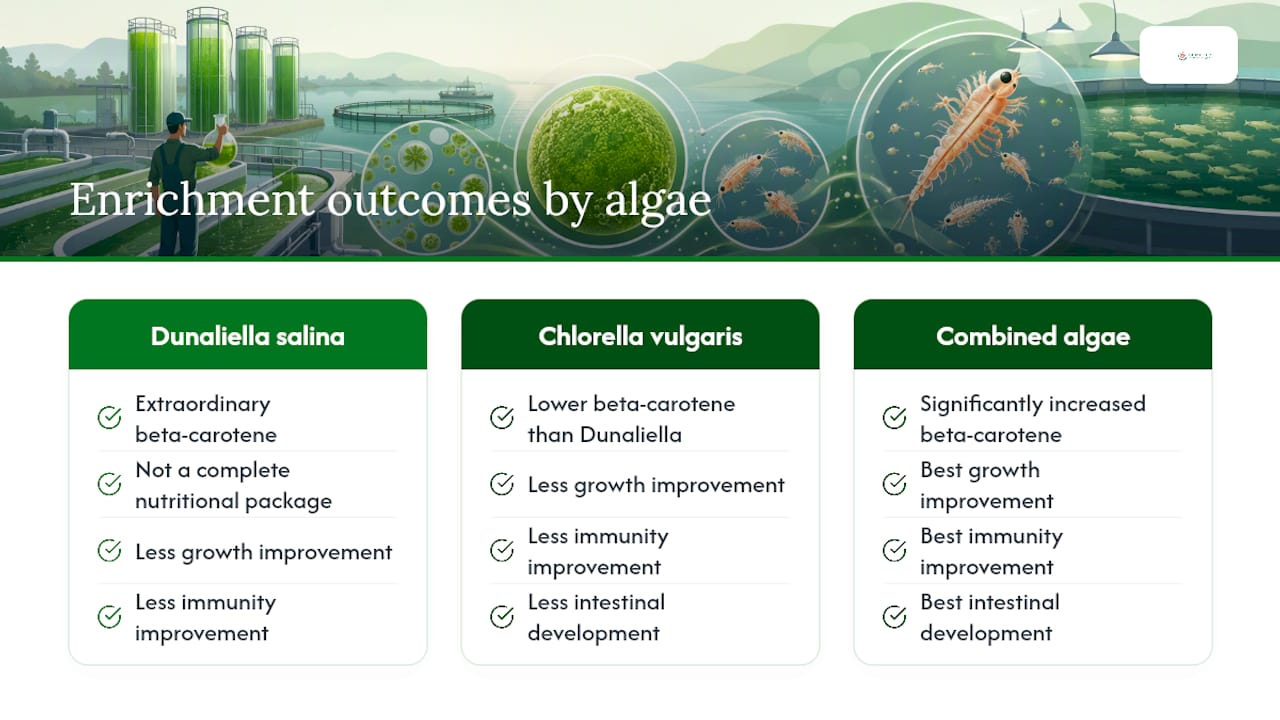
That is the practical takeaway for anyone shopping for enriched live feed. Dunaliella-fed Artemia is the term buyers should look for, but the strongest results come from mixed-algae protocols, not Dunaliella in isolation. A 2025 review of Artemia enrichment strategies backs this up further, finding that microalgae enrichment generally beats commercial lipid emulsions for delivering long-chain polyunsaturated fatty acids (LC-PUFA), and that mixed microalgal diets tend to produce the most balanced fatty-acid profiles overall.
Live Order, Subscription, or Bulk: Which Fits Your Setup?
The right purchase format depends less on budget and more on how often you need feed and how much risk you can tolerate on a single shipment.
- Hobbyists and small-tank operators testing enriched live feed for the first time should start with a single live shipment. It's the fastest way to see if pigmentation and feeding response improve before committing further.
- Hatcheries and continuous feeders need predictable timing more than anything else. A monthly subscription removes the guesswork of reordering and keeps enrichment quality consistent across every batch.
- Retailers, public aquaria, and research institutions buying in volume benefit from bulk packaging that lowers the per-unit cost and simplifies storage logistics.
All three formats are cultivated in the same land-based system, maintaining a consistent nutrition profile regardless of order size. That consistency matters more than it sounds: wild-harvested brine shrimp vary season to season depending on what's actually available in the salt flats they're pulled from, while a controlled system feeds the same Dunaliella diet year-round.
How to Choose a Dunaliella-Fed Artemia Supplier
Not every seller labeling their product "enriched" can back that claim with data. Run through this checklist before you order:
- Ask for lab test results. A credible supplier should be able to state protein percentage and enrichment method, not just say "high nutrition" on the label.
- Confirm the enrichment method. Single-algae Dunaliella enrichment boosts pigmentation; mixed-algae protocols (Dunaliella plus Chlorella or similar) tend to deliver better all-around growth and immune benefits.
- Check the live-arrival policy. Live Artemia are perishable. A supplier without a clear replacement or guarantee policy is a risk, not a bargain.
- Review packaging and storage instructions. You need clear guidance on temperature, aeration, and shelf life the moment the shipment lands.
- Ask about repeat-order flexibility. Can you scale from a trial shipment to a subscription without renegotiating terms from scratch?
Red flags include vague marketing language with no nutrient data, no mention of how the Artemia were fed, and no policy for what happens if shrimp arrive dead or stressed. If a supplier can't answer a direct question about enrichment duration or cell density, that's a sign they're reselling rather than cultivating.
Pro Tip: Send a short email before ordering: "What algae feed your Artemia, for how many hours, and what's your live-arrival guarantee?" A supplier that answers all three specifically is worth your business. One that dodges the question isn't.
Why Land-Based Cultivation Changes the Reliability Equation
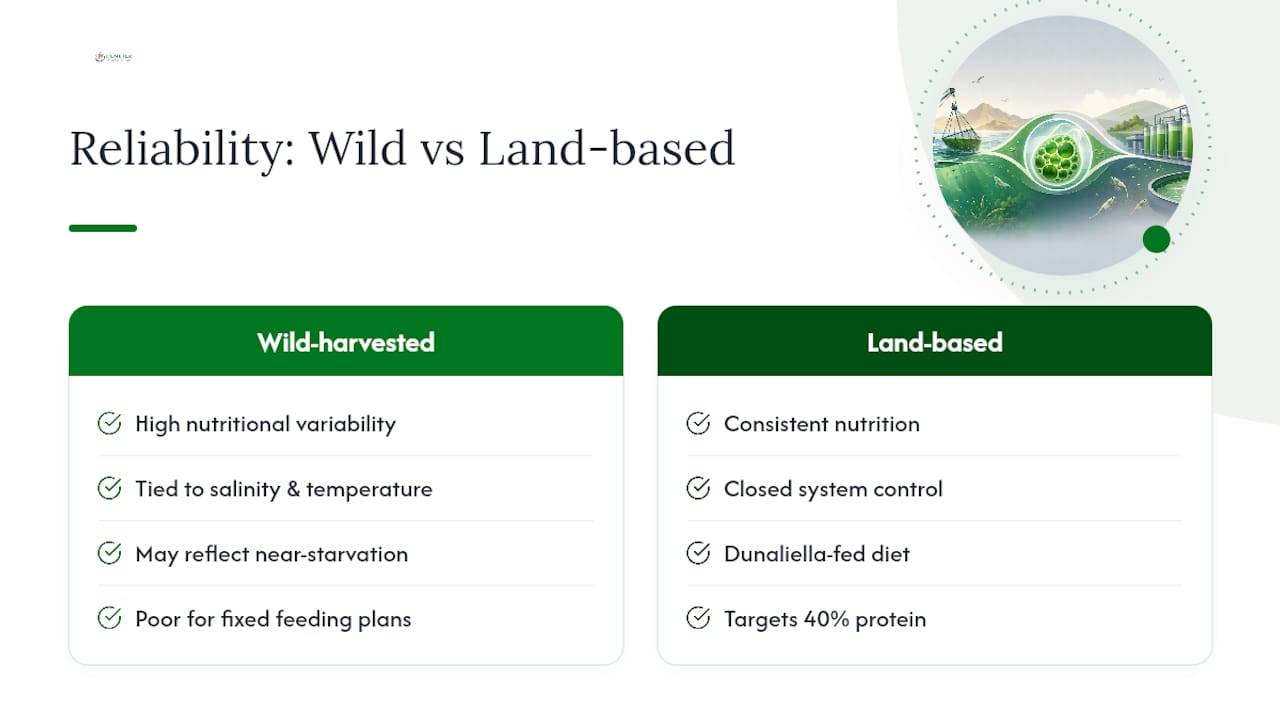
Wild-harvested brine shrimp go through boom-and-bust cycles tied to salinity, temperature, and food availability in the lake or salt pond they came from. That means the same "brine shrimp" product can carry wildly different nutrition from one harvest to the next, sometimes reflecting near-starvation conditions rather than a fed diet.
Land-based, Dunaliella-fed cultivation removes that variability. Demeter Biosciences runs a closed system where Artemia are fed Dunaliella under controlled conditions targeting 40% protein content, batch after batch. For a hatchery running feeding schedules months in advance, that predictability is worth more than a marginally cheaper wild-harvest alternative that might undercut the diet your fish actually receive.
Order Demeter's Dunaliella-Fed Live Brine Shrimp
This company focuses on ensuring Artemia deliver the nutrition indicated on the label, rather than the variable nutrition that can occur with wild harvests. You can order three ways depending on how you operate. Hobbyists and small-tank owners can start with a single live shipment to test feeding response before scaling up. Hatcheries running continuous feeding schedules can lock in a monthly subscription for predictable, scheduled delivery. Retailers, museums, and research institutions can place a bulk order sized to their storage and volume needs.
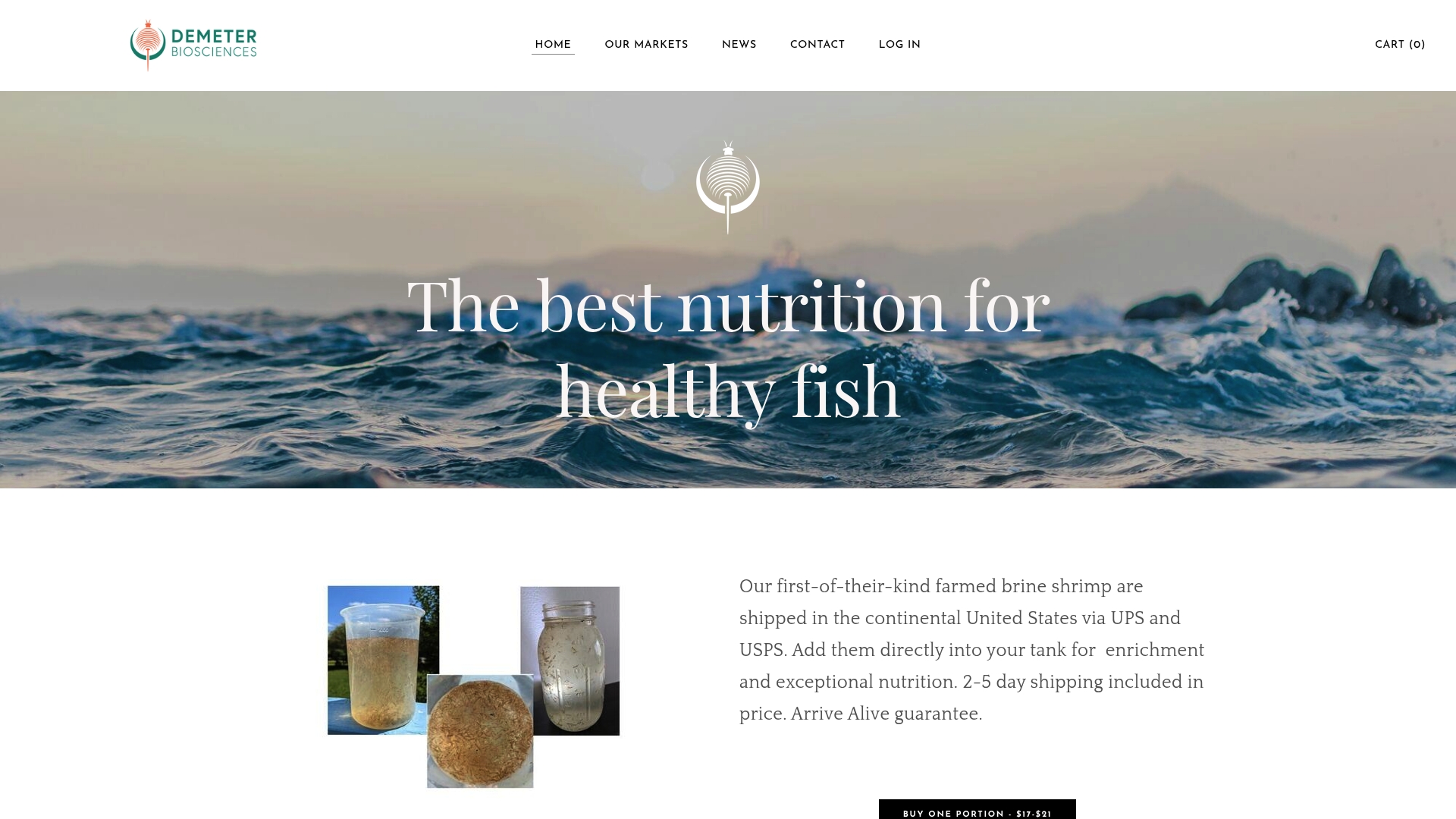
Orders ship live and are timed to arrive with feeding vigor intact, so plan your feeding schedule around the delivery window rather than storing shrimp for extended periods. Check the our markets page to see which format matches your operation, then place your order directly through the store.
Sources
- Chlorella vulgaris and Dunaliella salina‑enriched Artemia salina enhances growth, pigmentation, gut morphology and immune‑related pathways in goldfish (Carassius auratus)
- Chlorella vulgaris and Dunaliella salina‑enriched Artemia salina enhances growth, pigmentation, gut morphology and immune‑related pathways in goldfish (Carassius auratus) | Scientific Reports
- Artemia enrichment strategies: comprehensive review (2025)
- Optimum enrichment duration and microalgal effects on Artemia fatty acid profile (2023)
FAQ
Does Dunaliella-Fed Artemia Improve Fish Pigmentation?
Yes. Dunaliella's beta-carotene transfers through Artemia into fish tissue, and a 2026 study measured beta-carotene at 8.90 ± 0.4 mg/100 g in goldfish fed combined Chlorella and Dunaliella-enriched Artemia over 90 days.
Is Mixed-Algae Enrichment Better Than Dunaliella Alone?
Generally yes for overall outcomes. Studies show combined Chlorella and Dunaliella enrichment produces stronger growth, immune, and pigmentation results than either algae used alone, according to Scientific Reports.
How Long Should Artemia Be Enriched Before Feeding?
Most research points to a 5 to 7 hour enrichment window as the sweet spot for boosting fatty-acid content without making nauplii too large for small larvae, based on enrichment duration research.
What's the Best Way to Start Buying Enriched Artemia?
Order a single live shipment first, monitor growth and pigment response for about a week, then decide whether a subscription or bulk order fits your ongoing needs. All three formats come from the same land-based, Dunaliella-fed production system.
Can I Buy Dunaliella-Fed Artemia in Bulk for a Retail Store?
Yes. Demeter Biosciences supplies bulk institutional orders for retail stores, museums, and research institutions that need larger volumes at a lower per-unit cost.