
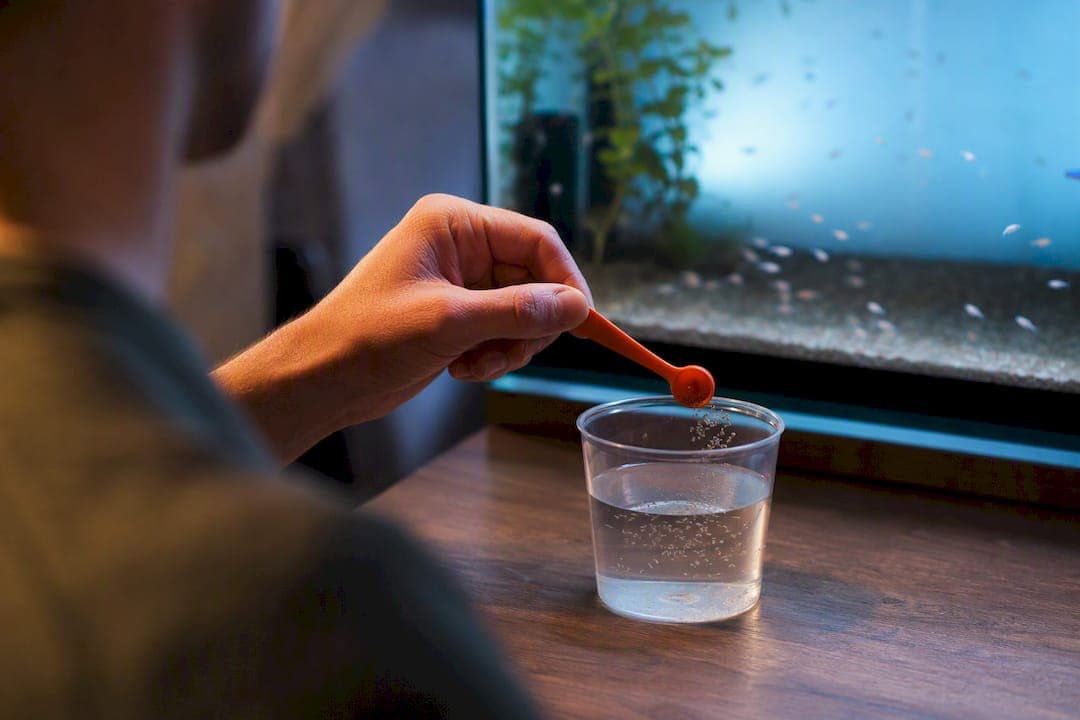
Most live brine shrimp subscriptions run $12 to $40 per shipment depending on format and volume, with autoship discounts typically shaving 5% to 15% off the sticker price. Shipping often adds $10 to $25 unless you clear a free-shipping minimum, which usually matters more to your total than the discount does. For most breeders and serious hobbyists, a subscription beats DIY hatching on reliability, even when it costs more on paper. Subscription plans built around land-based, algae-fed shrimp offer a different value proposition than raw price alone.
TL;DR:
- Bulk purchase sizes and weekly shipments generally reduce the per-unit cost of live brine shrimp, but freshness and shelf life should influence your choice.
- Shipping fees and delivery schedules can significantly increase overall costs; planning well can help avoid paying multiple shipping charges or receiving delayed shipments.
- Land-based, algae-fed production offers more consistent protein content, which benefits fry survival and growth compared to wild-harvested options with seasonal variability.
- Calculating actual feeding costs requires converting product volume into nauplii count and considering hatch rates and nauplii-per-gram, not just sticker prices.
- DIY hatching appears cheaper on paper but involves significant time, effort, and risks of batch failure, making subscriptions more reliable for most breeders.
Table of Contents
- What Subscription Pricing Looks Like By Format And Size
- How Frequency And Quantity Change The Subscription Math
- Shipping Costs, Delivery Windows, And What They Mean For Your Total
- How To Calculate Cost Per Feeding Or Cost Per Million Nauplii
- Subscription Vs. DIY Hatching: The Real Annual Cost
- How Demeter's Subscription Model Handles Cost, Nutrition, And Delivery
- The Hidden Fees That Change Your Real Total
- From Signup To First Shipment: What The Timeline Looks Like
- Author Perspective: What Actually Makes Sense To Pay For
- Getting Started With A Demeter Subscription
- Sources
- FAQ
What Subscription Pricing Looks Like By Format And Size
The price you pay depends almost entirely on which format you buy: live nauplii in a bottle, decapsulated cysts you hatch yourself, or frozen pods you thaw and feed. Each has a different cost structure, and vendors price them accordingly.
Live bottled brine shrimp sits at the premium end because you're paying for shipping stress, oxygen packing, and a short shelf life. AlgaeBarn lists its Nano Brine product at $15 per bottle, with a "Subscribe & Save" option that knocks 10% off when you set up recurring delivery. That's a fairly standard anchor point for a single live shipment aimed at a home tank or small breeding setup.
Volume-based live shrimp pricing scales the way you'd expect, but not perfectly linearly. One vendor's live baby brine shrimp listing prices a 16 oz container at $29, a 32 oz container at $39, and a 64 oz container at $59. Buying bigger containers less often is almost always cheaper per ounce, assuming you can use the product before it degrades.
Decapsulated cysts and eggs work on a different economy entirely. You're buying dry, stable product that you hatch on your own schedule, so the price reflects concentration and hatch quality rather than shipping urgency. Cyst pricing varies by hatch rate and nauplii-per-gram yield, which is why two products at the same weight can have very different real-world value. Technical spec sheets from suppliers like Reed Mariculture publish these numbers directly, and they're worth checking before you compare price tags.
Frozen and shelf-stable formats sit at the low-maintenance end. You lose some of the live-culture nutritional edge, but you gain a product that survives a delayed delivery or a missed feeding day without dying in transit.
When you're sizing a package to your actual usage, a few guidelines help:
- A single 10 to 20 gallon tank with occasional fry usually does fine on a 16 oz live bottle every couple of weeks.
- A dedicated breeding setup with multiple fry tanks often needs 32 oz or larger, delivered weekly or biweekly.
- Museums, fish stores, and other bulk buyers should look at bulk packaging rather than scaled-up subscription tiers, since per-unit pricing usually flattens out at volume.
- Frozen or cyst formats make sense as a backup stock even if live shipments are your primary feed source.
The "Subscribe & Save" language you see across these vendor pages isn't unique to brine shrimp. It's the same discount pattern used across retail subscription commerce generally, where autoship programs commonly advertise savings in the 5% to 15% range and let you skip or cancel without penalty. Brine shrimp vendors have simply adopted a familiar e-commerce pattern for a live-animal product, which is part of why the discounts look modest compared to what you might expect from a specialty supplier.
How Frequency And Quantity Change The Subscription Math
Delivery frequency is the lever most buyers underprice. The same monthly volume can cost noticeably different amounts depending on whether it arrives as one big box or four small ones.
Weekly shipments give you the freshest possible product, since brine shrimp nauplii lose nutritional value within days of hatching even when refrigerated. But weekly delivery usually means paying a shipping fee four times a month instead of once, and that fee often outweighs any volume discount you'd get from ordering less frequently.
Monthly or every-eight-week intervals reduce shipping frequency and typically unlock better per-unit pricing on larger containers. The tradeoff is freshness: a large bottle sitting in your fridge for three weeks isn't delivering the same nutritional punch as one hatched two days ago.
Here's how to think through the choice:
- Estimate your weekly consumption in ounces or grams based on your current feeding schedule and tank count.
- Multiply by your desired interval (weekly, biweekly, monthly) to size the package you'd need per shipment.
- Compare the per-ounce cost at that package size against a smaller, more frequent order of the same monthly total.
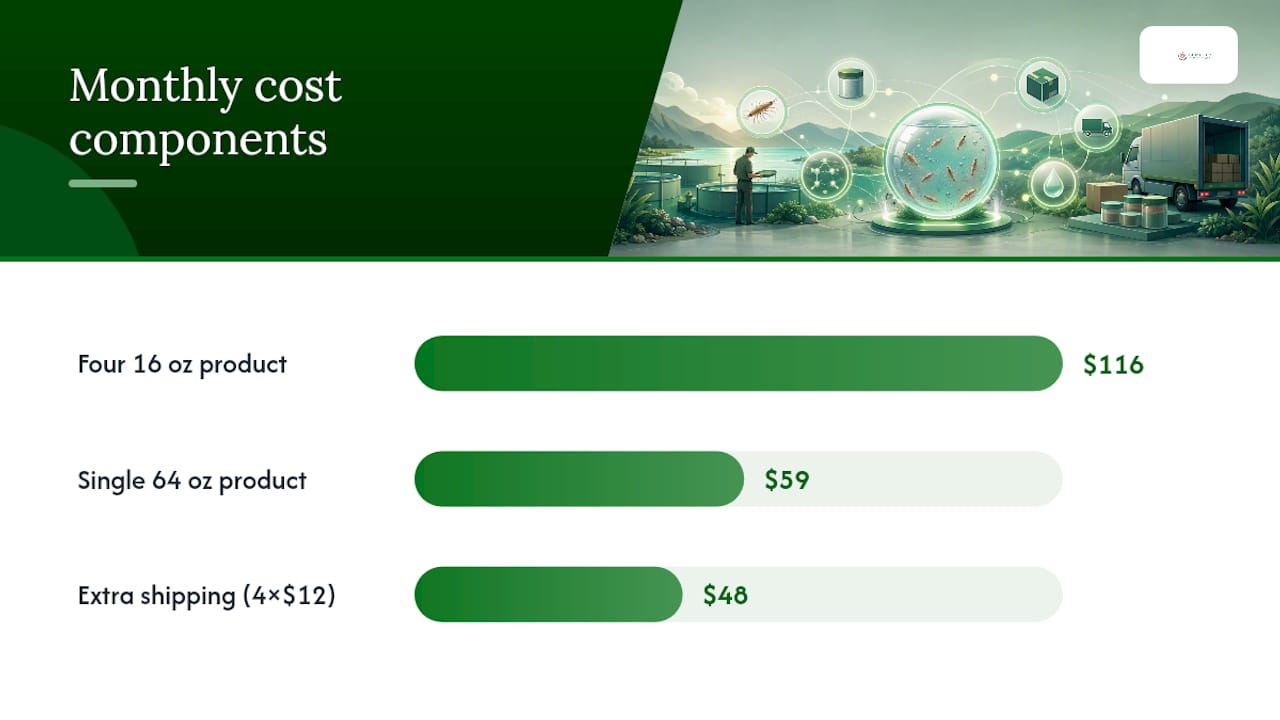
- Factor in shipping cost per shipment, since a $12 flat shipping fee charged four times a month adds $48 that a single monthly order avoids entirely.
- Weigh the freshness cost of storing extra product against the dollar savings of ordering less often.
Say you feed roughly 64 oz of live shrimp a month. Ordering that as four 16 oz shipments at $29 each costs $116 in product alone, before shipping is applied four separate times. Ordering it as a single 64 oz shipment at $59 costs less than half that, plus one shipping charge instead of four. The catch is that a 64 oz container has to survive a month in your care, and live brine shrimp aren't shelf-stable indefinitely.
Commercial breeders with high fry density and predictable consumption usually do better on frequent, moderate-sized shipments, because they burn through product fast enough that freshness isn't a concern. Hobbyists with a single tank or seasonal breeding projects often save more by ordering larger and less often, then supplementing with frozen product between live shipments.
Shipping Costs, Delivery Windows, And What They Mean For Your Total
Shipping is where a "cheap" subscription quietly becomes an expensive one. Live brine shrimp can't sit in a warehouse or ride in a slow truck, so the fee structure around shipping reflects urgency, not convenience.
Most live-food vendors ship on a narrow set of days, commonly Monday through Wednesday, so shrimp don't sit in transit or in a distribution hub over a weekend. AlgaeBarn's shipping schedule reflects this pattern, pairing limited ship days with free or discounted transit once you clear a minimum order size. That's standard across the live-aquatics category, not a quirk of one vendor.
What this means for your budget:
- Expect a flat shipping fee in the $10 to $25 range unless your order clears a free-shipping threshold.
- Free shipping thresholds usually sit at a specific dollar amount or package size, so a slightly bigger order can sometimes cost less than a slightly smaller one after shipping is added.
- Limited ship days mean you can't always order on your own schedule. A Thursday order might not ship until the following Monday, which affects how far in advance you need to plan a feeding cycle.
- Live-shipment guarantees, where a vendor replaces a dead-on-arrival shipment at no charge, functionally lower your real cost by removing the risk of a wasted order.
Pro Tip: *Before you commit to a subscription interval, check the vendor's live-arrival guarantee terms.
Transit guarantees matter more than they get credit for. A live shipment that arrives dead is a total loss, not a partial one, and without a replacement policy you're paying full price for zero usable product. Vendors that build in a replacement window are effectively insuring your order, which changes the math on whether a slightly pricier subscription is actually the better deal.
How To Calculate Cost Per Feeding Or Cost Per Million Nauplii
Comparing vendor prices side by side is close to useless unless you convert everything to the same unit. A $15 bottle and a $59 jar aren't comparable until you know how many feedings each one actually delivers.
Here's a repeatable method:
- Find the package weight or volume listed on the product page (ounces, grams, or milliliters).
- Find or estimate the hatch rate and nauplii-per-gram figure. Vendors selling cysts, like Reed Mariculture's GSL Artemia line, publish these specs directly. Live bottled product doesn't always list this, so you may need to estimate density based on the format.
- Multiply weight by nauplii-per-gram to get a rough total nauplii count for the package.
- Divide total nauplii by your typical feeding size (how many nauplii you feed per session) to get the number of feedings the package supports.
- Divide package price by feeding count to get your cost per feeding.
- Divide total nauplii by one million and divide price by that number if you want cost-per-million-nauplii, which is the standard unit hatchery operators use for comparing bulk cyst products.
A worked example: say a 32 oz live bottle costs $39 and contains an estimated 900,000 nauplii based on typical density for that format. If you feed 30,000 nauplii per session, that bottle supports 30 feedings, putting your cost per feeding at $1.30. Compare that to a cyst product where 1 gram yields roughly 200,000 nauplii at a stated hatch rate, and you can run the same math against the eggs' price per gram.
Before you trust any of these numbers, confirm three things on the vendor's own page: the stated hatch rate (not all cysts hatch at the same percentage), the nauplii-per-gram figure, and whether "guaranteed analysis" protein numbers refer to dry weight or wet weight. Skipping that last check is the most common way hobbyists misjudge nutritional value per dollar.
Subscription Vs. DIY Hatching: The Real Annual Cost
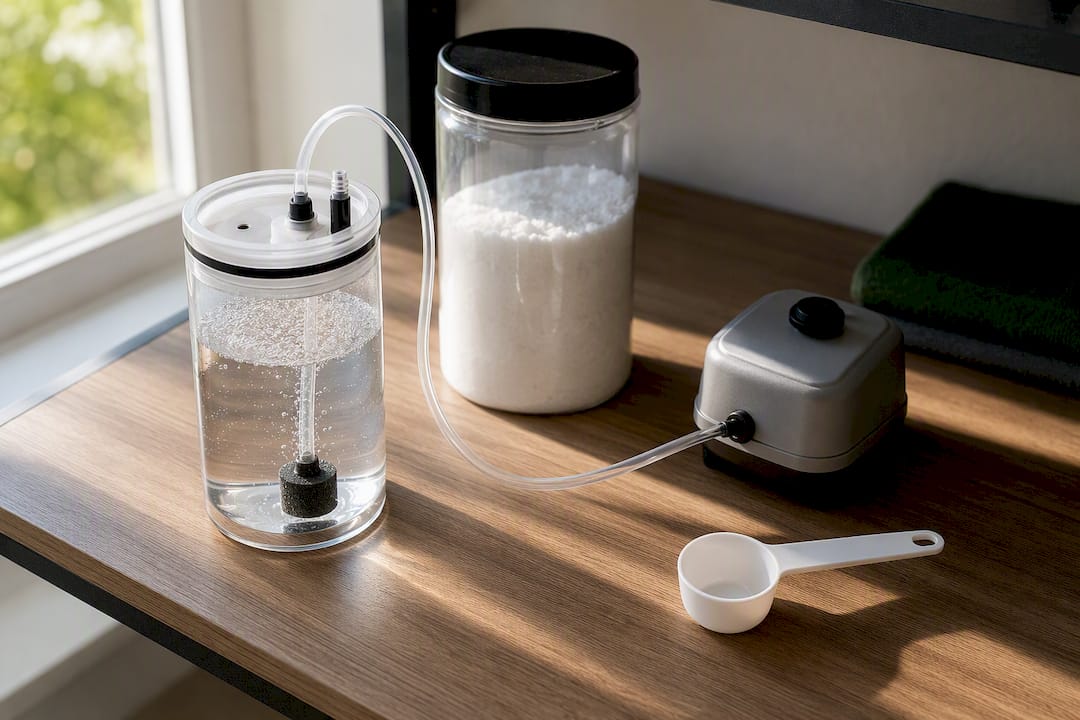
DIY hatching looks cheap until you total the line items. Cysts, aquarium salt, Epsom salt, an air pump running continuously, a hatching cone or bottle, and the electricity to run it all add up faster than most people expect.
Published hobbyist cost modeling from Tropical Fish Hobbyist Magazine puts annualized DIY hatching costs somewhere between $16 and $95, depending on hatcher size and how you value your own time. That's a wide range, and the size of your setup explains most of the spread.
The $16 to $95 range isn't really about equipment cost. It's about scale and labor tolerance. A single small hatching cone run occasionally lands at the low end. A larger, continuous-cycle setup feeding multiple breeding tanks pushes toward the high end, mostly from salt and cyst volume, not equipment.
What DIY hatching actually costs you beyond dollars:
- Daily attention to start, monitor, and harvest each hatch cycle.
- Failed batches from temperature swings, salinity errors, or contaminated water.
- Storage and disposal of used hatching brine, which most people underestimate as a hassle.
- Inconsistent nauplii density from batch to batch, which makes feeding amounts harder to standardize.
A subscription running $30 to $60 a month looks expensive next to a $16 DIY setup on paper. But that comparison ignores the value of not hatching your own shrimp every single day, which hobbyist analysis consistently flags as the real point of paying for live subscriptions rather than raw cost-per-serving. DIY makes sense if you have the time, a stable setup, and enjoy the process. Subscriptions win when reliability and consistent nutrition matter more than shaving a few dollars a month.
How Demeter's Subscription Model Handles Cost, Nutrition, And Delivery
Some producers raise brine shrimp on land in controlled systems, feeding them exclusively on microalgae like Dunaliella. Wild-harvested brine shrimp can experience seasonal starvation cycles in their natural lake environments, causing nutritional value to vary depending on timing. Land-based, algae-fed cultivation aims to remove that variability.
That consistency has a direct cost benefit you don't see on a price tag. A subscription shipment that delivers the same protein content every single time means you're not guessing whether this month's batch is as nutritionally dense as last month's. For breeders raising fry, that predictability affects growth rates and survival, not just convenience.
Before signing up for any live brine shrimp subscription, confirm a short list of details:
- What days the vendor ships, and whether that lines up with your feeding schedule.
- Whether you can skip a shipment or cancel without a fee if your tank needs change.
- Whether protein or nutritional guarantees are published, not just implied.
- What the replacement policy looks like if a shipment arrives in poor condition.
Pro Tip: Ask specifically whether the protein guarantee is measured on a dry-weight basis. That's the standard most cyst and live-shrimp suppliers use, and it's the number you want when comparing nutritional value across vendors.
Land-based production also means Demeter's shipment scheduling isn't at the mercy of a lake's seasonal harvest window, which is part of what makes recurring monthly delivery more predictable than sourcing wild-caught product through irregular seasonal availability.
The Hidden Fees That Change Your Real Total
The subscription price on the product page is rarely your final charge. Sales tax applies in most states for online aquatic supply orders, typically adding a few percent depending on where you live and how the vendor handles nexus rules for e-commerce.
Handling fees show up more often than people expect on live-animal shipments. Packing a live culture for transit, insulated boxes, heat or cold packs depending on season, and oxygen-purged bags all cost the vendor money, and that cost sometimes appears as a separate handling line rather than being folded into the product price.
Packaging materials for live shipments aren't the same as a standard shipping box. Insulation, gel packs, and pressurized bags add real material cost, and some vendors itemize this separately from the base shipping charge rather than absorbing it.
Seasonal shipping surcharges are common in extreme weather months. A live culture shipped during a summer heat wave or a winter freeze often needs extra insulation or expedited transit, which can push the shipping line higher than what you paid in a milder month for the identical product.
When you're comparing subscription offers, add up the base price, the shipping fee, any handling charge, and estimated tax before you judge whether one vendor is actually cheaper than another. A subscription that looks $5 cheaper on the product page can end up costing more once handling and packaging are added.
From Signup To First Shipment: What The Timeline Looks Like
Signing up for a brine shrimp subscription is fast. Most vendors process the order and charge your card immediately, the same as any standard e-commerce checkout.
Your first shipment timing depends almost entirely on ship-day restrictions, not on processing speed. If a vendor only ships Monday through Wednesday to avoid weekend transit delays, an order placed on a Thursday typically waits until the following week to go out. That's not a delay in your order. It's a deliberate scheduling choice to protect the live animals in transit.
Once your shipment ships, transit time is usually one to three business days depending on your distance from the vendor's facility and the shipping method selected. Overnight or two-day shipping is standard for live cultures because brine shrimp don't tolerate extended transit well, especially at temperature extremes.
From signup to first delivery, plan for roughly four to ten days in a typical case: a few days waiting for the next available ship day, then one to three days in transit. Rush orders or expedited shipping can compress this, but live-animal shipping rarely gets same-day treatment the way dry goods might.
If you're timing a subscription around a specific feeding need, like a fry batch that will need live food in two weeks, place your order with enough buffer to absorb a missed ship-day window. Vendors that publish their exact ship-day schedule up front make this much easier to plan around than ones that only mention "processing time" without specifics.
Author Perspective: What Actually Makes Sense To Pay For
Commercial breeders running consistent fry batches should lean toward weekly or biweekly subscription tiers, even at a higher monthly total, because feeding reliability protects survival rates in a way that a lower cost per feeding never will. Casual hobbyists with one or two tanks are usually better served by a monthly or 8-week interval paired with a frozen backup, since freshness matters less when you're not running dense fry tanks.
The math in this article consistently points to one thing: cost-per-feeding is the wrong number to optimize in isolation. A cheaper subscription that arrives inconsistently or degrades before you use it isn't actually cheaper once you count wasted product and stressed fry. Reliability and nutritional consistency are what you're really buying, and DIY hatching only wins that trade when you have the time and tolerance for daily upkeep that most people underestimate going in.
If you're unsure which tier fits your setup, start with a single trial shipment before locking into a recurring plan.
— Demeter
Getting Started With A Demeter Subscription
If you've been weighing DIY hatching against a subscription, the deciding factor usually isn't price. It's whether you want to spend part of every day managing a hatch cycle or spend a few minutes a month setting a delivery schedule. Some producers run shrimp production on land-based systems feeding exclusively on Dunaliella algae, which aims to ensure more consistent protein content than the seasonal swings that can occur in wild-harvested product.
Signing up is straightforward: pick your shipment frequency, confirm your shipping days, and set your skip or cancel preferences before your first charge. Check the guaranteed protein content and shipping schedule on the live brine shrimp product page before committing, and confirm whether a monthly membership or a single trial shipment fits your tank setup better. If you're ordering for a fish store, museum, or research institution, the bulk order page handles larger volumes at a more efficient per-unit rate. Start with one shipment, evaluate how the shrimp hold up in your nursery tanks, and scale your subscription tier from there.
Sources
A few of the sources behind the pricing comparisons in this article are worth checking directly if you want to verify numbers yourself:
- How to hatch brine shrimp — Tropical Fish Hobbyist Magazine
- Artemia Nano Brine | Brine Shrimp | Live Foods - AlgaeBarn
- Live baby brine shrimp product listing — GetPods
When you check vendor pages yourself, pay attention to whether a listed hatch rate applies to that specific product batch or is a general category average. That distinction affects your actual nauplii yield more than the sticker price does.
FAQ
How much do brine shrimp cost?
Live brine shrimp typically run $15 to $60 per shipment depending on volume, while decapsulated cyst products are priced by weight and vary with hatch rate.
What's the difference between brine shrimp and mysis shrimp?
Brine shrimp (Artemia) are smaller, easier to culture, and commonly used as first food for fry, while mysis shrimp are larger crustaceans often fed to adult fish needing bigger prey items. The two aren't interchangeable in a feeding program built around fry-stage nutrition.
What is the average lifespan of brine shrimp?
Adult brine shrimp can live several months in ideal conditions, but as a live food product they're meant to be fed quickly after hatching, since their nutritional value drops within days even under refrigeration.
Can you buy live brine shrimp?
Yes, live brine shrimp are sold directly through vendor websites as one-time orders or recurring subscriptions, with Demeter Biosciences offering land-based, algae-fed live shrimp as one option built around consistent nutritional content.
Are brine shrimp subscriptions worth it compared to DIY hatching?
For most breeders, yes, since DIY hatching costs range from about $16 to $95 annually but demands daily attention and produces inconsistent nauplii density, while subscriptions trade a modest premium for predictable delivery and nutrition.