
Sourcing sustainable aquaculture feed inputs that guarantee stable nutrition and traceable certification remains challenging for hatcheries and eco-conscious buyers in Australia. Bulk suppliers often limit access to live feed organisms, restrict international shipping, or lack transparent provenance details for environmentally sensitive products. This comparison lets you weigh price, sourcing transparency, product diversity, and farming practices across six Australian suppliers to match your live feed or certified organic procurement needs without settling for inconsistent quality.
Table of Contents
- Demeter Biosciences
- biodynamic.com.au
- Organic Trader
- Austral Herbs
- Mungalli Creek Bio-Dynamic Dairy
- Summer Land Camels
- Comparative Analysis
Demeter Biosciences
At a Glance
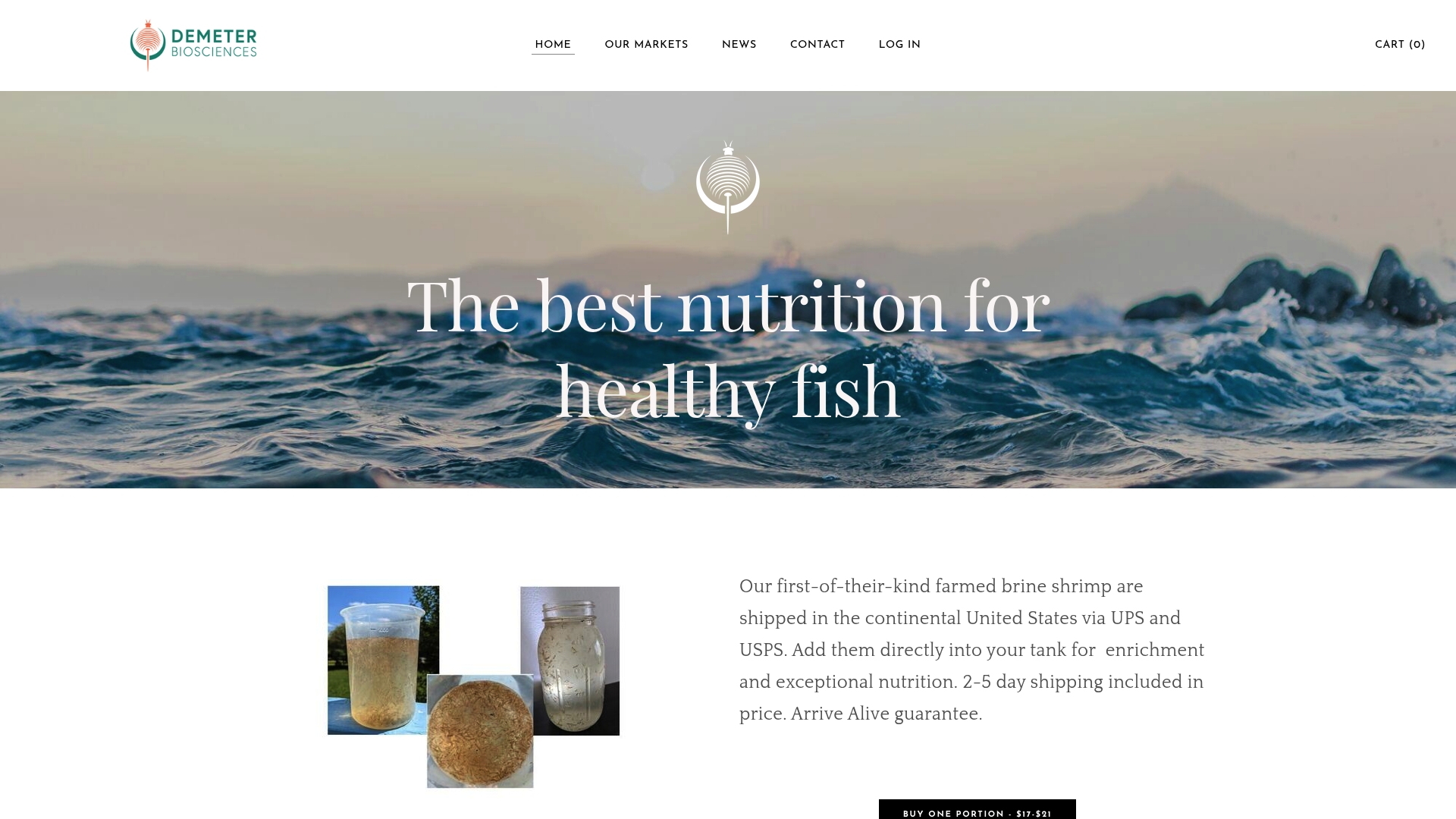
Subscription deliveries start at $25/month for a 15 gram live brine shrimp plan, making predictable feed flow possible for small hatcheries and hobbyists. The company advertises its brine shrimp are fed exclusively on the algae Dunaliella and contain at least 40% protein, a vendor claim that speaks to concentrated nutrition.
Core Features
- Land-based cultivation of microalgae and brine shrimp using organic and closed-loop systems aimed at reducing pressure on wild fisheries.
- Direct-to-consumer live brine shrimp shipments, monthly subscription plans, bulk retail packages for museums or local fish stores, and gift card options.
- Customizable fish meal and feed ingredients derived from microalgae and shrimp biomass, intended to supply protein, omega-3s, and micronutrients.
- Eco-friendly practices including waste-to-feed approaches and on-site carbon sequestration strategies designed to lower environmental impact.
Key Differentiator
Demeter Biosciences relies on proprietary, land-based organic cultivation methods to control nutrition and harvest timing rather than depending on seasonal ocean catches. That production model is positioned to reduce reliance on ocean-caught fish by supplying reproducible, farmed microalgae and brine shrimp for aquaculture feed.
Pros
- Reduces ocean pressure: A land-based approach lowers dependence on wild harvests and gives aquaculture managers an alternative to variable seasonal supply.
- Consistent nutrition: Controlled cultivation supports predictable nutrient profiles for feed formulation, which matters when you need the same input batch to batch.
- Range of supply options: Direct shipments, subscriptions, and bulk boxes let both hobbyists and institutions pick cadence and volume that match stocking cycles.
- Targeted formulations: Customizable fish meal and microalgae ingredients help nutritionists hit protein and omega-3 targets without resorting to mixed wild-caught meals.
- Environmental focus: Waste-to-feed techniques and onsite carbon capture aim to reduce waste streams and the broader footprint of feed production.
Cons
- Geographic limits: Delivery and shipping are mainly US based, which constrains access for international hatcheries and hobbyists.
Who It's For
Aquaculture professionals and fish hatcheries that need reliable, traceable feed inputs will find this product relevant. Research institutions and environmentally conscious aquarium owners who prioritize mercury-free, land-farmed live feed also match the profile.
Unique Value Proposition
Locking in monthly deliveries and customizable bulk orders turns seasonal uncertainty into a repeatable procurement line item. For hatcheries that schedule larvae cycles months ahead, predictable shipments and stable nutrient specs cut the risk that comes with fluctuating wild harvest quality.
Real World Use Case
A hatchery switches its larval diet to Demeter subscriptions and bulk microalgae meal. Over six months the team reports fewer diet adjustments at weaning because harvest timing and nutrient content remain steady, helping them meet production targets while reducing wild-caught inputs.
Pricing
Prices vary by product: live brine shrimp portions run about $17 to $21, subscriptions start at $25/month for 15 grams, and bulk boxes land around $90 to $130. Shipping is included within the US and custom quotes apply for larger or institutional orders.
Website: https://demeterbioscience.com
biodynamic.com.au
At a Glance
Many of the site’s products are sourced from Tasmania and Victoria and include Demeter Biodynamic certification on select items, a specific focus that separates it from generic organic marketplaces. The catalog pairs pantry staples with books and educational media aimed at biodynamic practice.
Core Features
- Wide product range covering dried fruits, grains, nuts, dairy, beverages, condiments, books, and educational resources.
- Searchable online storefront with categorized sections for quick discovery of specialty items.
- Demeter Biodynamic and other organic certifications appear on selected products to signal farming practice and provenance.
- Educational content that supports biodynamic farming principles and community learning.
Key Differentiator
A deliberate emphasis on biodynamic certification combined with educational resources makes the site more than a grocery store. It merges product sourcing with farming philosophy, so buyers can buy pantry staples and pick up books that explain the practices behind those products.
Pros
- Extensive catalog that appeals to niche organic and biodynamic consumers who want both food and reference material in one place.
- Strong sourcing focus on Australian producers, with many listings tied to Tasmania and Victoria, which helps with traceability and seasonal variety.
- The blend of retail and educational media supports practitioners and educators seeking curated biodynamic material.
- A user friendly online storefront reduces friction for shoppers looking for specialty items and certification details.
Cons
- Limited third party reviews or visible customer feedback, which makes independent assessment of service and product consistency harder.
- Prices trend premium given biodynamic and organic certification, so budget buyers may find the range expensive.
- International shipping and global logistics are not clearly outlined, which complicates ordering from outside Australia.
When It May Not Fit
If you need low cost bulk staples or extensive wholesale pricing, this marketplace may not match warehouse style suppliers. Buyers outside Australia who require predictable international delivery will find the site less transparent about cross border options.
Who It's For
Eco aware consumers, biodynamic growers, and educators seeking certified products plus reference books. Retail buyers in Australia who want carefully sourced pantry items and institutions running biodynamic courses will find relevant inventory.
Real World Use Case
A home gardener orders a bulk box of native Australian dried fruits and a biodynamic farming book, then sets up a recurring delivery. Educational staff purchase multiple copies of a core text for training and local workshops.
Pricing
Prices vary by category. Typical ranges include AUD 10–50 for dried fruits and grains, AUD 20–60 for specialty books, and AUD 5–30 for beverages. The site advertises free shipping thresholds and volume discounts on larger orders.
Website: https://biodynamic.com.au
Organic Trader
At a Glance
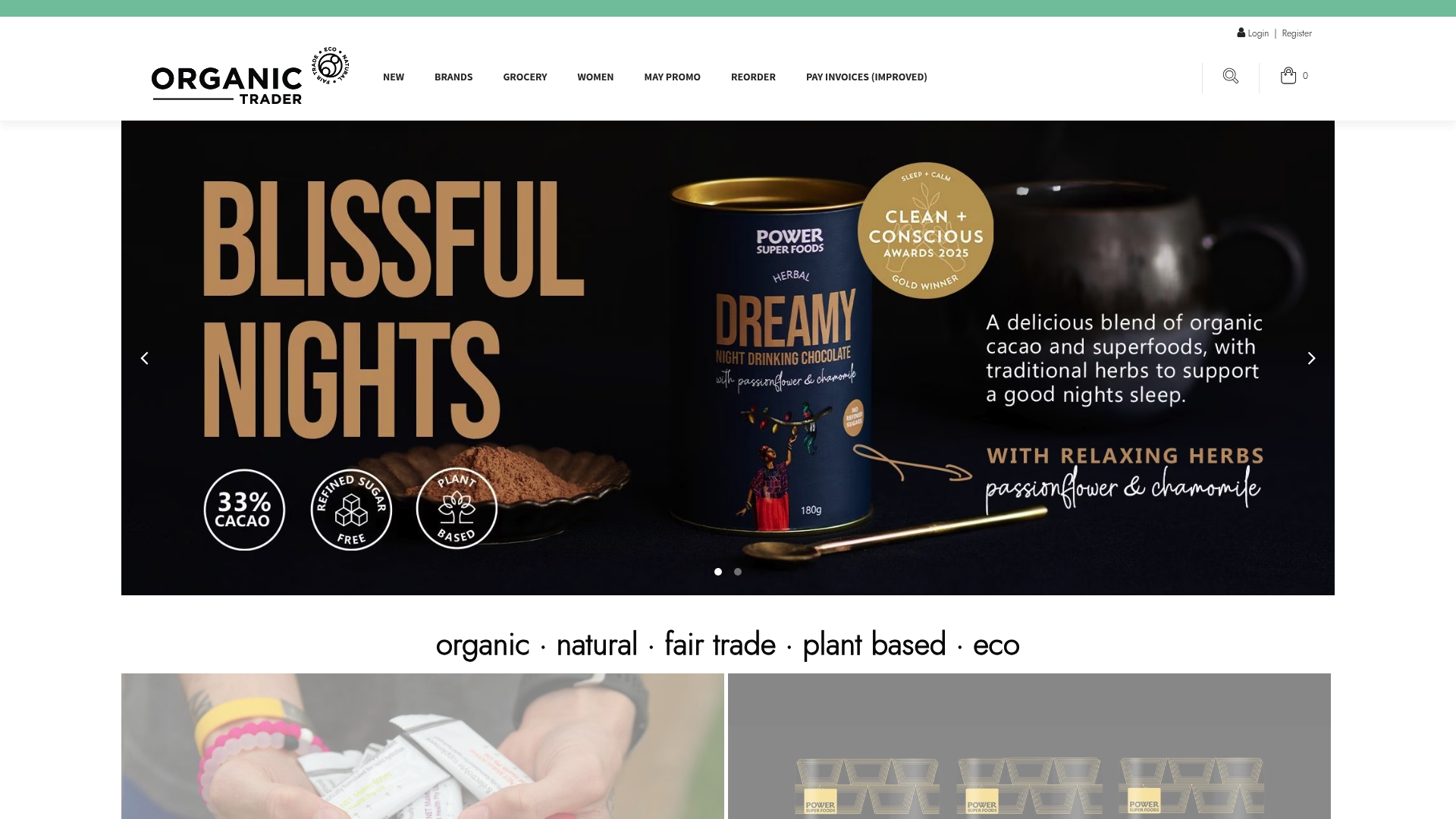
Serves both individual shoppers and businesses with wholesale pricing, invoice payments, and recurring reorders for restocking. That B2B plus DTC set up makes it a convenient source for clinics, small retailers, and households seeking certified organic and vegan options within Australia.
Core Features
- Wide catalog of natural, organic, vegan, and fair trade goods spanning groceries, personal care, supplements, and eco supplies.
- B2B wholesale capabilities with bulk discounts, invoice payment terms, and reordering for regular stock replenishment.
- Product filters by attributes and class for targeted browsing and clearer product comparison.
- Customer account tools and published policies for delivery, returns, and trading terms that support business buyers.
Key Differentiator
Organic Trader emphasizes a broad multi brand assortment of certified organic and eco friendly products while supporting wholesale workflows for small businesses. That combination positions it as a supplier rather than a specialist producer. Compared with Demeterbioscience, which focuses on farmed live brine shrimp and microalgae fed production, Organic Trader serves customers who need packaged wellness and household goods from many brands.
Pros
- Extensive catalog makes one order possible for groceries, body care, and cleaning items rather than sourcing from many suppliers. This saves procurement time for small retailers.
- Strong brand sourcing and transparent labels help you assess product claims quickly. That clarity speeds selection for practitioners ordering for clients.
- Flexible buying paths let individuals place single orders and businesses set up bulk buys with invoice terms. The mixed model supports both use cases without separate portals.
- Australian based operations reduce freight time for local buyers and support local sourcing where available.
- Visible policies for delivery and returns give buyers a clear sense of trading terms before checkout.
Cons
- The site shows limited third party review aggregation or independent verification of customer satisfaction which makes vetting product popularity harder.
- Product level certification details are not always prominent which forces extra label checks when sustainability credentials matter.
- Navigation can feel cluttered for first time visitors, so finding niche items sometimes takes more clicks than expected.
- International shipping options are limited which restricts access for buyers outside Australia.
When It May Not Fit
If you need live cultured feed or purpose grown aquaculture inputs then Organic Trader is not the right supplier. The retailer focuses on packaged organic and wellness products rather than farmed live organisms.
Who It's For
Enviro conscious consumers, wellness practitioners, and small Australian retailers who want a single supplier for organic groceries, supplements, and personal care. It fits buyers who value local sourcing and wholesale terms but do not need live stock or real time inventory feeds.
Real World Use Case
A naturopathic clinic sets up a business account, places a bulk order of body care and supplement lines, and activates recurring reorders. The clinic uses invoice payments and receives deliveries on a predictable cadence, freeing staff from frequent small orders.
Pricing
Prices vary by product category, spanning affordable to premium lines. Bulk discounts and subscription style reorder savings are available, and the vendor advertises free shipping once an order meets site thresholds.
Website: https://organictrader.com.au
Austral Herbs
At a Glance
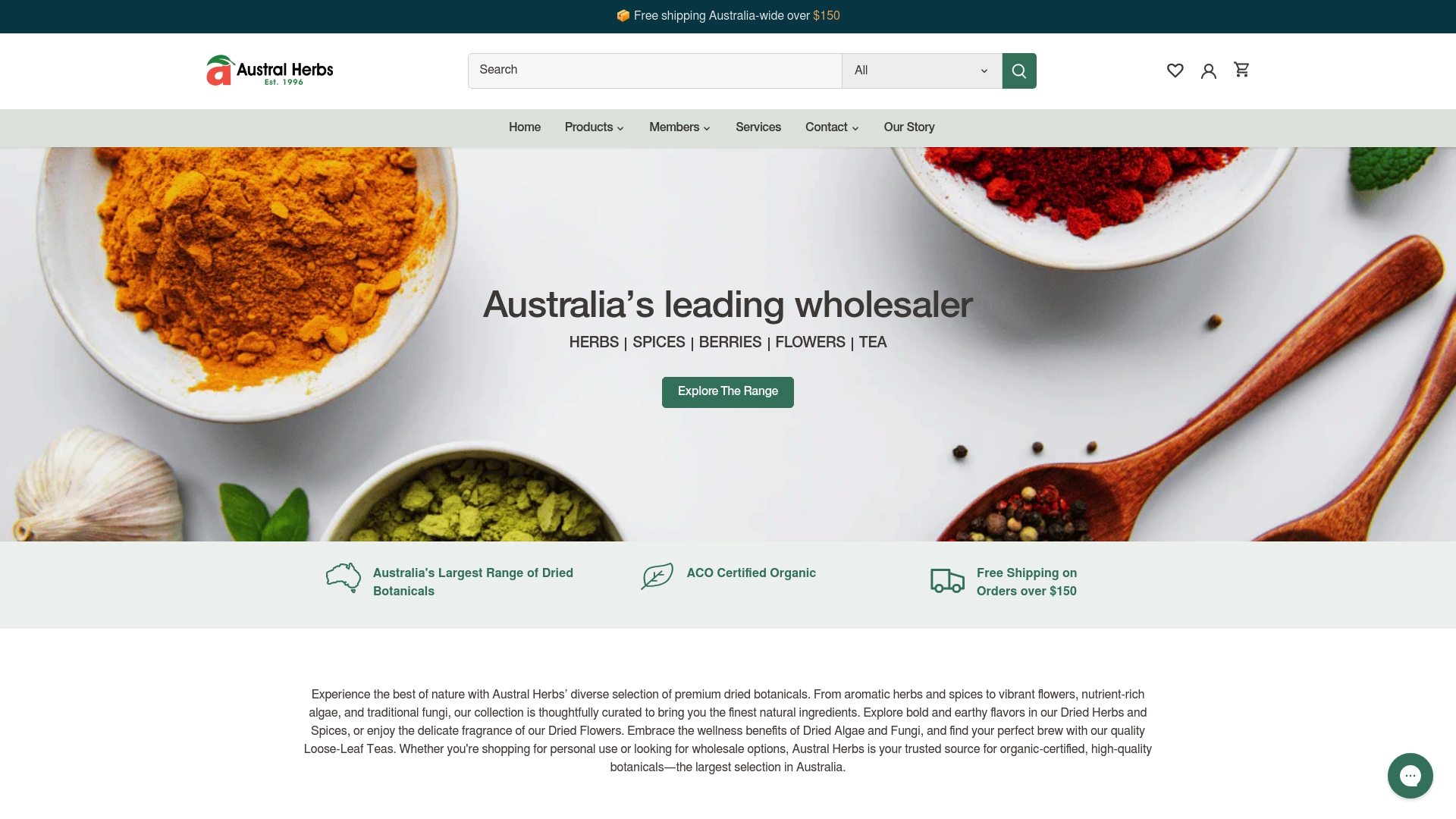
Austral Herbs' marketing materials describe it as Australia's largest selection of organic-certified botanicals, and the company highlights sustainable sourcing and traceability alongside a long track record since 1996. The catalog covers herbs, spices, flowers, berries, and tea leaves for commercial use.
Core Features
Austral Herbs stocks an extensive mix of organic-certified and conventional dried botanicals for commercial buyers.
- Custom blending and private labeling for manufacturers and retailers.
- Bulk ordering tiers and business-focused customer support for scaled production runs.
- Australia-wide shipping with free shipping on orders over AUD 150 and certified provenance documentation.
Key Differentiator
The claim above frames the offering: an unusually broad catalog combined with traceable certifications aimed at industrial buyers. That positioning makes Austral Herbs a sourcing partner when ingredient variety and documented provenance matter more than the lowest unit price.
Pros
- Largest product breadth in the Australian market for dried botanicals, which shortens supplier lists when you need many ingredients in one place.
- Strong focus on transparency and certifications, with documentation that helps product developers meet label and audit requirements.
- Decades of experience since 1996 means supply conversations are technical and production oriented rather than purely transactional.
- Custom processing and private labeling let small manufacturers scale without building in-house handling capabilities.
- Business shipping terms and wholesale sizing reduce logistics overhead for regular bulk buyers.
Cons
- Primarily wholesale oriented, so on-site retail pickup or small single-unit options are limited for hobbyists or very small retailers.
- International shipping can be constrained and less flexible for small overseas buyers compared with large freight forwarders.
- The catalog suggests premium pricing on many organic lines, which raises per kilogram costs for margin sensitive products.
- The product data does not mention a formal sample program, which complicates first-time selection for formulators.
When It May Not Fit
If you are a casual home herbalist or need single 50 gram sachets for a retail test run, this supplier will likely be too bulk focused. Buyers outside Australia who cannot consolidate larger orders through a freight partner may face limited options or higher shipping friction.
Who It's For
Manufacturers, herbalists, naturopaths, cafés, spas, and beverage companies that require documented organic botanicals in bulk will find the service aligned to their needs. Ideal users plan orders at kilogram scale and prioritize sustainability and traceability over bargain pricing.
Real World Use Case
A small health food manufacturer set up a wholesale account, ordered several kilograms of organic herbs and berries, and arranged private labeling for tea blends and supplement powders. Austral Herbs supplied certification paperwork and consistent lots that let the manufacturer scale from small batches to monthly production runs.
Pricing
Prices vary widely by botanical and packaging size with common bulk examples ranging from AUD 20 to AUD 600+ depending on item and kilogram quantity such as 1kg, 5kg, or 10kg packs. Free shipping threshold applies for orders above AUD 150 which helps smaller bulk purchases.
Website: https://australherbs.com.au
Mungalli Creek Bio-Dynamic Dairy
At a Glance
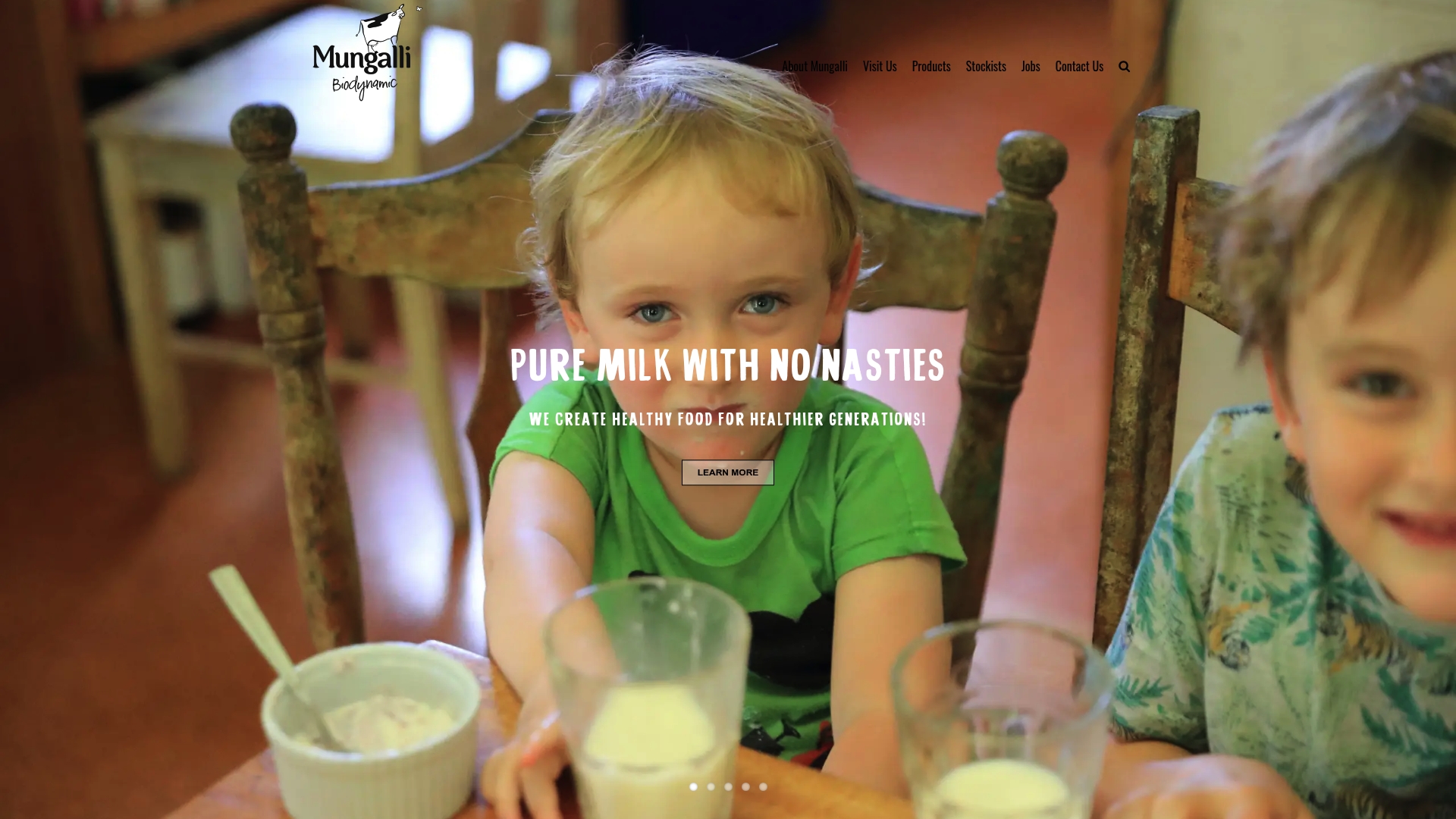
A family-operated farm on Queensland’s Atherton Tablelands that returns pasture to rainforest while producing milk, cheese, yogurt, and ice cream. The property doubles as a visitor destination with a café and farm tours that connect shoppers directly to production.
Core Features
- Biodynamic farming methods that emphasize soil health, biodiversity, and holistic herd management.
- A broad product line: milk, cheese, yogurt, ice cream, and flavored milks sold direct and through local stockists.
- On-farm visitor experiences including a café and guided farm tours that showcase farming practices and product origins.
- A clear focus on environmental sustainability and rewilding parts of the property to support wildlife.
Key Differentiator
The vendor states their dedication to biodynamic farming as the defining difference, arguing it produces dairy with higher purity and nutritional value than conventional methods. That claim frames the brand as a producer linking regenerative land care directly to the food on the shelf.
Pros
- Strong commitment to biodynamic and sustainable farming. That philosophy is visible on the farm and in product labeling which appeals to conscious shoppers.
- Wide product range from everyday milk to specialty cheeses and desserts, giving retailers multiple SKU options for premium shelves.
- Transparent practices and community engagement. Farm tours and the café make farming methods tangible and build consumer trust.
- Location in a tropical environment that supports diverse forage, which can influence flavor and seasonal variety in dairy products.
- Family continuity and local partnerships. Longstanding relationships with nearby farmers support regional supply resilience.
Cons
- Regional focus limits international availability. Customers outside Australia will face restricted access and higher freight hurdles.
- Pricing sits in the mid to high range relative to mainstream dairy, reflecting biodynamic certification and small-batch production.
- Distribution channels are narrow, mostly direct sales and selected local stockists, which reduces grocery footprint for national chains.
- Online delivery outside Australia is limited, so global customers must rely on specialty importers.
When It May Not Fit
If you need low-cost, widely distributed dairy for national supermarket shelves this brand will not match scale or price expectations. Also avoid if you require frequent international shipments or a broad wholesale logistics network.
Who It's For
Eco-conscious consumers and families who prioritize ethically produced, traceable food and who are willing to pay a premium for biodynamic certification. Small cafes and boutique grocers seeking a story-driven artisanal dairy supplier will find a natural fit.
Real World Use Case
A Queensland family visits the farm café on a weekend, joins a tour to see herd and pasture management, then buys a selection of milk, yogurt, and cheese. They replace supermarket brands at home and recommend the farm to neighbors and their local health food shop.
Pricing
Products range across a mid to high price band that reflects biodynamic and organic standards. Specific retail prices vary by SKU; consult the website for current carton and cheese prices, but expect premium positioning versus conventional dairy.
Website: https://mungallicreekdairy.com.au
Summer Land Camels
At a Glance
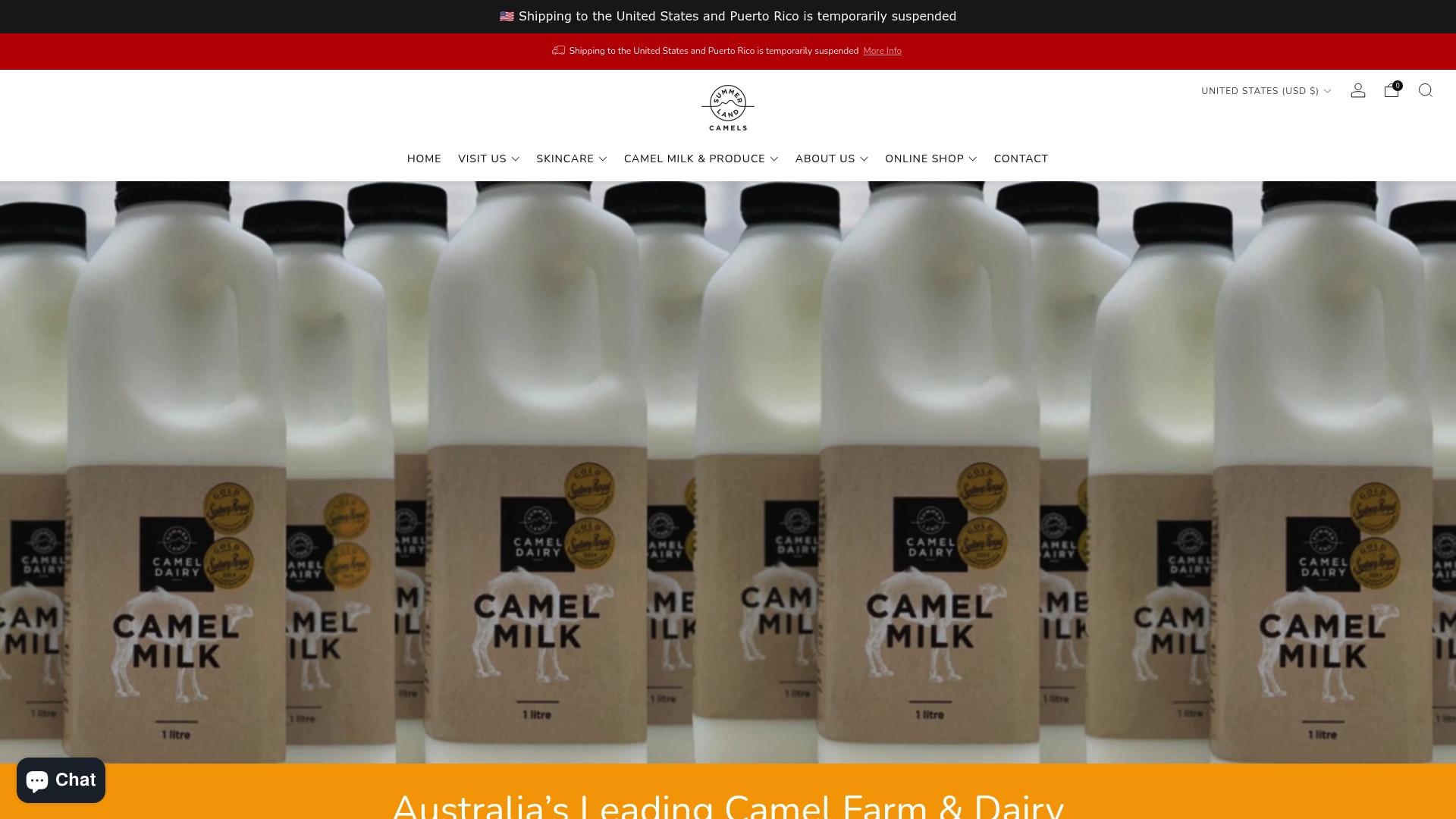
They sell camel milk vodka alongside lotions, powdered milk, meat, and soaps — a concrete product mix you rarely see from a single farm. The vendor advertises therapeutic benefits of camel milk for gut, skin, and mental health, a claim referenced throughout their product descriptions.
Core Features
- Camel milk skincare products including lotions and soaps crafted from on‑farm milk.
- Camel dairy options: fresh milk, powdered milk and value bundles for home use.
- Camel meat and charcuterie paired with a small selection of crafted spirits like camel milk vodka.
- Farm tours and camel rides for visitors, plus a café and educational programs for schools and groups.
- An online store that supports direct purchases and shipping within Australia with limited international options.
Key Differentiator
Summer Land Camels ties product development to regenerative agriculture and on‑farm processing. That agricultural focus shapes their product line and visitor experiences more than typical boutique skincare brands. If you want farm provenance and a farming story behind your soap, that narrative is central here.
Pros
- Offers genuinely unusual products. Camel milk appears across skincare, dairy, spirits, and charcuterie, giving customers multiple entry points into the brand.
- Strong farming story. Their emphasis on regenerative practices gives buyers traceability and a clear origin for raw ingredients.
- Visitor experiences work as a retail channel. On‑site tours and rides turn casual visitors into buyers and educators into repeat clients for school programs.
- Convenient online ordering for Australian customers. The web shop makes it simple to buy specialty items without visiting the farm.
- Educational content supports purchase decisions. Product pages explain uses and sourcing, which helps customers who are new to camel milk.
Cons
- International shipping is limited and currently suspending deliveries to the US and Puerto Rico, restricting overseas buyers.
- The product niche is specialized; buyers who prefer mainstream dairy or skincare ingredients may find the range unfamiliar.
- Several experiences require physical presence. Remote customers miss the full farm visit and tasting or ride options.
When It May Not Fit
If you need fast, worldwide delivery or regular bulk supply for a retail chain, this farm will frustrate you. It also underperforms for customers who want widely recognized ingredient labels or standardized clinical claims. School groups far from Queensland should plan travel logistics carefully.
Who It's For
People seeking natural skincare with a clear farm provenance, adventurous food buyers, and educators arranging hands‑on agricultural visits. It suits customers who value regenerative farming narratives and are willing to try uncommon animal‑derived products.
Real World Use Case
A health conscious shopper orders camel milk soap and a meat bundle through the online store for home delivery. Separately, a regional school books a guided farm tour and camel ride to support a curriculum module on sustainable agriculture.
Pricing
Prices vary by product and pack size. Small items like soaps start at about $4.50 USD, while specialty bundles, meat packs, and skincare sets are higher. Shipping and bundle discounts appear at checkout for Australian addresses.
Website: https://summerlandcamels.com.au
Comparative Analysis
Analyzing the distinct strengths of Demeter Biosciences alongside its competitors reveals substantial tradeoffs tailored to various operational needs.
Reliability and Consistency in Supply Chains
Demeter Biosciences stands out in ensuring consistent, year-round availability owing to its land-based organic cultivation system. This methodology significantly reduces reliance on external factors and seasonal variability tied to ocean harvests. This attribute provides aquaculture facilities with the predictability to plan nutrient-rich feed schedules well in advance. It contrasts with competitors such as Organic Trader, whose product lines, while extensive, are subject to market-driven supply fluctuations that can impact availability.
Scope of Offerings with Geographical Orientation
While Demeter Biosciences focuses on live feed and customized aquafeed solutions targeted at hatcheries and hobbyist aquaculteurs, competitors like Austral Herbs offer an expansive catalog tailored for herbal producers, and Mungalli Creek Bio-Dynamic Dairy supports biodynamic dairy enthusiasts. For those seeking diverse niche ingredients or emphasizing localized sourcing, competitors may provide relevant alternatives depending on specific regional demands.
Best Fit Applications
- For operations prioritizing consistent schedules and nutrient specifications: Demeter Biosciences offers controlled cultivation for year-round reliability.
- For eco-conscious small businesses sourcing for educational or community purposes: Austral Herbs blends an extensive product range with sustainability certifications.
- For Australian-based aquaculture operations preferring locally sourced grocery and wellness products: Organic Trader provides a broad supply under transparent terms.
Our Pick
Demeter Biosciences uniquely combines modern low-impact aquaculture practices with a focus on nutrient-controlled live aquatic feed inputs, distinguishing it from the broader market offerings. Its approach is particularly effective for companies prioritizing reliable live feed supplies directly optimized at the source. However, for buyers outside its geographical reach, exploring alternatives like Organic Trader or Austral Herbs may provide immediate logistical advantages. This highlights the importance of selecting a supplier aligned with one's strategic goals and internal processes.
Live Brine Shrimp and Alternative Eco-Feeds Comparison
For those procuring sustainable and nutrient-consistent aquaculture feed, this table outlines available options for consideration.
| Product Name | Primary Use Case | Key Differentiator | Pricing | Notable Limitation |
|---|---|---|---|---|
| Demeter Biosciences | Reliable aquaculture feed supply | Land-based organic cultivation | Starts at $25/month | Shipping mainly within the US |
| biodynamic.com.au | Biodynamic and organic-certified products | Emphasis on certification | AUD 10–50 for foods | Limited international shipping transparency |
| Organic Trader | Organic and vegan wholesale products | Serves both B2B and DTC alike | Not disclosed | Cluttered navigation for niche product searches |
| Austral Herbs | Industrial bulk botanical ingredients | Extensive organic offerings | AUD 20–600+ per kg | Inadequate options for small-scale purchases |
| Mungalli Creek Dairy | Biodynamic dairy offerings in Australia | Focused on sustainability | Premium positioning | Limited international distribution |
Discover Reliable and Sustainable Brine Shrimp Alternatives with Demeterbioscience
Finding dependable, nutrient-rich brine shrimp alternatives can be a challenge, especially when you need consistent protein content and supply unaffected by seasonal wild catches. Demeterbioscience addresses these pain points with their land-based, organic cultivation system producing live brine shrimp fed exclusively on Dunaliella algae, guaranteeing at least 40 percent protein and steady nutrition batch after batch. Their approach removes the guesswork of fluctuating wild harvests and supports sustainability by reducing pressure on ocean fisheries.
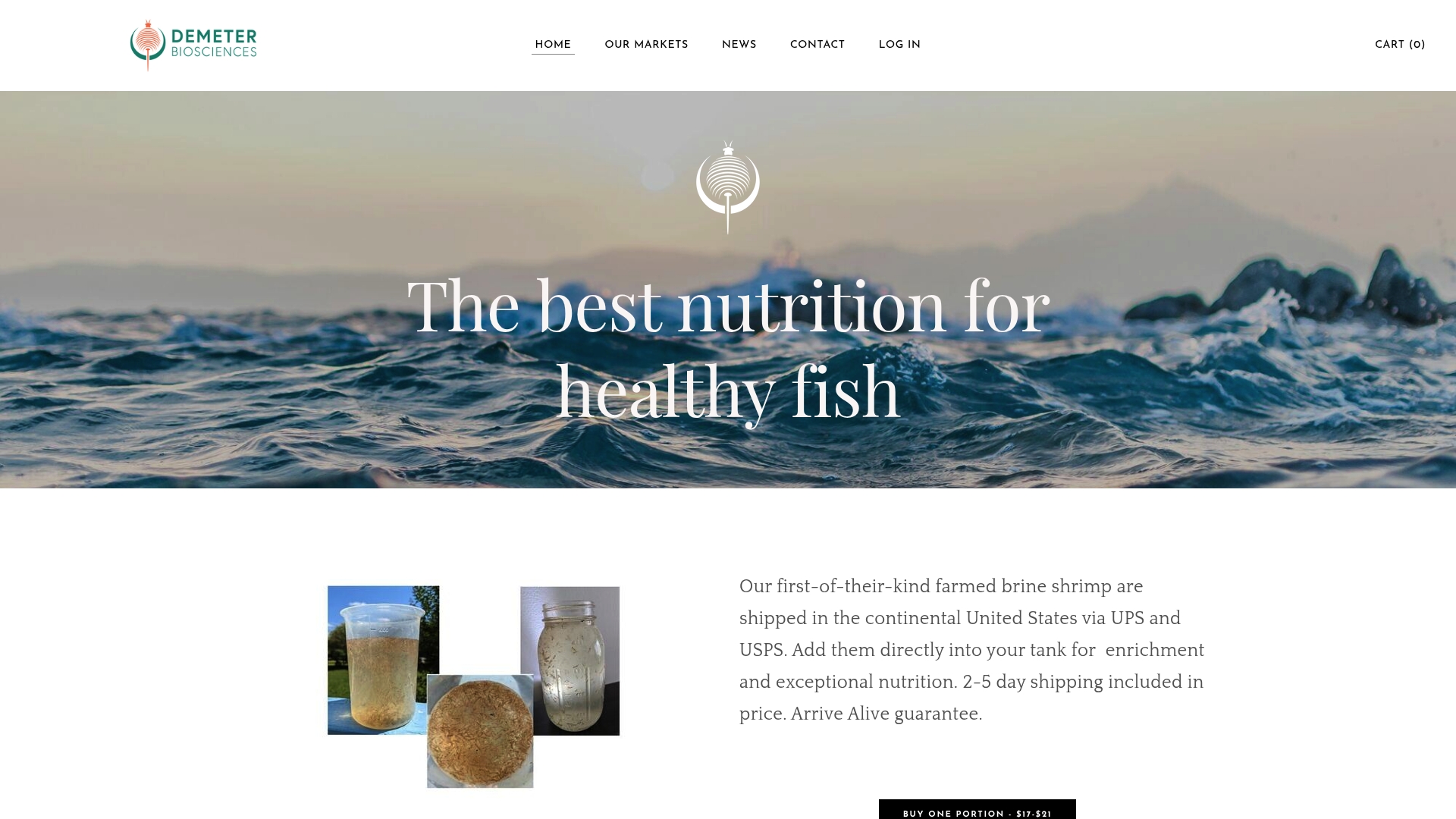
Explore flexible options like monthly subscriptions, bulk packages, and direct-to-consumer shipments that fit your hatchery or aquarium needs. Visit Demeterbioscience’s website to secure consistent live feed that helps you take control of your aquaculture nutrition and receive shipments tailored just for you.
Frequently Asked Questions
How does Demeterbioscience ensure consistent nutrition in live brine shrimp?
Demeterbioscience controls nutrition through its proprietary, land-based organic cultivation methods. This approach allows for predicted nutrient profiles, making it suitable for aquaculture needs. For users requiring consistency in their feed formulation, this stability is critical for managing production cycles effectively.
What is the difference between Demeterbioscience and Austral Herbs?
Austral Herbs specializes in bulk organic-certified botanicals for commercial buyers, while Demeterbioscience focuses specifically on live brine shrimp and microalgae-based feeds. This makes Austral Herbs an excellent option for manufacturers needing a wider range of botanicals, while Demeterbioscience provides a direct solution for aquaculture needs. Those interested in tailored live feed should consider Demeterbioscience's offerings for their more focused application.
Can I use Demeterbioscience for large aquaculture operations?
Demeterbioscience can support larger operations through customizable fish meal and feed ingredient formulations designed for aquaculture. Their emphasis on predictable shipments aligns well with the needs of hatcheries and large aquaculture managers facing seasonal variability issues. However, those needing vast quantities may also want to explore bulk options or alternative suppliers for additional capacity.
How does Demeterbioscience help reduce reliance on wild fisheries?
Demeterbioscience reduces reliance on wild fisheries by providing a land-based alternative that lessens pressure on ocean catches. Their focus on sustainable practices through organic cultivation speaks directly to the environmental concerns of aquaculture professionals. Users interested in minimizing their environmental footprint will find their methods align well with those objectives.
What pricing options does Demeterbioscience offer for live brine shrimp?
Demeterbioscience’s subscription plans for live brine shrimp start at $25 per month for a 15-gram plan. This affordability allows both hobbyists and small hatcheries to manage feeding costs effectively while ensuring they receive consistent quality and nutrition. For those with larger needs, there are also bulk retail packages available.