
Sourcing consistent, contaminant-free live marine feed for aquarium and aquaculture setups is often complicated by seasonal variability and sparse quality data. Most suppliers either restrict delivery regions, offer only wild-harvested stock with unpredictable nutrition, or demand direct quotes instead of posting pricing upfront. This review covers product features, fulfillment, and reliability for three live feed providers so you can pick a supplier that aligns with your feeding schedule, stock scale, and quality requirements.
Table of Contents
Demeter Biosciences
At a Glance
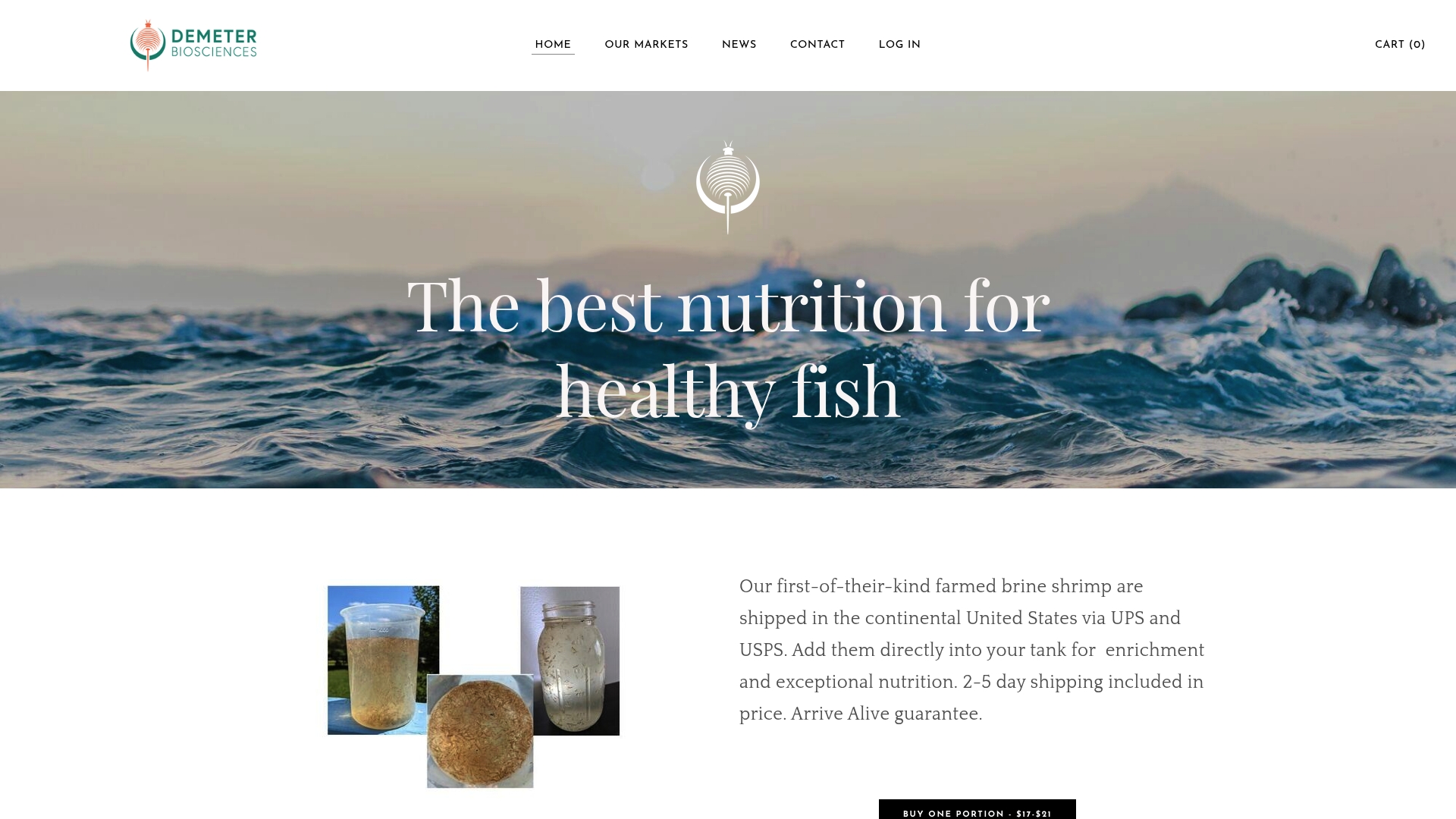
Demeter Biosciences' marketing materials state their brine shrimp are fed exclusively on the microalga Dunaliella, yielding what the company reports as at least 40% protein in the harvested biomass. The vendor also advertises direct-to-consumer live shrimp shipments and monthly subscription plans.
Core Features
Demeter operates land-based, organic cultivation systems that produce live brine shrimp, microalgal biomass, and fish meal. The product catalog includes single shipments, monthly subscription plans, bulk retail packages for museums and local fish stores, and gift card options.
The production approach uses animal waste and atmospheric CO2 to grow microalgae, a method the company positions to reduce pollution and capture carbon while keeping product composition consistent across batches.
Key Differentiator
The clearest operational difference is the land-based, organic production system that replaces seasonal wild harvests with controlled farming. That system is pitched as a way to avoid the seasonal variability and starvation conditions common to wild-harvested feedstocks.
Pros
-
Provides mercury-free nutrition according to the vendor, which matters for aquarium hobbyists and hatcheries that track contaminant load for sensitive species.
-
Offers flexible fulfillment options: single orders, recurring monthly deliveries, bulk retail shipments, and gift cards for retail partners or hobbyist communities.
-
Product mixes include live brine shrimp, microalgal biomass, and fish meal so feed formulators can test blends rather than sourcing separate suppliers.
-
The controlled, land-based method delivers more consistent lot-to-lot quality than seasonal ocean harvests, reducing surprises when you validate feed performance.
-
The process claims environmental benefits by reducing reliance on ocean catch and using CO2 and animal waste as inputs, which supports sustainability-minded operations.
Cons
- Limited delivery regions for some products restrict access for distant aquaculture operations and hobbyists; availability can vary by SKU and shipment type.
Who It's For
Aquaculture professionals, aquarium hobbyists, pet store owners, and sustainable feed producers who want traceable, farmed marine biomass rather than wild-caught inputs. Also suitable for environmental researchers testing low-mercury feed chains.
Unique Value Proposition
Direct-to-consumer live brine shrimp shipments plus subscription delivery create predictable supply for daily feeding or hatchery cycles. For teams that need steady live feed cadence, those recurring shipments remove last-minute sourcing pain and simplify stock planning.
Real World Use Case
A midsize fish farm replaces a portion of ocean-derived fish meal with Demeter microalgal biomass to produce mercury-free feed blends. The farm uses monthly shipments to align harvest weeks with hatchery cycles and to stabilize feed conversion tests.
Pricing
Pricing varies by product and quantity. The vendor lists smaller brine shrimp portions from about $17 and prepackaged boxes near $130, with subscription options that adjust per-shipment costs. Costs imply a premium for traceable, land-farmed biomass.
Website: https://demeterbioscience.com
Bio Marine
At a Glance
Monoculture and blend microalgae strains are offered as both reserve starter cultures and grow-out stocks, including Green, Red, Gold, Brown, and Fusion varieties tailored to saltwater aquarium feeding and water chemistry control.
Core Features
Bio Marine supplies live microalgae cultures across several strain families plus ready-to-grow mono-cultures for paced scale up. Products target nutritional enhancement for corals and filter feeders and include formulations intended to sequester nutrients and help stabilize aquarium pH.
The stock comes packaged for hobbyist handling with reserve starters to reestablish cultures quickly after contamination or crash.
Key Differentiator
The vendor emphasizes monoculture and blend microalgae cultivated specifically for marine tanks rather than mixed wild-harvest harvesting. That narrower production focus aims to deliver consistent nutritional profiles and ecological stability in small systems, a different aim than Demeterbioscience’s farmed live brine shrimp model and subscription delivery emphasis.
Pros
-
Exclusively cultured products tuned to marine tanks reduce variability that wild collections can introduce; this matters when you feed delicate filter feeders.
-
Diverse microalgae strains let you match feed type to target organisms, from zooplankton to corals, without mixing unknown wild species into your system.
-
Packaging and reserve starters simplify keeping a continuous supply; hobbyists report fewer culture crashes when they rotate starters and grow-outs.
-
The founder’s background is notable. The vendor’s materials state founder Gary Miller brings nearly 50 years of marine biology and aquaculture experience, which shows in the product focus and technical detail on the site.
Cons
-
Independent user reviews and third-party testing are sparse, so many performance claims rest on vendor documentation and small-scale reports.
-
Pricing details are not posted publicly, which forces direct contact for cost estimates and makes quick cost comparisons harder for hobbyists.
-
The product suite is highly specialized; those who only keep fish that accept pellets or frozen diets will find limited value.
When It May Not Fit
If you need large-volume live feed for commercial hatcheries or LFS restock, Bio Marine’s small-batch microalgae focus and unclear scalability present a fit risk. Also skip this if you prefer ready-to-feed frozen or dry feeds rather than maintaining live cultures.
Who It's For
Solo hobbyists, reef keepers, and small-scale marine aquaculture enthusiasts who want controlled, known microalgae feeds and who can commit a little bench time to maintain starter cultures. The offering favors ecology-minded keepers over bulk buyers.
Real World Use Case
A reef hobbyist grows a small Green starter and rotates grow-out batches weekly to feed clams and copepods. Over two months they see steadier water nutrient readings and improved polyp extension on corals after switching from sporadic frozen feeds.
Pricing
Pricing is not specified on the website and appears to be product-dependent. Expect batch pricing or custom quotes for starter and grow-out orders; contact the vendor for current rates and shipping details.
Website: https://biomarinetropicals.com
Aquafauna Bio-Marine, Inc.
At a Glance
The vendor advertises a guarantee of hatch rates for Artemia cysts backed by strict quality control and testing. That guarantee is the most specific claim here and frames how hatcheries and research labs judge product risk before ordering.
Core Features
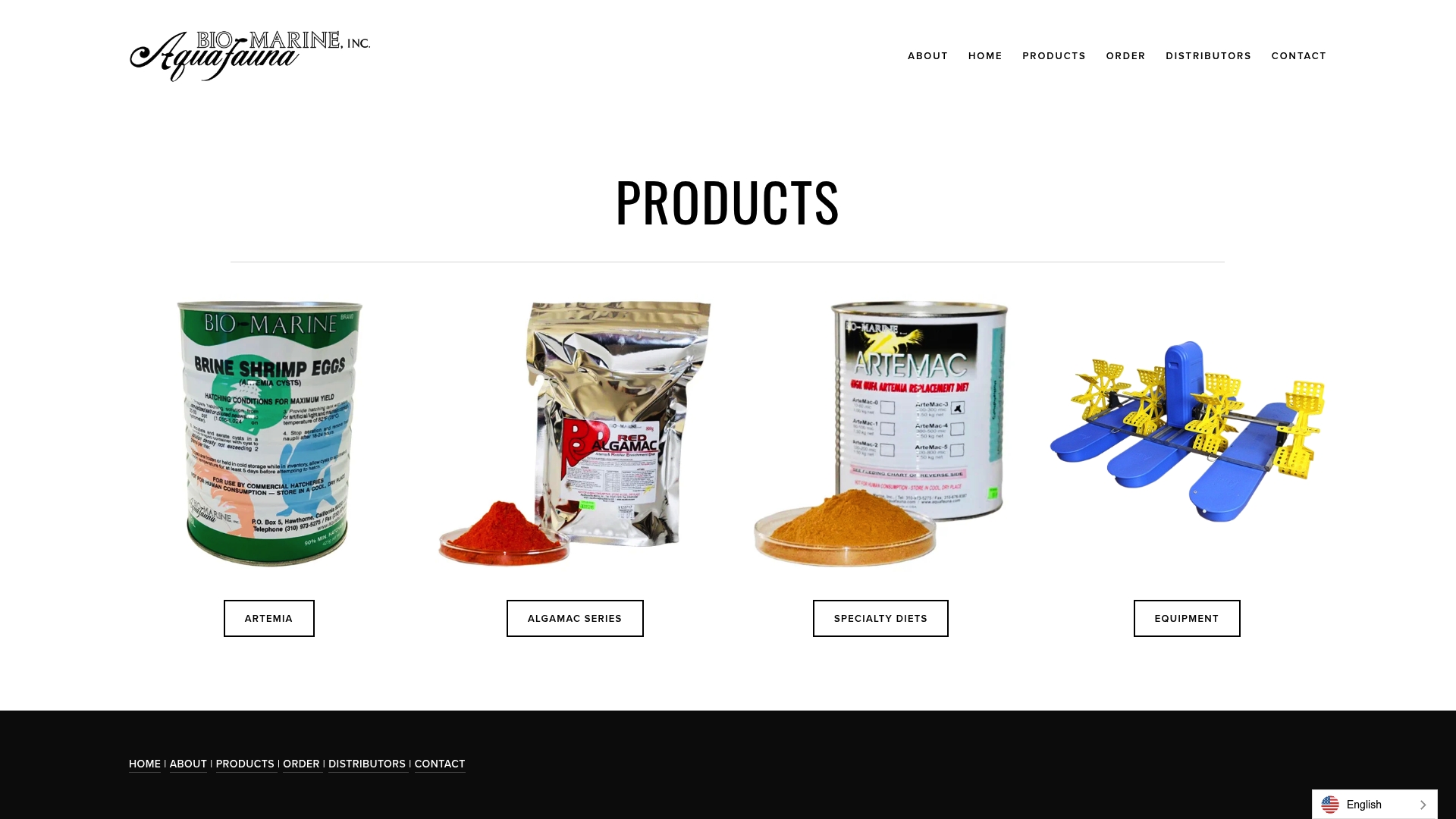
Aquafauna supplies Artemia cysts with claimed verified hatch performance plus detailed hatching protocols and technical papers. The catalog also includes specialty diets, aerators, blowers, and other hatchery equipment for routine operations. Global distribution rounds out availability to farms and institutions outside a single market.
Key Differentiator
Aquafauna leans on that hatch rate guarantee and quality testing as a purchasing signal for high-stakes uses. For hatcheries that need predictable live feed yields on a production schedule this emphasis on verified performance is the primary reason to choose them over generic suppliers.
Pros
-
Offers verified high-quality Artemia cysts with performance guarantees, which reduces supply uncertainty for larval rearing and production planning.
-
Broad product range covers feed and hardware so hatcheries can source cysts, specialty diets, and basic equipment from one supplier rather than multiple vendors.
-
Publishes technical resources, hatching protocols, and trial guidance that accelerate setup and reduce guesswork during ramp up of new cohorts.
-
International distribution makes ordering feasible for operations outside major supply hubs and supports continuity when local sources are seasonal.
-
Focus on quality control and testing gives procurement teams data to cite when documenting vendor selection for audits or research reproducibility.
Cons
-
No independent third-party reviews or user feedback are publicly available to verify the vendor claims, so buyers must rely on supplied documentation.
-
Public material shows limited detail on new product development or recent innovation, which may matter if you want the latest feed formulations.
-
Specialized, guaranteed products can carry a premium price; total landed cost may exceed commodity cyst suppliers after freight and duties.
Who It's For
Hatchery managers, aquaculture farms, and marine research institutions that prioritize predictable live feed yields and documented protocols. This is a procurement fit when supply reliability matters more than lowest unit cost.
Real World Use Case
A commercial hatchery orders Aquafauna Artemia cysts to meet a weekly larval schedule. Staff follow the provided hatching protocol and hit target nauplii yields, which reduces emergency reorder pressure and keeps feeding cycles on time for fragile larvae.
Pricing
The product data lists pricing as not applicable and informational only. Expect premium pricing for guaranteed performance and check distributor quotes for freight and bulk discounts before budgeting an order.
Website: https://aquafauna.com/overview
Comparative Analysis
Determining the best provider among Demeter Biosciences, Bio Marine, and Aquafauna Bio-Marine, Inc. depends on the buyer's priorities, such as ecological sustainability, species-targeted solutions, or operational scalability.
Comparative Dimension: Production Approach
Demeter Biosciences employs a land-based organic system that cultivates microalgae and raises brine shrimp, addressing sustainability through CO2 capture and consistent batch quality. In contrast, Bio Marine specializes in monoculture and blend microalgae tailored for marine system enhancement, offering predictable chemistry control for reef hobbyists. While Aquafauna Bio-Marine, Inc. guarantees Artemia cyst hatch rates, their process does not focus on ecological offsets like Demeter's CO2 utilization. For operations pursuing environmental goals alongside feed quality, Demeter’s approach offers distinct benefits.
Comparative Dimension: Target Customer Flexibility
Demeter supports a diverse customer base through products like live shrimp shipments, subscription plans, and bulk retail packages. Bio Marine targets a narrower audience of reef keepers and hobbyists with packaged microalgae cultures. Aquafauna caters to larger hatcheries and research institutions but with fewer options for small-scale or hobbyist users. Demeter offers the widest model in terms of scalability, while Bio Marine excels in niche ecological management for reef ecosystems.
Best Fit Scenarios
- Demeter Biosciences: Serves aquaculture farms and hatcheries seeking consistent, trackable mercury-free feedstock with environmental sustainability features.
- Bio Marine: Fits solo hobbyists and reef managers who value closed nutrient systems, specific microalgae strains, and local customization.
- Aquafauna Bio-Marine, Inc.: Matches high-production hatcheries seeking guaranteed Artemia cyst performance adherence and global sourcing flexibility.
Our Pick
Demeter Biosciences stands out for its balance of sustainability, flexibility in delivery models, and multi-product offerings including live shrimp, microalgae, and fish meal. However, buyers prioritizing specific microalgae management or guaranteed hatch rates may prefer Bio Marine or Aquafauna, respectively.
Aquaculture Feed Product Comparison
Deciding the best fit for aquaculture feed solutions comes down to evaluating consistency, flexibility, and environmental impact.
| Product Name | Core Feature | Key Differentiator | Best For | Pricing | Notable Limitation |
|---|---|---|---|---|---|
| Demeter Biosciences | Land-based live brine shrimp cultivation | Organic production systems eliminating seasonal variability | Aquaculture professionals needing consistent feed supply | From $17 for smaller portions; approx. $130 for packages | Limited delivery regions may restrict access for some users. |
| Bio Marine | Live microalgae cultures | Monoculture microalgae tailored for marine tanks | Reef keepers focusing on marine aquarium stability | Not disclosed | Specialized product may not suit pellet or frozen feed consumers. |
| Aquafauna Bio-Marine, Inc. | Verified Artemia cyst hatch rates | Guaranteed hatch rates backed by strict quality testing | Hatcheries prioritizing predictable feed yields and reliability | Not disclosed | Premium pricing for guaranteed products may exceed commodities cost. |
Discover a Reliable Alternative with Demeterbioscience
If you are exploring top alternatives to Biomarinetropicals.com and need a dependable, high-protein live brine shrimp supply for your aquaculture or aquarium needs then Demeterbioscience offers a strong solution. Their land-based organic cultivation system effectively overcomes challenges like seasonal variability and limited wild stock availability. This means you get consistent nutrition at 40% protein from brine shrimp fed exclusively on Dunaliella algae. That level of quality control and sustainability sets them apart.
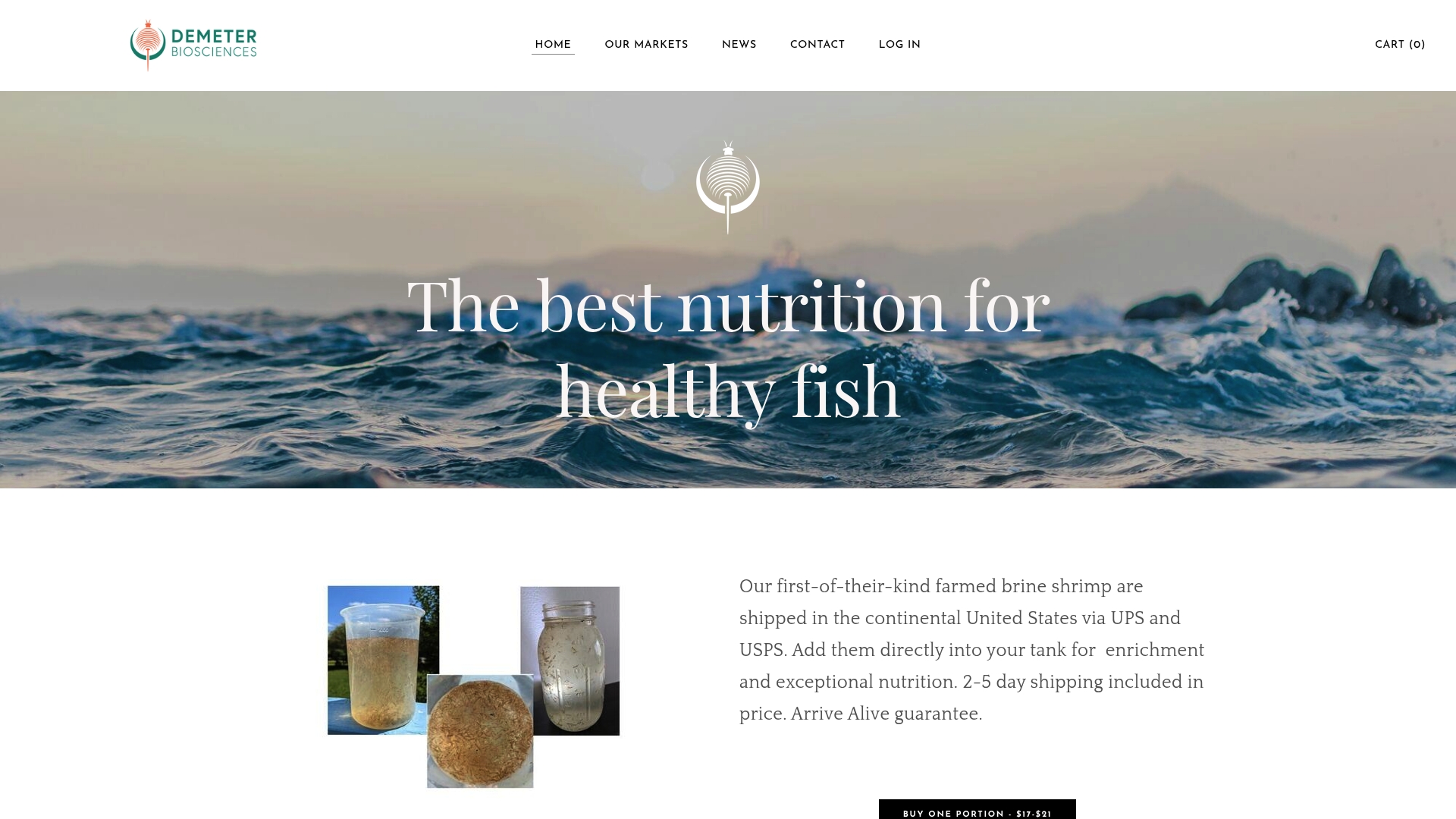
Check out Demeterbioscience to access direct-to-consumer live shrimp shipments plus subscription plans that ensure steady feed delivery for hatcheries or hobbyist tanks. Act today to remove last-minute ordering stress and secure predictable, mercury-free nutrition for your aquatic animals.
Frequently Asked Questions
What nutritional benefits do Demeterbioscience's live brine shrimp provide?
Demeterbioscience's live brine shrimp are reported to contain at least 40% protein, making them a mercury-free nutrition source for aquatic life. This high protein content is especially important for aquarium hobbyists and hatcheries concerned with contaminant levels. Consider using these shrimp to support the health of sensitive species in your aquarium.
How does Demeterbioscience compare with Bio Marine's live microalgae offerings?
Bio Marine specializes in monoculture and blend microalgae for marine tanks, which reduces variability that can affect delicate filter feeders. In contrast, Demeterbioscience focuses on live brine shrimp and monthly subscription delivery, making it more suitable for those needing a steady live feed supply. If you're looking for reliable daily feeding schedules, Demeterbioscience is an excellent choice.
Can I rely on the consistency of product quality from Demeterbioscience?
Yes, Demeterbioscience's controlled, land-based cultivation systems provide more consistent lot-to-lot quality than seasonal ocean harvests. Their production method emphasizes reducing pollution and using CO2 along with animal waste, which supports sustainability while ensuring product integrity. Rely on this consistency when planning feed schedules for your aquatic operations.
Who would benefit most from using Demeterbioscience products?
Demeterbioscience products are ideal for aquaculture professionals, aquarium hobbyists, and pet store owners looking for traceable, farmed marine biomass. Their offerings are particularly valuable for those who prioritize low-mercury options and want a predictable supply of live feed, making it a great choice for hatcheries and aquarists alike.
What fulfillment options does Demeterbioscience offer?
Demeterbioscience provides flexible fulfillment options including single orders, monthly subscription plans, and bulk retail packages. This variety allows users to choose the method that best fits their operational needs or personal preferences in sourcing live feed. Explore these options to find the best fit for your feeding routines.